




Meiji Studio Pottery
Meiji studio pottery brings hand-formed Japanese ceramic artistry into your home through expressive vessels and sculptural forms.
Meiji Studio Pottery
Meiji studio pottery encompasses decorative bowls, vases, cups, saucers, and mugs originating from late nineteenth and early twentieth century Japan. These works span the Meiji and early Taisho periods, reflecting a rich heritage of traditional craftsmanship.
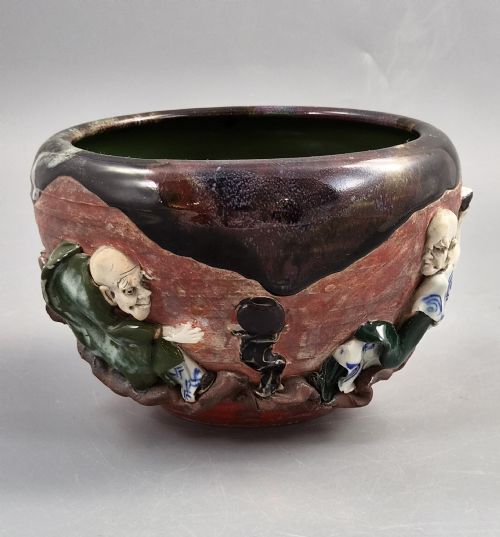
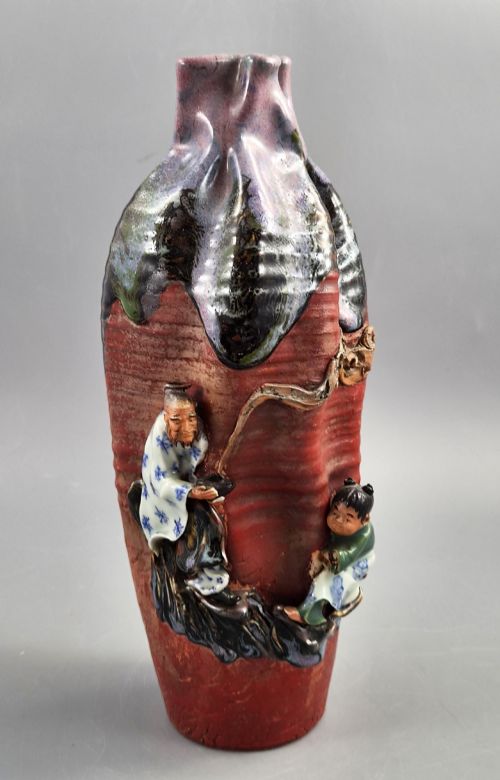
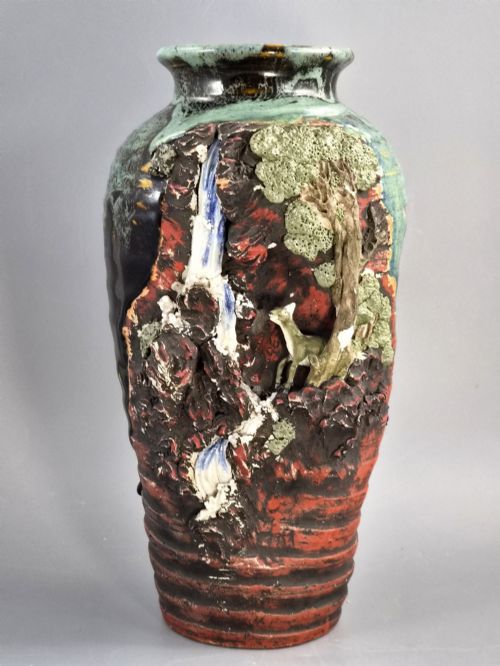
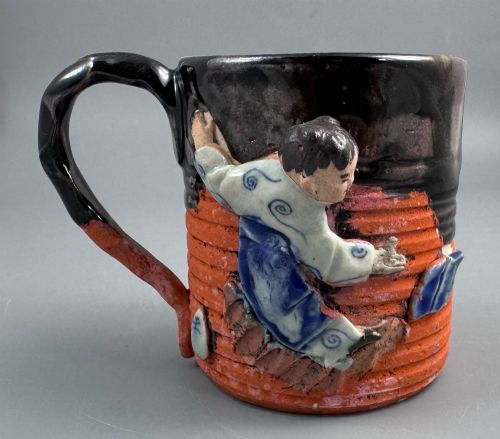
The pieces on this page are predominantly Sumida Gawa and Satsuma wares, showcasing applied figures, detailed painting, and expressive sculptural elements. You will frequently encounter signature works featuring sages, children, and landscapes executed with distinct regional character.
Vessels range from intimate tea wares and brush washers to large exhibition vases, capturing both functional utility and purely decorative intent. Makers worked across distinct Kyoto and Tokyo workshops to produce these durable ceramic items.
Materials and technique
Potters utilised earthenware, terracotta, and stoneware bodies, often finishing pieces with intricate glaze effects, enamel colours, and gold leaf highlights. The clay forms were shaped by hand before receiving detailed surface treatments.
Many Sumida Gawa pieces incorporate thick flambé glazes alongside modelled figures applied directly in relief to the vessel wall. Satsuma items rely instead on finely painted enamel and gilt motifs across a pale, crazed ceramic surface.
The selection spans earthenware, stoneware, and terracotta forms produced across the nineteenth and twentieth centuries.
Distinguishing quality
Quality rests in the precision of the modelling and the clarity of the maker signatures stamped or painted onto the base. Finer examples display meticulous control over relief figures and complex glaze flows.
The depth of the enamel painting and the crispness of the gilt work dictate the standing of a Satsuma vessel. Stronger pieces maintain balanced proportions and harmonious colour palettes across their entire surface.
Inoue Ryōsai·Makuzu Kozan·Kinkozan·Shozan
The Meiji Studio Pottery Glossary
- Satsuma
- Earthenware pottery originating from Satsuma Province, traditionally featuring a finely crackled ivory glaze and elaborate enamel decoration.
- Sumida Gawa
- Pottery produced in the Tokyo region known for heavy dripping glazes and theatrical figures applied in high relief.
- Flambé
- A streaked or mottled glaze achieved through the unpredictable interaction of metallic oxides during high temperature firing.
- Karako
- A traditional decorative motif depicting Chinese children at play, frequently found in Japanese ceramic art.
- Suiban
- A shallow decorative basin used for holding water, often styled as a brush washer or miniature landscape setting.
Meiji Studio Pottery: Frequently Asked Questions
How do I identify Satsuma pottery?
Satsuma pieces are characterised by a distinctive cream-coloured earthenware body covered in a network of fine glaze cracks. They are typically decorated with detailed enamel patterns and gold leaf.
Many examples carry artist signatures on the base, often associated with prominent Kyoto workshops from the late nineteenth century.
What is Sumida Gawa pottery?
Sumida Gawa pottery originates from workshops near the Sumida River in Tokyo and stands out for its unorthodox aesthetic. These pieces feature thick, uneven glazes combined with sculpted human figures modelled directly onto the vessel.
They represent a more tactile and sculptural approach to Japanese ceramic production during the Meiji and Taisho eras.
How should I display these ceramics?
Display these works on stable surfaces away from direct sunlight to preserve delicate enamel and gold leaf details. Vases and bowls function well as standalone decorative focal points.
Ensure that smaller pieces like cups and saucers rest in secure positions where they will not be accidentally knocked.
Are these pieces functional?
While many items were originally created for practical use such as tea service or brush washing, most collectors treat them as decorative art objects today. The historic nature of the earthenware and glaze materials makes careful handling essential.
Gentle dusting with a dry cloth is recommended rather than washing with water.
How do I date these ceramics?
Dating relies on stylistic markers, materials, and documented periods such as the Meiji or early Taisho eras. Signatures and workshop marks on the base provide further clues to chronological origin.
Comparing the glazing technique and relief work with documented examples helps narrow down the decade of production.