





Meiji Satsuma Ware
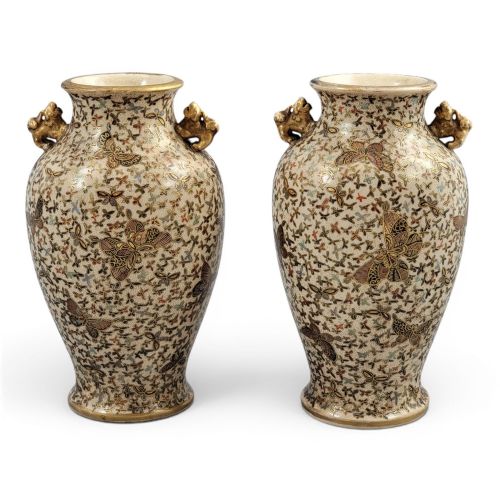
Meiji satsuma ware brings together intricate earthenware vessels and okimono painted with dense enamel and gold leaf.

Meiji Satsuma Ware
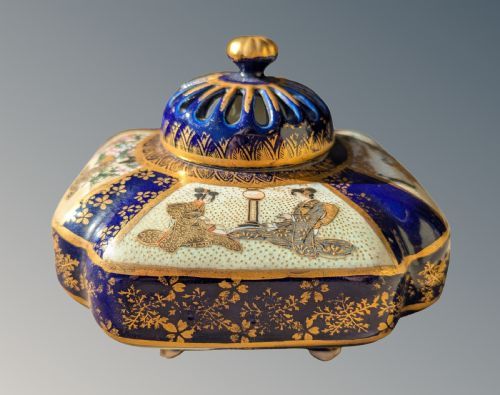
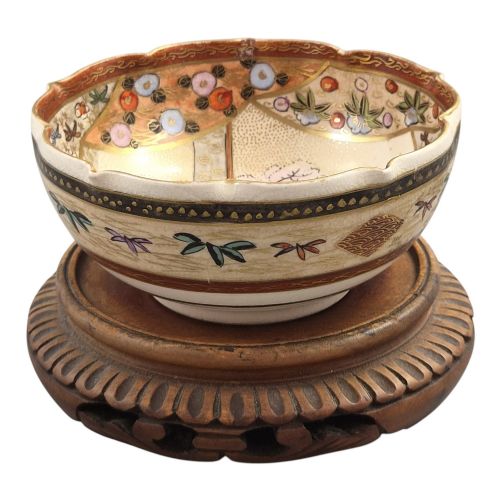
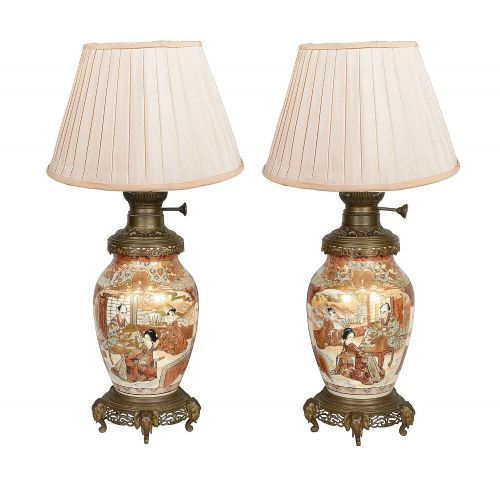
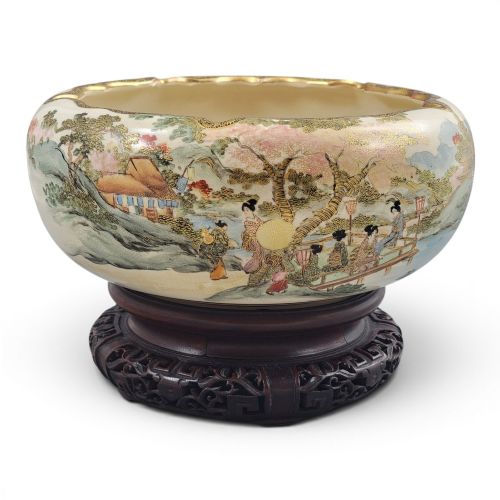
Meiji satsuma ware comprises earthenware pottery and decorative objects originating from Japan during the nineteenth and early twentieth centuries. Pieces found in this selection span vases, ginger jars, bowls, decorative plates, incense burners, okimono figures, and table lamps.
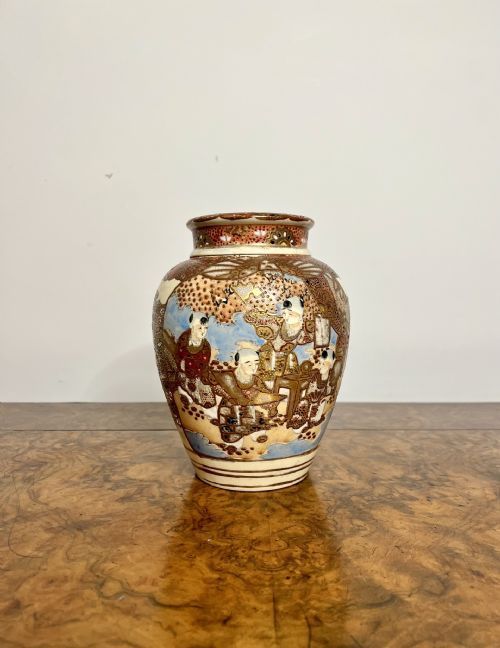
The dominant forms belong to the Meiji period, with related examples stretching into the Taisho period and Edwardian eras. Vases and bowls frequently display complex pictorial scenes featuring figures, landscapes, flowers, and birds rendered in fine detail.
Materials and Construction
Potters built these items using earthenware bodies finished with characteristic crackle-glaze surfaces. Artisans then applied detailed enamel painting augmented by gold leaf, gilt highlights, and raised moriage decoration.
Many objects incorporate traditional signatures, studio marks, or the Shimazu family crest applied directly into the enamel or base. Workshops employed specialised painters to execute multi-figure processions, arhats, and intricate floral motifs.
Listings feature earthenware vessels, plates, and okimono spanning the nineteenth century through the Edwardian and Taisho periods.
Distinctions in Execution
Quality rests upon the precision and complexity of the enamel work and the fineness of the gold detailing. Master painters produced balanced compositions with crisp facial expressions and meticulous garment patterns.
Vessels signed by renowned makers or associated with prominent kilns exhibit superior control over the crazed glaze and pigment placement. Larger monumental pieces and detailed okimono display exceptional sculptural ambition alongside the surface decoration.
Kinkozan·Hotoda·Shizan·Chosei·Nanzan
The Meiji Satsuma Ware Glossary
- Earthenware
- Porous ceramic pottery fired at lower temperatures, forming the structural body beneath the glaze of these items.
- Moriage
- A decorative technique using piped clay trails to create raised, three-dimensional patterns beneath enamel and gilding.
- Okimono
- Japanese freestanding ornamental carvings or figures designed for display on shelves or tokonoma alcoves.
- Koro
- A traditional incense burner featuring a perforated lid, often supported on small feet and decorated with handles.
- Shimazu Mon
- The heraldic badge or crest of the Shimazu clan, frequently found painted on the base or body of satsuma pieces.
Meiji Satsuma Ware: Frequently Asked Questions
What is satsuma ware?
Satsuma ware is a distinct style of Japanese earthenware characterised by a creamy, crackled glaze that serves as a canvas for elaborate enamel and gilt painting.
Production flourished during the Meiji period, evolving from regional wares into highly detailed export art designed for international collectors.
How do I identify a Meiji period piece?
Meiji period pieces are identified by their stylistic execution, specific signature marks, and the historical context of late nineteenth to early twentieth-century Japanese craftsmanship.
Many items carry artist seals or kiln stamps from notable Kyoto and Yokohama workshops associated with this era.
Were these items used or decorative?
Most surviving satsuma objects were created primarily for decorative display and export markets rather than domestic utility.
Certain forms, such as incense burners, tea jars, and small bowls, retained functional elements while maintaining highly ornamental surface designs.
What are okimono figures?
Okimono are decorative sculptural objects depicting figures, deities, animals, or mythological subjects intended for interior decoration.
In satsuma ware, these figures are modelled in earthenware and finished with the same detailed enamel and gold painting found on vases.