


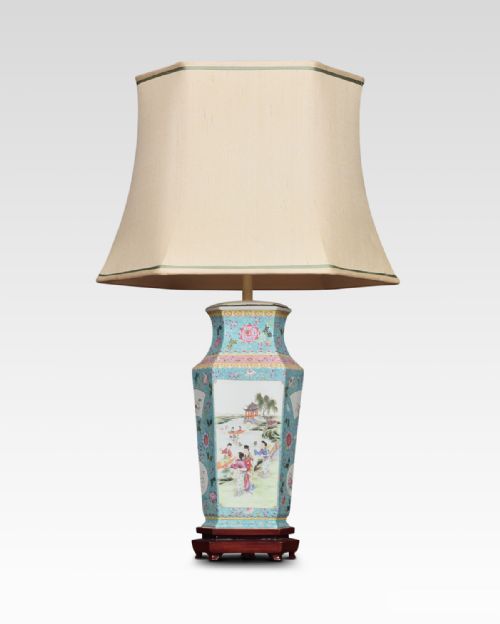


Hexagonal Ceramic Vases
These hexagonal ceramic vases bring together intricate Japanese and Chinese designs from the nineteenth century to brighten any room.

Hexagonal Ceramic Vases
When you search for hexagonal ceramic vases, you find pieces shaped with six distinct sides originating from Asian and British workshops. These vessels bridge decorative arts from the nineteenth century, including Japanese Satsuma and Imari alongside Chinese export porcelain.
The pieces on this page are most frequently Japanese Satsuma or Imari vessels from the Meiji period, often featuring painted figures, dragons, and rich enamel palettes. Alongside these are Chinese Canton and Famille Verte pieces, plus occasional British ironstone pottery shaped with multiple sides.
How they were made
Potters shaped clay into precise six-sided forms using earthenware or hard-paste porcelain before firing the body. Artisans then applied intricate polychrome enamels and gilding directly onto the ceramic surface.
Many of these vessels combine painted glazes with gold leaf detailing, and some nineteenth-century examples have later been adapted into table lamps mounted with brass fittings or paired with silk elements.
Several of these ancient pottery vessels now wear modern electrical hats as table lamps.
What varies in quality
Quality rests upon the precision of the six-sided form and the clarity of the painted enamels. Finer examples display meticulous brushwork in the depiction of figures such as Rakan, dragons, and floral motifs.
The application of gold leaf and the depth of the glaze also separate standard production wares from pieces attributed to skilled makers. Balance in the proportions across all six panels dictates the overall visual success of the vessel.
Hattori zo
The Hexagonal Ceramic Vases Glossary
- Satsuma
- Earthenware pottery originating from Satsuma province in Japan, typically featuring a ivory crackle glaze decorated with rich enamels and gold. It became widely exported during the Meiji period.
- Imari
- Japanese porcelain decorated in underglaze blue and overglaze red, gold, and green. This distinctive palette was heavily exported to Europe.
- Famille Verte
- A Chinese porcelain palette dominated by green enamel overglazes, popular during the Qing dynasty and later imitated in Victorian export wares.
- Ironstone
- A dense, durable British pottery type patented in the nineteenth century to rival imported Chinese porcelain.
- Polygon
- A geometric shape with three or more straight sides, used here to describe six-sided vessels.
Hexagonal Ceramic Vases: Frequently Asked Questions
What are hexagonal ceramic vases?
These are decorative vessels featuring six flat sides, primarily originating from nineteenth-century Japanese and Chinese kilns. They showcase traditional hand-painted motifs and enamel work.
Most examples date from the Victorian and Meiji periods, reflecting international trade and stylistic exchange between Asia and Europe during that era.
How were these vases used?
Historically, these vessels served as ornamental display items in grand interiors, often showcased on mantelpieces or tables. Their symmetrical multi-sided forms allowed detailed narratives to unfold across each distinct panel.
Some examples have subsequently been converted into table lamps, incorporating electrical fittings while retaining their original ceramic bodies.
How do I style hexagonal ceramic vases at home?
Place them where natural light can catch the enamel details and gold leaf highlights on their six sides. They work well as standalone focal points on sideboards or open shelving.
Keep surrounding decor simple to let the intricate patterns of dragons, figures, and florals stand out without visual competition.
How can I tell Satsuma and Imari apart?
Satsuma wares are typically earthenware with a warm, crackled ivory glaze and dense polychrome enamels. They often depict detailed figural scenes and heavy gilding.
Imari pieces utilise a porcelain body decorated in a distinct palette of cobalt blue and iron red, frequently accented with gold.