
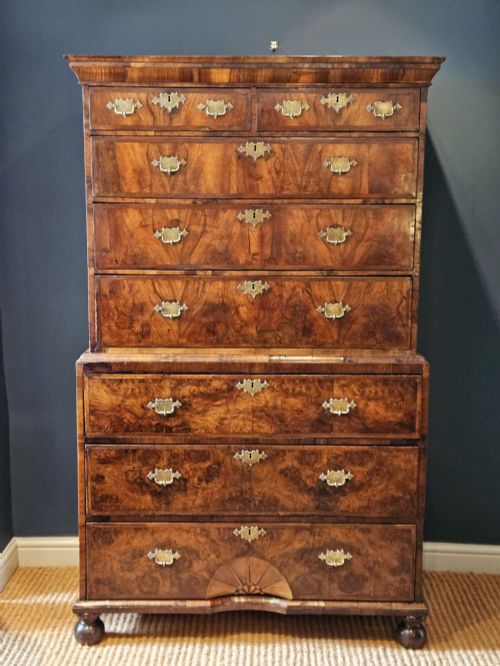
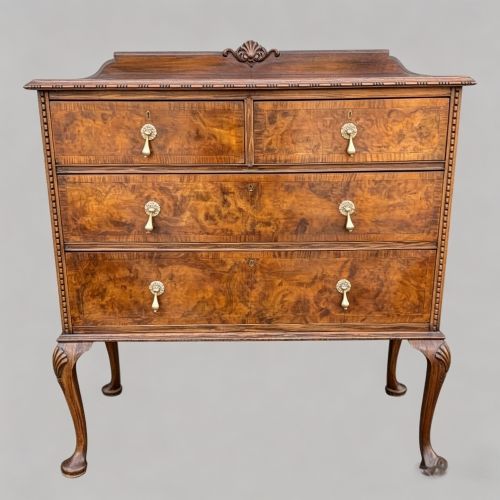
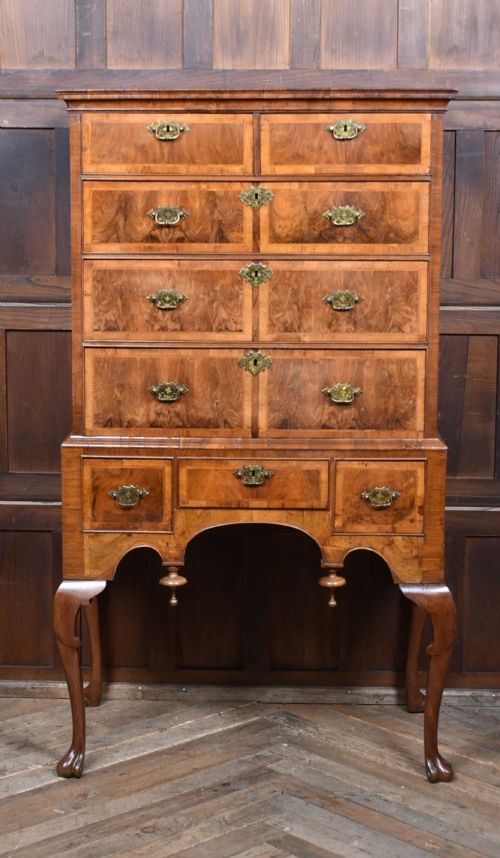
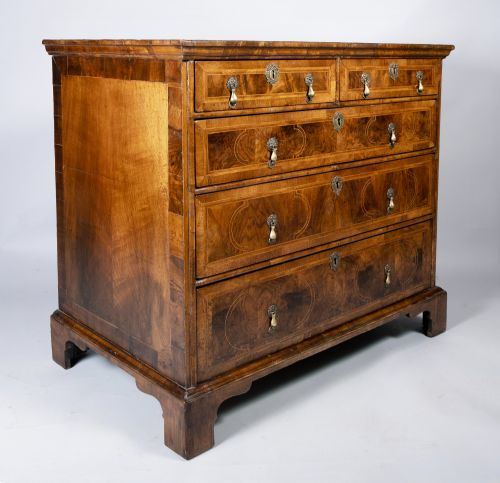
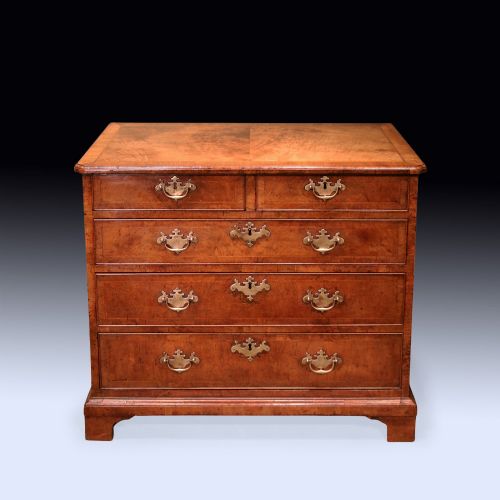
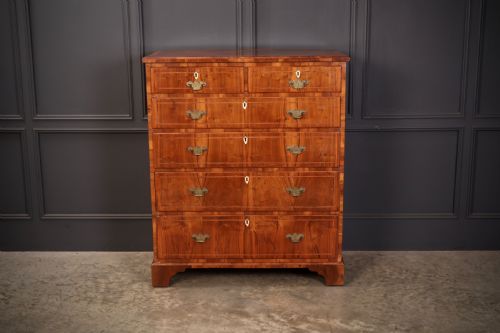
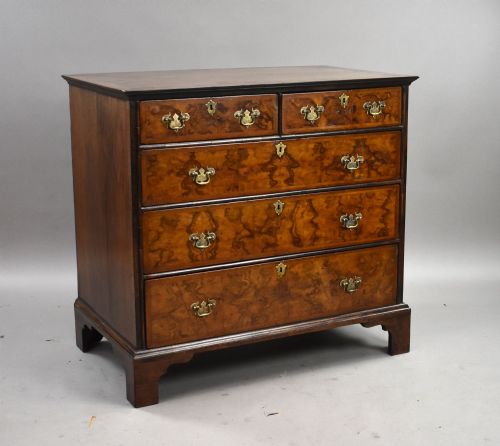


Feather Banded Chest
A feather banded chest is a piece of walnut furniture defined by delicate decorative borders framing the drawer fronts, prized for the rich grain of the wood.
Feather Banded Chest
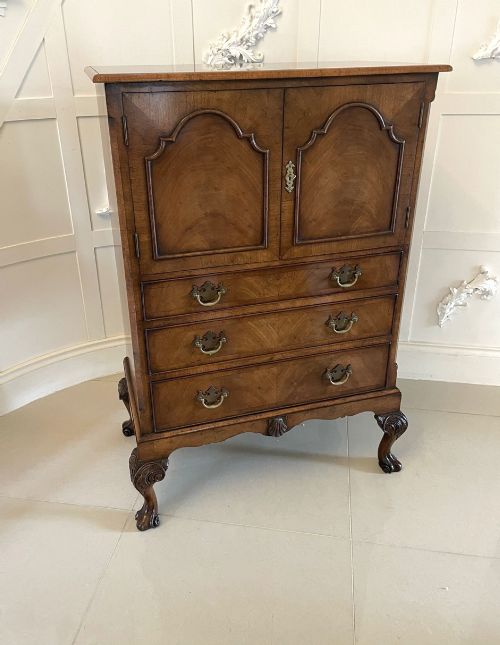
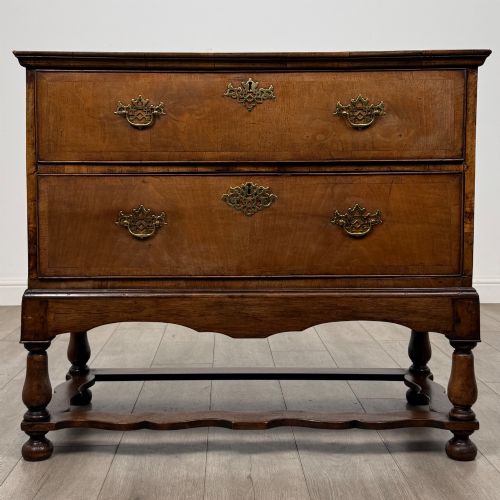
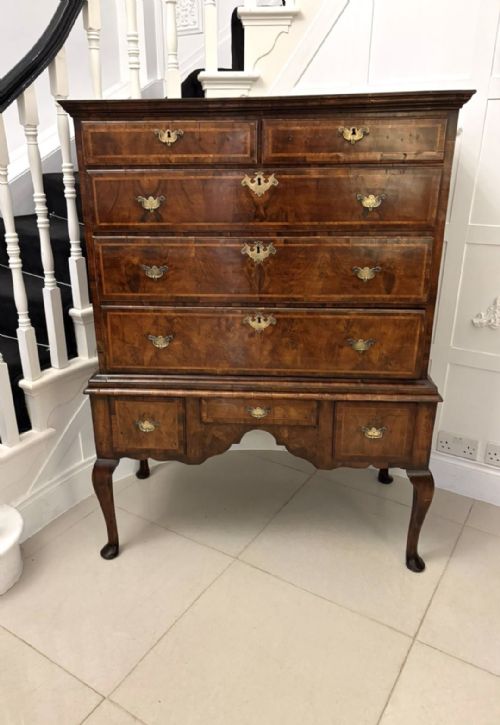
A feather banded chest brings together domestic storage and cabinet-making skill from the late seventeenth and eighteenth centuries, alongside later revivals from the twentieth century. These pieces appear primarily as chests of drawers, chests on stands, tallboys, and bureaux, showing walnut veneers laid over solid carcases.
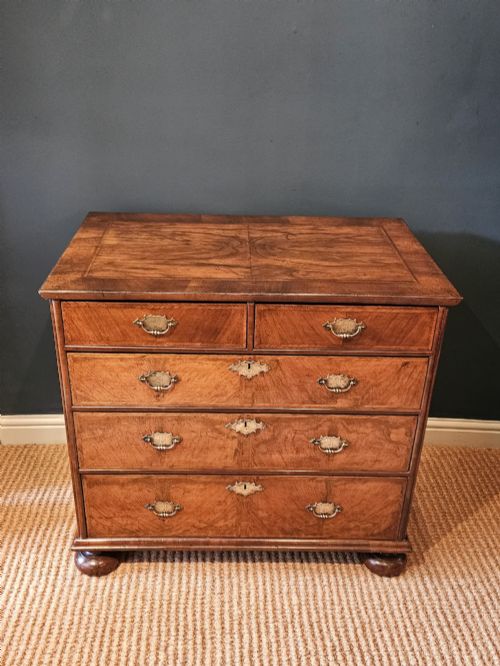
The version most commonly met on this page dates from the eighteenth century, aligned with the reigns of Queen Anne and the early Georges. These foundational examples rely on figured walnut, burr walnut, and herringbone or feather banding to animate flat drawer fronts and tops.
Later reinterpretations from the early twentieth century also surface, adopting the styles of the William and Mary and Queen Anne periods. These twentieth-century pieces replicate the forms and decorative stringing of earlier decades using similar walnut timbers.
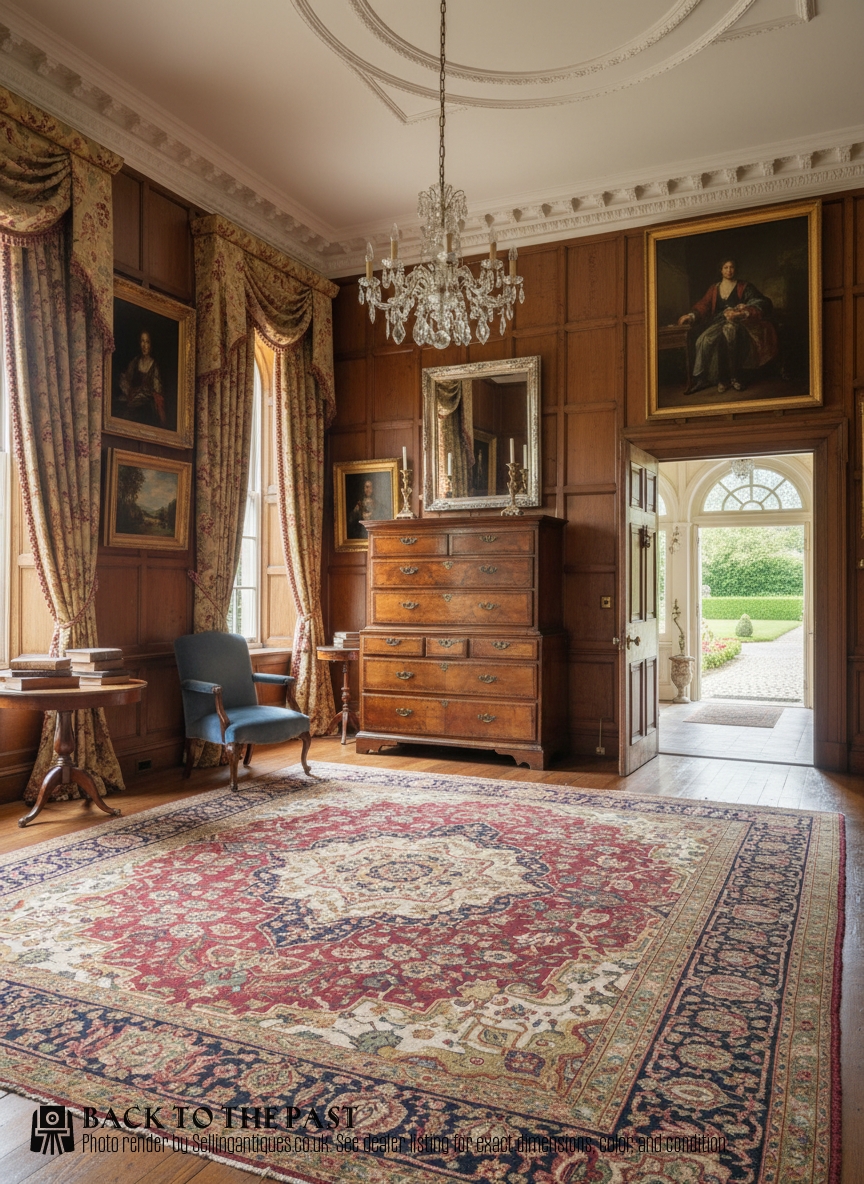
How they were made
Cabinet-makers constructed these carcases using oak or pine as a stable foundation, applying thin veneers of figured or burr walnut to the exterior surfaces. This technique allowed workshops to display symmetrical grain patterns that solid timber could not easily match.
The characteristic borders were formed by cutting thin strips of walnut veneer across the grain at an angle, then laying them side by side to create a pattern resembling the spine of a feather. These inlaid bands were positioned around drawer perimeters and top edges, often accompanied by lighter boxwood or dark herringbone stringing.
Brass hardware such as batwing handles, escutcheons, and drop pulls were secured to the drawer fronts, while bracket feet, bun feet, or dedicated stands supported the lower structure.
Feather Banded Chest Retail Price Guide 2026
Typical asking prices for feather banded chest among the pieces listed under this phrase on Sellingantiques today, from the lower quarter to the upper quarter. They describe what is for sale here now, not the wider market.
Cabinet-makers occasionally concealed secret compartments behind sliding panels within walnut bureaux, keeping private letters safe from prying household eyes.
What varies in quality
The visual hierarchy of a feather banded chest rests on the choice of walnut veneer and the crispness of the inlaid borders. Finer examples display deeply figured burr walnut with warm natural colour and carefully matched grain symmetry across the drawer fronts, while lesser pieces utilise plain timber with minimal grain movement.
Execution of the banding distinguishes workshop output, demanding precise cutting and tight mitres at every corner. When the feather banding aligns cleanly without visible gaps or filler, the piece reflects the hand of a more proficient cabinet-maker.
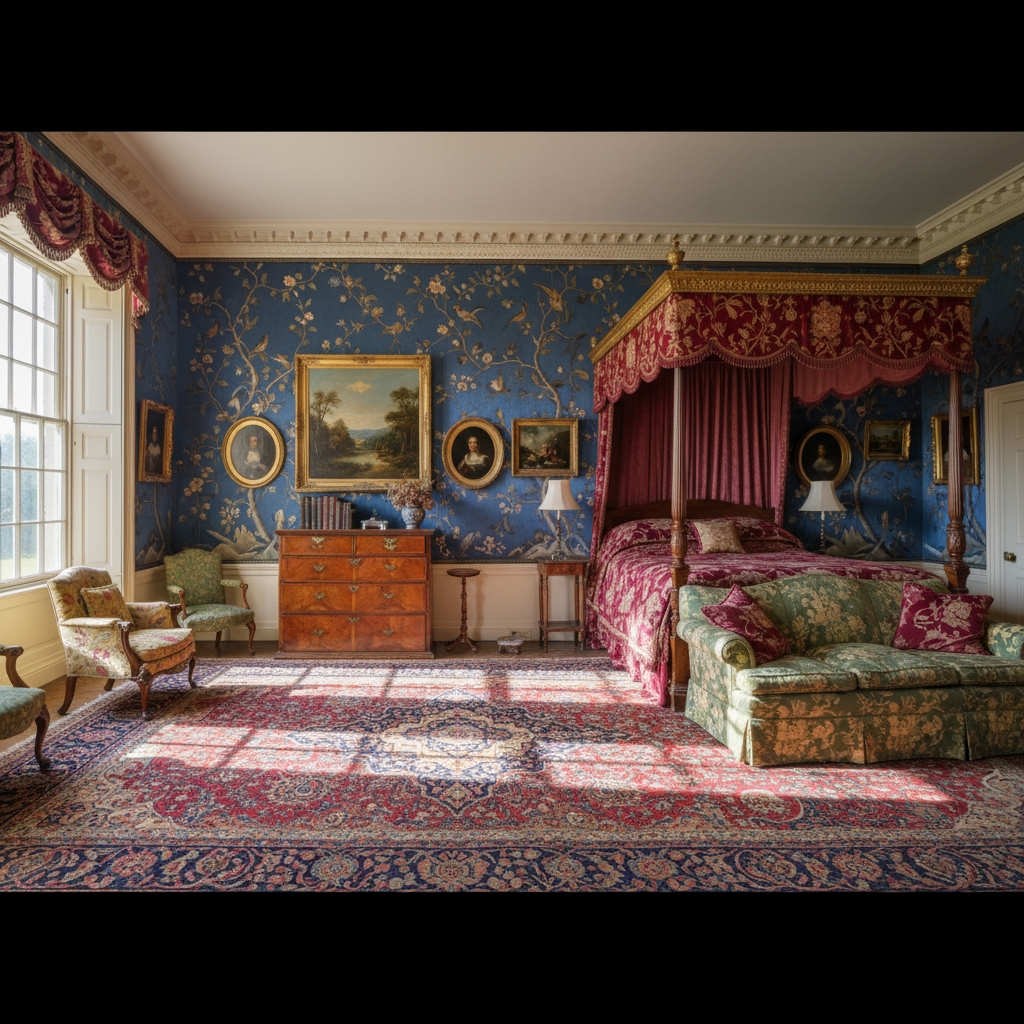
The Feather Banded Chest Glossary
- Feather banding
- A decorative inlay formed from two strips of veneer cut diagonally and laid in opposite directions to create a central V-shaped motif resembling a feather. It outlines drawer fronts and tops on period walnut furniture.
- Herringbone
- A zigzag pattern of inlaid veneer used as a border alongside feather banding. It adds geometric contrast to the curved grain of walnut surfaces.
- Burr walnut
- A prized timber harvested from walnut tree growths, producing swirling, knotty grain patterns. Cabinet-makers used its veneer on primary surfaces for dramatic visual effect.
- Chest on stand
- A tall storage chest elevated on a separate framework of legs connected by stretchers. This form emerged in the late seventeenth century and elevated storage off domestic floors.
- Escritoire
- A writing cabinet featuring a fall-front flap that opens to reveal a fitted interior of small drawers and pigeonholes. These pieces combine enclosed desk space with standard chest proportions.
Feather Banded Chest: Frequently Asked Questions
What is a feather banded chest?
A feather banded chest is a wooden storage unit, typically made from walnut during the eighteenth century or its twentieth-century revival periods. It gets its name from the decorative inlaid borders framing the drawers.
Cabinet-makers constructed these pieces as chests of drawers, tallboys, or chests on stands, applying thin veneers and intricate stringing to enhance plain surfaces with geometric detail.
How do I date an antique walnut chest?
Dating relies on examining construction methods, timber choice, hardware fixings, and overall proportions. Eighteenth-century examples display hand-cut dovetails and native woods within secondary carcase parts.
Stylistic markers such as bracket feet, cornice mouldings, and brass drop handles also point towards specific reigns like Queen Anne or George I, while later twentieth-century copies reveal modern machining beneath the surface.
What woods were used in these pieces?
Primary surfaces feature walnut, including plain walnut, figured walnut, and highly decorative burr walnut. Inlaid borders incorporate contrasting light woods such as boxwood.
Internal drawer linings and carcase frames commonly rely on secondary timbers like oak or pine to provide structural stability behind the decorative exterior veneers.
How should I care for walnut furniture?
Walnut furniture requires stable room humidity and protection from direct sunlight to prevent the timber from drying out or veneers from lifting. Regular dusting with a soft, dry cloth maintains the surface.
Applying microcrystalline wax occasionally helps nourish the wood and preserve the natural sheen of old polish without building up heavy residue.
What is the difference between a tallboy and a chest on chest?
A chest on chest consists of two distinct carcases stacked directly on top of one another, combining a wider base section with a slightly narrower upper section. Both parts contain multiple drawers.
A tallboy generally refers to a single tall chest of drawers or a chest elevated on a frame, though historical terminology often uses the terms interchangeably for high-storage furniture.