


Fall Front Secretaire Desk
A fall front secretaire desk conceals a fitted writing surface behind a vertical drop panel, offering refined utility alongside concealed compartment work.
Fall Front Secretaire Desk
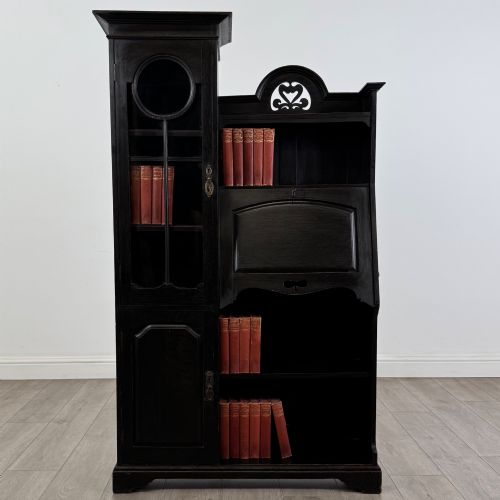
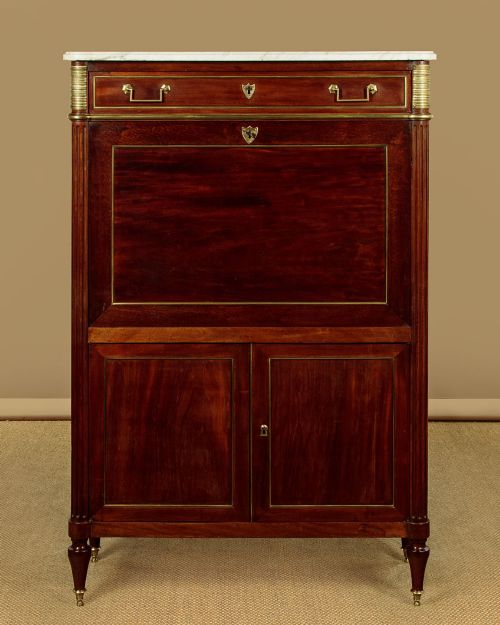
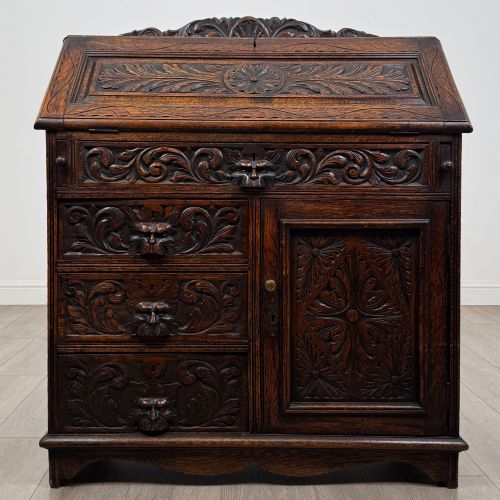
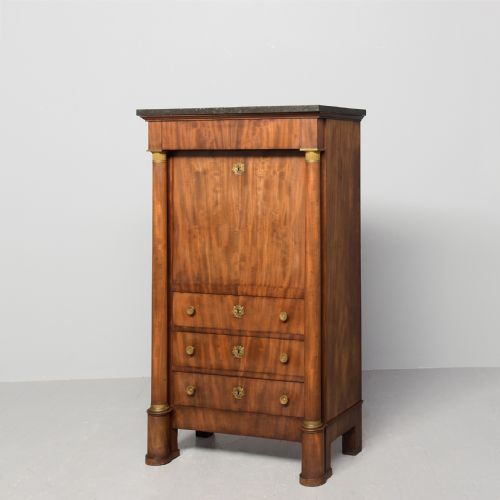
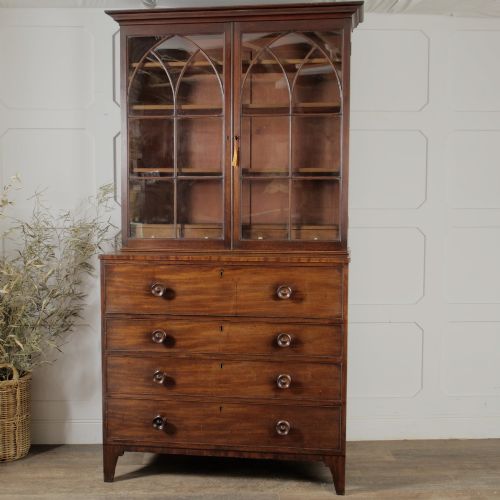
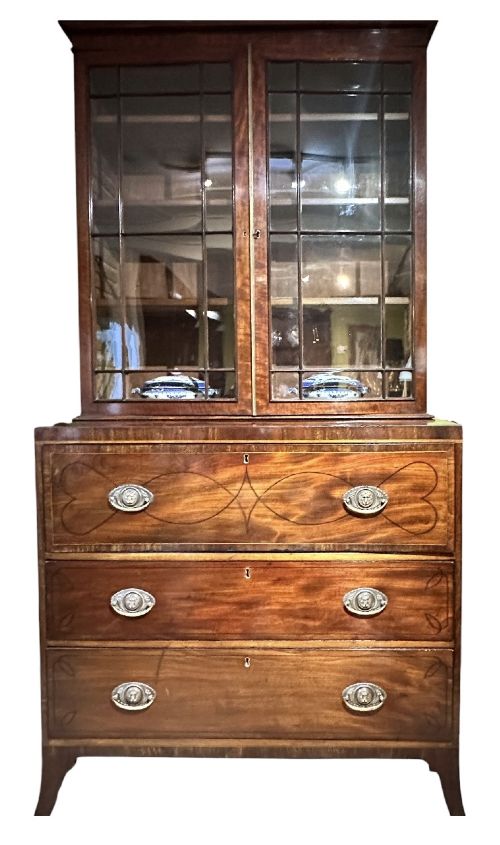
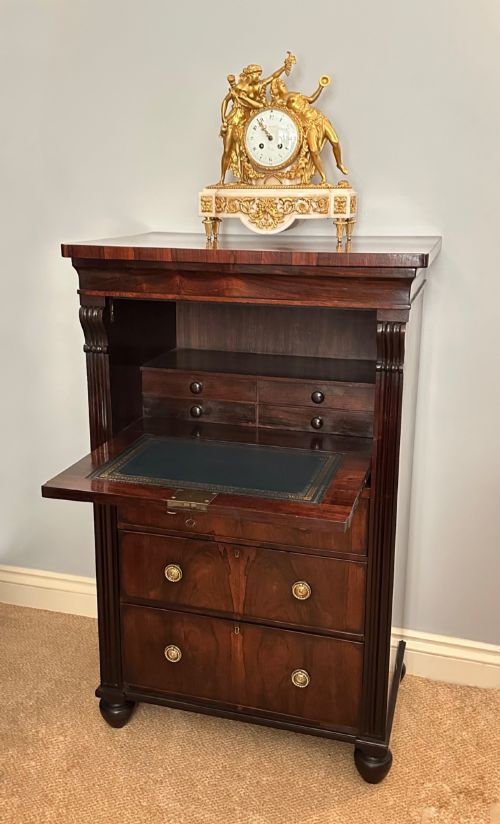
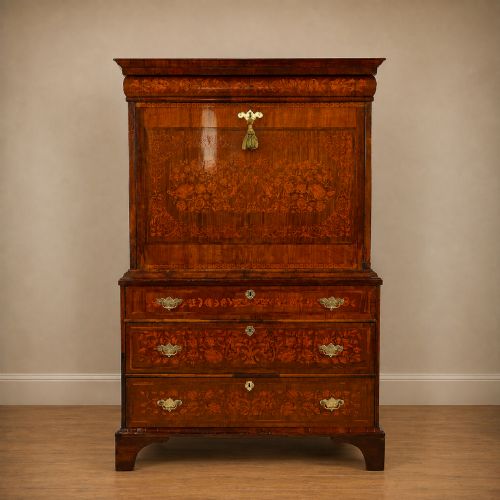
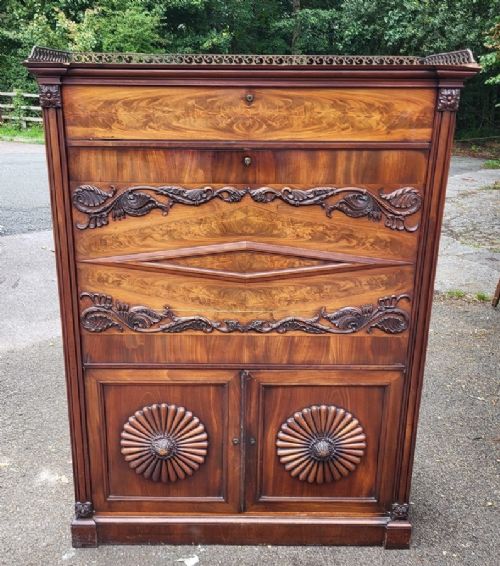
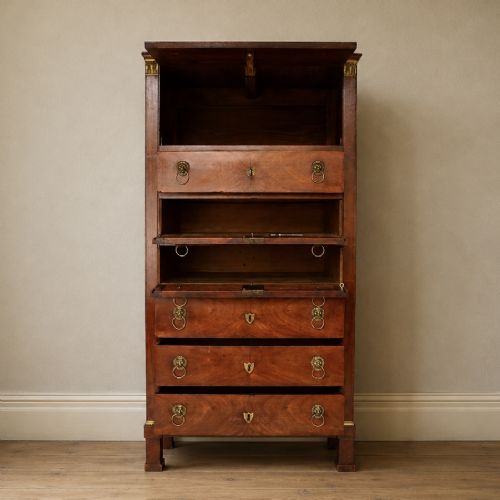
A fall front secretaire desk provides a vertical writing cabinet form where the drop-down panel opens to reveal inner drawers and pigeonholes. The examples met on this page span the eighteenth, nineteenth, and twentieth centuries, taking forms such as freestanding abattants, tall bookcase combinations, and compact writing cabinets.
The styles range widely across European traditions, covering Georgian walnut and oak, Regency rosewood, French Empire and Louis XV revival pieces with marble tops, alongside later Biedermeier, Art Deco, and Edwardian expressions. These pieces function primarily as writing desks that double as tidy storage when the writing flap closes shut.
How They Were Made
Cabinetmakers constructed these pieces using dense timber carcases overlaid with figured veneers like flame mahogany, walnut, rosewood, kingwood, and amboyna. Structural woods such as oak and pine form the interior framing and drawer linings.
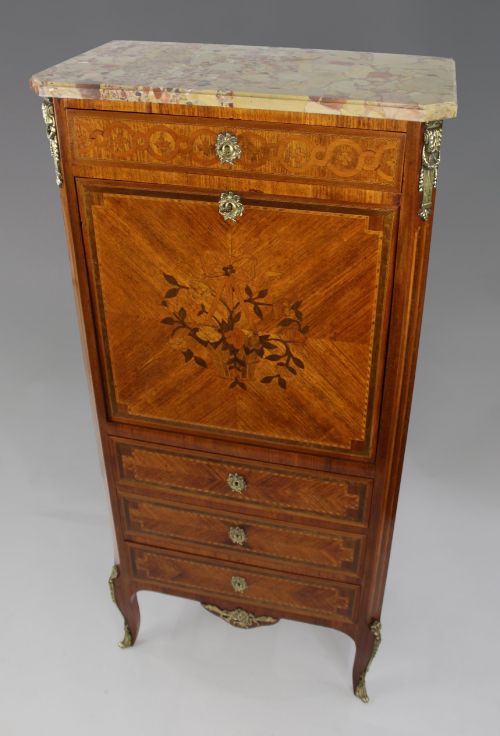
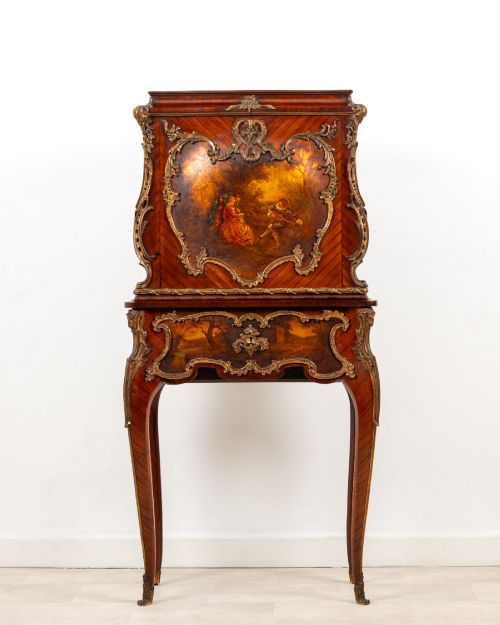
Decorative surfaces relied on marquetry, parquetry, brass inlay, painted vernis martin panels, and applied ormolu or gilt bronze mounts. Heavier continental versions incorporated inset marble tops above the drop front and concealed internal compartments.
Periods represented span from the early eighteenth century through the Georgian, Regency, Victorian, and Art Deco eras.
What Varies in Quality
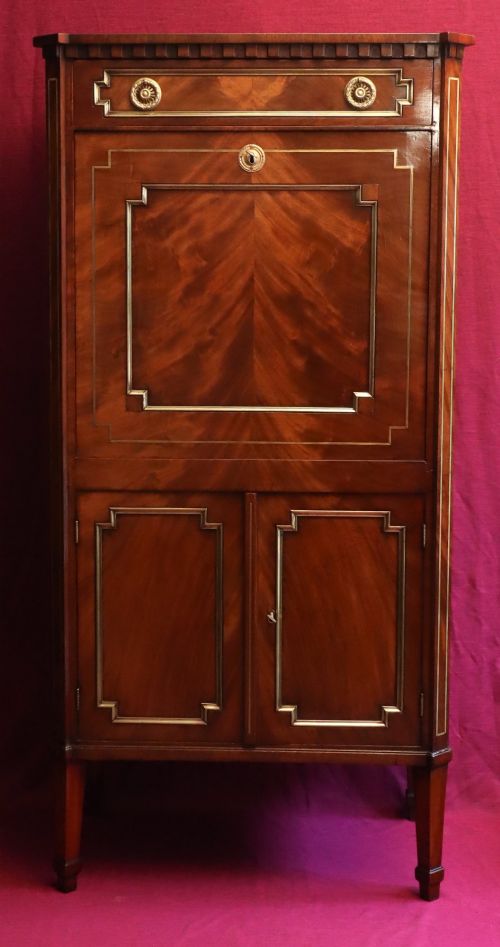
The choice of timber figure and veneer matching determines the initial visual impact, moving from plain deal or oak up to highly figured flame mahogany, amboyna, or intricate floral marquetry. Superior examples display seamless grain continuity across the fall front and drawer banks.
Mount quality and internal complexity set the finer pieces apart. Cast ormolu mounts, intricate secret drawers, and original fitted mirrors or hidden compartments distinguish workshop output from standard production.
Blake, London
The Fall Front Secretaire Desk Glossary
- Secretaire abattant
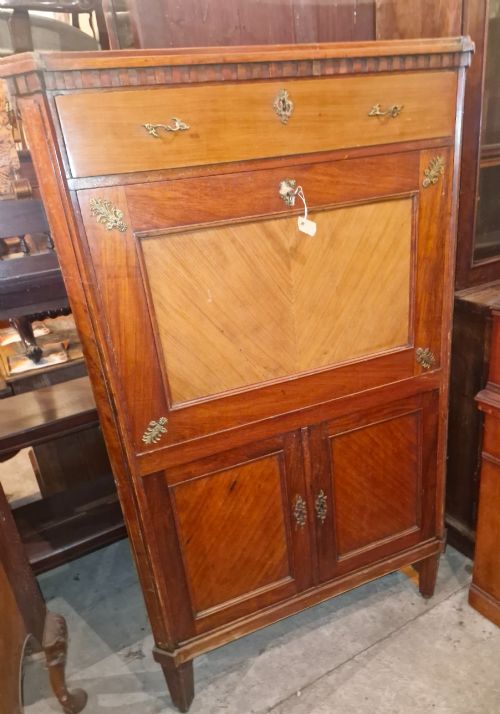
- A tall vertical cabinet featuring a hinged fall front writing flap that drops down horizontally. This French form typically includes a drawer above the flap and cabinet doors below.
- Escritoire
- An alternative term for a writing desk or cabinet with a sloping or drop writing surface. It originates from the French term for writing.
- Ormolu
- Gilt bronze mounts applied to furniture for decoration, commonly found on French nineteenth-century pieces. It adds metallic contrast to dark wood veneers.
- Marquetry
- Inlaid wood veneers arranged in decorative patterns or pictorial designs. Floral motifs are frequently seen on eighteenth-century walnut and mahogany examples.
- Wellington chest
- A tall narrow chest of drawers secured by a hinged locking side stile. Some variants integrate a secretaire drawer within the stack.
Fall Front Secretaire Desk: Frequently Asked Questions
What is a fall front secretaire desk?
A fall front secretaire desk is a piece of furniture featuring a vertical writing flap that pulls down to create a horizontal desk surface. It usually hides a series of small internal drawers and pigeonholes behind the panel.
These desks were designed to keep correspondence and writing materials neatly hidden away when not in use, maintaining a tidy room appearance.
How do I identify the period?
Dating relies on timber choices, construction methods, and stylistic details. Georgian and eighteenth-century pieces often use figured walnut or mahogany with brass hardware, while nineteenth-century French pieces frequently feature marble tops and ormolu mounts.
Later pieces from the Art Deco period or the early twentieth century show simpler geometric lines, oak construction, or modern veneering techniques.
Were these desks used for writing?
Yes, they served as primary correspondence desks for writing letters and managing personal accounts. The fold-down panel provided a stable writing surface supported by hinges or specialised pull-out brackets.
Inside the desk, dedicated compartments organised paper, inkwells, and envelopes away from general view.
How do I care for wood veneers?
Maintain wood veneers by keeping the furniture away from direct sunlight and steady heat sources to prevent timber shrinkage and veneer lifting. Regular dusting with a soft, dry cloth preserves the finish.
Avoid using silicone-based polishes or excessive moisture, applying traditional wax polish sparingly when the wood appears dry.