


Ersari Woven Carpet
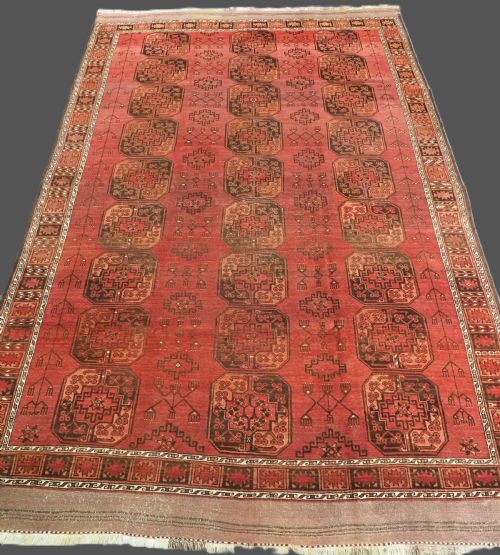
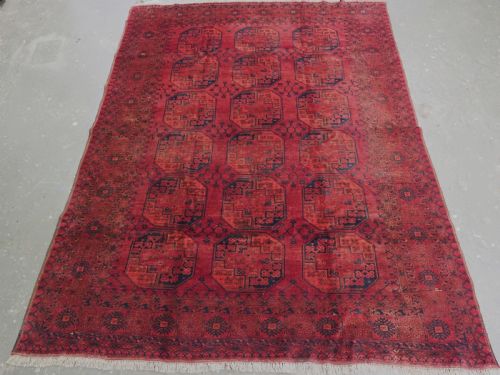
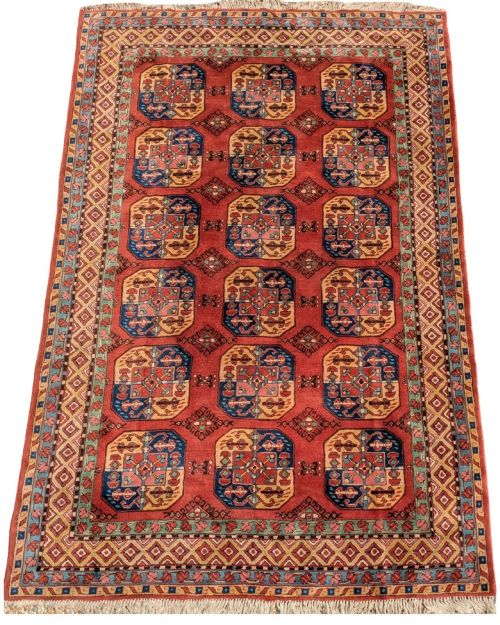
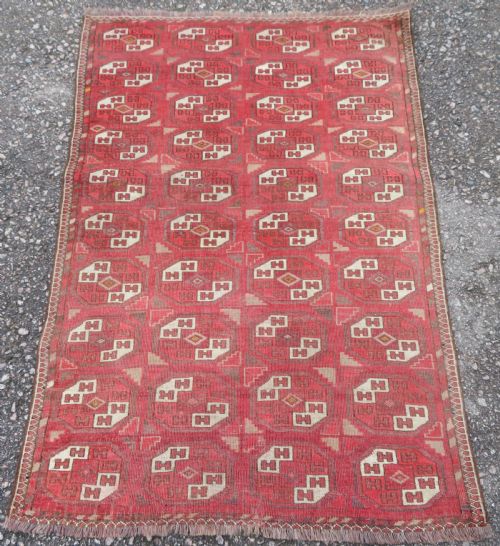
When you search for an ersari woven carpet, you are looking at tribal Central Asian textiles defined by deep red tones and geometric gul motifs.
Ersari Woven Carpet
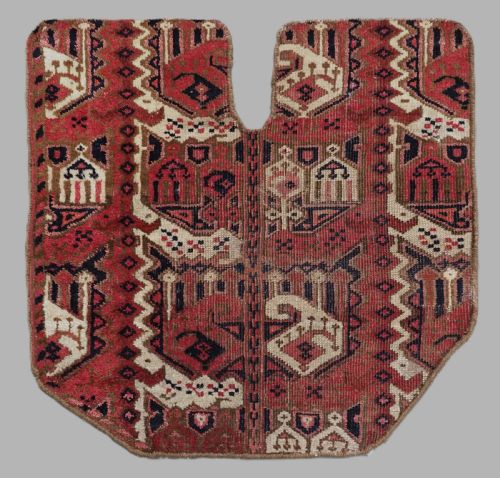
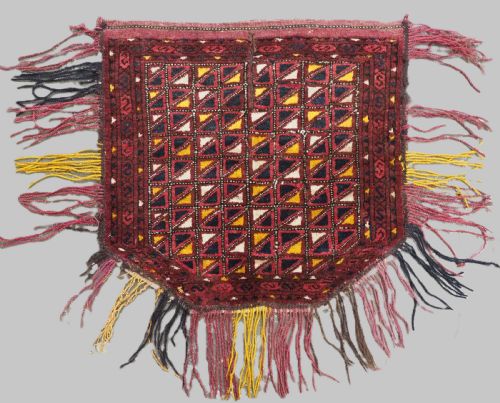
An ersari woven carpet encompasses large floor coverings, tent door rugs, and smaller storage bags originating from Turkmen and Afghan tribal traditions. The pieces on this page span the mid-nineteenth century through the early twentieth century, showing the traditional weaving forms of nomadic and village makers.
Main carpets provide large format examples with classic repeating gul designs, whereas smaller formats like torbas, chuvals, and ensis serve as bag faces or door hangings. These variations reflect the practical domestic requirements of Central Asian tribal life.
The aesthetic is rooted in Central Asian tribal styles, often featuring warm red ground colours, traditional secondary ornaments, and structured borders. Regional variations connect these textiles to specific sub-tribes and Afghan village workshops.
How they were made
Weavers utilised hand-spun wool for the pile, combined with foundations that occasionally incorporate goat hair and horsehair for durability. These natural animal fibres provide the structural integrity found in nomadic textiles.
Natural dyes produced the characteristic deep reds, golds, and secondary tones seen across the pieces. The application of these dye stuffs created varied depths of colour that developed character over time.
Listings span from 1850 to 1930, utilising hand-spun wool, natural dyes, goat hair, and horsehair across Turkmen and Afghan tribal forms.
What varies in quality
Quality depends upon the precision of the tribal pattern work, the handling of the primary gul motifs, and the richness achieved through natural dyeing. Pieces with balanced proportions and clear graphic layouts demonstrate superior execution.
The condition of the hand-spun wool pile and the structural soundness of the foundation influence the integrity of each rug. Original finishes, such as intact tassels and borders, contribute to the completeness of the textile.
The Ersari Woven Carpet Glossary
- Gul
- A primary medallion or repeating octagonal motif used in Turkmen carpet design. These stylistic emblems often identify specific tribes or sub-tribes.
- Torba
- A small wall-hanging storage bag used within nomadic tents for household possessions. They typically display detailed face designs framed by geometric borders.
- Chuval
- A large tent bag used for storage, frequently encountered as a surviving bag face. These pieces showcase compressed versions of main carpet patterns.
- Ensi
- A tribal door rug or hanging designed for the entrance of a yurt. They usually feature a cruciform division separating the field into distinct panels.
- Kapunuk
- A decorative tent door surround placed around the wooden frame of a nomadic dwelling. These specialised textiles display distinct triangular headpieces and side flaps.
Ersari Woven Carpet: Frequently Asked Questions
What is an ersari woven carpet?
An ersari woven carpet is a traditional Central Asian textile made by Turkmen and Afghan tribes using hand-spun wool and natural dyes. These carpets are distinguished by their geometric patterns and warm red colour palettes.
They include large floor formats as well as smaller domestic items such as storage bags and door hangings. Each piece represents the practical and decorative craft of nomadic weavers.
How were these carpets used?
These textiles served multiple functions within nomadic and village life, ranging from floor coverings in living spaces to horse covers and structural tent furnishings. Large formats provided warmth and decoration on the ground.
Smaller bag faces like torbas and chuvals were utilised for storing household goods inside tents. Door hangings such as ensis defined the entrances of traditional dwellings.
How do you date an antique carpet?
Dating involves examining the materials, dye types, and structural wear patterns present in the wool and foundation. Hand-spun wool and early natural dye palettes typically indicate nineteenth-century or earlier production.
Structural details, such as the inclusion of goat hair or horsehair in the foundation, also help establish the period. Stylistic markers connect specific examples to nineteenth and early twentieth-century tribal traditions.
How do I live with an antique carpet?
Living with these textiles involves placing them in low-traffic areas or mounting smaller bag faces on walls to protect the wool pile. Regular gentle vacuuming without a beater bar helps maintain the fibres.
Keeping them away from direct sunlight preserves the natural dyes. Allowing the wool to breathe ensures the longevity of the foundation.