

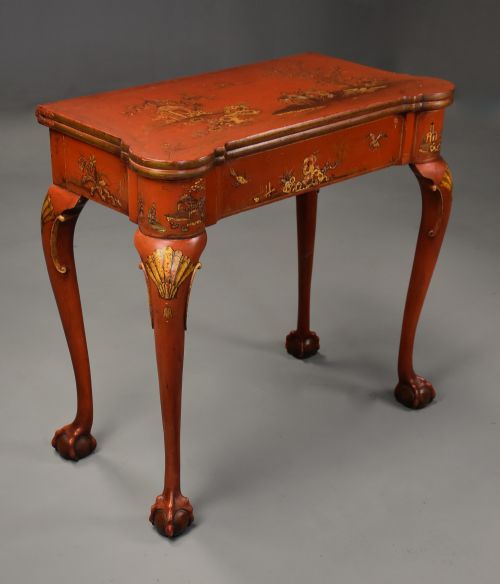


Envelope Games Table
An envelope games table is a clever folding piece designed for cards and social play, prized for its ingenious mechanism that opens like a letter.
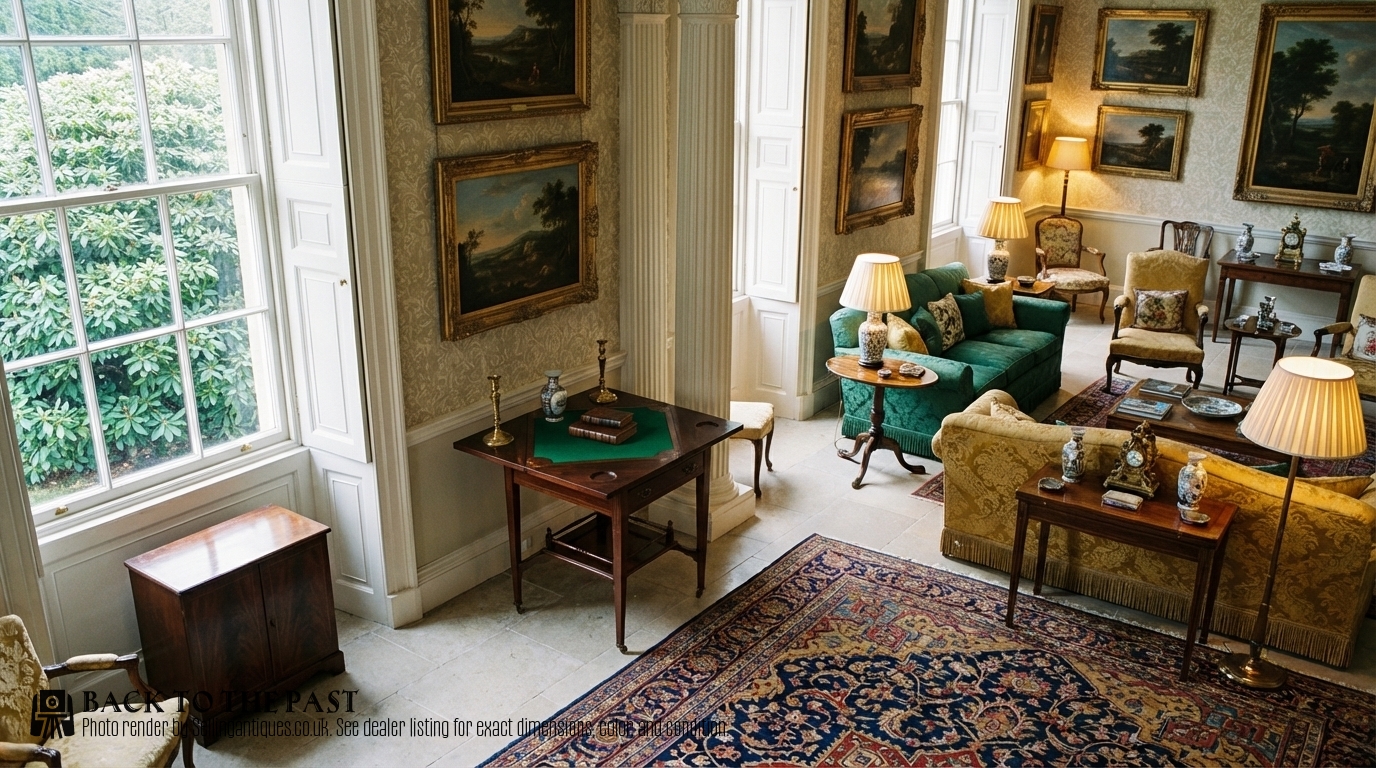
Envelope Games Table
When you search for an envelope games table, you encounter ingenious folding furniture designed primarily for cards and social evenings. These pieces appear most frequently from the Edwardian and Victorian periods, alongside examples from the nineteenth century.
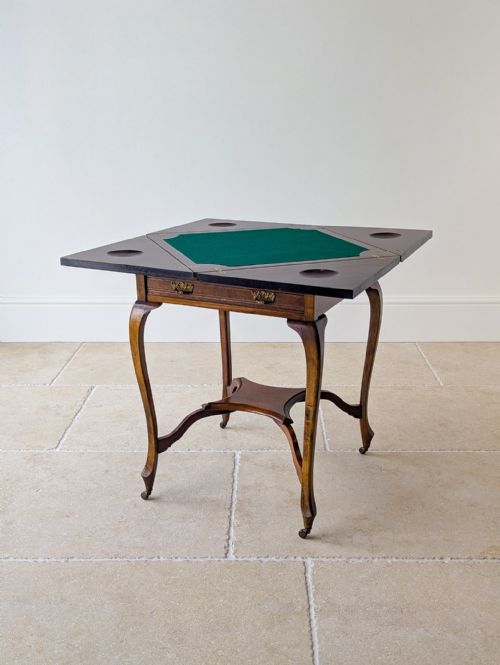
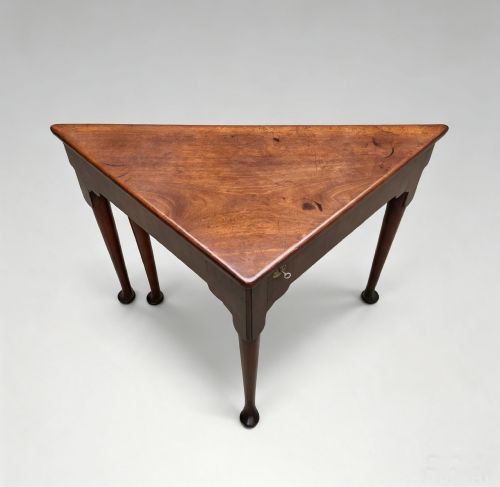
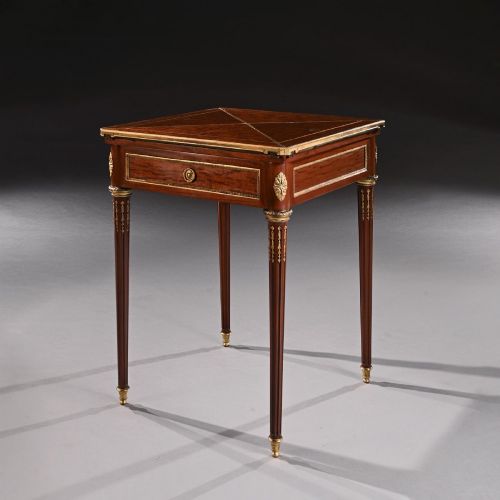
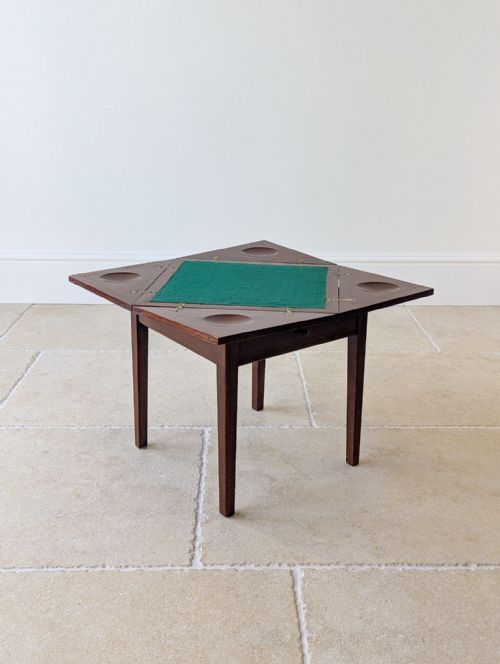
The defining characteristic of an envelope games table is its clever pivoting top, which rotates and unfolds four triangular flaps to reveal a baize-lined playing surface. You will also find variants featuring gaming wells for counters or corner tea table configurations.
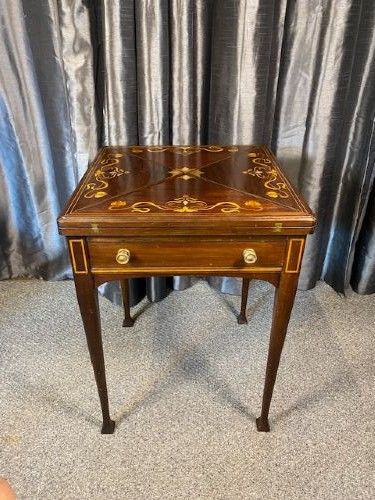
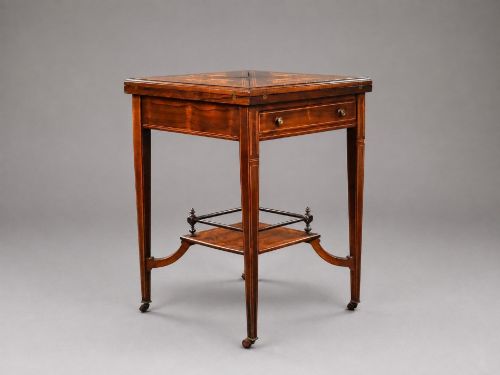
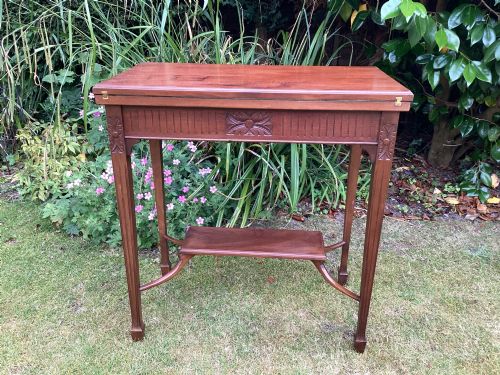
Woods such as mahogany, rosewood and satinwood dominate the selection, often enriched with intricate inlay or brass details. These tables function equally well as occasional side tables when closed, making them adaptable for modern rooms.
How they were made
Cabinetmakers constructed these tables using dense timbers like mahogany, walnut and rosewood as a stable base for delicate veneers and satinwood inlay. Brass hinges and castors support the complex swivel mechanism required for the folding flaps to operate smoothly.
Makers integrated wool baize into the interior surface to provide a suitable texture for playing cards. Decorative techniques range from marquetry and parquetry to Chinoiserie red lacquer and ormolu mounts.
Envelope Games Table Retail Price Guide 2026
Typical asking prices for envelope games table among the pieces listed under this phrase on Sellingantiques today, from the lower quarter to the upper quarter. They describe what is for sale here now, not the wider market.
Some tables hide tiny wells for your chips, proving Victorians took their after-dinner poker just as seriously as their tea.
What varies in quality
The precision of the rotating mechanism dictates the daily usability of the piece, separating robust engineering from loose or sticky folding leaves. Finer examples display meticulous attention in the alignment of wood veneers and the crispness of brass or satinwood inlay.
The choice of primary timber and secondary decorative elements marks the distinction between standard production and master craftsmanship. Pieces attributed to documented makers or exhibiting distinct revival styles command greater interest through their refined proportions.
Antoine Lampre·Maple And Co·Howard And Sons Ltd·Francois Linke
The Envelope Games Table Glossary
- Envelope top
- A clever mechanism where four triangular flaps fold over each other to form a square tabletop. Rotating the top causes the flaps to open simultaneously.
- Baize
- A coarse woollen fabric, traditionally green, used to line the playing surface of card tables. It provides a soft, durable layer for dealing cards.
- Gaming wells
- Small recessed compartments built into the corners of the table interior. They hold counters, coins or markers during card games.
- Marquetry
- Decorative woodwork where pieces of veneer are fitted into a ground to form intricate patterns or pictures. It appears frequently on rosewood and walnut surfaces.
- Parquetry
- A geometric mosaic of wood pieces used for decorative floors and tabletops. This technique creates repeating patterns like squares and cubes.
Envelope Games Table: Frequently Asked Questions
How does an envelope games table work?
The clever mechanism relies on a central pivot that allows the square wooden top to rotate. As the top turns, internal linkages cause the four triangular flaps to unfold outwards into a flat surface.
This movement reveals a baize-lined interior designed specifically for card games. When closed, the flaps lock securely to form a compact occasional table.
What were envelope games tables used for?
These tables served as versatile furniture for entertaining guests during the Victorian and Edwardian eras. Households utilised them primarily for evening card games, social gatherings and tea.
Between games, the folded top allowed the piece to function as an everyday side table or occasional table against a wall.
How do I identify an Edwardian envelope table?
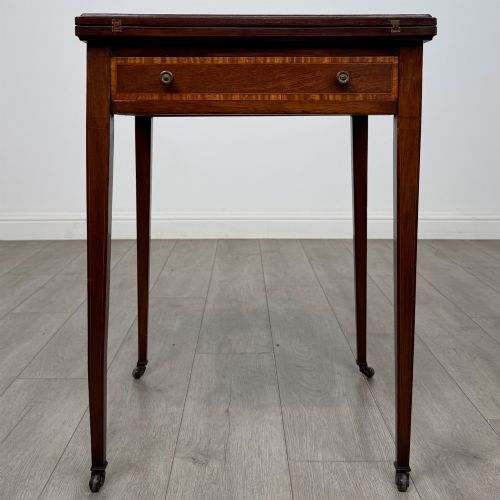
Edwardian examples typically date from around 1900 to 1910 and frequently feature lighter timbers like satinwood or inlaid mahogany. They often display delicate stringing, brass castors and slender tapered legs.
Makers from this period, such as Maple and Co, produced numerous variations in rosewood and mahogany for contemporary drawing rooms.
Can I use an envelope table every day?
These tables accommodate daily use as side tables when kept in their closed position. The folding leaves function best with gentle handling to preserve the historic swivel mechanisms.
Placing them away from direct heat sources protects the polished wood veneers and the original baize lining from unnecessary wear.