
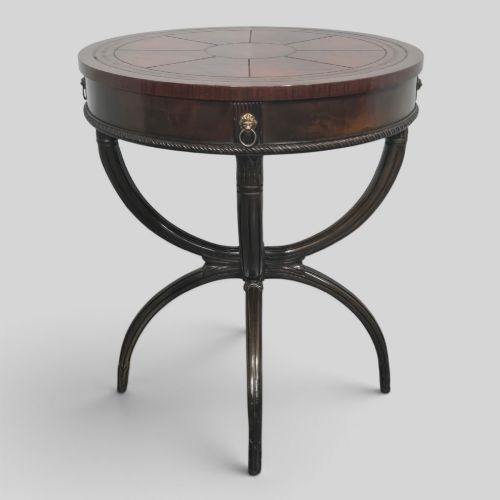
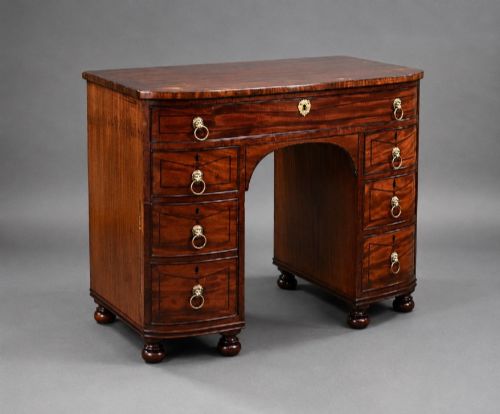
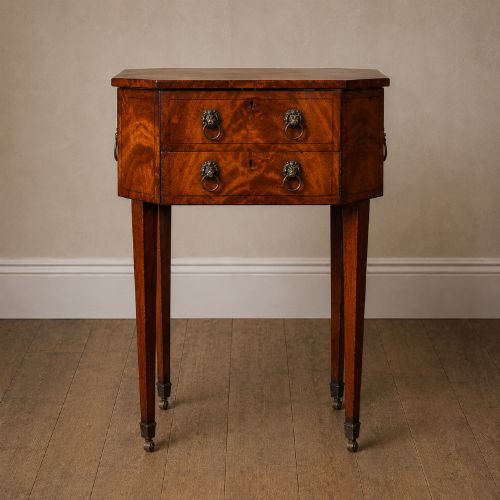
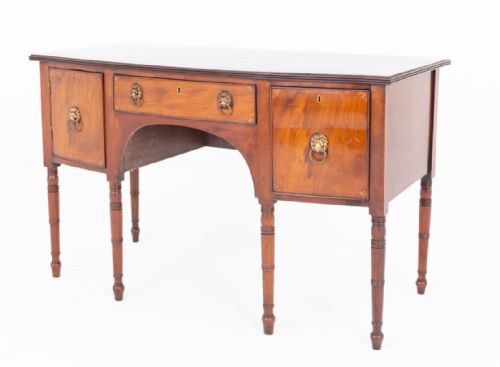



Lion Mask Handle Table
A lion mask handle table combines robust classical hardware with fine timber, bringing bold hardware detail and functional elegance to any period room.
Lion Mask Handle Table
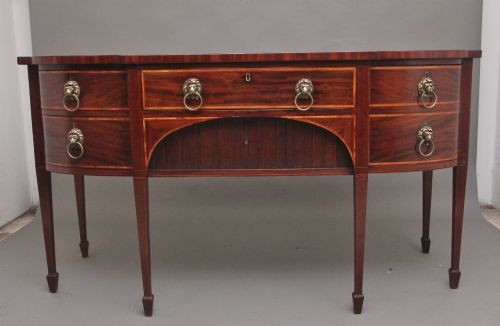
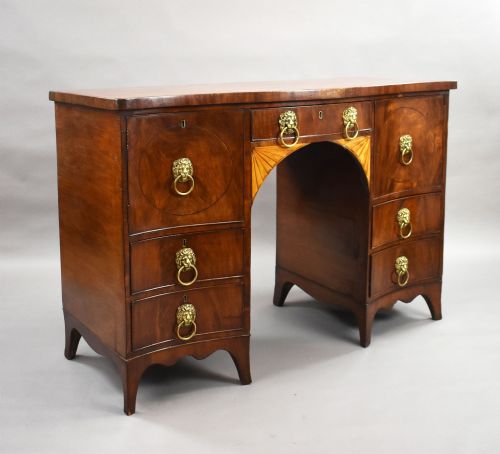
When you search for a lion mask handle table, you are looking for pieces that feature distinct cast brass lion pull rings or mounts. The selections span George III, Regency, and Georgian periods, showcasing how cabinet makers integrated classical motifs into everyday domestic furniture.
The origins stretch from English workshops to Scottish and Irish makers, reflecting a broad taste for animal hardware across the eighteenth and nineteenth centuries.
Materials and construction methods
Makers utilised solid and veneered mahogany as the primary timber, often framing surfaces with satinwood, boxwood inlay, and boxwood stringing. Plum pudding mahogany and flame mahogany veneers appear on grander geometric carcases.
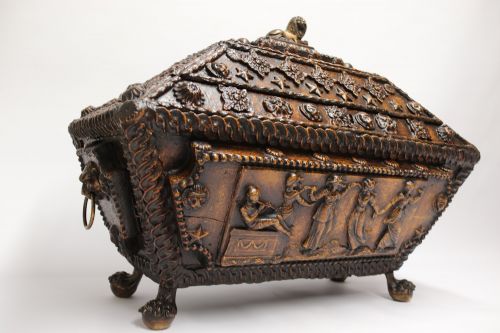
Brass formed the heavy drop handles and lion mask mounts, which were secured through the drawer fronts with threaded posts or pins. Gesso decoration and leather surfaces also feature on related caskets and games tables within the tradition.
Lion Mask Handle Table Retail Price Guide 2026
Typical asking prices for lion mask handle table among the pieces listed under this phrase on Sellingantiques today, from the lower quarter to the upper quarter. They describe what is for sale here now, not the wider market.
Every lion mask handle table relies on a very small brass lion biting a heavy metal ring just to help you reach your spare cutlery.
Judging quality and craftsmanship
Structural integrity lies in the secondary woods used for drawer linings and carcase backs, alongside the precision of the dovetail joints. Retaining the original cast brass hardware without later replacements preserves the integrity of the piece.
Gillington of Dublin·H Mower & Stephenson
The Lion Mask Handle Table Glossary
- Lion mask handle
- A piece of cast brass hardware shaped like a stylised lion face holding a drop ring in its mouth. It serves as a drawer pull or decorative side mount on case furniture.
- Satinwood
- A lustrous, fine-grained yellow timber imported from tropical regions and used extensively for contrasting veneers and crossbanding. It catches light differently depending on the grain orientation.
- Flame mahogany
- A distinct veneer figure created by cutting through the branch junctions of the tree. The resulting pattern resembles flickering flames across the drawer fronts.
- Boxwood inlay
- Narrow strips of pale hardwood embedded into darker timber surfaces to create geometric borders and lines. It provides sharp linear contrast on table tops and sideboard edges.
- Gesso
- A plaster-like mixture applied to wooden bases and carved or moulded before gilding or painting. It provides the raised decorative relief seen on boxes and caskets from the period.
Lion Mask Handle Table: Frequently Asked Questions
What periods do these tables come from?
The pieces span the Georgian, Regency, and Edwardian eras, with many examples originating around eighteen hundred. Later revival pieces from the early twentieth century also capture the same classical aesthetic.
Craftsmen across these different generations reinterpreted the classical hardware motifs in their own regional styles, maintaining the popularity of the brass lion pulls over more than a century.
How do I care for mahogany surfaces?
Maintain the timber by keeping pieces away from direct heat sources and strong sunlight, which can dry out the old polishes. Regular dusting with a soft, dry cloth preserves the natural lustre of the wood.
Avoid silicone-based sprays and heavy waxes that build up over time. Traditional beeswax applied sparingly helps nourish the grain without harming the original finish.
Were lion mask handles always original?
Hardware was frequently replaced during repairs or updates in later centuries. Examining the interior of the drawer reveals whether the fixing holes match the current backplates.
Matching patination between the brass mounts and the surrounding timber offers a strong indication of original placement, though period replacements remain entirely acceptable to many buyers.
Where were these tables placed in a home?
Sideboards and serving tables stood in dining rooms to hold silver, linen, and wine during grand meals. Sofa tables and work tables sat in drawing rooms for needlework, reading, and correspondence.
Occasional tables served multiple functions around the principal reception rooms, holding lamps, decorative boxes, or small items for daily use.