
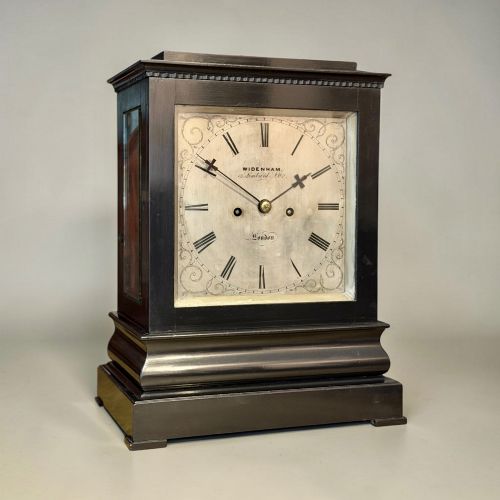


Engraved Silvered Dial Clock
An engraved silvered dial clock brings together precise metalwork and mechanical timekeeping, offering a traditional centrepiece for any room.
Engraved Silvered Dial Clock
When you search for an engraved silvered dial clock, you are looking at horological pieces that span several centuries, from George II style models to Art Deco designs. These objects appear in various forms, including bracket clocks, library clocks, desk clocks, and longcase clock dials.
The selections on this page showcase pieces originating predominantly from the nineteenth and eighteenth centuries, alongside twentieth-century examples. You will encounter carriage timepieces, mantel clocks, and combination barometer units housed in cabinets of mahogany, rosewood, walnut, ebonised wood, and brass.
Victorian and Georgian pieces dominate the selection, often featuring fusee movements and distinct regional or London signatures. Each form serves a different domestic or architectural function, from towering longcase dials to portable library clocks.
Materials and construction
The construction of these pieces relies on contrasting materials, pairing brass and silvered metal dials with robust timber cases made from mahogany, rosewood, walnut, and ebonised wood. Glazed panels frequently protect the mechanism and allow light to reach the engraved chapter rings.
Dial surfaces undergo silvering before being meticulously engraved with numerals and maker details, creating a crisp contrast against the darker brass ground. Mechanical complexity varies from simple timepieces to fusee movements with quarter-striking capabilities housed within heavy metal or wooden frameworks.
Some clocks hide their secrets entirely behind mysterious dials while others proudly display every single moving part through four glass walls.
Factors of quality
Quality in these instruments rests upon the crispness of the dial engraving and the fidelity of the metal finishing. Finer examples display deeply cut numerals and decorative flourishes that remain sharp and legible across the silvered surface.
The architectural execution of the housing and the sophistication of the internal movement further distinguish the pieces. Heavy glass panels, well-figured timber veneers, and signed movements by established makers elevate an item above standard production.
Widenham of London·Mappin & Webb·Dent·Howell & James·Ganthony of London·Thomas Cole·James Cole·Hunt And Roskell·Standring of Bolton·Smiths Clocks·John Massey·L.Donne Birchin Lane
The Engraved Silvered Dial Clock Glossary
- Fusee
- A conical pulley used in a clock or watch to maintain even power from the mainspring as it unwinds. This mechanism ensures more consistent timekeeping throughout the duration of the wind.
- Bracket clock
- A portable household clock originally designed to sit on a bracket on the wall to aid projection of sound. Later examples sit directly on furniture such as mantelpieces or desks.
- Carriage timepiece
- A small, portable spring-driven clock designed for travel, typically featuring a brass frame with glass panels. Many include a carrying handle on top.
- Longcase clock dial
- The visible face and associated motion work of a tall floor-standing clock. These round or square brass plates often bear the maker's name and town of origin engraved directly into the metal.
- Mystery clock
- A timepiece where the method of driving the hands is concealed or seemingly magical. These pieces often date from the twentieth century and utilise innovative internal arrangements.
Engraved Silvered Dial Clock: Frequently Asked Questions
What is a fusee movement?
A fusee movement uses a conical pulley and cord or chain to equalise the diminishing power of the mainspring as it runs down.
This traditional arrangement helps the clock maintain a steady rate of accuracy over its running period.
Where were these clocks placed?
Depending on their size, these clocks found homes on library desks, mantelpieces, wall brackets, or grand hallways.
Smaller carriage and library clocks were also built to travel with their owners.
How do I date a silvered dial clock?
Dating relies on stylistic clues in the wooden case, the shape of the hands, and the formatting of the engraved signature.
Many pieces carry the maker's name or retailer inscription directly on the dial or movement backplate.
What woods are used for the cases?
Cabinet makers utilised dense hardwoods including mahogany, rosewood, walnut, and ebonised wood to house the delicate brass movements.
These timbers were chosen for both their structural stability and their rich grain patterns.