



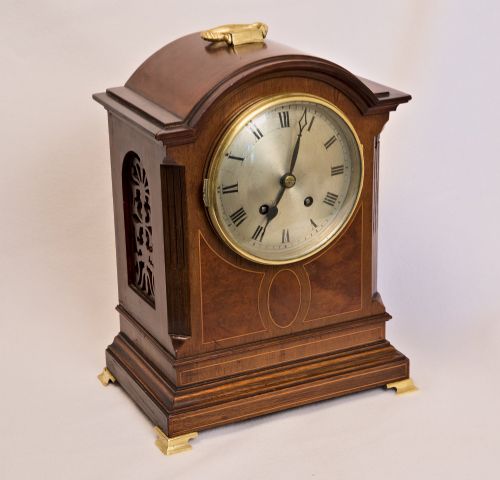


Traditional Wooden Desk Clock
A traditional wooden desk clock brings warmth and mechanical precision to a room, offering timeless style through polished timber and brass dials.
Traditional Wooden Desk Clock
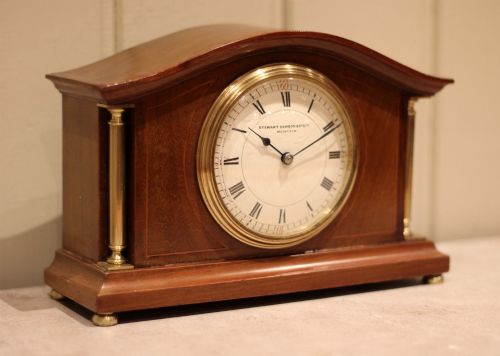
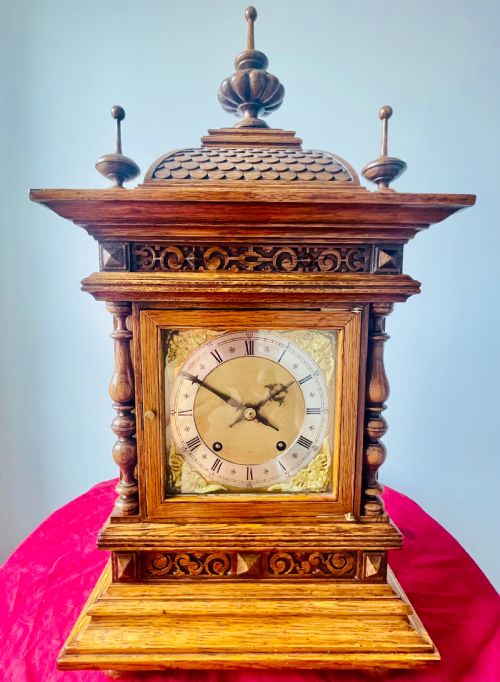
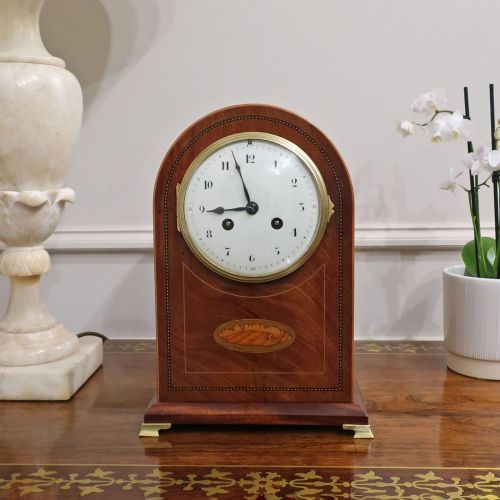
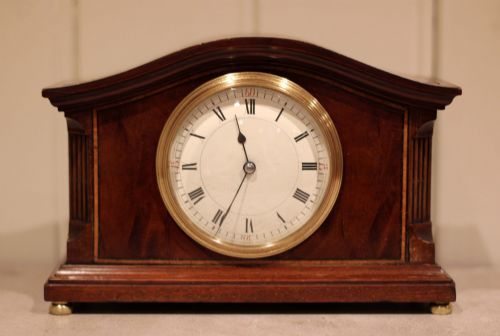
When searching for a traditional wooden desk clock, buyers encounter a variety of forms including compact mantel clocks, bracket clocks, and table clocks originating from the Georgian, Victorian, and Edwardian periods. These timepieces served practical domestic functions in sitting rooms and studies, housing delicate gear trains within sturdy timber housings.
The most common versions on this page are Edwardian and Victorian mahogany mantel clocks, alongside notable Georgian bracket clocks. Many of these pieces utilise durable eight-day or single fusee movements enclosed in rich mahogany, walnut, or oak cases.
Makers and retailers such as Winterhalder & Hofmeier, Mappin & Webb, and regional watchmakers stamped their identities on dials and movements, adding historical depth to the surviving examples. These clocks range from simple timepiece models to complex striking and quarterly chiming versions.
How they were made
Cases rely on traditional cabinet-making timbers such as mahogany, walnut, oak, rosewood, and satinwood, frequently accented with brass handles, bezel rings, and inlaid stringing. Woodworkers shaped solid timber and applied fine veneers to create arched, pad top, or architectural bracket clock bodies.
Interiors house brass gear trains, escapements, and pendulum or fusee mechanisms assembled by skilled horologists. Dials feature white enamel chapter rings, brass spandrels, and protective glass panels set into hinged doors.
Listings feature timbers including mahogany, walnut, oak, rosewood, and satinwood across Victorian, Georgian, and Edwardian periods.
What varies in quality
The distinction between standard production items and superior examples lies in the crispness of the timber figuring, the finesse of the brass casting, and the complexity of the movement. Master horologists and named makers delivered refined fusee movements and precise striking trains that operate with sustained accuracy.
Case construction methods also separate the ranges, with solid woods, intricate marquetry, and well-proportioned architectural mouldings commanding greater attention than plain, utilitarian boxes. The integration of fine enamel dials and original brass hardware completes the higher tiers of craftsmanship.
Mappin & Webb·Winterhalder & Hofmeier·Turner of London·W. Burton·Piggin Norwich·Walker and Hall·Funnell of Brighton·Hampson & Son·Plumbly & Tupman·Malecot of Paris
The Traditional Wooden Desk Clock Glossary
- Fusee
- A conical pulley used in mechanical clocks to maintain an even pull on the gear train as the mainspring unwinds. This mechanism ensures more consistent timekeeping throughout the duration of the winding period.
- Bracket clock
- A portable table clock originally designed to sit upon a matching wall bracket or desk. These pieces often feature sophisticated striking or chiming trains and glazed side panels.
- Enamel dial
- A metal face covered with a fused glass powder coating to create a smooth, white background for painted numerals. They provide a durable and legible surface for reading the time.
- Timepiece
- A clock that measures and indicates the time without including a striking or chiming mechanism. These simpler movements focus entirely on the primary function of rotation and escapement.
- Pad top
- A convex, domed upper section typical of certain eighteenth and nineteenth-century bracket clock case designs. This shape gives the timber housing a balanced and formal silhouette.
Traditional Wooden Desk Clock: Frequently Asked Questions
How do I wind a fusee clock?
A key is inserted into the dial winding square and turned gently clockwise until resistance indicates the mainspring is fully tensioned. Care must be taken not to overwind the mechanism.
Most fusee movements require weekly attention to maintain accurate timekeeping. Keeping the key in a consistent location helps preserve the original winding components.
Where should I place a mantel clock?
These clocks suit stable flat surfaces such as sideboards, desks, and mantelpieces away from direct heat sources and damp environments. A level surface ensures the pendulum swings evenly.
Avoid placing mechanical clocks in areas subject to heavy vibrations from slamming doors. Proper placement protects both the delicate wooden case and the internal brass escapement.
What is the difference between a timepiece and a striking clock?
A timepiece simply tells the time through hands moving across the dial. It contains no bells or gongs for sounding the hours.
Striking clocks include an additional gear train and hammer mechanism that sounds on the hour or quarter-hour. This extra complexity alters the interior layout and weight of the movement.
How do I identify a Georgian bracket clock?
Georgian bracket clocks typically feature architectural mahogany or kingwood cases with brass carrying handles on top. Their proportions are stout and balanced, often displaying restrained brass inlay or fretwork sound frets.
The dials frequently incorporate engraved brass backplates and maker signatures. These indicators separate them visually from later Victorian and Edwardian productions.