
Engraved Glass Wine Goblet
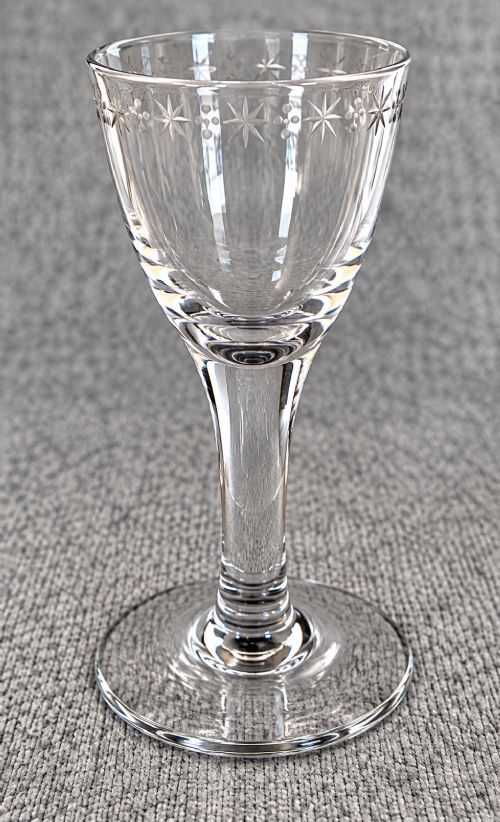
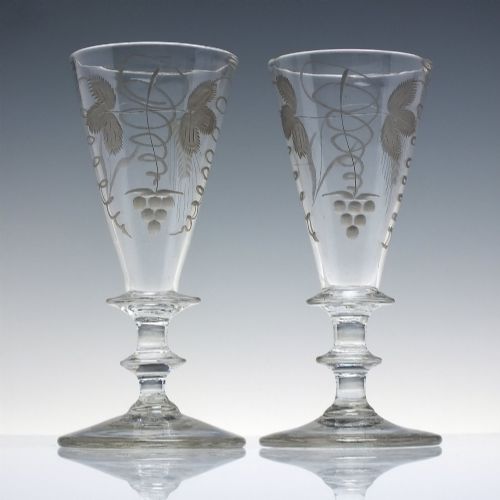
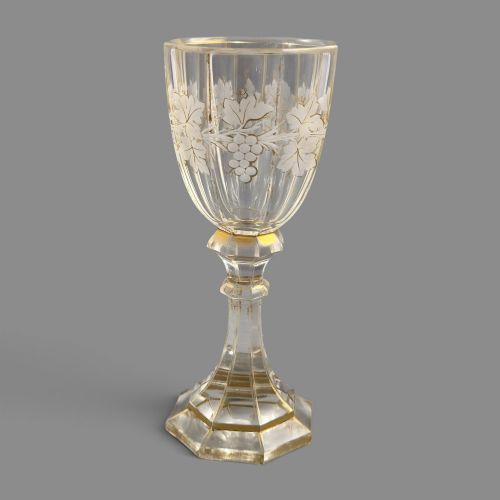
An engraved glass wine goblet brings historic craftsmanship to the table, offering tactile weight and intricate surface decoration.
Engraved Glass Wine Goblet
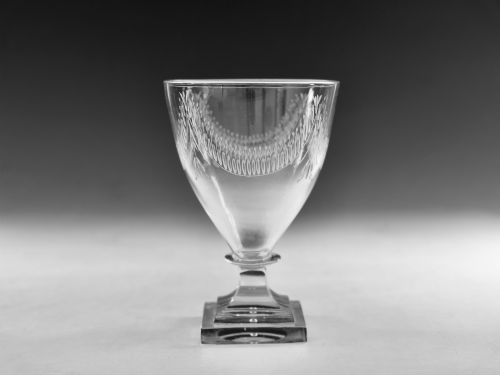
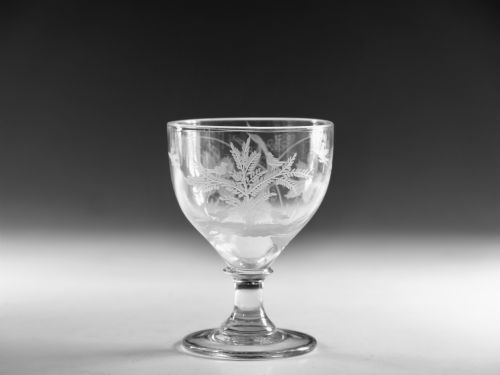
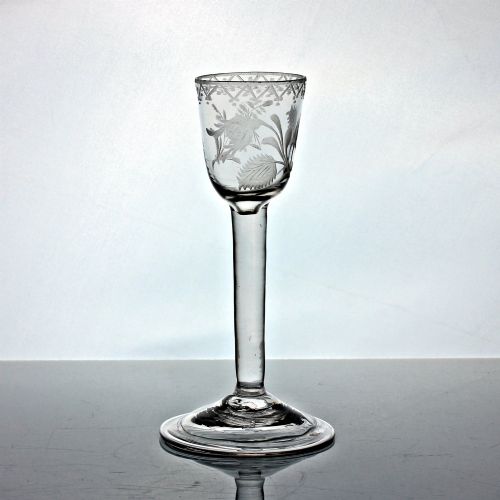
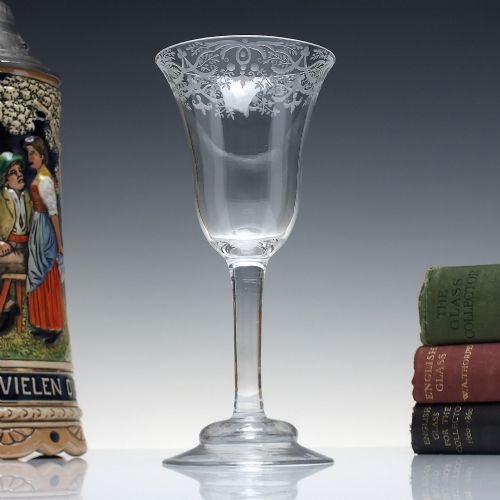
An engraved glass wine goblet represents centuries of drinking vessels, ranging from light eighteenth-century balustroids to substantial nineteenth-century rummers. Buyers seeking this phrase encounter clear lead glass forms featuring wheel-engraved motifs, armorials, or floral sprays.
The selection encompasses Georgian air twists, Victorian etched services, and Edwardian crystal pieces. Domestic vessels sit alongside ceremonial and commemorative goblets produced across British and continental workshops.
How They Were Made
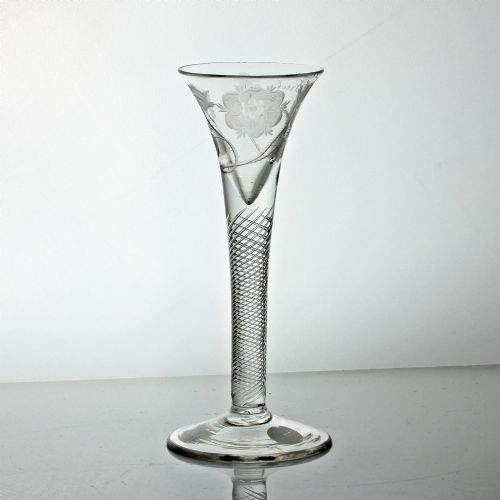
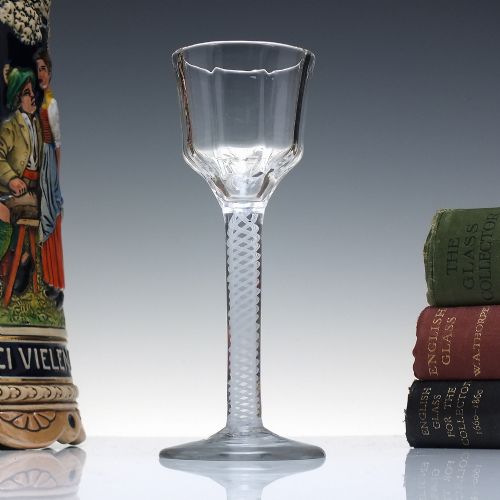
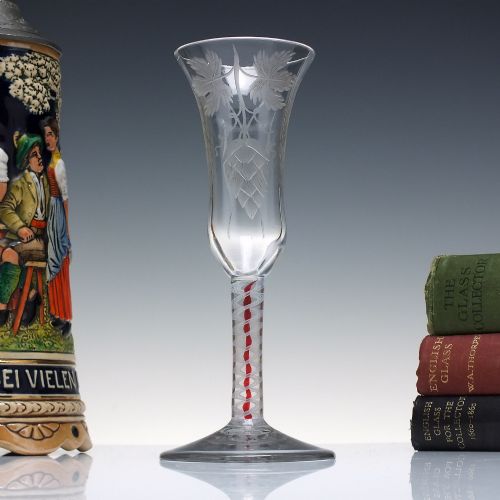
Makers utilised lead glass and clear crystal compositions, manipulating the molten material into stems, ogee bowls, and wide foot bases. Air twist and opaque twist stems required precise internal manipulation of trapped air or white enamel threads during blowing.
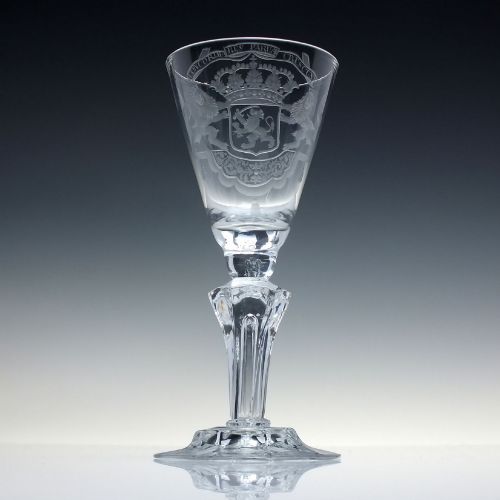
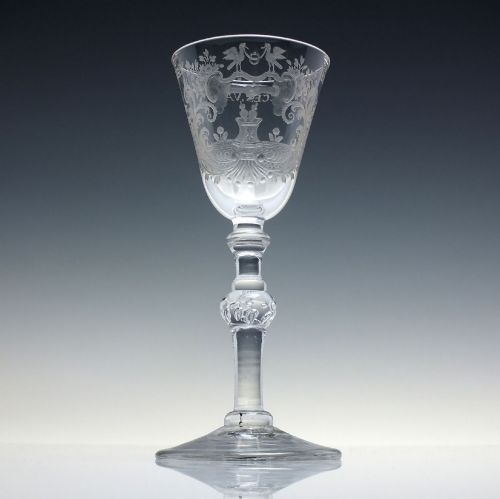
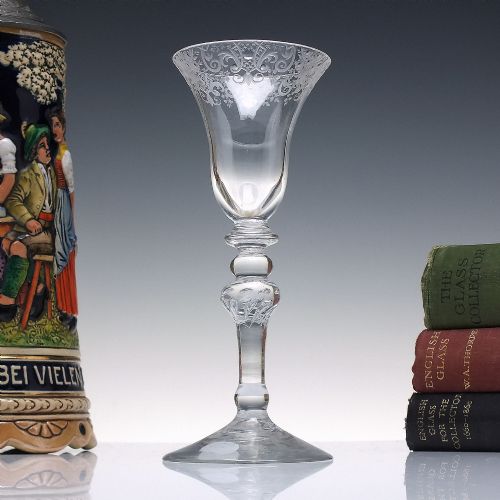
Surface decoration relied on copper wheel engraving, diamond point scratching, or later acid etching to cut detailed floral sprays, hunting scenes, and monograms into the glass body.
Listings span from seventeen-ten Nuremberg pieces through Georgian balusters and Victorian etched services to nineteen-ten Edwardian crystal.
What Varies in Quality
Quality rests upon the clarity and weight of the metal itself, alongside the depth and precision of the wheel engraving. Crisp, deeply carved motifs demonstrate superior hand skills compared to shallow machine-pressed or surface-etched substitutes.
Proportion and balance also distinguish finer examples, where the stem type, bowl volume, and foot diameter unite in harmonious proportion rather than clumsy heaviness.
Moser Bohemian·Richardson Stourbridge·Stevens & Williams·Webb Corbett
The Engraved Glass Wine Goblet Glossary
- Baluster
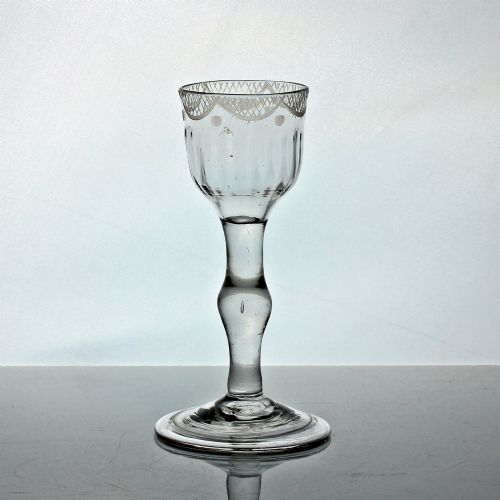
- A heavy, swelling stem form resembling architectural pillars, typical of early eighteenth-century drinking vessels. These stems often feature internal air tears or nodes.
- Air Twist
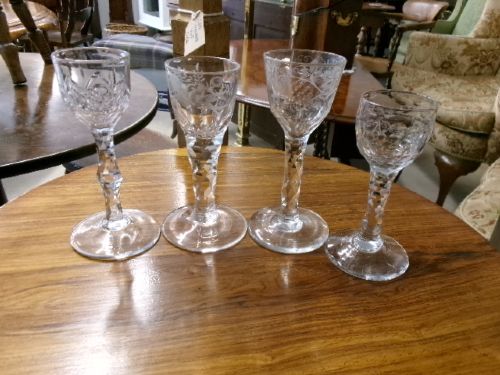
- A stem containing spiral threads of trapped air created by drawing and twisting heated glass canes. This technique demands high dexterity from the glasshouse worker.
- Opaque Twist
- A stem enclosing fine white or coloured enamel glass threads within clear crystal. Collectors prize the complexity and regularity of these internal strands.
- Rummer
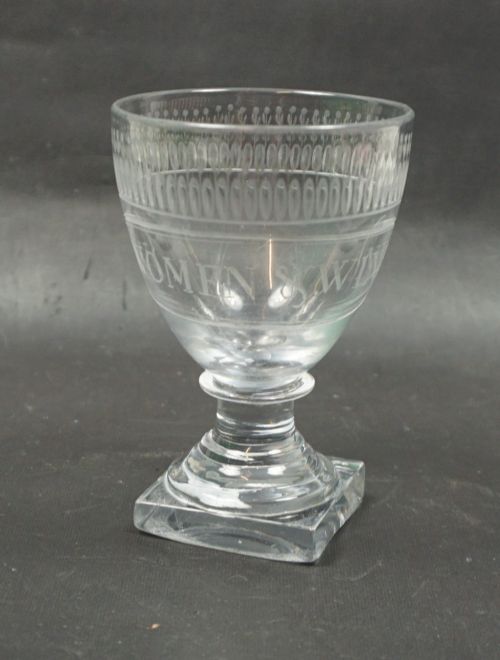
- A large, sturdy nineteenth-century drinking glass with a capacious bowl suited for ale, wine, or punch. Many feature square lemon squeezer bases.
- Intaglio
- A technique where the design is sunk below the surface of the glass rather than raised, creating a cameo effect when viewed from within.
Engraved Glass Wine Goblet: Frequently Asked Questions
How do I identify a Georgian goblet?
Examine the metal for dark inclusions, pontil marks on the underside of the foot, and traditional stem formations like air twists or balusters. The overall weight and hand-finished character typically indicate eighteenth-century origin.
Compare the bowl shape and engraving style against documented examples from the period to confirm authenticity.
Can I use antique goblets for dining?
Historic lead crystal drinking vessels can hold wine or water for special occasions, provided they receive gentle hand washing. Sudden temperature changes must be avoided to prevent thermal shock.
Storing them securely away from edge hazards ensures these fragile survivors remain intact for daily appreciation.
What makes an air twist stem special?
The optical effect comes from elongated air bubbles trapped inside the molten glass and twisted during the pulling process. Achieving a uniform, tight spiral required immense skill.
Collectors prize the visual movement and light refraction these delicate internal threads produce within the stem.