


Engraved Glass
Engraved antique glass brings together centuries of drinking vessels and display pieces carrying intricate wheel-cut and diamond-pointed decoration.
Engraved Glass
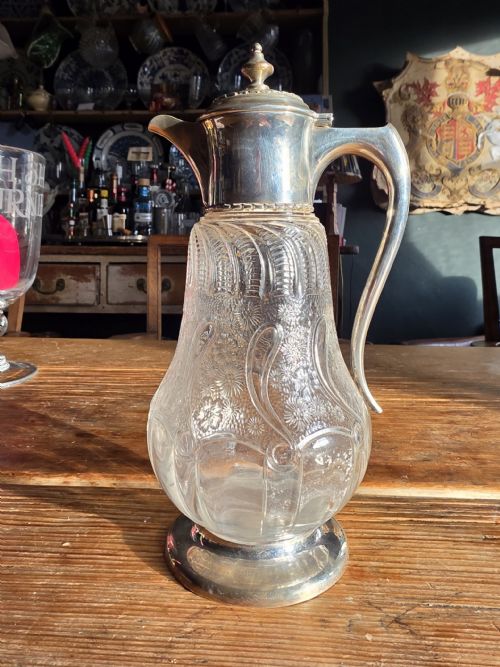
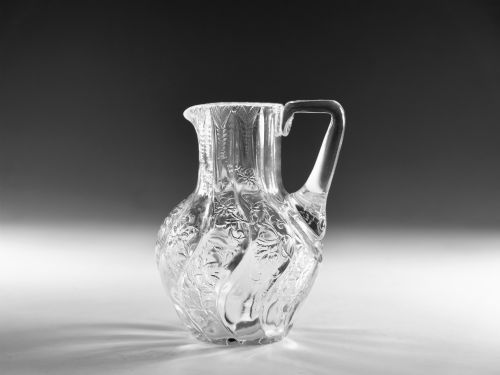
When searching for engraved antique glass, buyers encounter a diverse range of historical vessels and decorative items spanning the Georgian, Victorian, and Edwardian eras. The selections frequently include wine glasses, rummers, claret jugs, decanters, and scent bottles adorned with floral motifs, coats of arms, or commemorative scenes.
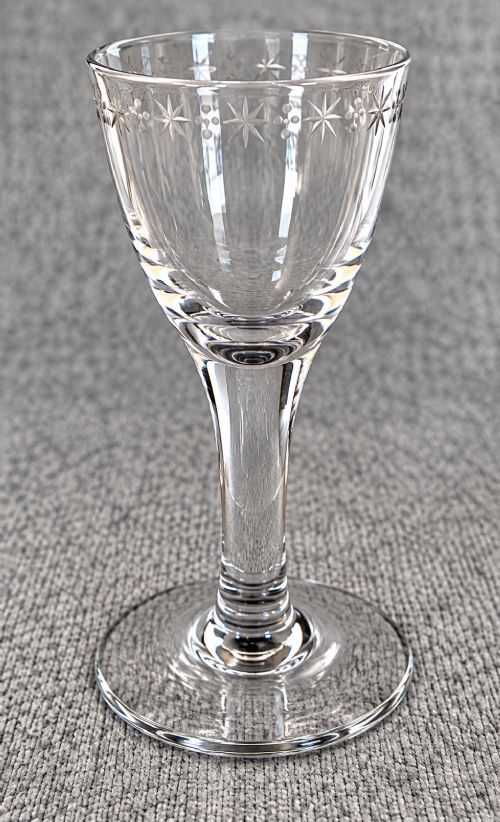
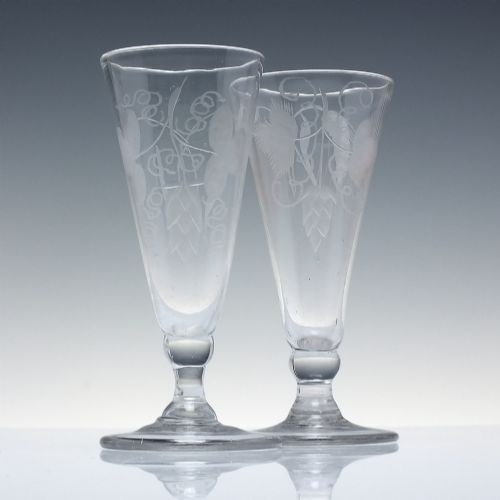
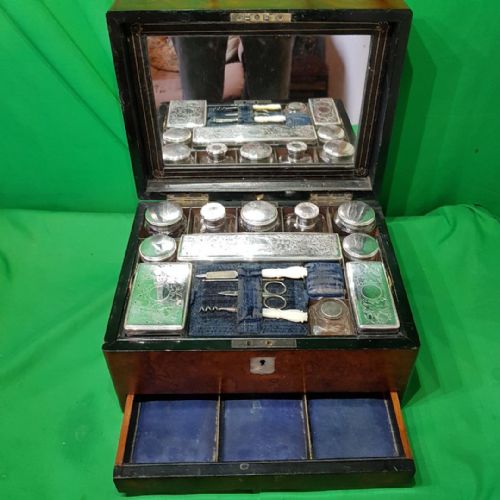
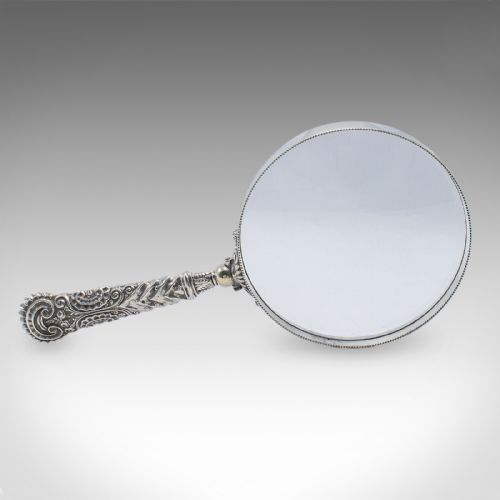
Drinking vessels dominate the available forms, particularly 18th-century wine glasses featuring balustroid or air twist stems alongside robust 19th-century rummer glasses. Alongside these functional pieces, collectors find decorative items such as mirrors, scent bottles, and toilet jars featuring detailed surface engraving.
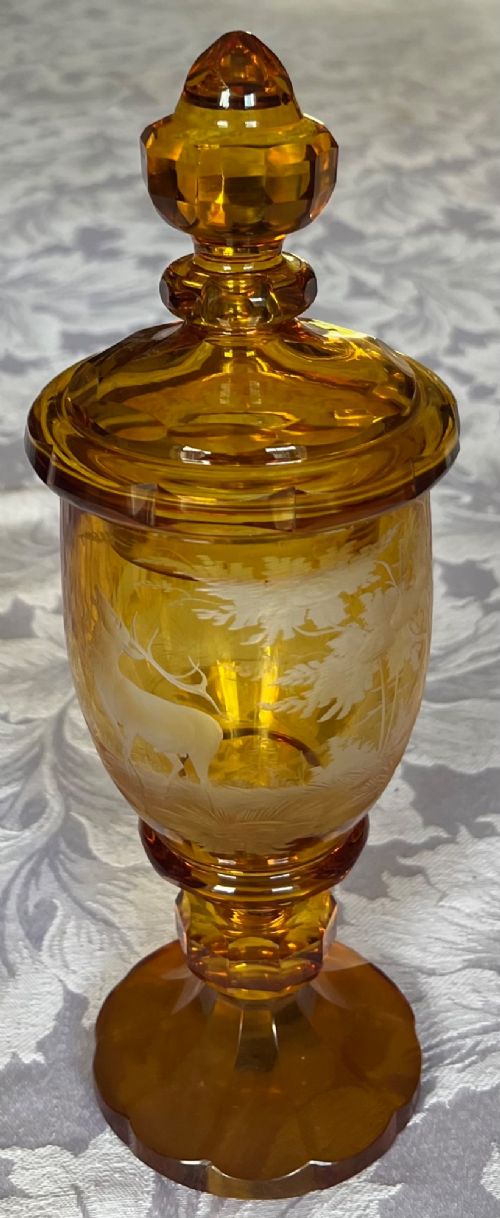
Originating largely from English, Bohemian, and French workshops, these items reflect the shifting domestic habits and social toasts of past centuries. Pieces range from modest tavern glass to heavily gilded and cased presentation goblets commissioned for specific societies or events.
How they were made
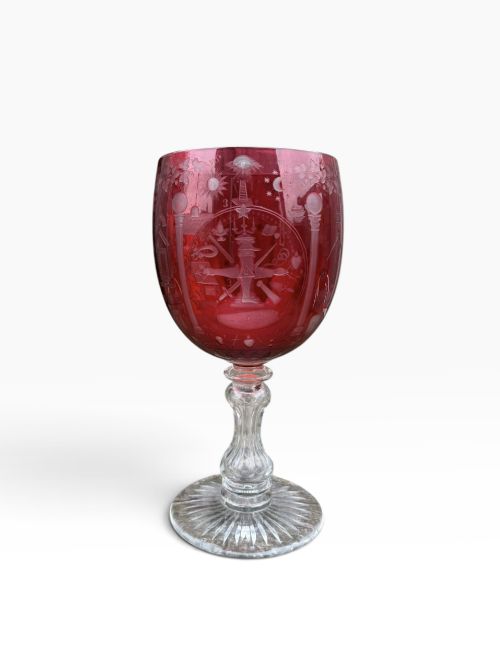
The foundation of these items rests on lead glass, clear glass, and coloured variants such as ruby, cranberry, and Bristol blue. Master glassmakers shaped vessels through free-blowing or mold-blowing before applying decorative surface techniques.
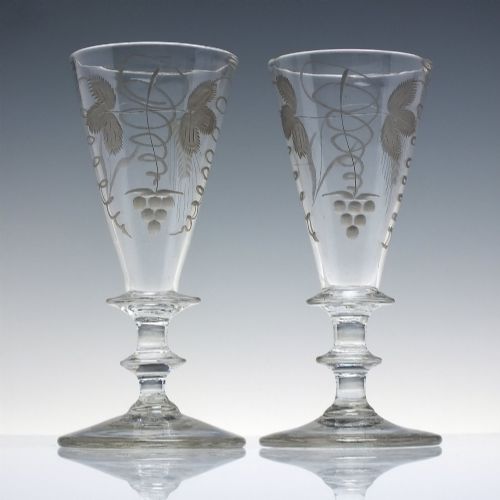
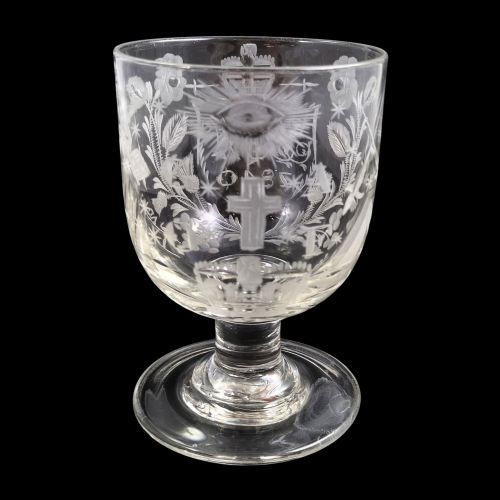
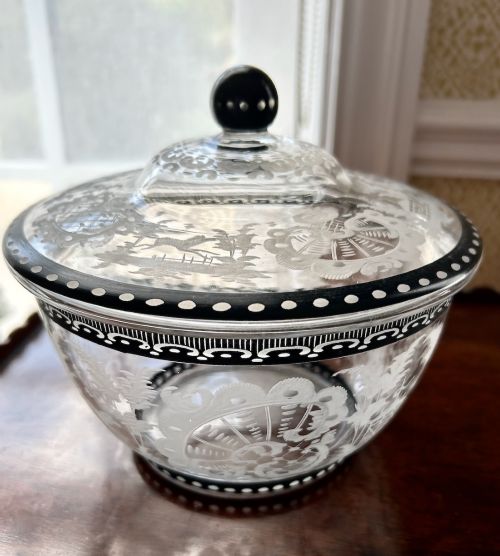
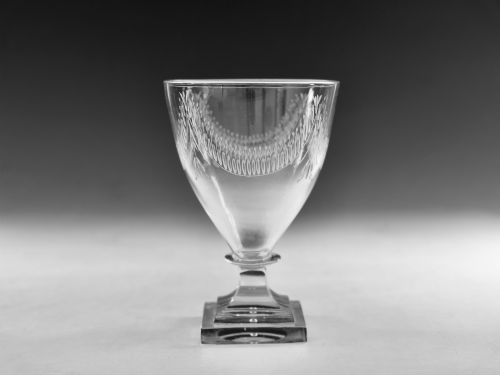
Engraving was executed using either diamond-point scratching or rotary wheel-cutting, a method requiring immense precision to etch floral swags, Masonic symbols, or detailed portraits directly onto the hardened vessel surface.
Several rummers bear cheerful toasts to agriculture and local taverns, ensuring your sideboard retains a rebellious Georgian spirit.
What varies in quality
Quality in engraved antique glass is dictated by the depth, clarity, and compositional skill of the wheel-cut or engraved design upon the vessel. Superior examples display crisp, confident lines and balanced proportions that integrate seamlessly with the optical properties of the lead glass.
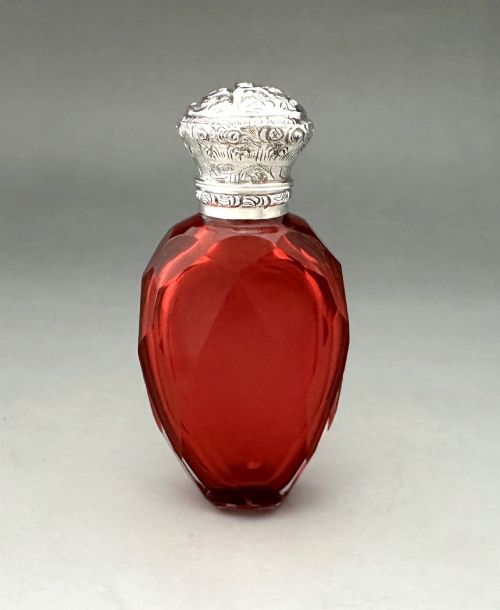
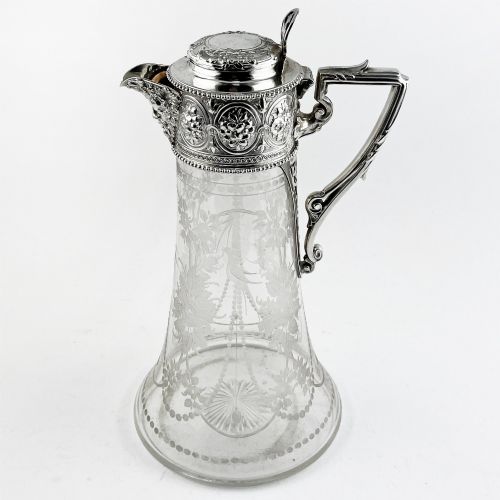
The metal itself contributes heavily to the overall standard, where heavy-weight lead crystal with high brilliance and minimal inclusions elevates a piece far above standard utilitarian glassware. Associated mounts in sterling silver or silver plate, particularly those bearing maker marks, further elevate the standing of items like claret jugs and scent bottles.
Asprey and Co. Ltd·Stevens and Williams·Nathan and Hayes·Mappin and Webb·Josephinenhutte
The Engraved Glass Glossary
- Balustroid
- A heavy, swelling stem form reminiscent of architectural balusters, common in 18th-century drinking vessels. This stout stem style provides both physical stability and tactile weight to early wine glasses.
- Rummer
- A large, capacious drinking glass popular during the Georgian and Victorian periods for ale, wine, or punch. These sturdy vessels frequently feature engraved agricultural scenes, ships, or political toasts.
- Firing glass
- A heavy-based drinking glass designed to be thumped onto a tavern table without breaking during toasts. The thick foot absorbs the impact of celebratory slamming.
- Cased glass
- A manufacturing technique involving a thin layer of coloured glass fused over a clear or contrasting body before engraving. Cutting through the outer layer reveals the contrasting colour beneath.
- Air twist
- An optical effect within a glass stem created by drawing out trapped air bubbles during the pulling process. These spiral threads catch the light beneath engraved bowls.
Engraved Glass: Frequently Asked Questions
How do I date an engraved glass?
Dating relies on combining the physical form of the vessel, such as stem construction and foot folding, with the style of the wheel engraving. Tool marks and wear patterns on the base also offer reliable clues to the era of manufacture.
Certain motifs and commemorative subjects tie directly to specific historical events or reigns, helping narrow down the decade in which the piece was produced.
What is a Jacobite wine glass?
Jacobite glasses are 18th-century drinking vessels engraved with hidden symbols supporting the exiled Stuart dynasty. These symbols often included roses, oak leaves, or specific portraits used during secret toasts.
Collectors prize these political pieces for their historical associations and the clandestine nature of their original use within British society.
How should I clean antique glass?
Wash pieces gently by hand using warm water and mild detergent, avoiding harsh scrubbing or ultrasonic cleaners. Support heavy vessels like rummers and claret jugs from the base rather than the stem during washing.
Dry them immediately with a lint-free cloth to prevent water spots from forming on the surface or settling within the engraved recesses.
Are these glasses safe for daily use?
While structurally sound, antique drinking vessels require careful handling due to their age and the irreplaceable nature of the glass. Many collectors prefer to display them rather than risk thermal shock or accidental chipping during modern dining.
Hand-washing is mandatory for any piece retaining silver mounts or delicate surface gilding alongside the engraving.