
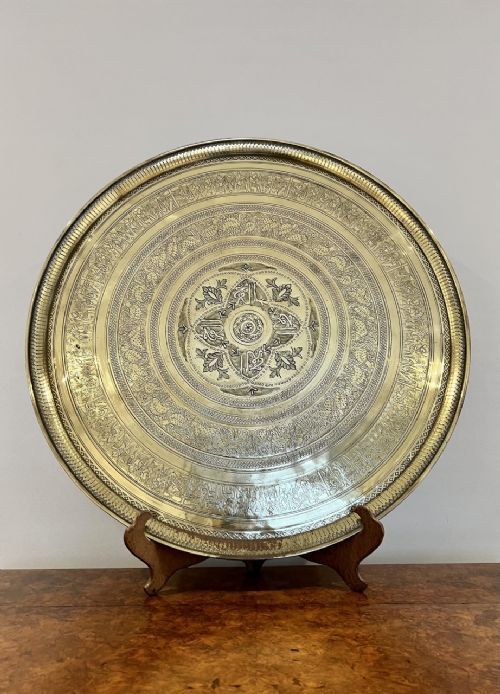
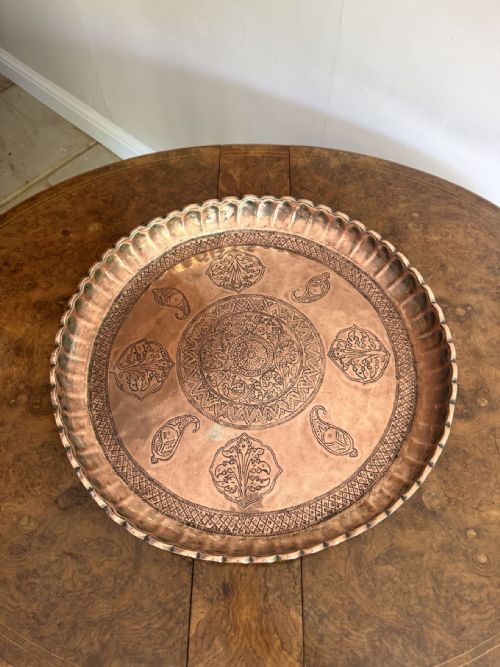
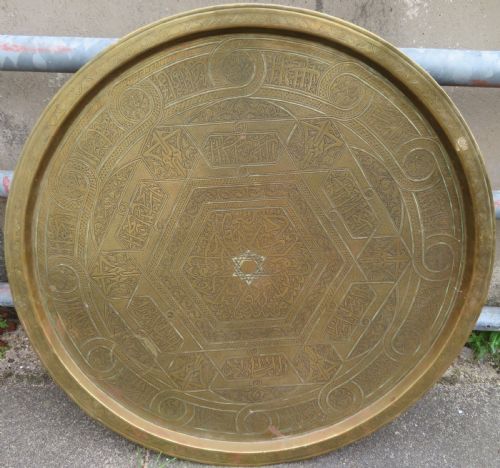


Engraved Brass Charger
These engraved brass charger pieces bring intricate orientalist and revivalist ornament into a room through confident metalwork.
Engraved Brass Charger
An engraved brass charger sits within a broader category of large decorative metal platters and trays spanning the nineteenth and early twentieth centuries. When you search for an engraved brass charger, you encounter items shaped by diverse regional traditions including Middle Eastern, Persian, and Anglo-Indian aesthetics.
The objects on this page appear in various forms, from circular trays and wall chargers to shields and plates. They emerge from periods such as the Victorian era, the Regency period, and the early twentieth century.
Mixed metal surfaces and patinated copper often accompany the brass work, reflecting international tastes of the nineteenth century. These pieces function primarily as decorative wall hangings or table centrepieces.
How they were made
Makers shaped sheet metals like brass, copper, and mixed metal alloys into large circular forms before applying surface ornament. Artisans hammered and chased the metal to build up the body of each charger or tray.
Decoration relied on incision and engraving to produce dense foliate and geometric patterns across the metal face. Certain examples integrate silver inlay within patinated copper to heighten the contrast of the design.
Some chargers doubled as defensive shields before retiring to the drawing room wall to terrify the local vicar.
What varies in quality
Quality rests in the crispness and depth of the hand engraving rather than the mere presence of decoration. Finer examples display precise control over complex foliate motifs and geometric panels across the entire surface.
The choice of materials also dictates the standard of the piece, with mixed metal compositions and silver inlaid copper demonstrating elevated craftsmanship. Weight and rigidity in the base metal separate substantial chargers from lighter utility items.
The Engraved Brass Charger Glossary
- Charger
- A large ornamental plate or dish traditionally used for display rather than dining. These substantial pieces often feature elaborate surface work designed to catch the light.
- Patinated copper
- Copper that has developed a darkened or chemical surface finish through age or intentional treatment. This deep tone provides a dark ground that emphasises brighter engraved lines.
- Mixed metal
- An object constructed from two or more distinct metallic elements or alloys combined for visual contrast. This technique was favoured in nineteenth-century revivalist metalwork.
- Foliate decoration
- Ornamentation inspired by leaves, vines, and botanical forms. It appears frequently in the dense surface engraving of Middle Eastern and Indian metalwork.
- CairoWare
- A term applied to nineteenth-century European and Middle Eastern revival metalwork imitating medieval Islamic brass vessels. These items typically feature intricate engraved and inlaid designs.
Engraved Brass Charger: Frequently Asked Questions
How were engraved brass chargers used?
These large metal pieces served primarily as decorative presentation items or wall displays in nineteenth-century interiors. They were designed to showcase intricate craftsmanship rather than for everyday dining.
Collectors today continue to mount them on walls or place them flat on large tables as striking centrepieces.
What periods do these chargers come from?
The listings on this page span the nineteenth century, including the Regency and Victorian eras, up to the early twentieth century. Many items reflect the nineteenth-century European appetite for Middle Eastern and Orientalist design.
Craftsmen produced these revivalist and traditional pieces across several decades using established regional techniques.
Are all these chargers made of solid brass?
While brass is prominent, the category includes pieces fashioned from copper, patinated copper, bronze, and mixed metal alloys. Some items incorporate silver inlay to create contrast against the darker base metal.
Examining the metal composition reveals the specific regional workshop tradition behind each item.
How do I distinguish regional styles?
Regional styles appear through distinct motifs and material combinations, such as Persian script elements, Islamic geometric panels, or Anglo-Indian foliate carving. CairoWare pieces often display dense silver and copper inlay characteristic of revivalist workshops.
Comparing the layout of the engraved patterns helps identify whether a piece leans toward Syrian, Persian, or Indian origins.