


Middle Eastern Tray
These middle eastern tray examples span engraved brass, copper, and mixed metal chargers alongside folding tables, offering intricate craftsmanship for everyday interiors.
Middle Eastern Tray
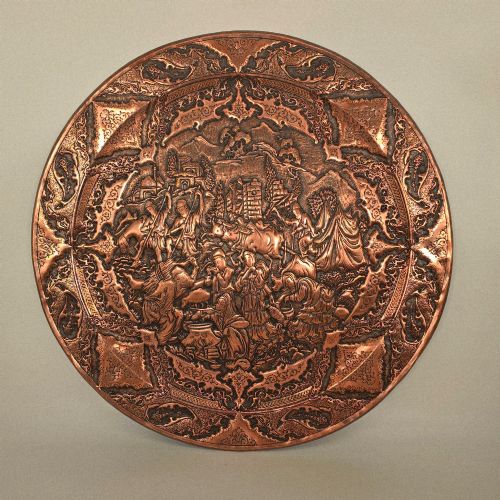
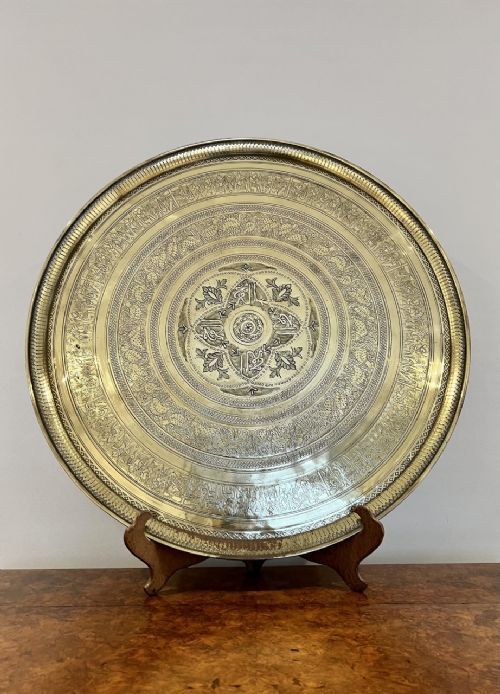
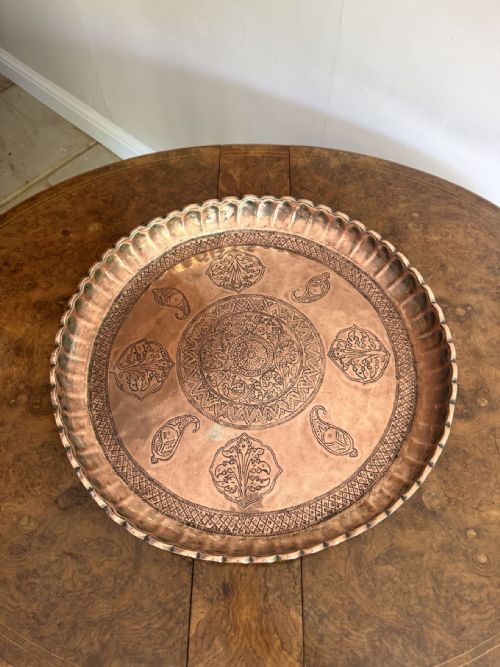
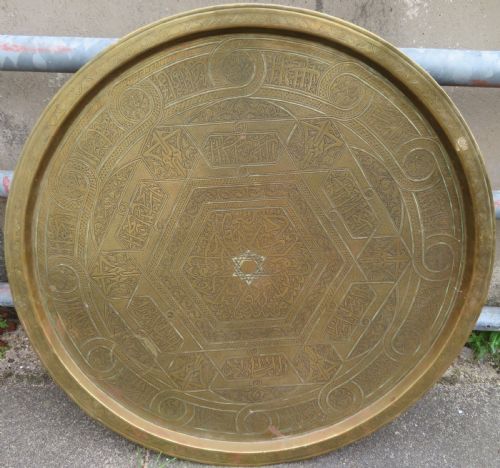
A middle eastern tray typically takes the form of a large circular charger, decorative plate, or a removable top designed to fit upon a folding wooden stand as a coffee table. The selection spans the nineteenth and early twentieth centuries, drawing on Persian, Egyptian, Syrian, and Anglo-Indian design traditions.
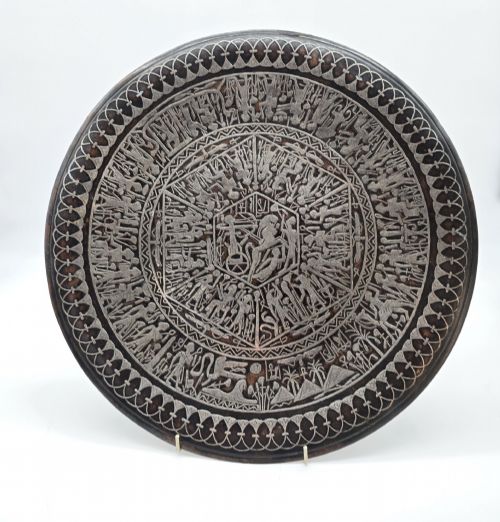
Buyers will most frequently encounter brass and copper pieces featuring detailed metalwork, often augmented with silver or mixed metal inlay. These objects function equally well displayed flat upon walls or mounted on folding wooden bases for use as occasional tables.
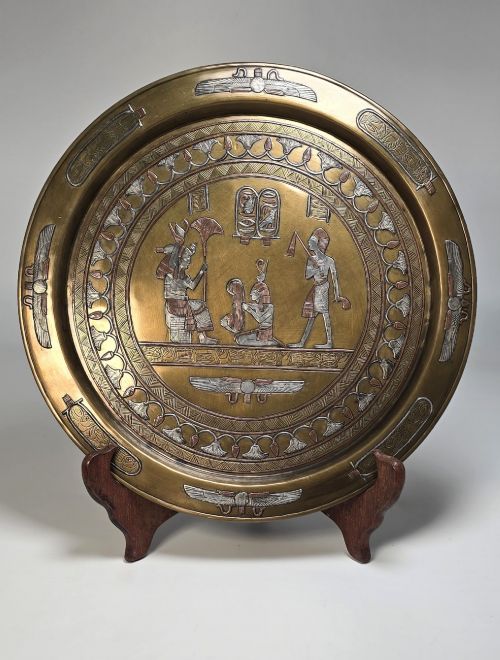
Origins range from specific regional workshops producing Cairo Ware and Mamluk Revival pieces to broader stylistic categories like Islamic Metalwork and Egyptian Revival. The form bridges decorative wall art and functional furniture, accommodating diverse interior settings.
Materials and construction techniques
Artisans utilised base metals such as brass, copper, bronze, and patinated copper, frequently combining them into mixed metal compositions. Surface enrichment relies heavily on hand engraving and repousse work to build complex geometric and figurative motifs.
Many examples incorporate contrasting inlay of silver or other metals into the copper or brass ground, particularly visible in Cairo Ware production. Folding wooden tables support these heavy metal tops through articulated stands that often feature their own inlaid decoration.
Several trays feature the Signs of the Zodiac rendered in brass, proving that astrological obsession transcends centuries.
Distinctions in quality and execution
The density and precision of the hand engraving and inlay dictate the upper tier of quality, distinguishing deeply chased repousse work from simpler surface scoring. Heavier gauge metals provide greater structural rigidity, particularly on large chargers and removable tray tops.
The integrity of the mixed metal inlay and the survival of the original patinated surface heavily influence the overall character of each piece. Finer examples display meticulous attention to detail across both the primary metal tray and any accompanying folding wooden stand.
The Middle Eastern Tray Glossary
- Cairo Ware
- Metalware produced in Egypt during the late nineteenth and early twentieth centuries, characterised by intricate silver and copper inlay on brass or bronze grounds. These pieces were often acquired by European travellers on the Grand Tour.
- Mamluk Revival
- A nineteenth-century design movement that drew inspiration from the metalwork of the historical Mamluk Sultanate. Items in this style typically feature complex geometric cartouches and Arabic script bands.
- Repousse
- A metalworking technique where the metal is hammered from the reverse side to create a raised design in relief on the front. Artisans then refine the details with chisels and engraving tools from the top side.
- Charger
- A large ornamental plate or tray traditionally used for presentation or service rather than daily dining. In nineteenth-century interiors, these were frequently hung on walls or placed upon low stands.
- Mixed Metal
- An object constructed from two or more distinct metallic elements, such as brass and copper combined to create visual contrast. This technique highlights different tones within the engraved decorative scheme.
Middle Eastern Tray: Frequently Asked Questions
Are these trays suitable for everyday use?
Most pieces function well as coffee tables or decorative display chargers in modern rooms. The heavy metal tops sit securely on folding stands while remaining removable for cleaning or repositioning.
Care should be taken with acidic liquids or hot items placed directly on antique metallic surfaces. Using coasters helps protect the engraved and inlaid finishes from unnecessary wear.
How do I date a middle eastern tray?
Examine the weight of the metal, the depth of the engraving, and the style of inlay work. Pieces bearing Cairo Ware characteristics frequently date from the late nineteenth or early twentieth century.
Associated folding wooden stands, where present, often offer clues through their construction methods and decorative inlay styles. Comparing motifs to documented Mamluk Revival or Persian examples helps narrow the period.
What is the difference between a charger and a tray?
Chargers are primarily large decorative plates intended for display on walls or prominent surfaces. Trays often feature flat bases designed to rest upon folding stands or serve beverages.
Many examples blur this distinction by combining a presentation charger format with a removable table base. Both categories rely on similar engraved brass, copper, and mixed metal techniques.