


Mamluk Revival Brass
Mamluk revival brass pieces bring the intricate metalwork of historic Islamic dynasties into your rooms through heavy brass vessels and tables.
Mamluk Revival Brass
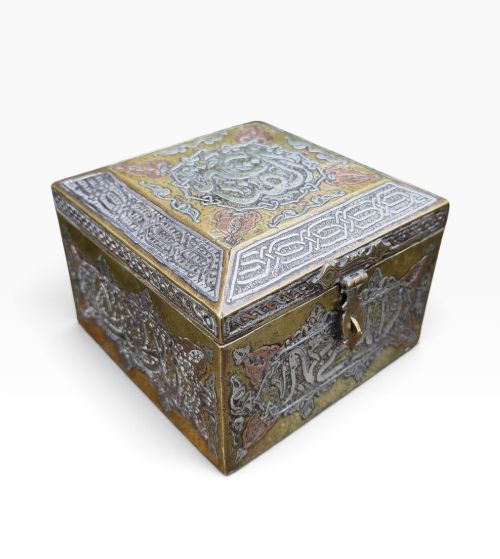
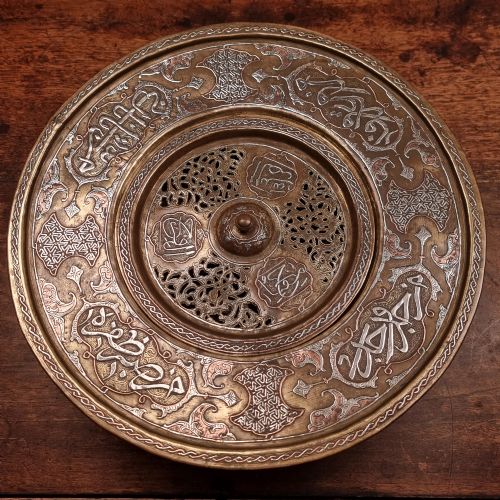
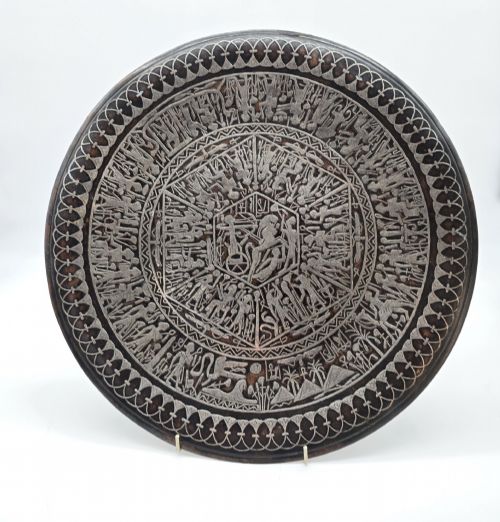
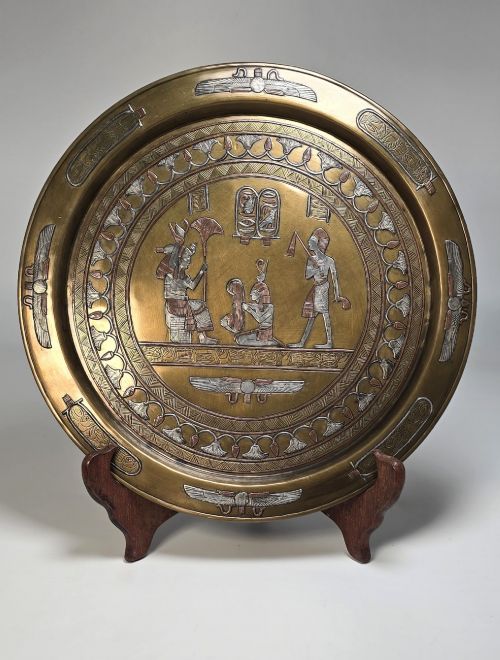
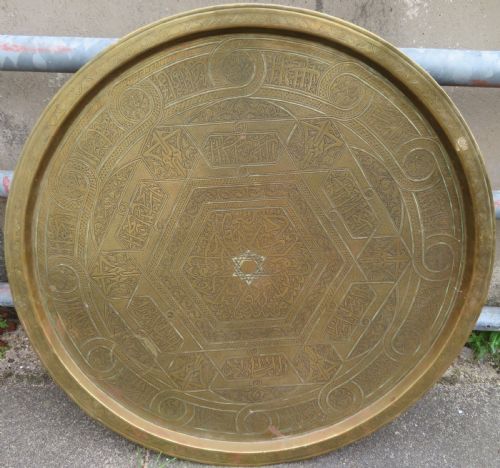
Mamluk revival brass objects span the nineteenth and early twentieth centuries, drawing upon the historic metalworking traditions of Egypt and Syria. These pieces include occasional tables, decorative bowls, and wall chargers that display elaborate geometric patterns and calligraphic script.
You will frequently encounter items labelled as Cairo ware, alongside Quran stands, caskets, and floor lamps produced during the late nineteenth and early twentieth centuries. These works reflect the intense European interest in orientalist design during the grand tour era.
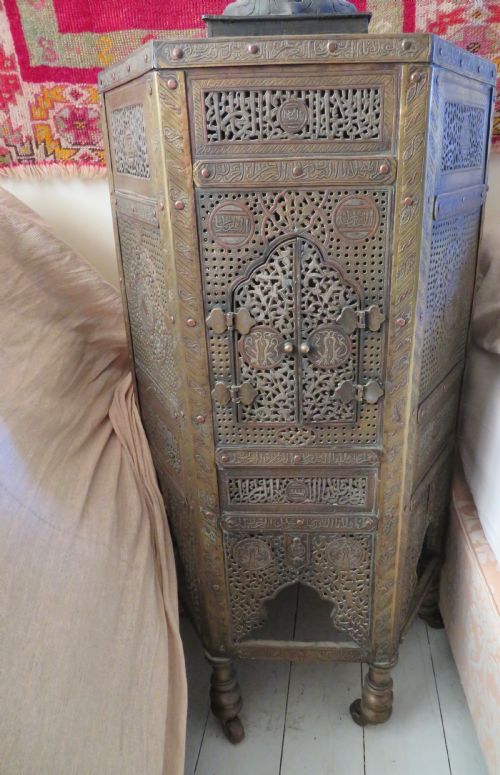
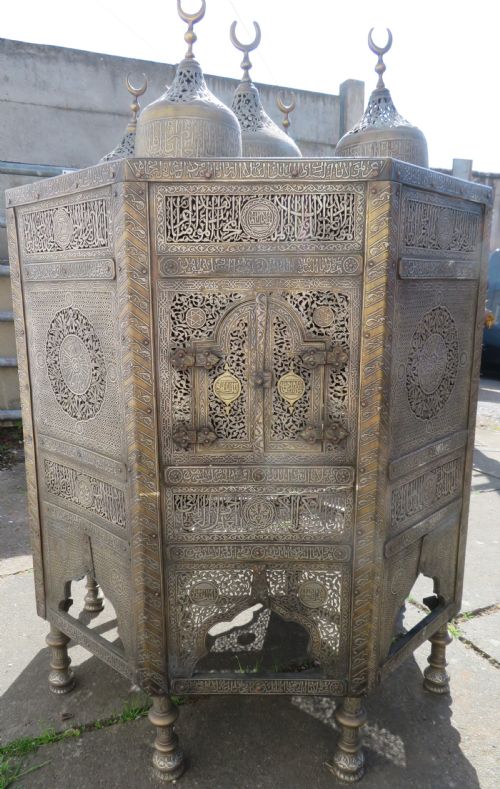
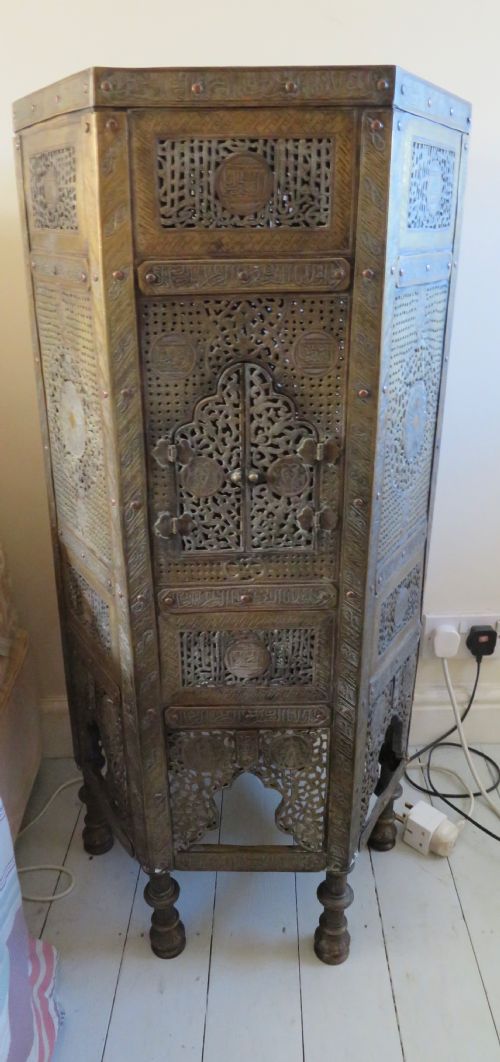
The objects are typically constructed from brass or bronze, frequently enriched with contrasting metal inlays of silver, copper, and white metal. Their forms range from small decorative boxes to large hexagonal occasional tables known as kursi.
Making Mamluk Revival Brass
The foundation of each piece is heavy brass, bronze, or copper, shaped into vessels, tables, and chargers through casting and beating. Artisans then engraved the surfaces deeply to prepare channels for subsequent metal inlay work.
Contrasting metals such as silver, copper, and white metal are hammered into the engraved channels to create striking visual patterns across the brass surface. Openwork techniques are also utilised on tables and lamps to allow light to filter through intricate geometric piercing.
The surviving objects span production dates from the late nineteenth century through to the 1930s.
Quality Variations
Quality reveals itself in the depth and precision of the engraving, where sharper incisions and more complex geometric interlacings distinguish finer workshops. The variety and combination of inlaid metals also indicate the standard of production, with multiple contrasting metals pointing to higher craftsmanship.
Substantial weight and solid construction separate better tables and chargers from lighter commercial equivalents produced for the grand tour market. The crispness of the openwork piercing and the neatness of the calligraphic script further differentiate the standard of execution.
The Mamluk Revival Brass Glossary
- Cairo Ware
- A term applied to nineteenth and twentieth-century metalwork produced in Egypt for both local use and European travellers. These pieces often feature dense silver and copper inlay upon a brass ground.
- Kursi
- A traditional low hexagonal table or Quran stand used in Islamic interiors. In this context, they are constructed from brass with openwork panels and metal inlay.
- Mamluk Revival
- A design movement inspired by the art and metalwork of the historic Mamluk Sultanate. It is characterised by bold calligraphic bands, geometric medallions, and complex interlaced patterns.
- Grand Tour
- A period of European travel through cultural centres that generated a strong demand for portable orientalist souvenirs. Metalwork from this context often displays mixed metal inlays designed to appeal to foreign buyers.
- Wall Charger
- A large decorative plate intended for display on a wall rather than use at table. They provide a broad surface for intricate engraving and inlaid metal designs.
Mamluk Revival Brass: Frequently Asked Questions
What is cairoware?
Cairoware refers to brass and bronze metalwork produced in Egypt during the late nineteenth and early twentieth centuries. These pieces were made for the domestic market and European travellers.
They are instantly recognised by their rich brass surfaces decorated with contrasting silver and copper inlay. Forms include large chargers, occasional tables, and lamps.
How were these tables used?
Tables known as kursi served as low occasional tables or stands for holy books such as the Quran in traditional interiors. Their hexagonal shape and openwork brass panels allowed them to function as decorative central furniture.
In European homes, they were adopted as exotic smoking tables or display surfaces for orientalist collections.
What metals are used?
The primary material is brass, though bronze and copper also appear across the surviving pieces. Artisans enhanced these base metals by inlaying silver, white metal, and copper into deep engraved channels.
This combination creates a strong contrast of colour across the surface of chargers, boxes, and tables.
How do I date these pieces?
Most items date from the late nineteenth century through to the 1930s, aligning with the height of the revival and the grand tour period. Stylistic cues and manufacturing methods help place them within this broader era.
Heavier construction and finer silver inlay typically point towards the earlier nineteenth-century examples rather than later souvenir pieces.