


Hand Chased Brass
Hand chased brass items are decorative metalwork pieces displaying intricate surface carving, offering collectors rich historical craftsmanship from various global traditions.
Hand Chased Brass
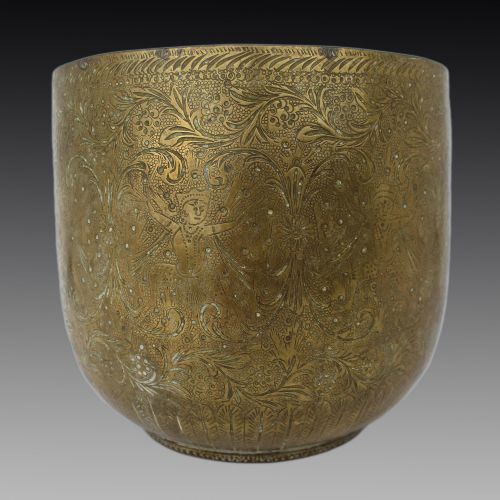
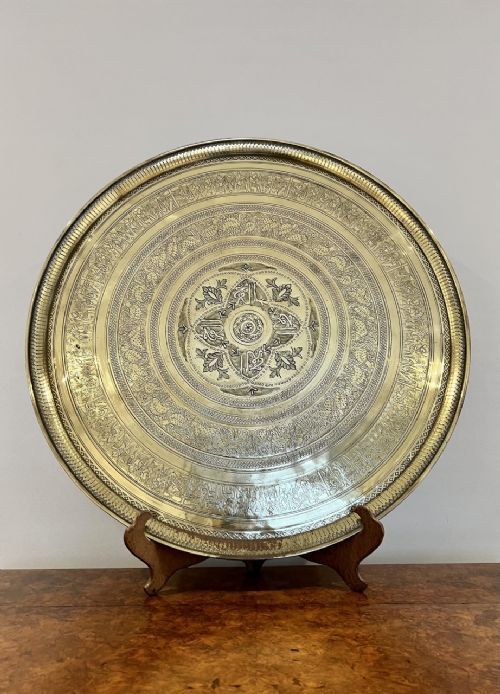
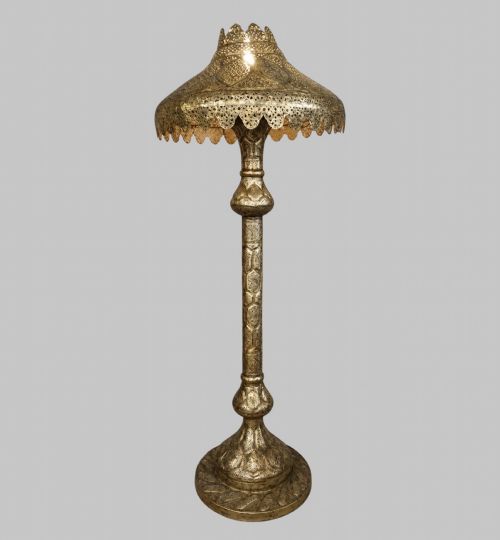
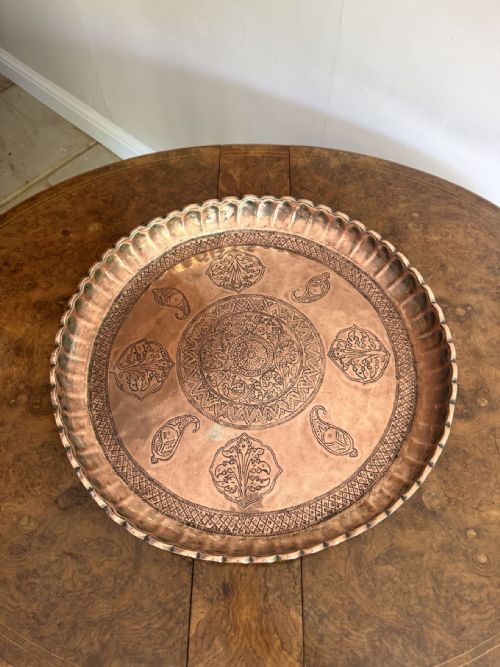
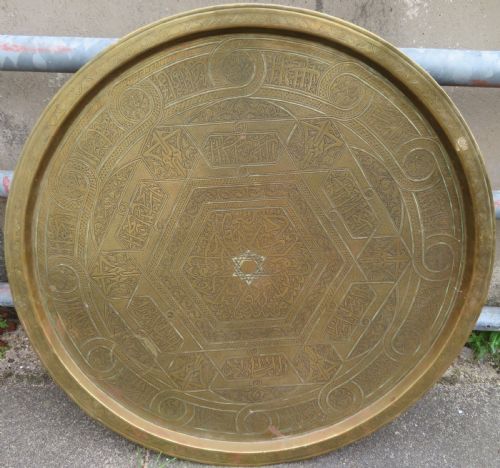
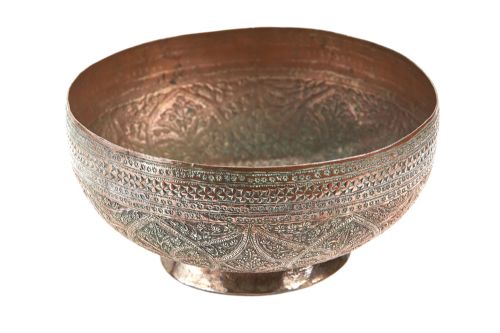
When you search for hand chased brass, you encounter a diverse array of decorative items spanning the nineteenth and twentieth centuries. These objects typically include large circular trays, cachepots, floor lamps, and vessels originating from regions such as India, Egypt, and the Middle East.
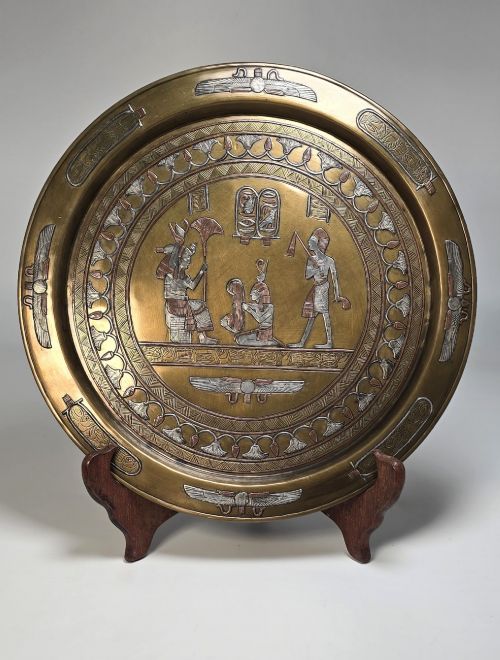
The pieces on this page showcase distinct stylistic influences including Anglo-Indian, Egyptian Revival, Moorish, and Chinese Export designs. Trays and chargers dominate the selection, often accompanied by planters, buckets, and vases.
Most items reflect periods from the eighteen-sixties through to the nineteen-thirties, capturing the Victorian enthusiasm for exotic and foreign craftsmanship. Buyers frequently find mixed metal pieces alongside solid brass and copper examples.
How they were made
Artisans created these objects using brass, copper, bronze, and mixed metals, sometimes incorporating silver inlay to accentuate the design. The metal was beaten, cast, or formed into vessels and trays before receiving its surface decoration.
Craftsmen utilised hand chiselling and chasing techniques to depress the metal around motifs, leaving raised patterns or incised lines. This intensive manual work produced deep, textured surfaces featuring foliate details, geometric patterns, and narrative scenes.
Listings feature items from eighteen-sixty to nineteen-thirty, encompassing Victorian and Raj periods alongside Egyptian Revival and Moorish styles.
What varies in quality
Quality in hand chased brass depends upon the depth and precision of the manual tooling rather than mere surface pattern. Finer examples display crisp, deeply carved lines that maintain clarity across the entire object, whereas inferior pieces show shallow, hurried stamping.
The choice of materials also distinguishes the range, with mixed metal compositions and silver inlay demanding greater skill from the artisan. Heavier gauge metal and balanced proportions generally indicate superior workshop standards from the period.
The Hand Chased Brass Glossary
- Chasing
- A metalsmithing technique where the artisan pushes and indents the metal surface with a hammer and punch to form a design. This method differs from engraving because no metal is removed during the process.
- Cairo Ware
- Nineteenth-century metalware produced in Egypt or Europe for the tourist market, typically featuring brass inlaid with silver and copper calligraphy or geometric motifs. These items were popular souvenirs during the Grand Tour era.
- Cachepot
- An ornamental container used to hold a flowerpot and conceal its utilitarian appearance. In metalwork, these are often heavily chased with traditional regional patterns.
- Charger
- A large decorative plate or tray, usually displayed on a wall or sideboard rather than used for dining. They serve as primary canvases for complex chased and engraved ornamentation.
- Mixed metal
- An artefact combining two or more distinct metals or alloys, such as brass with copper and silver, to create contrasting visual effects in the design.
Hand Chased Brass: Frequently Asked Questions
What is hand chased brass?
Hand chased brass refers to metal objects decorated by artisans using hand tools to depress the metal surface and create intricate patterns.
This traditional technique produces tactile, textured designs that define antique metalwork from various global regions.
How do I clean antique brass?
Cleaning antique brass requires caution to preserve the historic patina and delicate chased details built up over generations.
Harsh chemical polishes should be avoided in favour of gentle dusting with a soft cloth to maintain the surface integrity.
Where were these pieces made?
These pieces originated in diverse locations including India, Egypt, Morocco, and the wider Middle East during the nineteenth and early twentieth centuries.
Many items reflect specific regional aesthetics such as Moorish revival or Anglo-Indian styles produced for export and travellers.
How do I date a brass tray?
Dating a brass tray involves examining the manufacturing marks, weight, material composition, and the specific style of the chased decoration.
Nineteenth-century examples often display hand-beaten characteristics and mixed metal elements that evolved in style by the nineteen-thirties.