

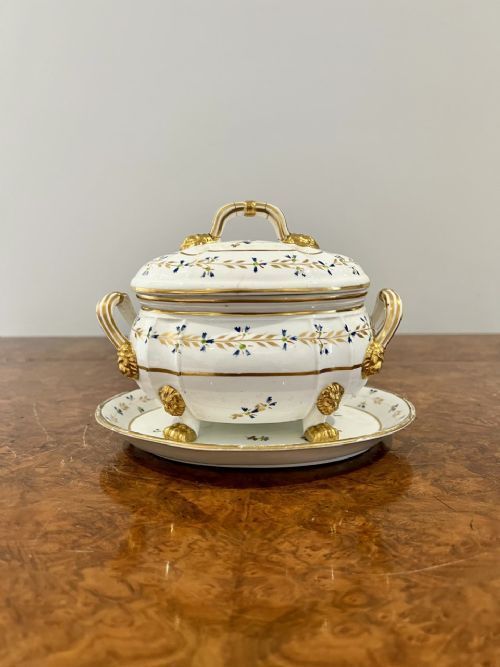


English Porcelain Tureen
An english porcelain tureen brings genuine warmth to a dining table, combining practical service with the finest ceramic artistry of past centuries.
English Porcelain Tureen
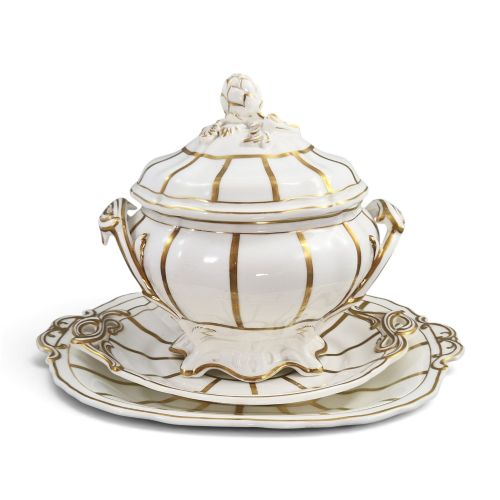
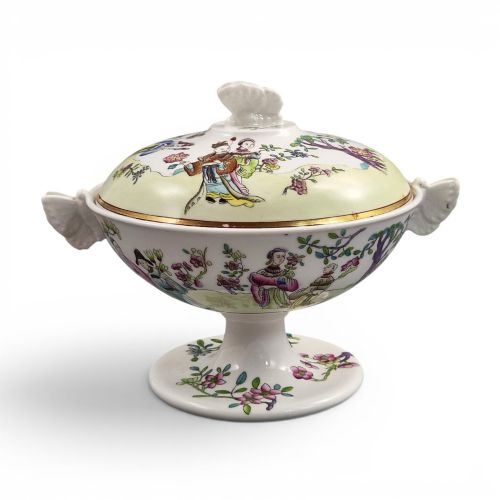
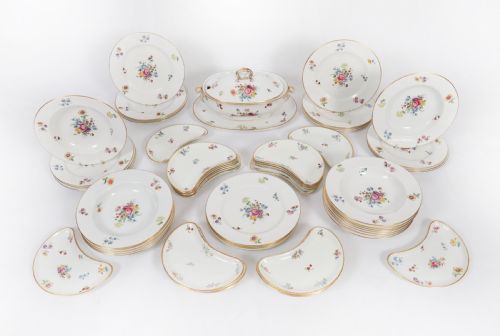
An english porcelain tureen serves as a striking centrepiece or practical vessel for soups, sauces, and entrées on the formal dining table. The pieces found here span the eighteenth and nineteenth centuries, taking the shape of sauce tureens, soup tureens, cream tureens, and pedestal bowls.
Makers such as Davenport, Spode, Mason's, Coalport, Crown Derby, Mintons, Worcester, and Staffordshire produced these serving pieces during the Georgian, Regency, and Victorian periods. Buyers frequently encounter sauce tureens and covered bowls featuring intricate handles and matching stands.
The styles range from the restrained elegance of the Regency and Georgian eras to the ornate flourishes of Rococo Revival and Victorian design. Earthenware and ironstone appear alongside bone china and standard porcelain to meet various dining requirements.
Judging Quality
The finest examples display crisp moulding in relief work, such as butterfly handles or naturalistic foliage, alongside precise hand-painted enamelling. Simpler utilitarian pieces lack the rich gilding and detailed hand-finishing seen on top-tier exhibition pieces.
The presence of matching stands and original covers elevates the standing of a tureen within its category. Clear factory marks and well-preserved gilt accents indicate superior workshop standards.
Listings feature pieces spanning the eighteenth, nineteenth, and twentieth centuries, incorporating materials such as gold leaf, enamel, and ironstone.
Davenport Bone China·Spode·Mason's Ironstone·Coalport·Crown Derby·Mintons·Worcester·Flight Barr and Barr·Staffordshire Turner
The English Porcelain Tureen Glossary
- Sauce tureen
- A small covered vessel designed for serving gravies and sauces at the table. These often include an integral or separate matching stand.
- Bone china
- A type of porcelain containing animal bone ash, providing strength and a warm milky appearance. It became widely utilised by English potteries during the nineteenth century.
- Ironstone
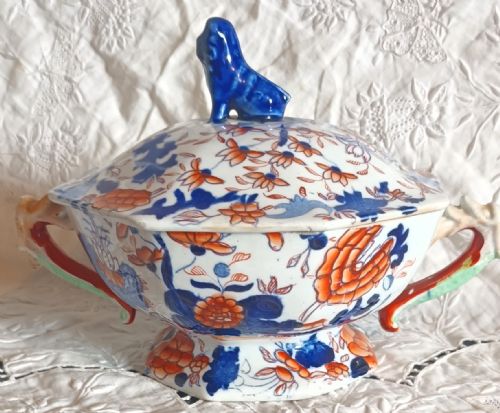
- A heavy, durable type of earthenware patented to resist chipping while mimicking porcelain. Mason's notably produced robust tureens in this durable ceramic.
- Felspar porcelain
- A dense ceramic body introduced by Spode containing felspar to improve whiteness and translucency. It allowed for sharper relief moulding on decorative vessels.
- Imari
- A decorative style inspired by Japanese export wares, featuring cobalt blue, iron red, and gilt details. Flight, Barr and Barr applied this aesthetic to several Worcester sauce tureens.
English Porcelain Tureen: Frequently Asked Questions
How were antique tureens used?
These vessels held soups, sauces, and gravies at formal dining tables, keeping contents warm with fitted lids. Servants brought them to the table as part of large service sets.
Today they function as decorative centrepieces or display items on sideboards and dining room tables.
Can I use an antique tureen for serving food?
Most buyers prefer to display these fragile ceramic pieces rather than subject them to modern dining use. Thermal shock and accidental knocks can damage nineteenth-century glazes and gilding.
Gentle hand washing is essential if you occasionally use them for dry presentation or display purposes.
How do I date an English porcelain tureen?
Makers marks stamped or painted on the base offer the most reliable guide to a piece's production period. Stylistic clues such as Regency handles or Victorian floral transfers also help narrow down the decade.
Comparing pattern numbers and ceramic bodies with known factory archives confirms the exact era of manufacture.
What is the difference between ironstone and porcelain?
Ironstone is a heavy, opaque earthenware developed for durability and everyday service resilience. Porcelain is a finer, more translucent ceramic fired at higher temperatures for delicate table settings.
Tureens made from ironstone feel noticeably heavier and thicker than their bone china or porcelain counterparts.