


English Painted Mirror
An English painted mirror brings architectural presence and a soft, historic palette to an interior through substantial carved framing and aged glass.
English Painted Mirror
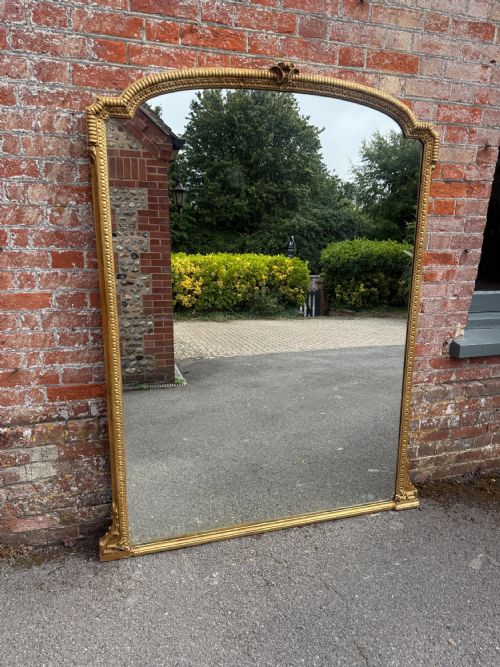
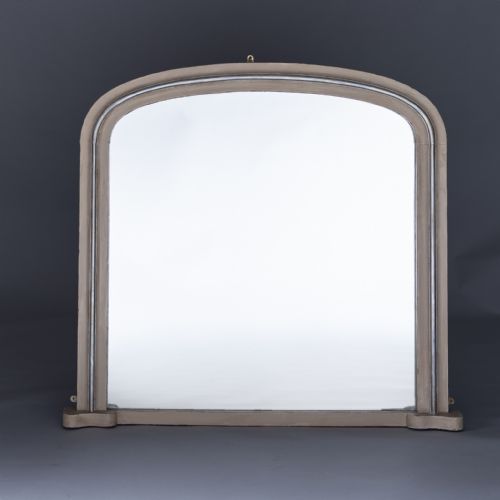
When searching for an English painted mirror, a buyer encounters primarily nineteenth-century overmantel mirrors designed to sit above a fireplace. These large formats frequently feature arched tops, shaped frames, or column details executed in carved wood and gesso.
The selection also encompasses pier mirrors, wall mirrors, and occasional twentieth-century examples including Art Deco forms. Surviving pieces often display original paint layered with parcel-gilt highlights, silvering, or intentional distressing.
While the majority originate from the Victorian era, items stretch from earlier Regency styles through to the early twentieth century. Beyond dedicated wall hangings, the category occasionally includes related case furniture such as bureau bookcases finished in red lacquer or painted surfaces.
How They Were Made
Construction relies on solid timber frames of pine, oak, or carved wood built to support heavy glass plates. Artisans applied layers of gesso over the wood substrate to build up crisp mouldings, relief ornament, and classical details like columns or laurel leaves.
Surfaces were finished with paint, often combined with gold leaf or parcel-silvering to accent the carved decoration. The resulting mirrors combine structural joinery with delicate surface paintwork designed to catch and reflect light.
The inventory records pieces finished with gold leaf, parcel-silvering, and distressed paint.
What Varies in Quality
The distinction between ordinary and exceptional pieces rests on the crispness of the carved wood and gesso ornamentation. Deep relief work, well-defined architectural columns, and complex shaped tops indicate superior craftsmanship over simple flat mouldings.
Surface preservation also dictates standing, with original paint schemes and parcel-gilt or silvered details holding greater visual weight than later overpainting. The integrity of the original mirror glass and the harmony of proportion across large overmantel formats complete the assessment.
The English Painted Mirror Glossary
- Gesso
- A plaster-like mixture applied to wood frames to create a smooth surface for painting or to be moulded into intricate relief decorations. This traditional ground allows for sharp architectural details on antique frames.
- Overmantel Mirror
- A large mirror specifically proportioned to hang on the wall directly above a fireplace mantelpiece. These pieces often feature horizontal width or soaring arched tops designed to anchor a room.
- Parcel-Gilt
- A decorative technique where only specific portions of a carved frame are gilded with gold or silver leaf, leaving the rest painted. This partial gilding highlights specific mouldings and relief work.
- Pier Mirror
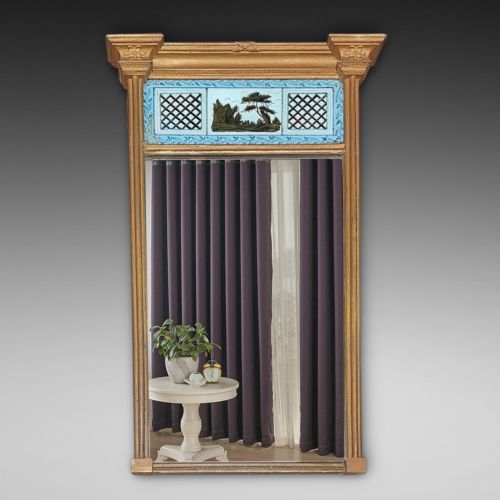
- A tall, vertical mirror traditionally hung on the solid pier of wall space situated between two windows. Their slender proportions were engineered to maximise light in nineteenth-century drawing rooms.
- Verre Eglomise
- A historic process of applying gold or silver leaf to glass and then engraving designs into the metal layer. It creates a mirrored surface with distinctive decorative borders or panels.
English Painted Mirror: Frequently Asked Questions
Where should an overmantel mirror be hung?
These mirrors were originally scaled to sit directly on or just above a drawing room fireplace. Today they function equally well mounted on principal living room walls to reflect natural light.
Their substantial proportions require secure fixing directly into solid wall studs or masonry. Positioning them opposite a window maximises the distribution of daylight across the interior.
How do I identify a nineteenth-century mirror?
Nineteenth-century examples typically employ heavy timber frames coated in thick gesso to build up classical motifs like columns and arched tops. Look closely at the construction of the wooden backboards and fixings for age indicators.
Original glass plates frequently exhibit subtle distortions, tiny foxing spots, or uneven silvering. These natural signs of ageing distinguish antique mirrors from modern reproductions.
What is the difference between gilt and parcel-gilt?
A fully gilt frame is completely covered in gold or silver leaf, presenting a uniform metallic brilliance. Parcel-gilt surfaces apply the precious leaf selectively to carved highlights while the rest of the frame wears paint.
This combination breaks up large expanses of decoration and creates depth. The contrast between painted wood and glittering accents defines many traditional English mirror designs.
Are painted mirrors fragile?
While structurally robust due to heavy wood and gesso construction, the historic painted surfaces require gentle handling. Changes in humidity can cause vintage gesso to develop minor cracks or distress over long periods.
Routine maintenance involves dusting with a soft dry cloth without chemical polishes. Preserving the original paint layer ensures the piece retains its historic character.