



English Oak Press
An english oak press is a heavy utilitarian timber furniture piece designed for storing textiles or applying mechanical pressure, spanning centuries of domestic life.
English Oak Press
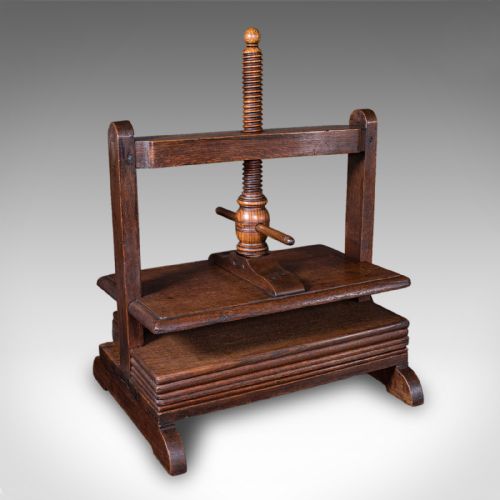
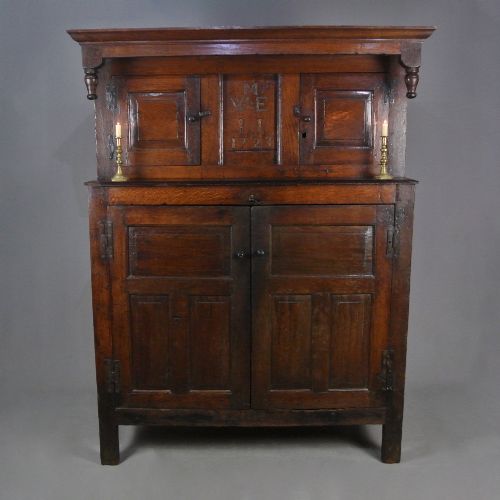
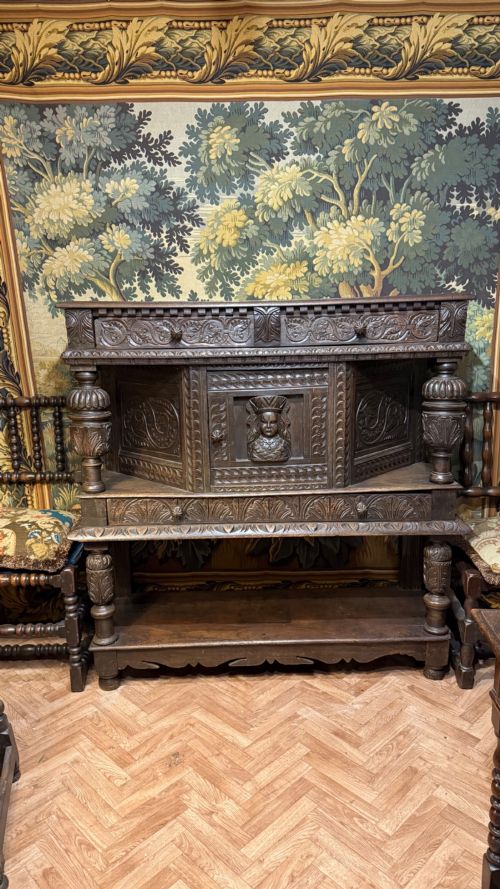
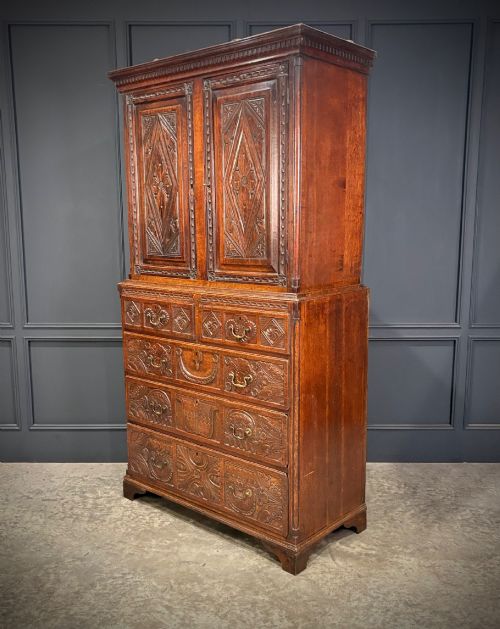
An english oak press covers substantial storage furniture and utilitarian devices from the sixteenth century to the early twentieth century. Buyers encounter robust court cupboards, housekeepers cupboards, linen presses, and smaller items like flower presses and cork compressors.
The seventeenth and eighteenth centuries dominate the selection, bringing architectural court cupboards and panelled linen presses into domestic spaces. These larger forms sit alongside Georgian and Victorian wardrobe presses designed for household organisation.
Regional variations appear across the inventory, notably seventeenth-century West Country pieces and vernacular country house examples. Elm and fruitwood details occasionally join the primary oak structure, reflecting local timber availability.
How they were made
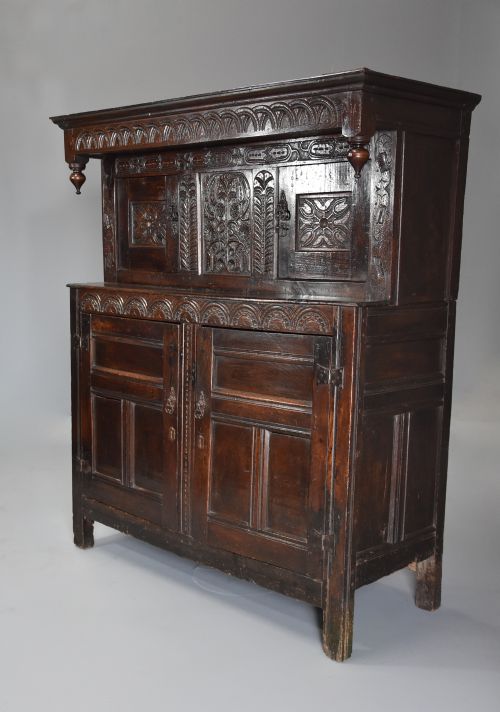
Joiners built these presses using solid oak boards joined by mortise and tenon framing held with wooden pegs. Carved panels, applied mouldings, and occasional fruitwood inlay ornament the structural framework.
Iron and brass hardware, including butterfly hinges, latches, and drop handles, secure the doors and drawers. Ebonised oak and turned decorations provide contrast on seventeenth-century and nineteenth-century variants.
Materials extend beyond standard oak to include elm, fruitwood inlay, ebonised surfaces, and wrought iron or brass hardware.
What varies in quality
Construction integrity separates utilitarian survivals from exceptional cabinet work, seen in the tightness of timber joints and the retention of original panel work. Surface texture ranges from dry, untouched seventeenth-century patination to later cleaned or ebonised finishes.
Proportion and carving depth define the upper tier of court cupboards and housekeepers cupboards. Crisp detailing on seventeenth-century stiles and rails indicates skilled regional joinery rather than basic village carpentry.
The English Oak Press Glossary
- Court cupboard
- A two-stage seventeenth-century storage piece featuring an enclosed upper section recessed above a wider base. These heavy oak items often display carved panels and dated inscriptions.
- Housekeepers cupboard
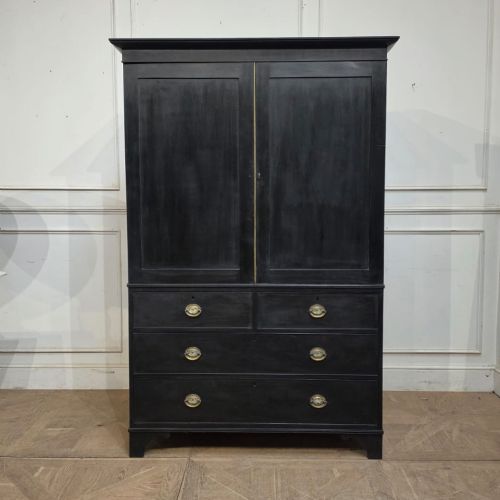
- A large storage cabinet used in country houses for linen and provisions, combining upper cupboards with lower drawers. Georgian examples often feature panelled doors and substantial cornices.
- Linen press
- A tall cabinet designed for storing folded textiles under flat pressure, usually incorporating sliding trays behind upper doors and drawers beneath. Eighteenth and nineteenth-century versions dominate this category.
- Livery cupboard
- A medieval or seventeenth-century ventilated cabinet used for storing food or small items of household equipment. These ventilated forms frequently feature turned spindles or pierced panels.
- Patina
- The surface appearance developed on timber through age, handling, and wax polishing over centuries. Untouched sixteenth and seventeenth-century oak exhibits a dark, warm sheen.
English Oak Press: Frequently Asked Questions
What is an english oak press used for?
These pieces served practical domestic functions, from storing household linen and clothing to compressing textiles or wine corks. Larger examples housed provisions and domestic equipment in country houses.
Today, buyers utilise the deep cupboards and drawers for modern storage while displaying the historic timber furniture as focal points in period interiors.
How do I date an english oak press?
Dating relies on construction methods, timber selection, and stylistic details such as carved strapwork, panel mouldings, and turned feet. Sixteenth and seventeenth-century pieces use pegged frame and panel construction with heavy oak boards.
Georgian and Victorian examples introduce more refined proportions, mahogany or fruitwood inlay, and standard brass hardware. Inscribed dates and initials carved into the timber occasionally provide a precise year of manufacture.
What is the difference between a court cupboard and a housekeepers cupboard?
A court cupboard is an earlier, typically seventeenth-century form featuring a recessed upper cabinet supported by short columns or brackets above a wider lower section. These pieces often display geometric carvings and architectural styling.
A housekeepers cupboard is a taller, more unified storage unit from the eighteenth or nineteenth century designed with full-length doors enclosing linen shelves or hanging space above base drawers.
How do I care for antique oak furniture?
Historic oak requires stable indoor humidity away from direct heat sources and sunlight to prevent timber shrinkage and splitting. Regular dusting with a dry cloth maintains the surface.
Applying traditional beeswax occasionally nourishes the dry timber and preserves the historic patina without sealing the wood.