


Eighteenth Century Press
An eighteenth century press is a storage piece built to house linens and clothes, offering deep interior space and classic joinery.
Eighteenth Century Press
An eighteenth century press brings together heavy storage and formal presence, appearing across British and European workshops in oak, mahogany, and walnut. Buyers seeking an eighteenth century press usually encounter Georgian linen presses, regional Welsh examples, and Dutch or French variations designed for daily domestic utility.
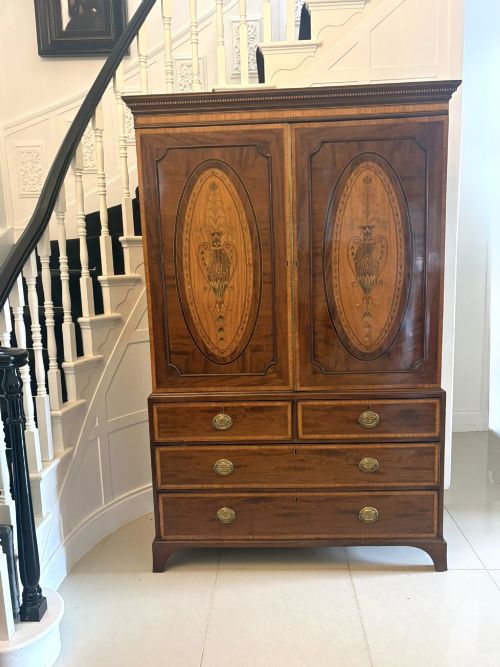
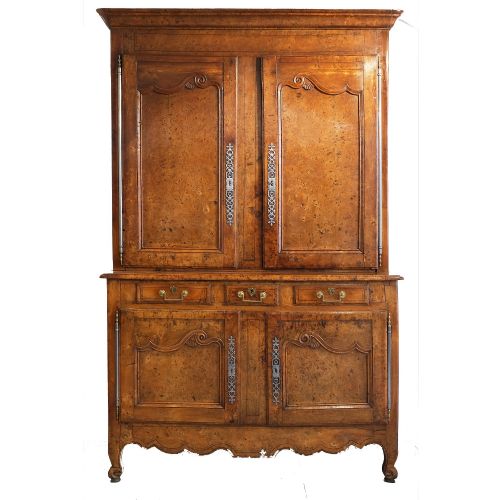
The inventory on this page shows a strong representation of Georgian mahogany designs alongside oak court cupboards and walnut cabinets on chests. These large timber items combine upper cupboard sections with lower drawer bases, providing substantial capacity for household textiles and garments.
How they were made
Cabinetmakers constructed these pieces using solid timbers like oak, mahogany, and walnut, frequently incorporating figured veneers such as burr walnut or satinwood inlay on principal surfaces. Secondary woods like ash, elm, and pine appear in regional framing and interior shelving.
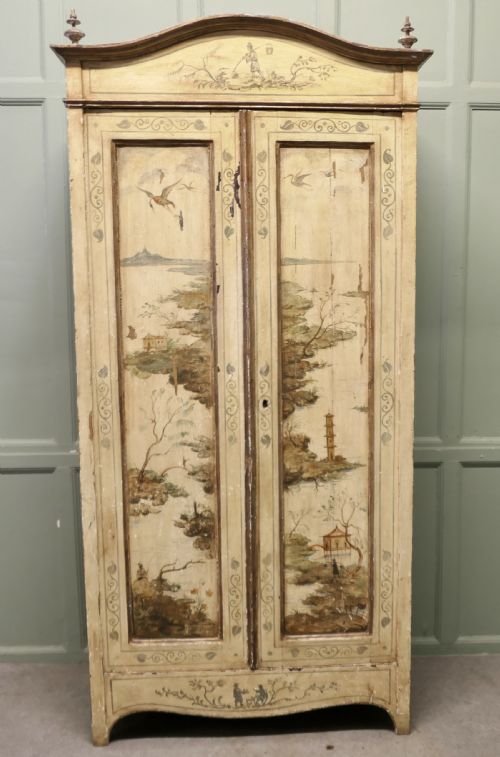
Structural assembly relied on traditional joinery, panelled doors, and timber pegged frames, paired with brass handles and steel hinges. Painted and lacquered finishes, including Chinoiserie decoration, surface on specific decorative models alongside natural wax polishes.
Listings feature oak, mahogany, walnut, and painted wood items spanning the Georgian period and the eighteenth and nineteenth centuries.
What varies in quality
Quality rests upon the selection of timber grain, the crispness of inlaid satinwood or carved mouldings, and the integrity of the original carcase construction. Pieces featuring highly figured burr walnut or detailed lacquerwork stand apart from simpler regional pine or oak items.
Proportion and surface preservation dictate the standing of a piece within its type. Refined cabinetwork with well-matched veneers and undisturbed brass hardware demonstrates superior workshop execution.
The Eighteenth Century Press Glossary
- Linen press
- A large storage cabinet designed specifically for folding and storing household linens, typically featuring sliding trays behind upper doors.
- Cabinet on chest
- A tall storage form consisting of an upper cabinet sitting directly upon a lower chest of drawers.
- Court cupboard
- An early form of enclosed storage furniture, often constructed in oak with carved detailing.
- Deuddarn
- A traditional Welsh two-tier oak cupboard used for household storage.
- Veneer
- A thin layer of decorative wood applied over a secondary timber carcase to create figured surfaces.
Eighteenth Century Press: Frequently Asked Questions
What is an eighteenth century press used for?
These pieces were built primarily to store household linens, folded garments, and textiles within deep upper compartments and lower drawer bases.
Today, they serve the same practical function in bedrooms or hallways, offering substantial enclosed storage space.
How do I identify a Georgian press?
Georgian examples frequently employ solid mahogany or oak, clean architectural proportions, and traditional brass hardware.
They often combine panelled upper cabinet doors with functional lower drawers in a structured two-part format.
Are these presses made of solid wood?
Many examples utilise solid timbers such as oak, walnut, mahogany, and ash throughout their structural framing and panelling.
Finer decorative variations also incorporate applied veneers on secondary timber carcases to display decorative grain patterns.
What is the difference between a wardrobe and a press?
A traditional wardrobe is designed primarily for hanging garments on interior rails from top to bottom.
A press typically houses internal sliding trays or shelves behind its upper doors, intended for flat linens and folded clothes.