



Solid Oak Press
A solid oak press is a substantial storage piece built to keep linens and garments flat, offering lasting weight and honest grain.
Solid Oak Press
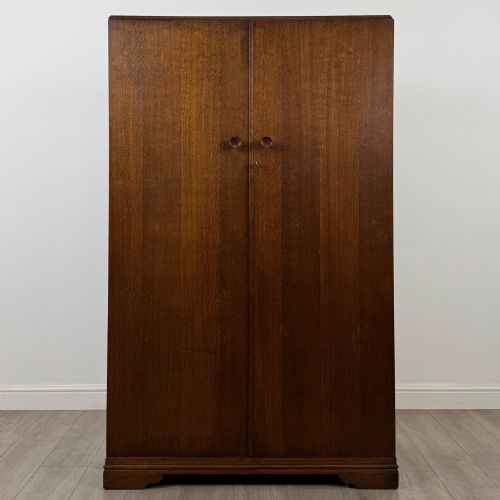
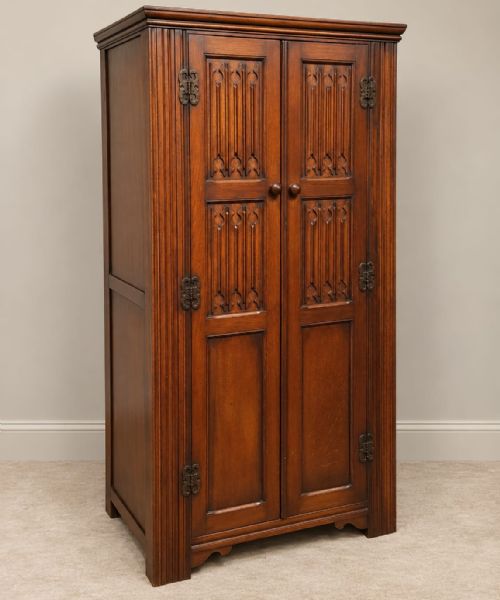
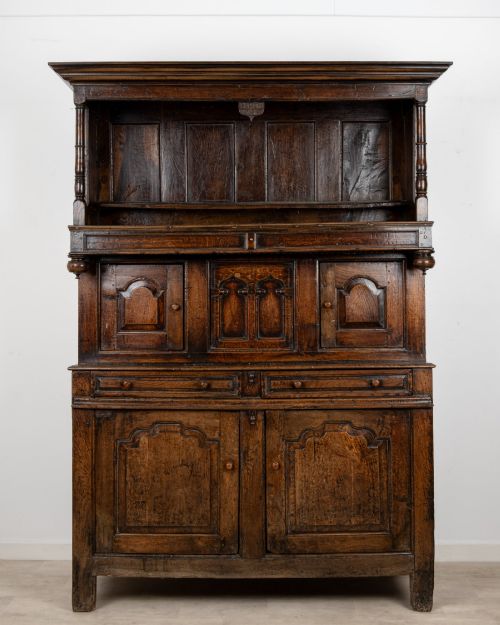
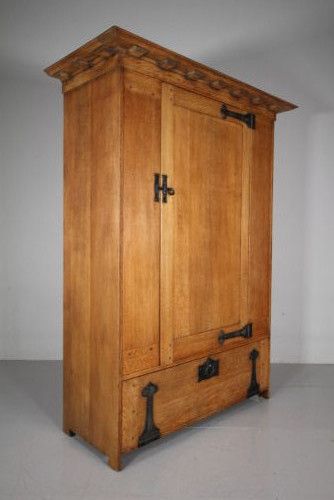
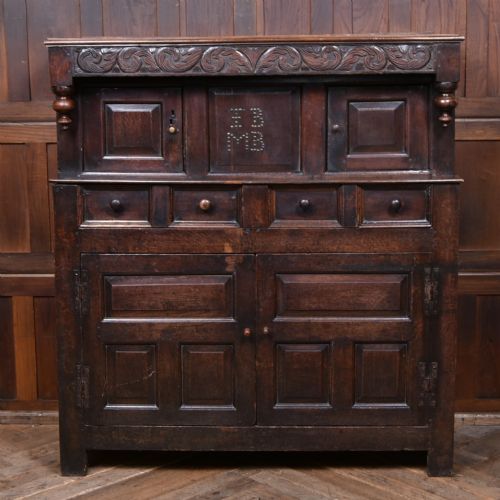
A solid oak press delivers heavy, dependable storage rooted in traditional cabinet making. When you search for a solid oak press, you encounter forms ranging from early 18th-century Welsh tridarns and court cupboards to Edwardian wardrobes and Georgian linen presses.
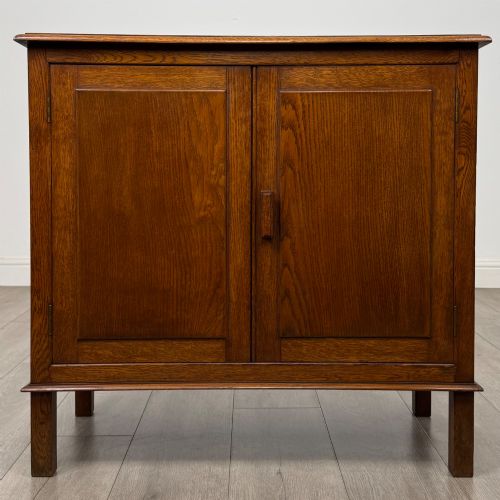
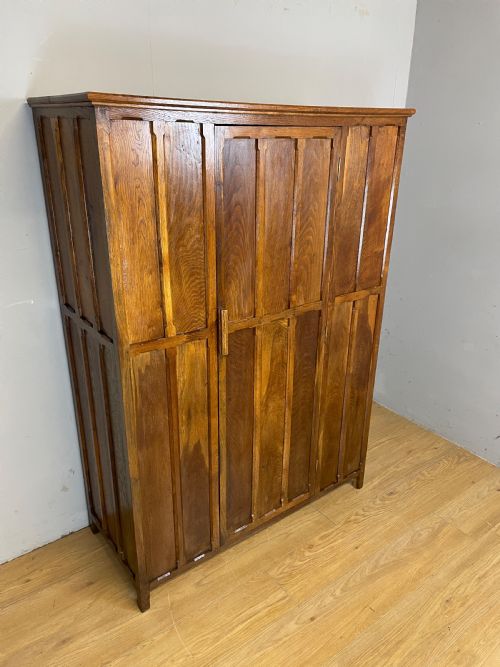
The pieces on this page span the 17th century through the 1930s, encompassing styles such as Arts and Crafts, Gothic Revival, and Jacobean. You are most likely to meet Edwardian and Georgian iterations featuring panelled doors and fitted interior shelving or hanging space.
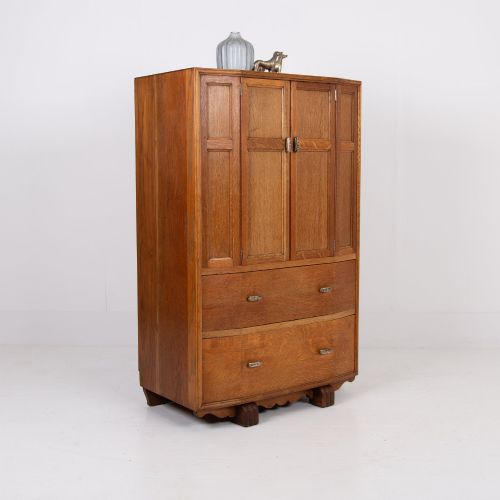
Early regional examples like the Welsh vernacular pieces show deep local character alongside traditional joinery. Later 20th-century variations bring simpler lines, sometimes echoing the Cotswold School or Art Deco tastes.
Markers of quality
Quality in a solid oak press rests on the clarity of the timber selection and the precision of the joinery. Superior pieces display tightly fitted panel work, original brass or iron hardware, and balanced proportions that respect the natural weight of the oak.
Finer examples reveal deliberate hand-carving and careful attention to interior sliding shelves or configuration. Lesser pieces often exhibit coarser timber grading, unsympathetic later alterations, or replacement hardware that disrupts the period balance.
The listings span from the 17th century through the 1930s, utilising solid oak alongside brass, iron, and glass.
Heals·Maple and Co
The Solid Oak Press Glossary
- Press cupboard
- A large storage furniture piece featuring upper and lower compartments, traditionally used for linen or clothes. It often incorporates interior sliding shelves.
- Tridarn
- A traditional Welsh three-tier cupboard featuring an open middle section and enclosed top and bottom cupboards. This form represents regional vernacular cabinet making at its most ambitious.
- Court cupboard
- An early style of low, heavy cupboard with decorative upper stages supported on columns or pendants. These pieces originate primarily from the 17th century.
- Quarter-sawn
- A method of cutting oak logs radially to reveal distinctive medullary ray figuring. This cut provides enhanced dimensional stability.
- Frame-and-panel
- A method of construction where a central floating panel sits within a grooved outer frame. This technique accommodates seasonal wood expansion.
Solid Oak Press: Frequently Asked Questions
What is the difference between a press and a wardrobe?
A press traditionally designates a piece designed with sliding shelves for linen storage, whereas a wardrobe focuses primarily on vertical hanging space for garments.
Over time, many examples blur these distinctions as interiors were adapted for modern clothing.
How do I care for a solid oak press?
Keep the wood away from direct heat sources and sudden temperature fluctuations to prevent the solid timber from splitting.
Feed the surface occasionally with traditional wax to maintain the natural lustre of the oak.
Can these pieces be disassembled for moving?
Many older presses were constructed as modular units or feature pegged joints that allow careful dismantling by a professional.
Early pieces often remain single solid carcases requiring adequate clearance for delivery.
How do I identify a 17th-century piece?
Seventeenth-century presses display distinct heavy mouldings, pegged joints, hand-riven oak panels, and early iron butterfly hinges.
Surface wear typically shows deep patination developed through centuries of domestic use.