
English Mahogany Desk
An english mahogany desk brings centuries of cabinet-making heritage and practical workspace into a room.
English Mahogany Desk
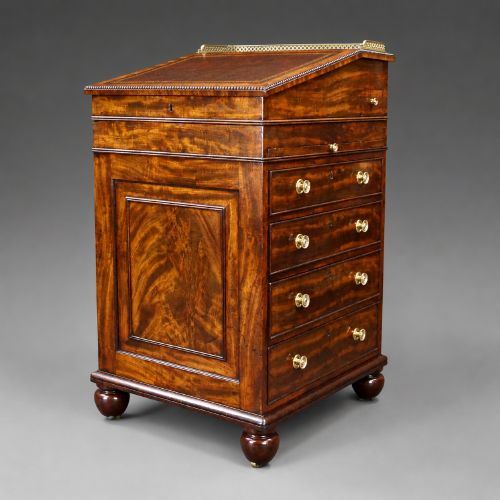
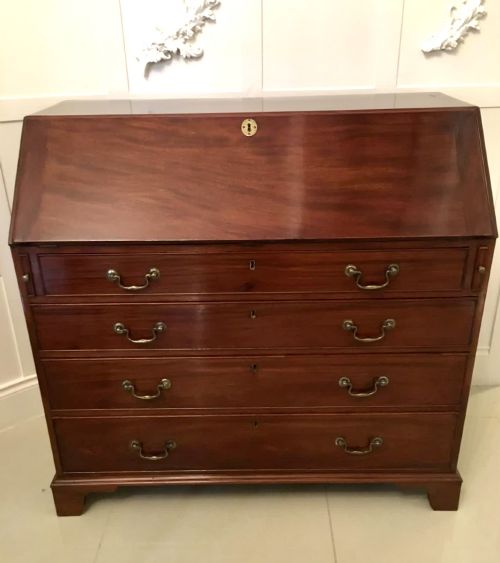
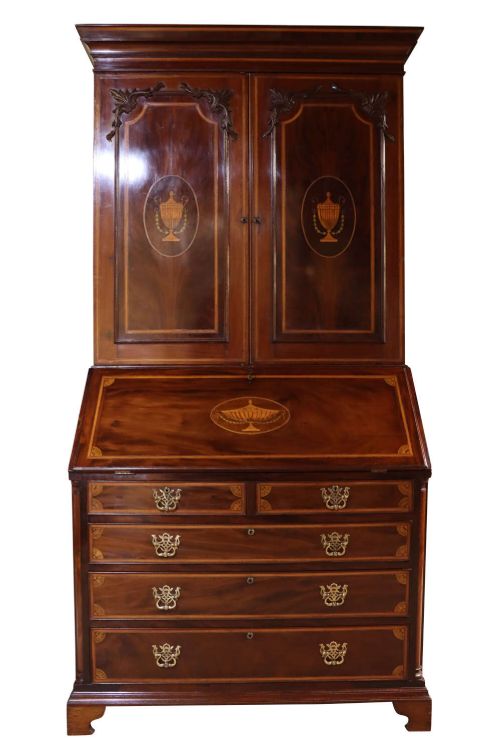
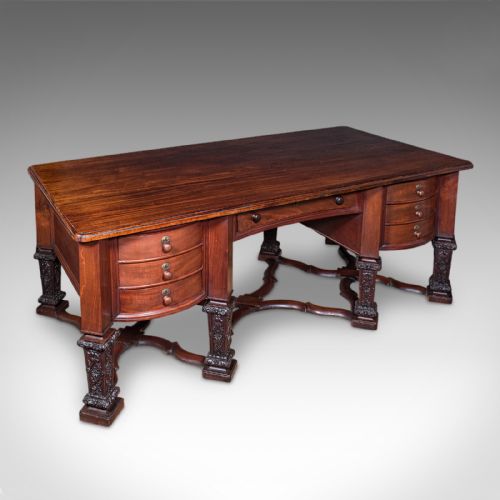
The english mahogany desk encompasses a variety of writing surfaces, writing tables, and pedestal formats developed across the eighteenth, nineteenth, and early twentieth centuries. Surviving examples range from compact writing tables and bureau bookcases to large partner desks designed for two users.
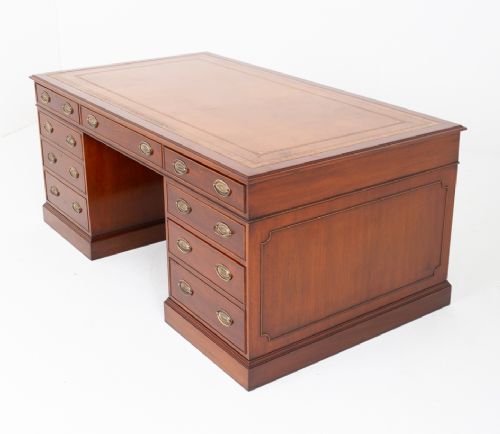
Buyers exploring this selection frequently encounter nineteenth-century pedestal forms fitted with leather inserts, alongside compact Georgian designs and later revival pieces. These forms reflect changing domestic needs, moving from private chambers to bustling libraries and offices.
How they were made
Craftsmen utilised solid timbers and figured veneers, selecting flame and other decorative grain patterns for primary surfaces while framing drawers in secondary woods. Construction relied on traditional joinery methods such as dovetailing for drawer boxes and mortise and tenon joints for structural stability.
Writing surfaces were frequently inset with hand-dyed or tooled leather, providing a durable and smooth writing plane. Brass hardware, including handles, escutcheons, and casters, was commonly integrated to complete the functional design.
English Mahogany Desk Retail Price Guide 2026
Typical asking prices for english mahogany desk among the pieces listed under this phrase on Sellingantiques today, from the lower quarter to the upper quarter. They describe what is for sale here now, not the wider market.
Some writing tables incorporate hidden compartments and secret drawers designed to keep private correspondence safe from prying eyes.
What varies in quality
The degree of refinement in cabinet-making determines the distinction between standard utilitarian items and superior examples. Master workshops exercised careful attention in matching veneer grains across drawer fronts and ensuring drawer linings were shaped from substantial timber.
Proportion, decorative carving, and the retention of original brass fittings and leather inserts heavily influence the character of a piece. Faded patination achieved through decades of use contributes significantly to the visual appeal of surviving desks.
Gillows·Thomas Chippendale·Morris And Co·Spillman And Co·Gill And Reigate
The English Mahogany Desk Glossary
- Pedestal desk
- A form comprising two banks of drawers supporting a single top, often featuring a central kneehole. This layout provides extensive storage beneath the writing surface.
- Partner desk
- A large double-sided writing table equipped with drawers and cupboards accessible from both front and reverse. It was originally built for professional colleagues working opposite one another.
- Dovetail
- A traditional interlocking joint used in drawer construction to secure corners with high tensile strength. Fine, narrow pins indicate meticulous hand craftsmanship.
- Patina
- The surface sheen and softening of colour developed on wood and leather through age and regular handling. It serves as an indicator of long-term survival and organic wear.
- Escutcheon
- A protective metal plate surrounding a keyhole, frequently cast in brass. It prevents the surrounding wood from becoming worn by repeated key insertion.
English Mahogany Desk: Frequently Asked Questions
What is a partner desk?
A partner desk is a large, double-sided writing table featuring drawers and cupboards on both faces. It was designed to allow two people to work simultaneously opposite each other.
These pieces were typically commissioned for libraries, studies, and administrative offices of large estates. Their substantial proportions make them focal points in spacious rooms.
How do I care for leather desk tops?
Leather inserts require gentle cleaning with a slightly damp cloth followed by application of appropriate leather balms to maintain flexibility. Avoid harsh chemical cleaners that can strip the original dye and tooling.
Protecting the surface from excessive direct sunlight prevents the leather from drying out and fading unevenly. Proper humidity control in the room preserves both the leather and the surrounding timber.
Are these desks suitable for daily use?
These desks accommodate contemporary work habits, offering sturdy construction and practical surface areas for writing or computing. Many pedestal and writing tables provide ample drawer space for modern storage needs.
Placing protective pads underneath modern equipment safeguards the historical timber and leather surfaces. Careful positioning away from direct heat sources ensures the wood joints remain stable.
How do I identify a Georgian desk?
Georgian pieces display restrained classical proportions, solid mahogany construction, and understated brass hardware. Cabinet-making from this era often incorporates hand-cut dovetails and distinct secondary timbers inside drawers.
Stylistic markers include bracket feet, cockbeading around drawers, and architectural cornices on larger storage sections. Comparing construction details helps differentiate eighteenth-century examples from later revival pieces.