
Large Study Desk
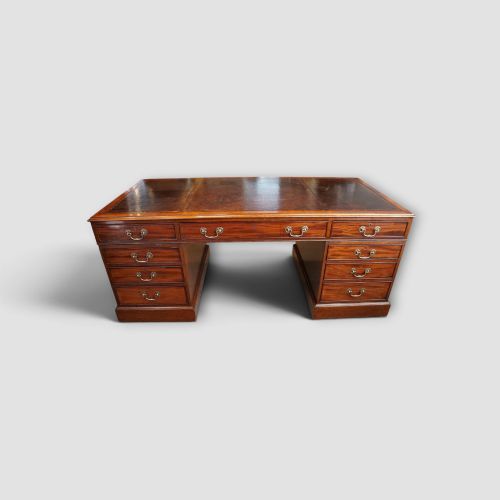
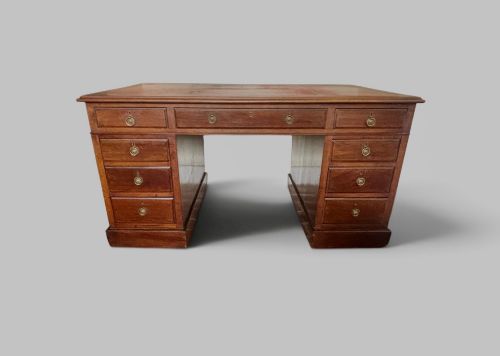
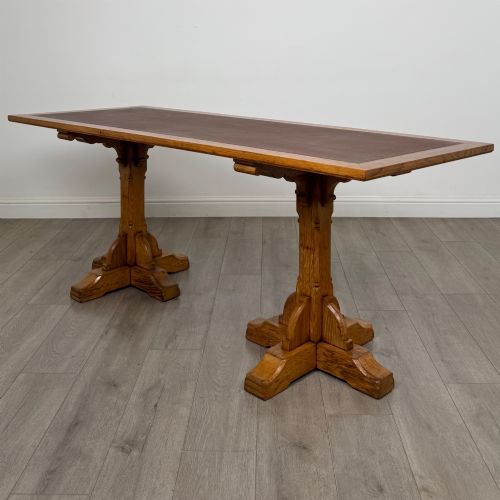
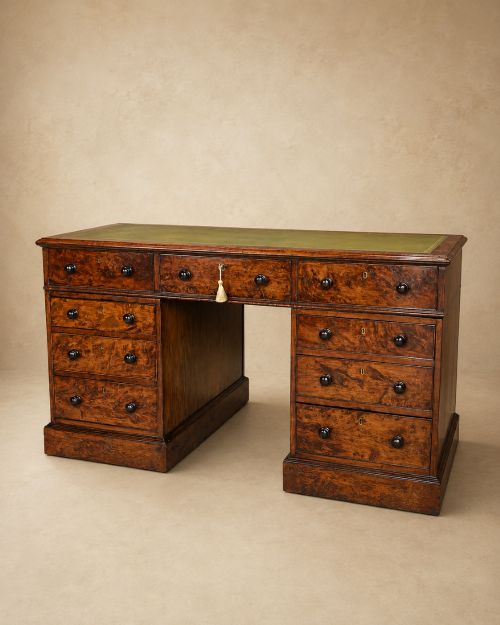
A large study desk provides commanding workspace, and the examples gathered here range from partners writing tables to heavy oak pedestals.
Large Study Desk
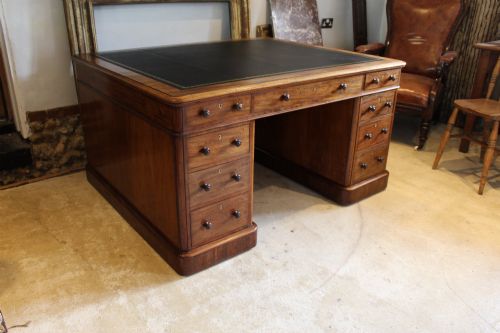
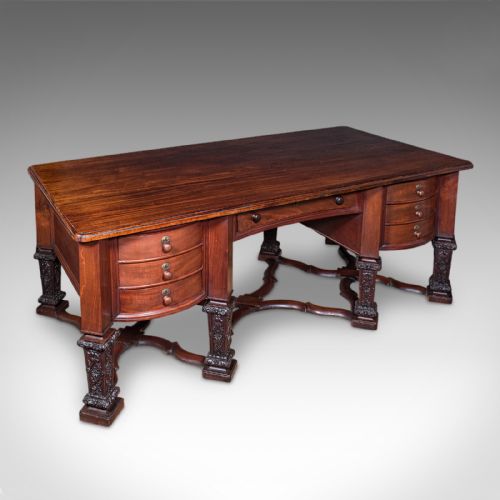
A large study desk serves as the architectural anchor of a room, designed to offer generous surface area and substantial storage. When you search for a large study desk, you will encounter pieces spanning the nineteenth and early twentieth centuries, with Victorian and Edwardian examples appearing most frequently.
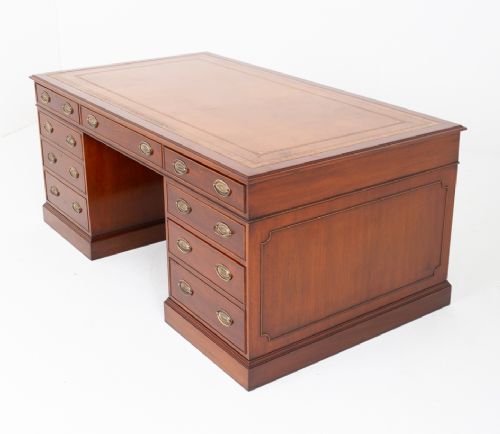
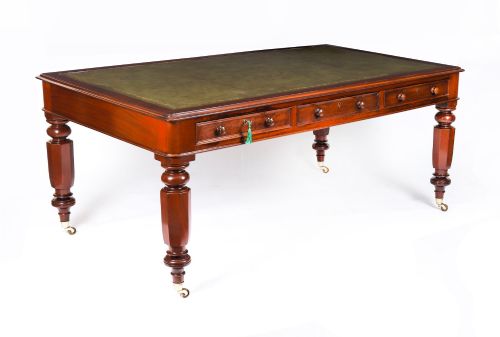
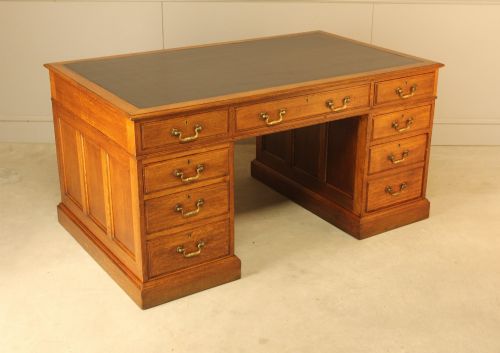
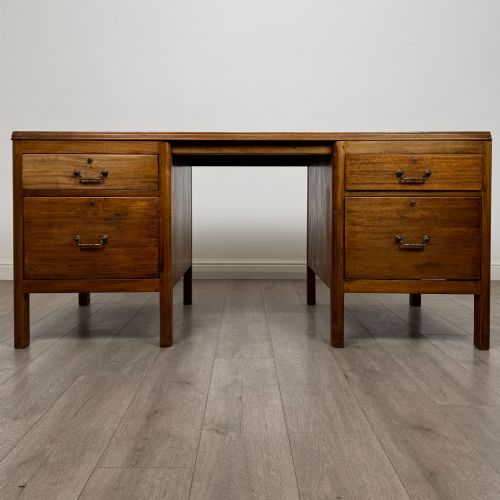
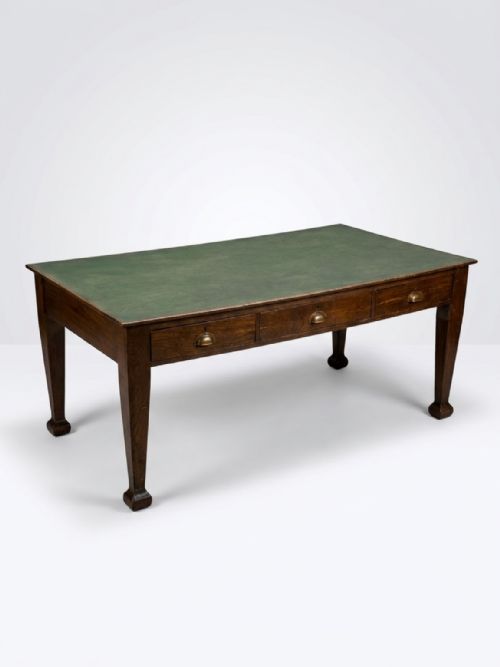
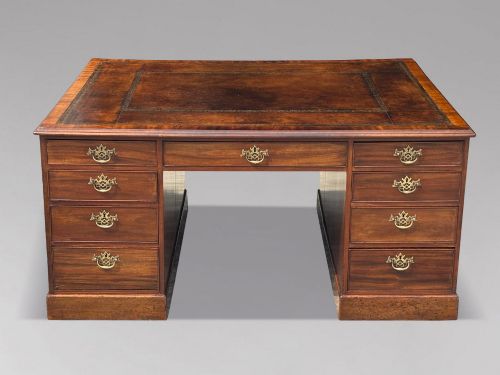
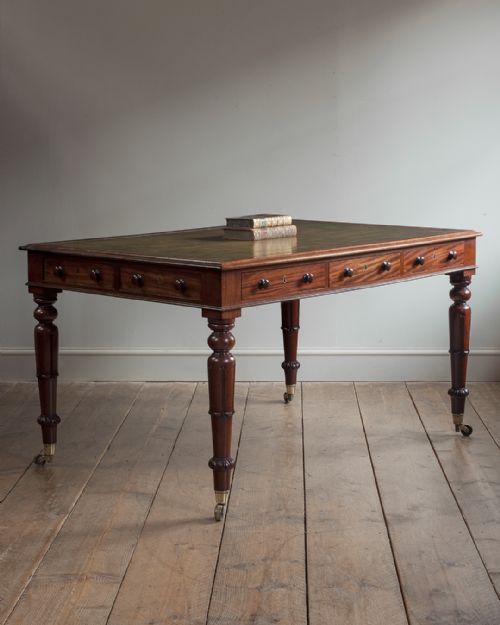
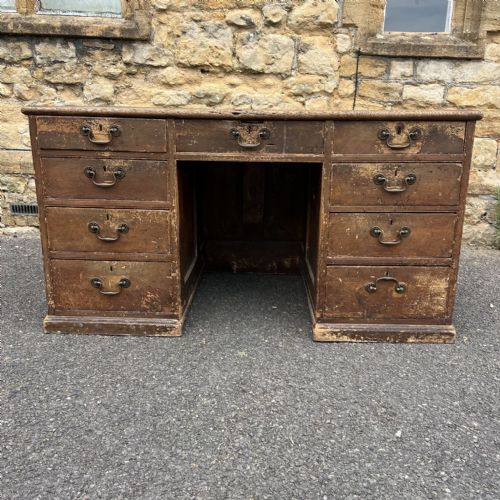
The selection centres heavily on partners desks and pedestal configurations, alongside library tables and robust oak bankers or wages desks. These utilitarian and formal forms originated to manage heavy paperwork in public institutions, solicitors' offices, and large private estates.
Makers utilised resilient timbers to construct pieces that endure decades of daily use, incorporating leather inserts for writing surfaces. The evidence shows styles reaching back to Georgian and Regency inspirations, as well as Arts and Crafts and Louis XIV revivals.
Distinctions in Standard
Quality rests upon the selection of timber veneers and the intricacy of the underlying carcase construction. Pieces featuring matched flame mahogany or burr walnut display a higher grade of craftsmanship than plain utility versions.
Drawer capacity and hardware configuration also distinguish standard pieces from exceptional ones, such as eighteen-drawer partners desks or those with panelled backs designed to stand freely in the centre of a room.
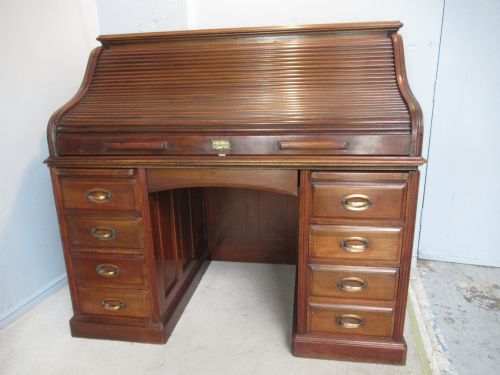
The inventory includes nineteenth-century library tables, roll top desks, and nineteenth-century partners desks.
Charles Andrea Nosotti·Eileen Grey
The Large Study Desk Glossary
- Partners desk
- A large double-sided desk designed for two people to work opposite one another, featuring drawers and cupboards on both faces.
- Pedestal desk
- A heavy freestanding desk comprising two supporting banks of drawers beneath a single top surface.
- Library table
- A large rectangular table utilised for reading and writing, often fitted with frieze drawers.
- Bureau Mazarin
- An ornate cabinet desk featuring a recessed central cupboard flanked by banks of drawers, resting on multiple legs.
Large Study Desk: Frequently Asked Questions
What is a partners desk?
A partners desk is built with storage drawers and cupboards on both sides so two individuals can sit and work opposite each other. These large pieces were traditionally used in banks, law firms, and stately homes.
They are designed to stand in the middle of a room rather than against a wall. This double-sided arrangement provides equal workspace and kneehole clearance for both users.
How do I care for a leather desk top?
Leather writing surfaces require gentle cleaning with a damp cloth and occasional treatment with suitable leather balms to prevent cracking. Avoid using harsh chemical sprays or placing hot cups directly on the hide.
Keeping the leather conditioned preserves the gold tooling and the suppleness of the material. Regular dusting prevents grit from wearing away the surface over time.
Where should I place a large study desk?
These substantial desks require adequate floor space and work best positioned in the centre of a spacious room or library. Partners desks in particular lose their visual impact if pushed against a wall.
Ensure you measure doorways and stairwells carefully before purchase, as these heavy timber pieces often do not dismantle easily. Positioning them away from direct sunlight protects the timber finish and leather inserts.
How do I identify Victorian desks?
Victorian desks are typically constructed from heavy mahogany, walnut, or oak, often featuring hand-dovetailed drawer construction and turned or fluted legs. They frequently incorporate inset tooled leather writing surfaces and brass hardware.
Stylistic influences during this period often looked back to earlier Georgian or Regency designs. Evidence of hand tools, such as saw marks on unexposed secondary timbers, helps confirm nineteenth-century origin.