

English Country Stool
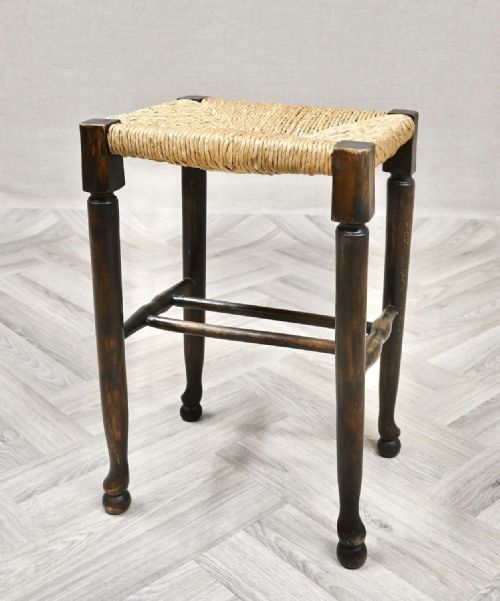
An english country stool brings utilitarian regional character and honest timber construction straight into an interior.
Forms and periods
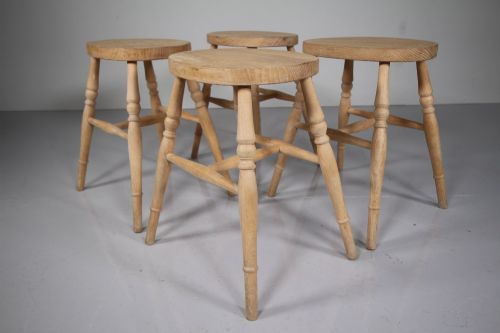
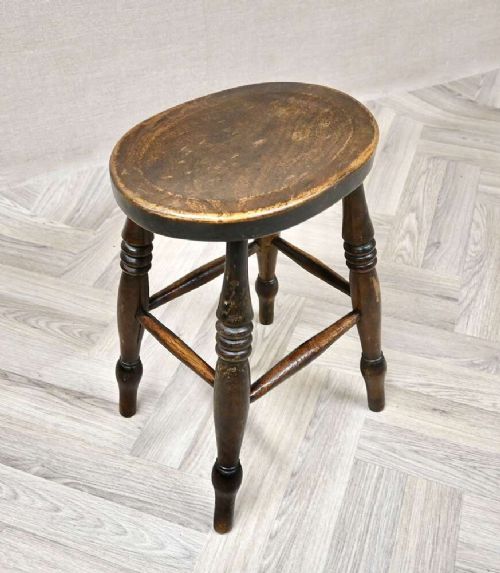
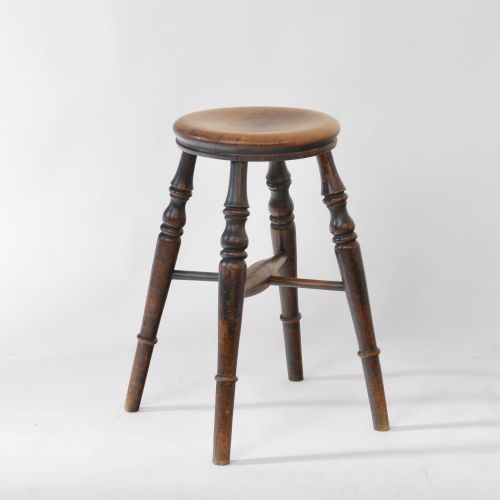
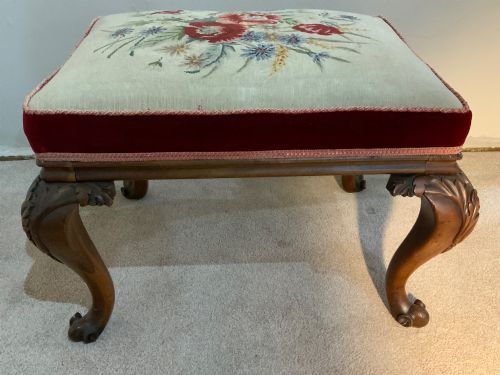
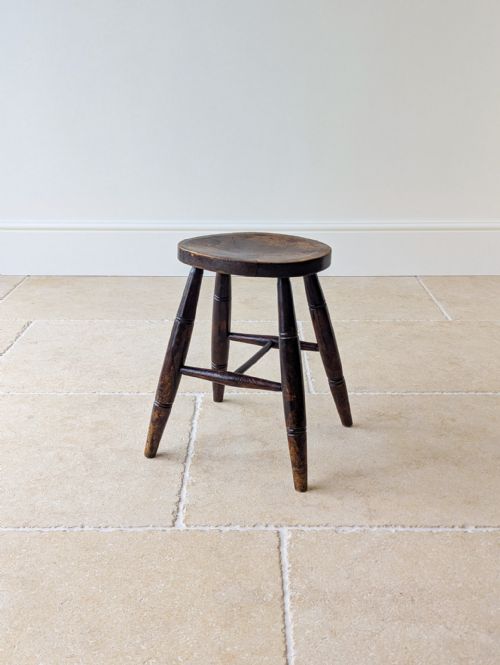
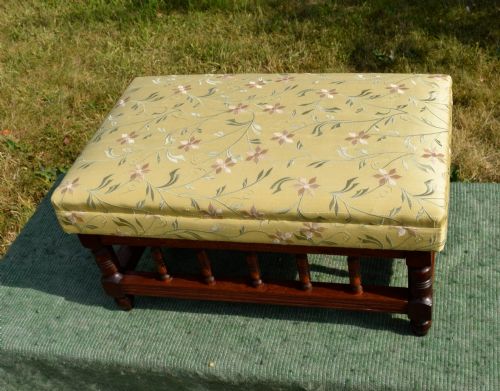
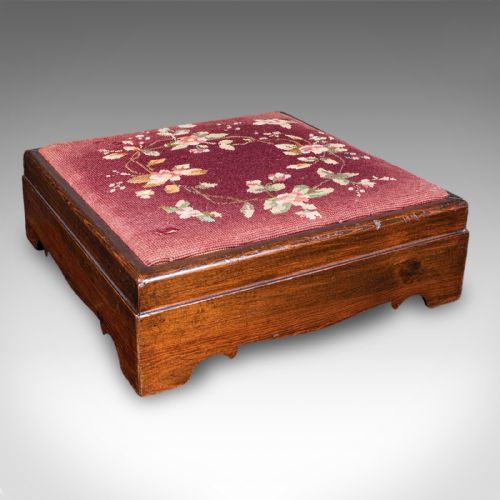
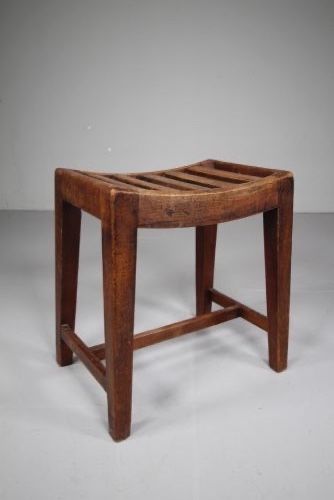
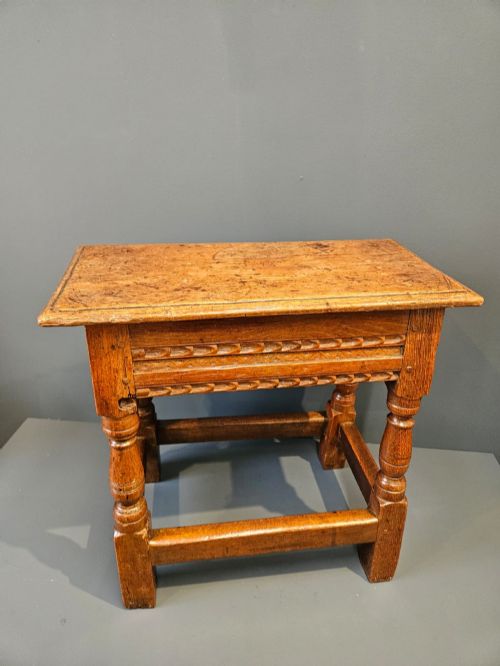
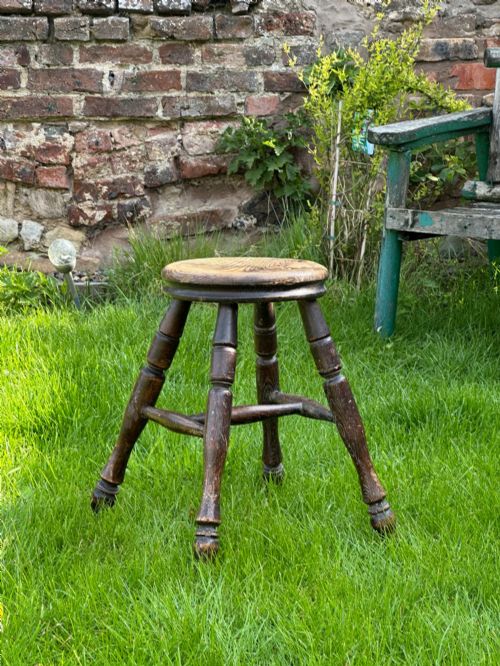
An english country stool encompasses functional wooden seating shaped by regional traditions rather than courtly fashion. These pieces range from simple three-legged milking stands to sturdy joined forms and low Windsor variants.
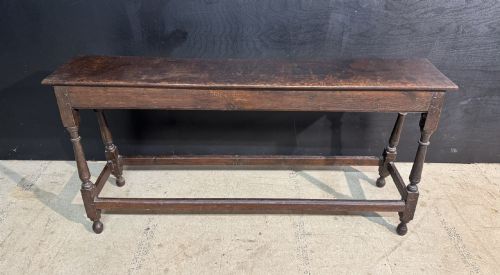
The selections available here lean heavily into the nineteenth century, though earlier oak examples and later studio pieces appear in the broader record. Buyers encounter square tops, round seats and occasional high stools designed for specific domestic or agricultural tasks.
Makers shaped these utilitarian objects for daily work in dairies, kitchens and cottage workshops across different English counties. Their straightforward designs reflect local materials and practical needs rather than academic stylistic rules.
Materials and construction
Craftsmen relied on native timbers such as elm, ash, oak, yew, beech and sycamore, often combining different woods within a single stool. Seats were commonly carved from solid elm or sycamore planks, while legs and stretchers utilised straight-grained ash or oak.
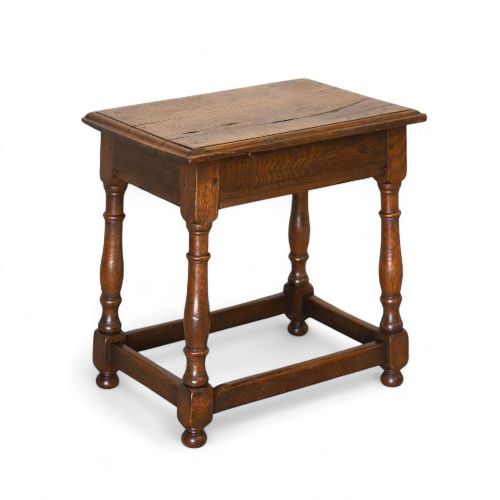
Joinery methods depended on the form, employing pegged mortise and tenon joints in early joined examples and turned legs wedged into drilled seats in Windsor and tripod stools. Some pieces feature brass hardware, leather elements, or original painted decoration and surface finishes.
Retail Price Guide 2026
Typical UK retail prices for english country stool, calculated from the Sellingantiques database of over a million retail prices indexed since 2003. This retail price guide relies exclusively on Sellingantiques data; no external sources or auction records are used, so the figures do not describe the wider market.
Listings feature elm, ash, yew, oak, and beech across nineteenth-century and earlier vernacular forms.
Timber selection and integrity
Quality rests primarily on the character of the timber and the integrity of the original construction. Selected pieces display well-figured elm seats or tight-grained oak, while lesser examples rely on plain or replacement boards.
The degree of wear and the retention of original surface patination distinguish finer survivals from heavily restored items. Construction stability, such as the snug fit of wedged legs into the seat underside, separates robust utilitarian work from compromised pieces.
The English Country Stool Glossary
- Joined stool
- An early wooden seat constructed with mortise and tenon joints fastened by wooden pegs rather than turned legs driven into bored holes.
- Milking stool
- A low three-legged or four-legged seat traditionally used by agricultural workers for milking cows or performing low household tasks.
- Windsor stool
- A seat featuring turned legs and spindles socketed directly into a thick solid wooden seat, echoing the construction of Windsor chairs.
- Close stool
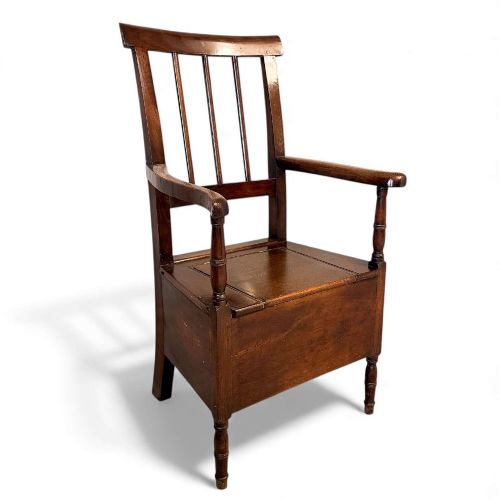
- A box-like furniture form enclosing a chamber pot, often fitted with a hinged lid for discreet indoor use.
- Vernacular furniture
- Objects made by local craftsmen using regional materials to satisfy practical local needs without reference to metropolitan design styles.
Frequently Asked Questions
How were these stools used?
These pieces served practical roles around the home, dairy, and farm, functioning as seats for milking, working, or sitting by the hearth.
Their robust construction allowed them to withstand heavy daily use in workshops and kitchens rather than formal reception rooms.
What woods were commonly used?
Cabinetmakers and local artisans utilised native British hardwoods, pairing tough elm or sycamore for seats with strong ash or oak for legs.
Occasional pieces incorporated yew, beech, or mahogany depending on the period and the regional workshop traditions.
How do I date an antique stool?
Dating relies on observing construction methods, tool marks, timber shrinkage, and the style of the turnery on the legs and stretchers.
Early seventeenth-century examples typically feature joined frames, whereas nineteenth-century versions frequently employ simpler turned leg insertion.
Can I use these in modern rooms?
These compact wooden seats fit easily beside armchairs, as bedside tables, or as functional display stands in contemporary spaces.
Their neutral timber tones and honest construction complement minimalist interiors as well as traditional rustic settings.