
English Brass Lighting
English brass lighting brings warmth and utility into a room, spanning tactile candlesticks to grand chandeliers.
English Brass Lighting
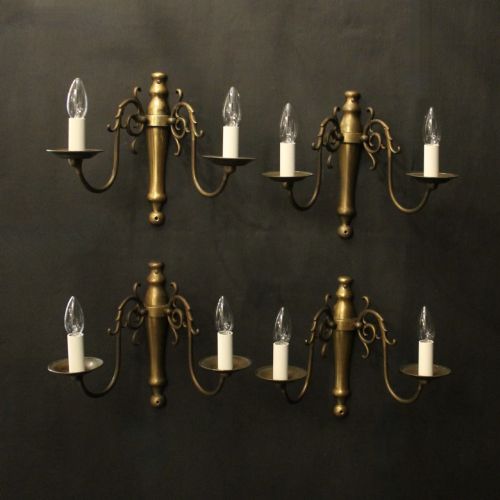
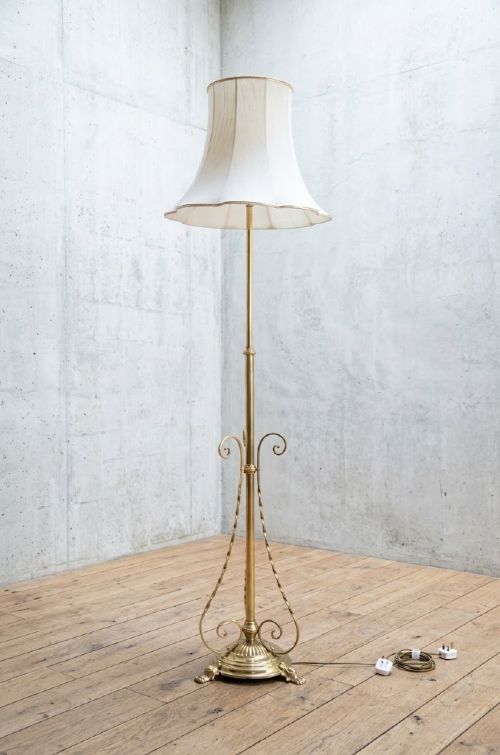
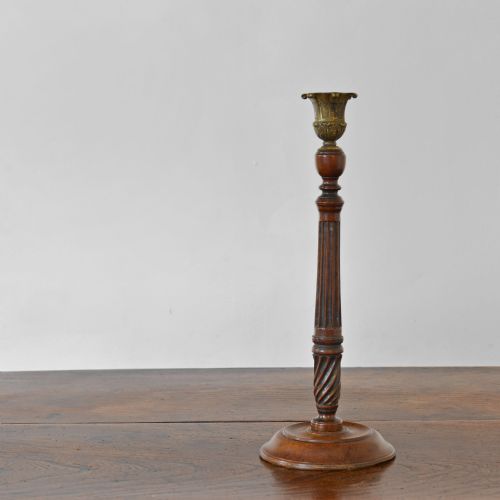
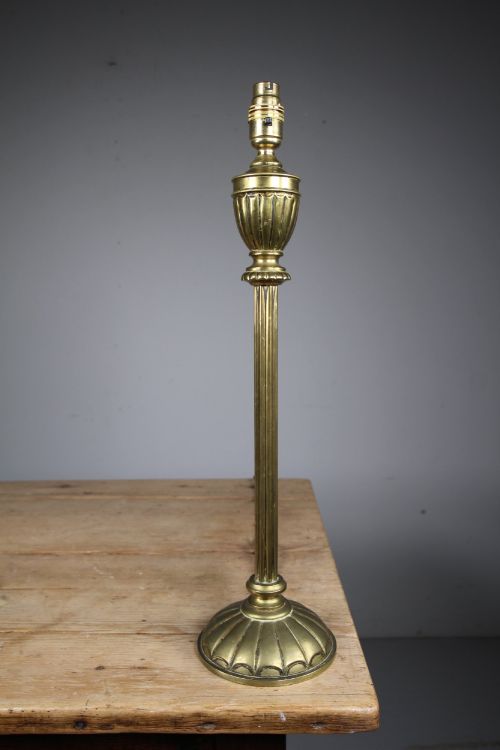
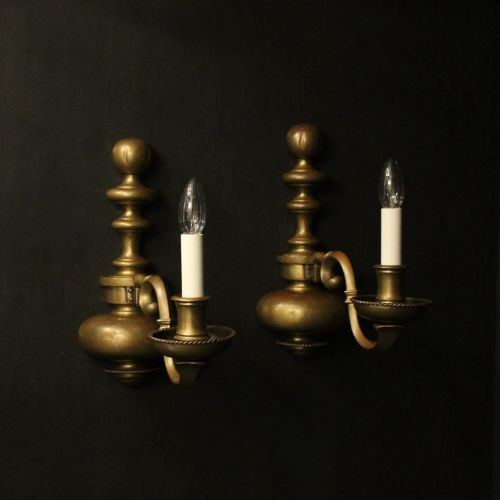
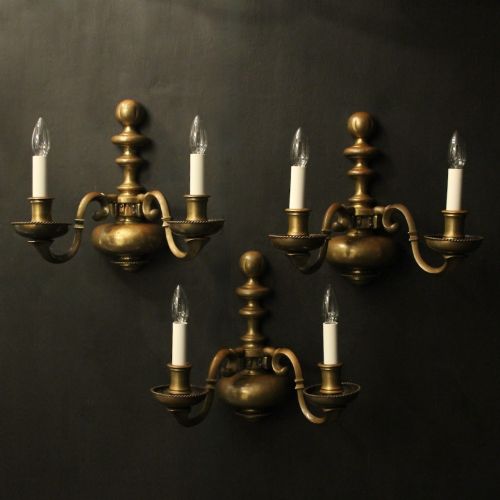
English brass lighting encompasses domestic utilitarian items and decorative fixtures produced across several centuries. Candlesticks and oil lamps dominate the earlier periods, alongside wall sconces and heavy floor lamps.
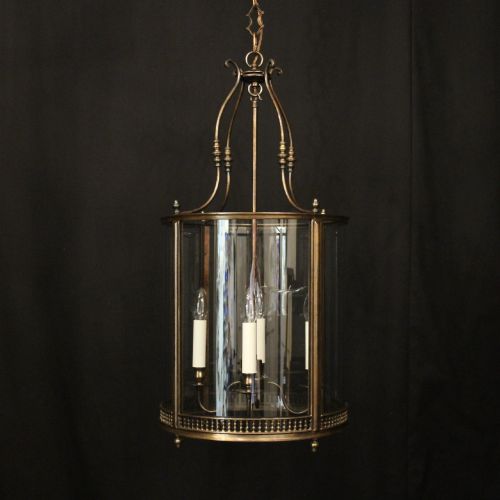
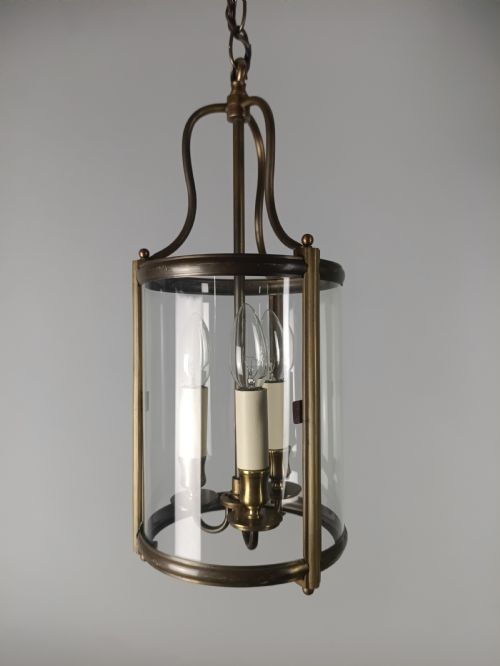
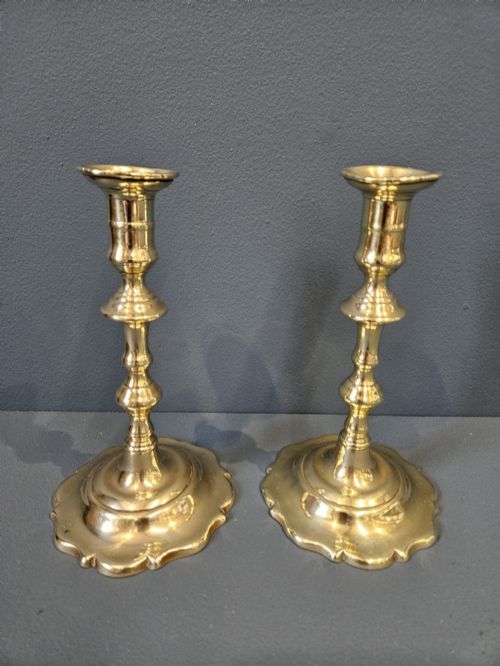
Buyers encounter eighteenth-century petal-base candlesticks, nineteenth-century Victorian oil lamps with ceramic reservoirs, and twentieth-century hall lanterns. These pieces served practical illumination needs before electricity remade domestic interiors.
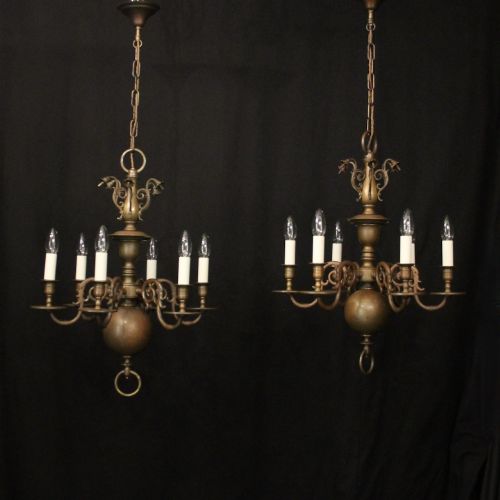
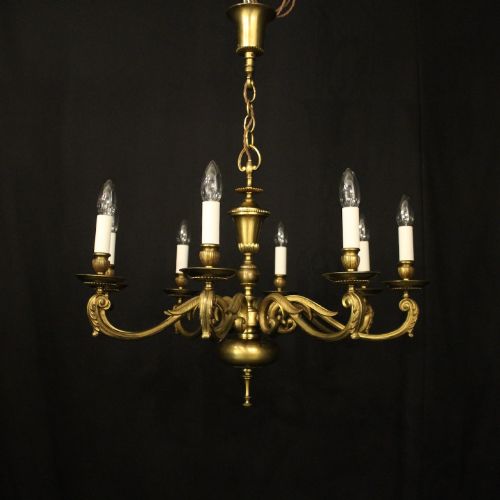
The selection ranges from simple chambersticks meant for carrying up stairs to multi-armed bronze and gilded chandeliers designed for reception rooms. Each form reflects the lighting technology and social habits of its respective decade.
Materials and construction
Makers utilised cast and seamed brass, bronze, and ormolu, often pairing metalwork with cut glass or moonstone glass shades. Early candlesticks frequently employed seamed construction methods where components were joined before finishing on a lathe.
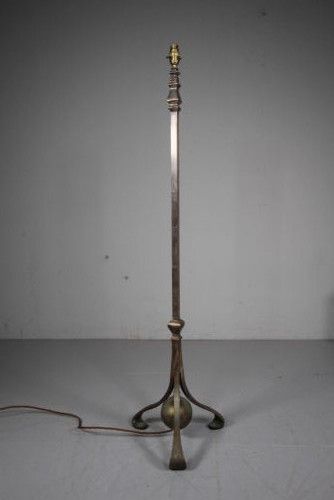
Later Victorian and Edwardian pieces incorporate complex mechanisms, including adjustable floor standards and articulated branches. Surface finishes vary from patinated bare metal to gilded applications and silver plating.
The object forms range widely, covering candlesticks, oil lamps, wall lights, floor lamps, and hall lanterns.
Judging quality and execution
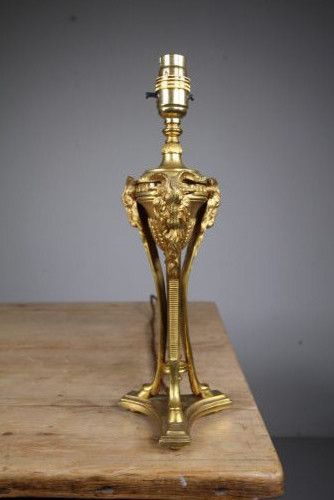
Superior examples demonstrate crispness in casting detail, particularly on ornamental elements like rams' heads, Corinthian capitals, and petal bases. Heavier gauge metal and secure, balanced proportions distinguish better workshops from mass production.
The integrity of period components, from original burner assemblies on oil lamps to matching glass shades, dictates desirability. Subtle hand-finishing marks on early seamed examples separate superior craftsmanship from later, purely mechanical output.
J.T. & Co·Hinks·Taylor Tunnicliff
The English Brass Lighting Glossary
- Ejector candlestick
- A domestic candlestick containing an internal mechanism to push out the remaining stub of a wax candle. This mechanical device made clearing and replacing candle ends straightforward.
- Chamberstick
- A low-profile candle holder fitted with a wide drip pan and a loop handle for carrying. These portable lights illuminated bedrooms and hallways during the evening hours.
- Plafonnier
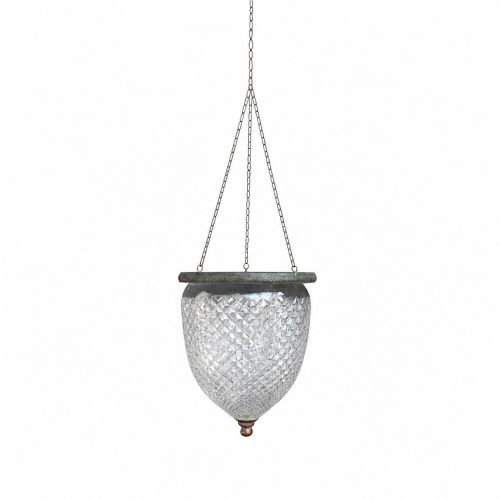
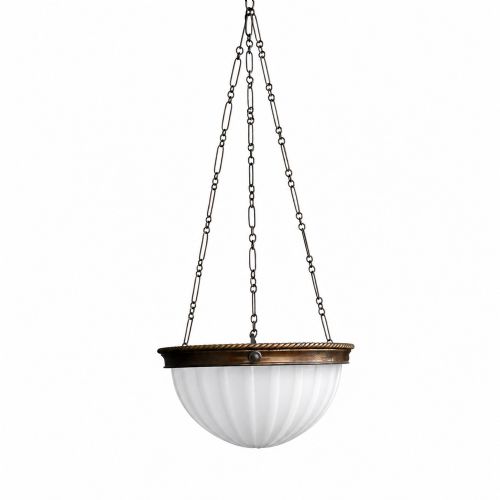
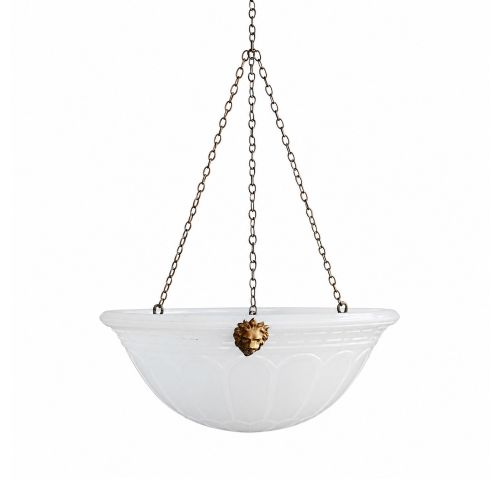
- A ceiling-mounted bowl light typically manufactured from pressed or frosted glass. These fixtures sit flush against the ceiling to diffuse light evenly across smaller rooms.
- Ormolu
- Finely ground high-purity gold applied to a bronze base using a mercury amalgam technique. This decorative coating yields a rich, warm metallic lustre on neoclassical pieces.
- Moonstone glass
- An opalescent white glass variety used for lamp shades to soften and diffuse glare. The glass gets its name from its resemblance to the shimmering appearance of the gemstone.
English Brass Lighting: Frequently Asked Questions
How do I date an old brass candlestick?
Dating relies on base shapes, casting methods, and stem profiles. Eighteenth-century pieces often feature petal bases and seamed construction, whereas nineteenth-century examples display heavier Victorian proportions and machine-threaded components.
Examining the wear patterns around the socket and the base underside provides further clues regarding age. Comparing the piece to documented examples from specific reigns helps narrow down the decade of manufacture.
How do I clean antique brass lighting?
Dusting with a soft, dry cloth removes everyday particles without disturbing the protective surface patination. Aggressive metal polishes strip away age and historical character, so they are generally best avoided.
For pieces with accumulated grime, a gentle wipe with a damp cloth and mild soap suffices. Preserving the natural darkening and mellow tone is standard practice among collectors.
What is the difference between brass and bronze?
Brass is an alloy primarily composed of copper and zinc, yielding a bright yellow metallic appearance. Bronze primarily combines copper with tin, resulting in a deeper, more reddish-brown hue.
Both metals appear frequently across English lighting, sometimes with added gilding or patination. The choice of metal often depended on the required structural strength and desired decorative finish of the object.