


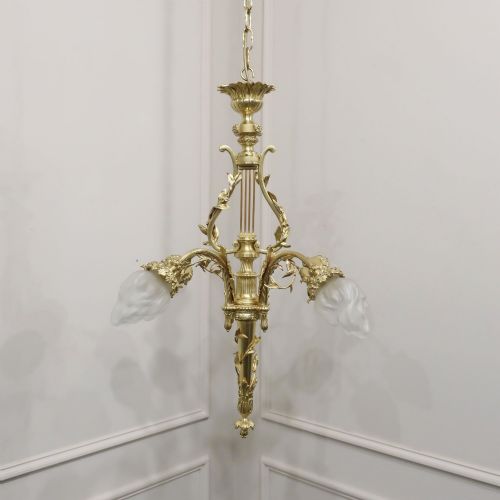
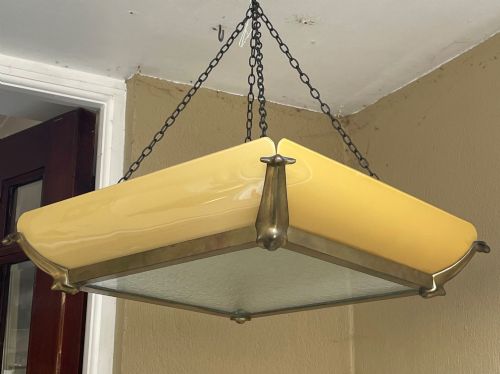
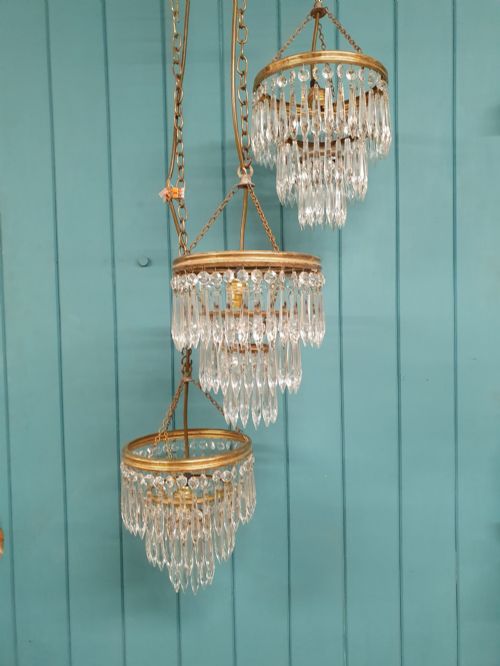
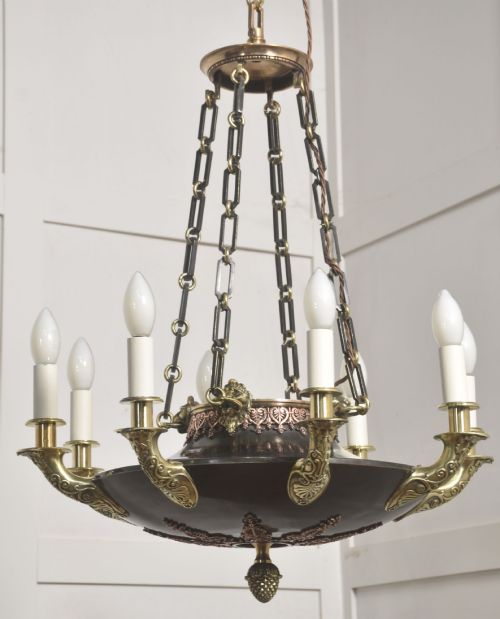
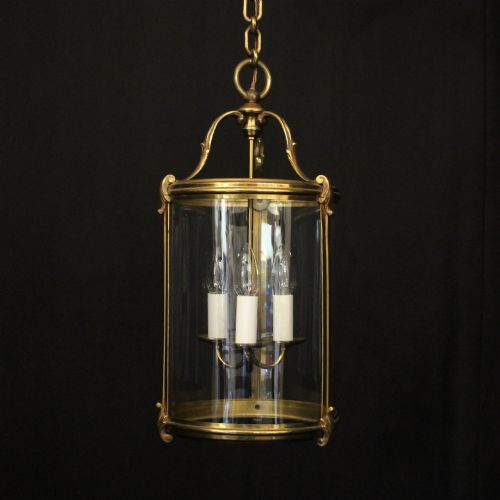
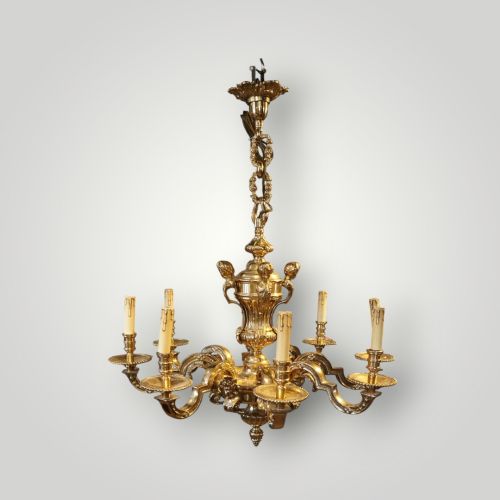
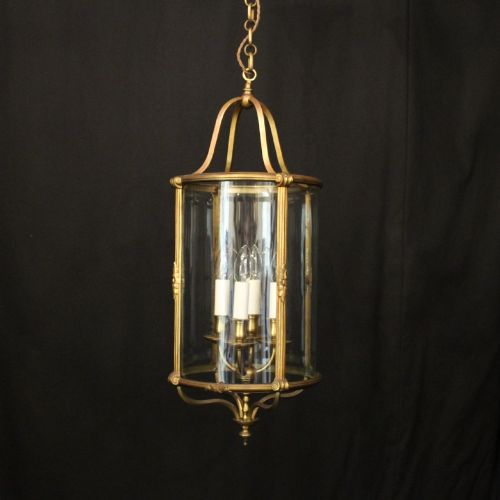
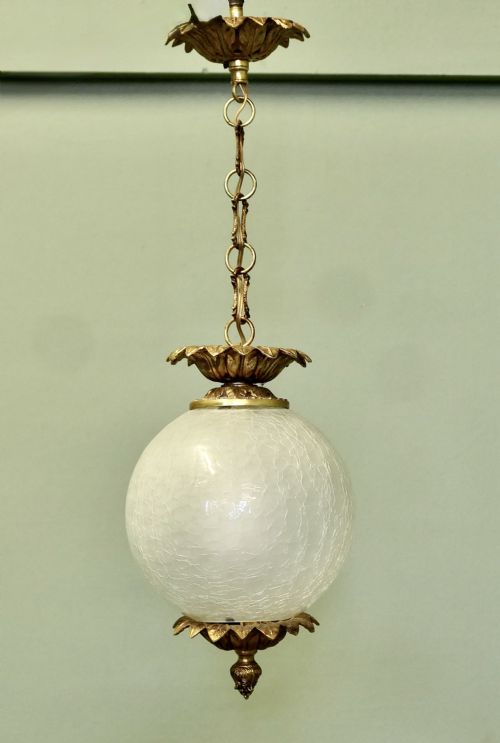
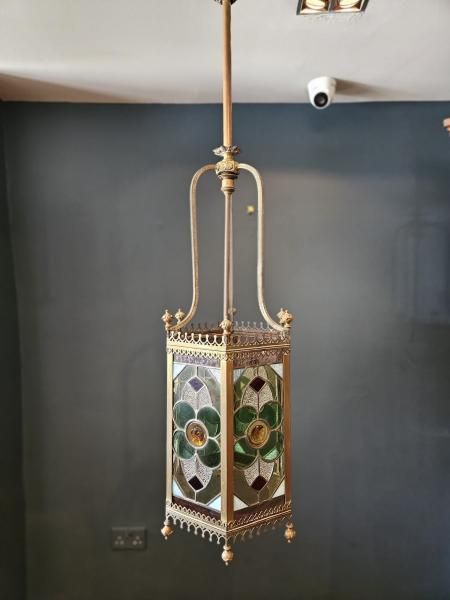
Brass Hanging Lamp
A brass hanging lamp brings warm illumination and period character to an entryway or hallway.
What brass hanging lamps are
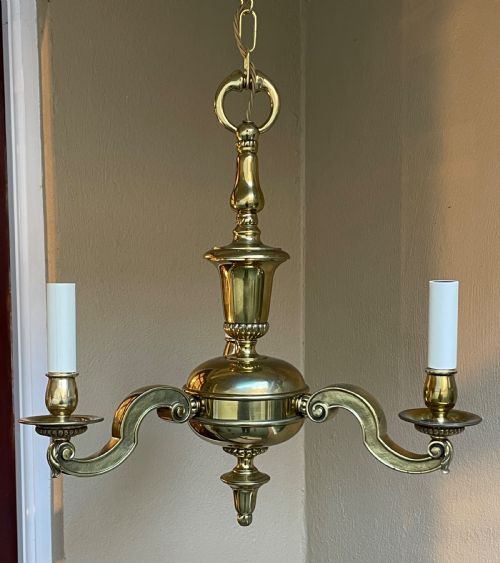
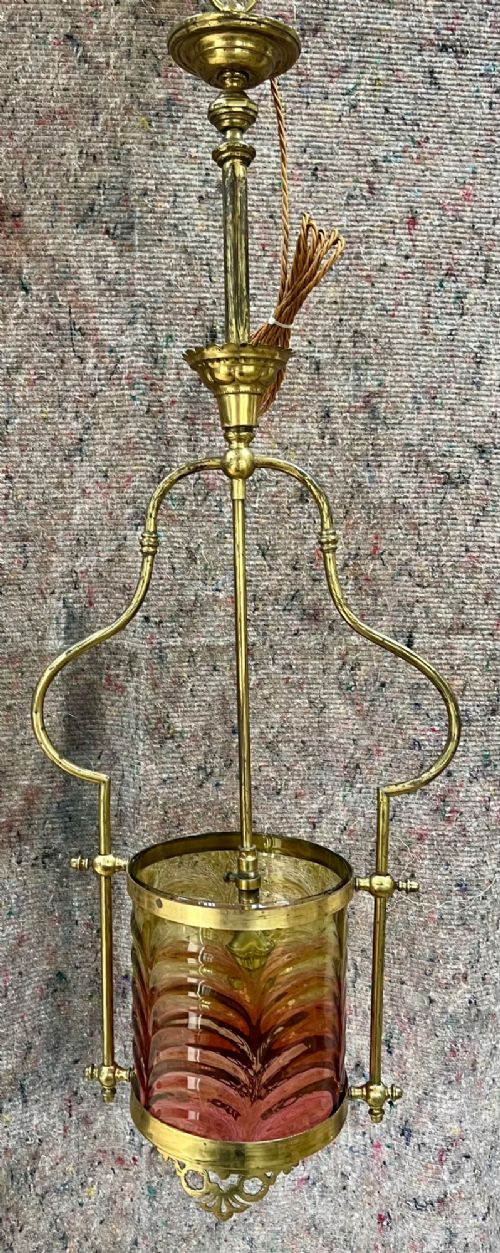
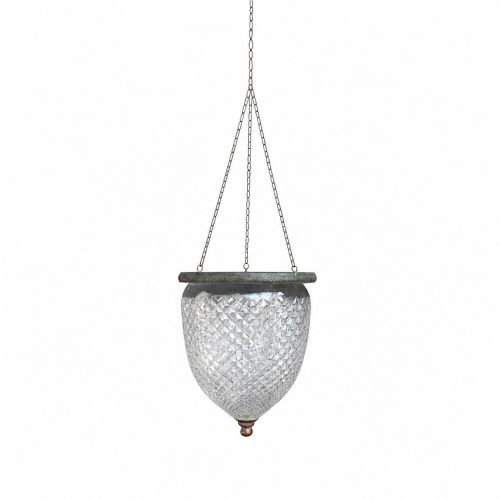
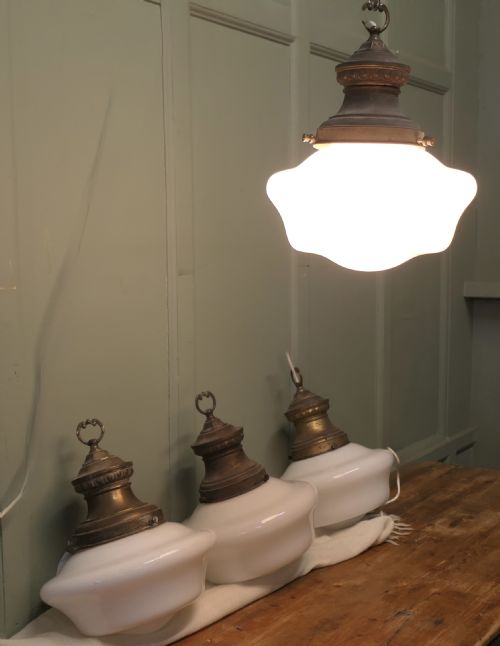
A brass hanging lamp encompasses ceiling lights, hall lanterns, and pendant lights designed to suspend from above. These fixtures bring practical overhead illumination and period character to hallways, stairwells, and rooms.
The brass hanging lamp examples on this page span the Edwardian era, nineteen-hundred, and nineteen-twenty. Designs range from simple round hall lanterns to more architectural square centre lights.
Many items combine metalwork with glass panels, including etched glass and toleware components. Both English Edwardian pieces and continental Amsterdam School designs appear in the collection.
How they were made
Makers constructed these fixtures primarily from brass, shaping the metal into frames, chains, and burners. Some examples incorporate glass panels, while others utilise etched glass or toleware bodies.
Assembly methods combined riveted or soldered brass frameworks with glazed panels secured by internal glazing bars. Suspended elements relied on sturdy chains or mounting brackets to support the weight of the metal and glass.
Retail Price Guide 2026
Typical UK retail prices for brass hanging lamp, calculated from the Sellingantiques database of over a million retail prices indexed since 2003. This retail price guide relies exclusively on Sellingantiques data; no external sources or auction records are used, so the figures do not describe the wider market.
Listings feature Edwardian, nineteen-hundred, and nineteen-twenty periods across brass, glass, and etched glass materials.
What varies in quality
Quality in a brass hanging lamp rests on the weight of the metal framework and the crispness of any surface detailing. Thicker brass gauge construction and clean joinery distinguish superior examples from lighter, more utilitarian alternatives.
The treatment of the glass elements also defines the tier of a piece. Intricately etched glass panels or hand-formed globular toleware bodies elevate the decorative ambition far beyond plain utilitarian glazing.
The Brass Hanging Lamp Glossary
- Hall lantern
- A ceiling-hung light fixture specifically proportioned for narrow entranceways and corridors. These fixtures usually feature glazed sides to distribute light evenly across a small space.
- Amsterdam School
- An architectural and design style originating in the Netherlands during the early twentieth century. It prioritises expressive, rounded brickwork and metal forms.
- Etched glass
- Glass decorated by acid or abrasive methods to create opaque patterns or scenes. This technique diffuses light gently while adding decorative detail.
- Toleware
- Painted or lacquered metalware, often tin or iron, shaped into decorative vessels and lamp bodies. It frequently mimics ceramics or adds colourful accents to a metal frame.
- Pendant light
- A solitary light fixture suspended from the ceiling by a cord, chain, or metal rod. It directs illumination downward into a specific area of a room.
Frequently Asked Questions
Where should I hang a brass hanging lamp?
These fixtures suit entrance halls, landings, and stairwells where overhead lighting is both practical and decorative. Their suspended design draws the eye upward and defines circulation spaces.
Ensure adequate ceiling height is available so the fixture clears head height comfortably. Hallways and high-ceilinged porches provide ideal placement for lantern-style pendants.
How do I identify an Edwardian brass hanging lamp?
Edwardian fixtures often feature restrained classical revival details or simple glazed frames designed to maximise interior brightness. Look for proportions suited to the generous hallways typical of the period.
The use of polished brass combined with clear or lightly etched glass points directly to early twentieth-century domestic lighting trends.
What is an Amsterdam School hanging lamp?
The Amsterdam School style brings distinctive early twentieth-century European modernist character to lighting design. These pieces often feature geometric or waterfall metal configurations.
Such lamps rely on strong architectural silhouettes rather than traditional period ornamentation to create visual impact.
Are these lamps wired for modern use?
Most antique lighting requires inspection and rewiring by a qualified electrician to meet current safety standards. Original lampholders and wiring may not comply with modern electrical codes.
An electrician can easily update the internal components while preserving the historic exterior brass and glass structure.