
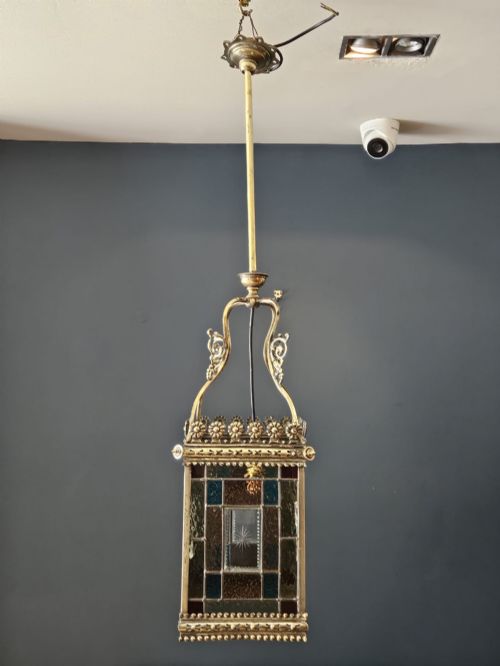
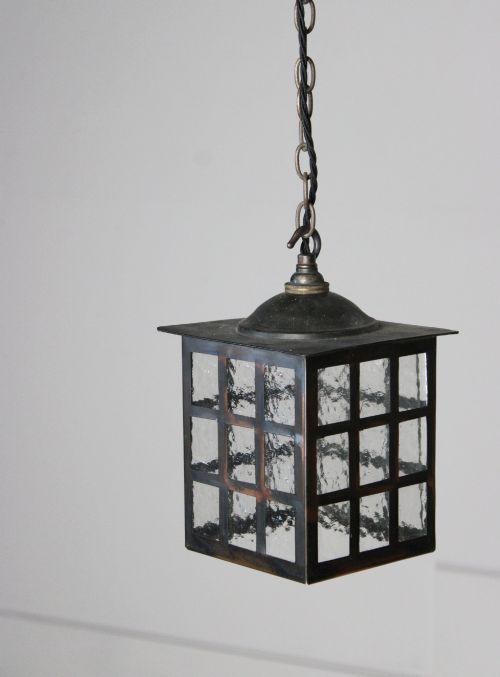
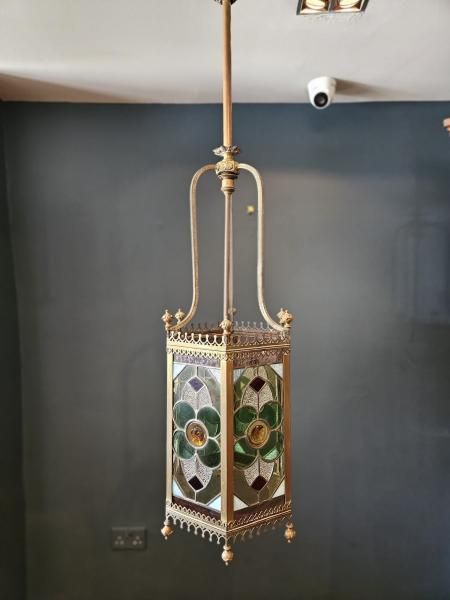
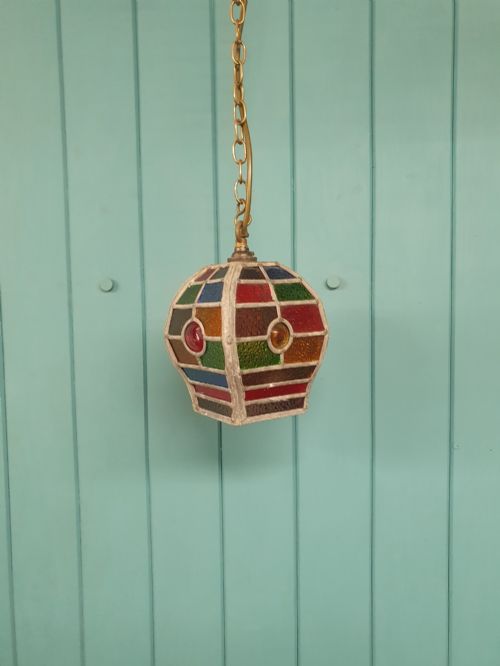
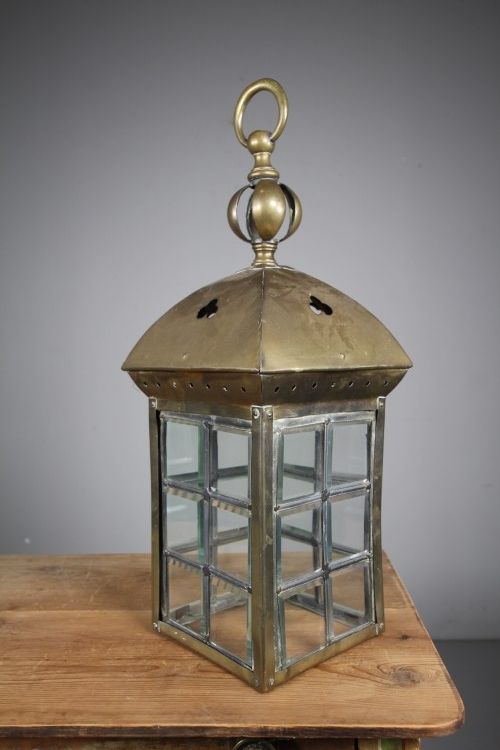
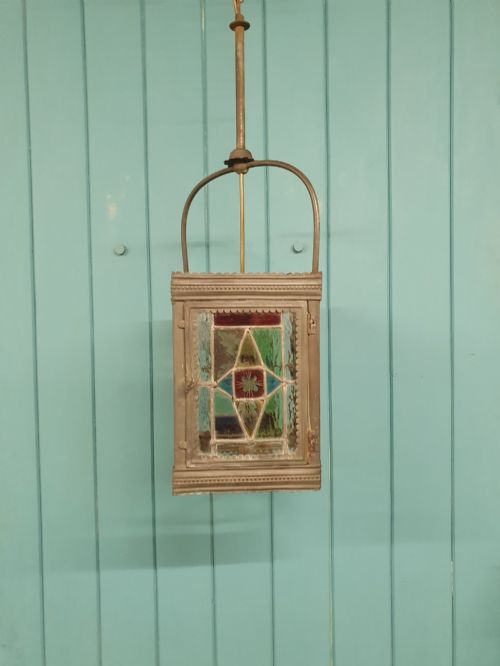


Leaded Glass Lantern
These leaded glass lantern pieces catch the eye with their soldered metal and coloured panes, casting a warm light in a hallway.
Leaded Glass Lantern
When you search for leaded glass lantern, you are looking at overhead lighting designed to hang in porches, halls, and large rooms. These pieces bring together metal framing and panes of clear, coloured, or stained glass joined with lead cames.
You will most commonly meet Victorian and Edwardian examples on this page, alongside pieces from around eighteen eighty and nineteen hundred. They appear in forms such as pendant lights, ceiling lights, and hall lanterns.
The aesthetic reaches from domestic Victorian brass fittings to robust Arts and Crafts copper designs and French wrought iron work. Gothic Revival influences also surface, drawing on architectural forms with pointed arches and heavy metalwork.
How they were made
Makers constructed these lanterns using a skeleton of brass, copper, bronze, iron, or steel to hold the structure. Individual pieces of glass were cut, wrapped in lead cames, and soldered at the joints to form the panels.
Surface finishes varied from patinated copper and polished brass to the natural dark tone of wrought iron. Stained and coloured glass panes were frequently incorporated to add rich hues when illuminated from within.
Some lanterns weigh enough to test the resolve of your ceiling joists.
What varies in quality
The distinction between ordinary and exceptional pieces lies in the weight of the metal frame and the intricacy of the leaded glass work. Heavier gauge brass or copper and complex geometric or pictorial stained glass indicate superior craftsmanship.
Originality of surface finish and glass panes separates untouched examples from those with replaced components. The crispness of the soldered joints and the harmony of the metalwork proportion reveal the skill of the original workshop.
The Leaded Glass Lantern Glossary
- Lead came
- The grooved lead strip used to hold individual pieces of glass together in a window or lantern panel. These strips form the structural grid of the design.
- Hall lantern
- A hanging light fixture specifically proportioned for entrance halls, corridors, and stairwells. They often feature protective glass panels to shield the flame or bulb from drafts.
- Arts and Crafts
- A design movement valuing traditional craftsmanship and simple forms over mass production. Pieces from this movement often display honest construction in copper and bronze.
- Patinated copper
- Copper that has aged naturally or undergone chemical treatment to alter its surface colour. This process creates rich brown, green, or dark tones on the metal.
Leaded Glass Lantern: Frequently Asked Questions
Where should I hang a hall lantern?
These lanterns suit entrance halls, porches, and high-ceilinged landings where their pendant drop can be fully appreciated.
Ensure you hang the fixture at a height that allows adequate headroom while casting light evenly across the space.
How do I identify a Victorian lantern?
Victorian pieces typically employ brass frames combined with leaded glass panels, often showing Gothic or classical proportions.
Examine the construction of the metal frame and the style of the suspension loop for period characteristics.
Are these lanterns wired for electricity?
Many examples have been electrified for modern use, though the wiring method can vary depending on past restorations.
Consult a qualified electrician to check the internal fittings and ensure safety before installation in your home.