


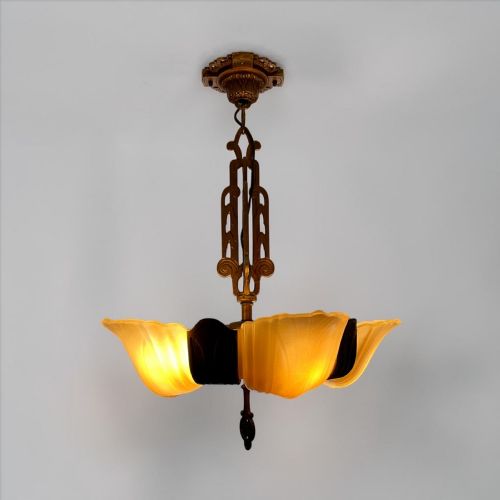
Antique Ceiling Lamp
An antique ceiling lamp anchors a room with gathered brass, cut glass, and steady overhead light.
Antique Ceiling Lamp
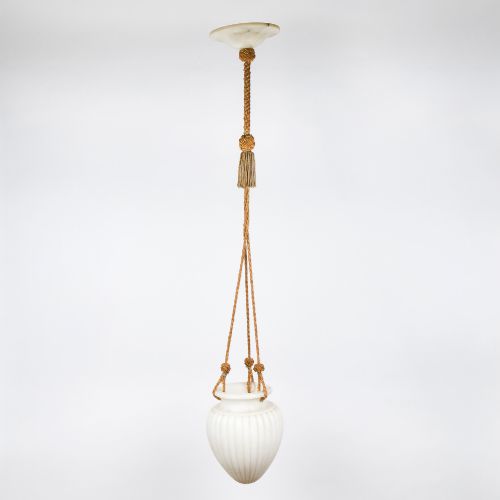
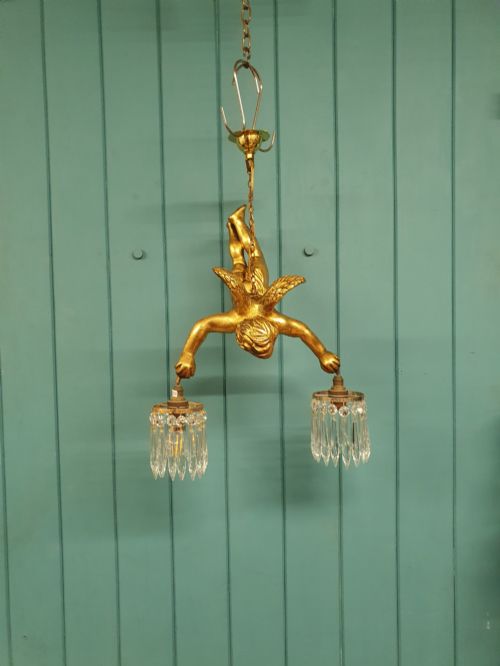
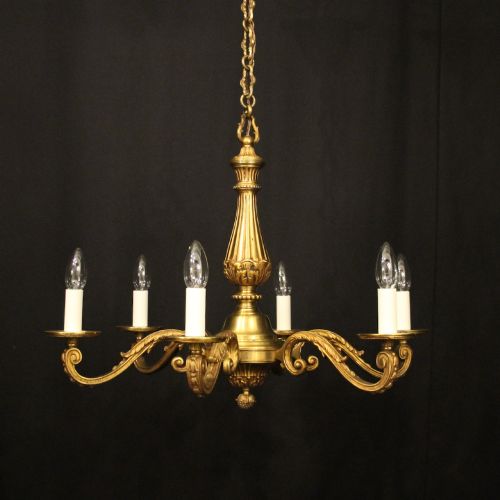
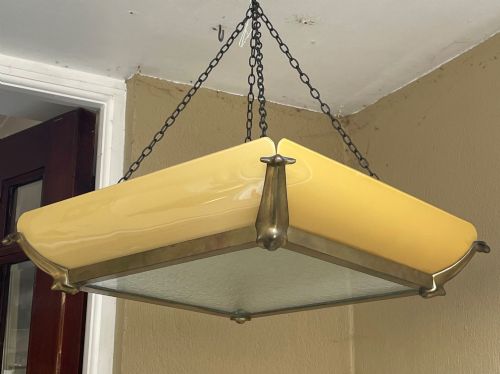
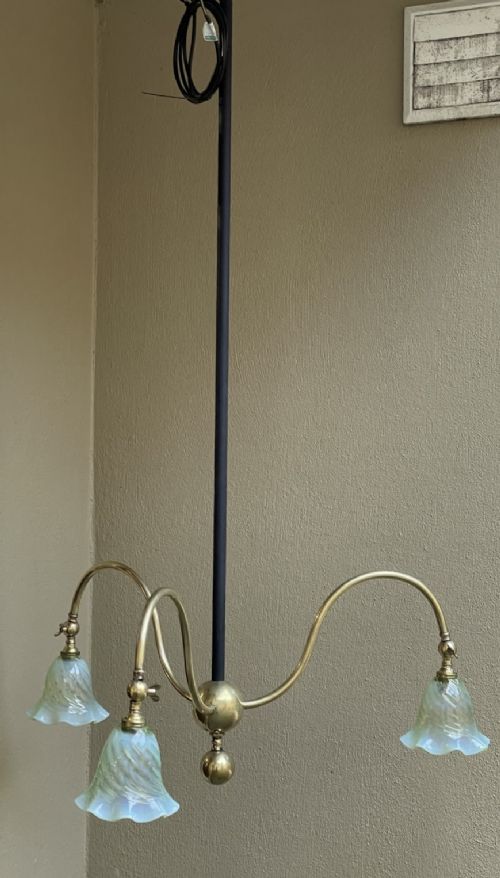
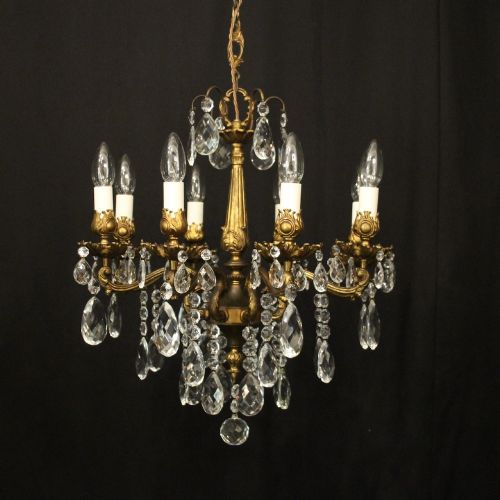
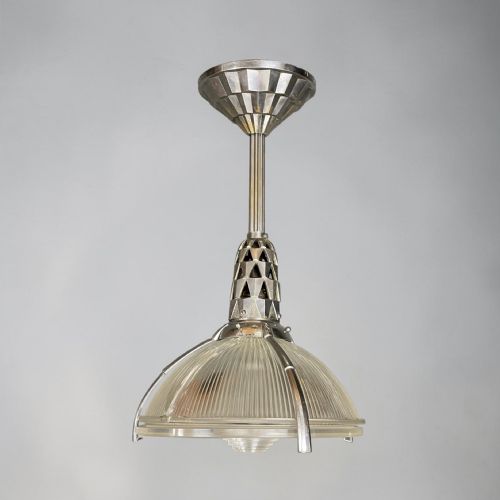
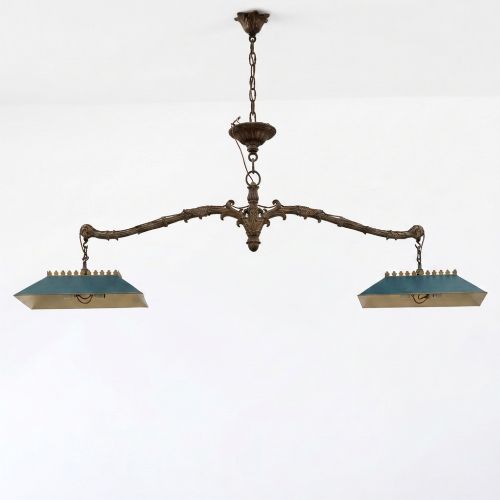
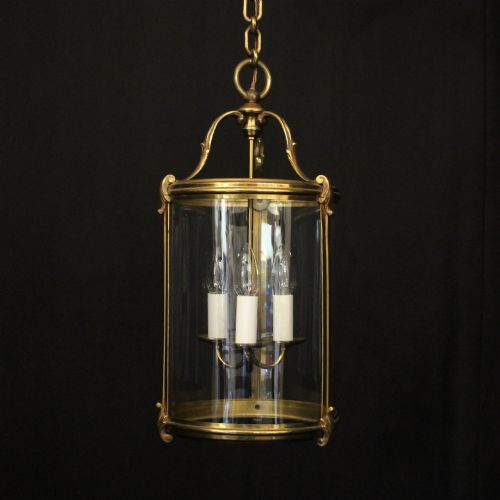
Every antique ceiling lamp on this page descends from practical lighting needs of the Victorian, Edwardian, and interwar decades, taking the form of multi-armed chandeliers, single pendants, and glass-enclosed lanterns.
French ateliers dominate the heavier gilded bronze and crystal arrangements, while English and American workshops supply simpler brass frames, industrial pendants, and utilitarian copper railway lanterns.
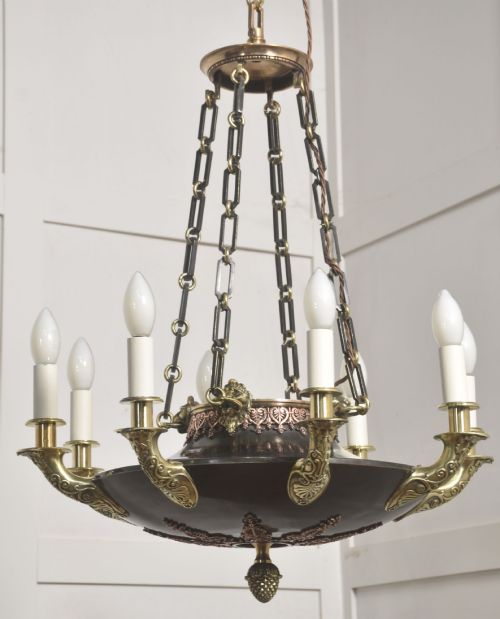
Buyers meet everything from grand Empire style waterfalls with eleven lights down to compact Edwardian cut glass plafonniers designed for modest domestic rooms.
Materials and Technique
Foundry work relied on cast brass, gilt bronze, spelter, and copper to build the structural arms and hanging mounts that support the weight of the fixture.
Refractive qualities came from hand-cut glass, moulded slip shades, leaded glass panels, and crystal spikes or droplets wired to catch and multiply the illumination.
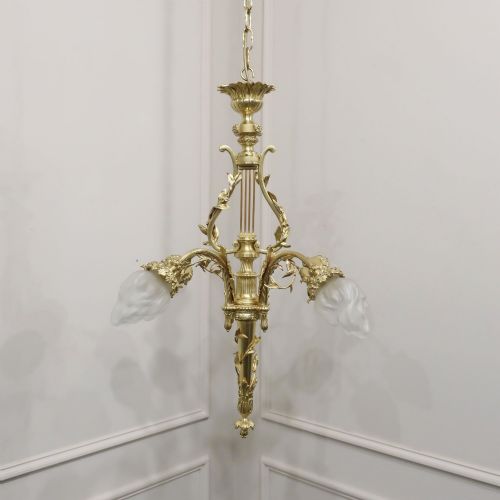
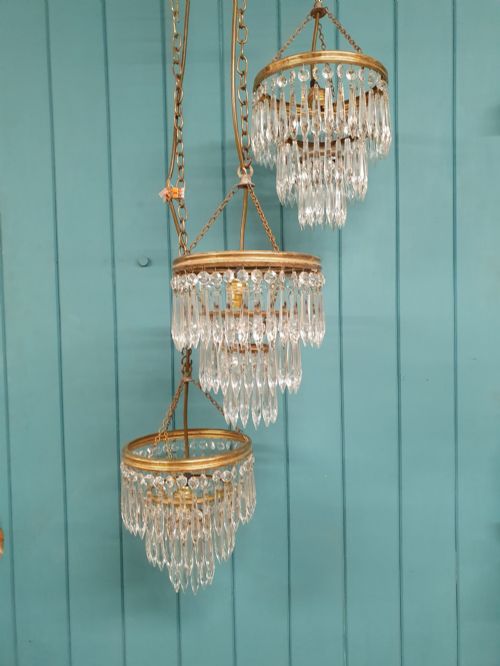
French styles range from restrained Neoclassical lyre chandeliers to elaborate tent and waterfall crystal configurations.
Craft and Proportion
Quality rests in the crispness of the metal casting and the depth of the gilding, where finer French bronzes show sharp chased detail rather than soft moulded edges.
The integrity of the glass elements defines the upper tier, distinguishing hand-cut crystal prisms and signed art deco shades from straightforward pressed glass plates.
Émile-Jacques Ruhlmann
The Antique Ceiling Lamp Glossary
- Plafonnier
- A shallow bowl-shaped ceiling light mounted close to the ceiling. These fixtures project illumination downward through decorative cut or moulded glass.
- Spike Chandelier
- A vertical hanging light featuring sharp crystal spikes or prisms arrayed around a central metal stem. This form was popular for concentrating sparkle in smaller spaces.
- Gilt Bronze
- Bronze metal coated with a thin layer of gold or gold-coloured alloy. It provides durable corrosion resistance while maintaining a warm metallic glow.
- Slip Shade
- An individual pane of glass that slips directly into a metal frame to form a bowl-shaped shade. These pieces define American and European art deco lighting designs.
Antique Ceiling Lamp: Frequently Asked Questions
How do I hang a heavy antique chandelier safely?
Heavy fixtures require direct anchoring to ceiling joists using steel brackets capable of holding several times the weight of the bronze and crystal.
Professional electricians should install modern wiring through the original hollow brass stems without compromising the vintage metalwork.
Can I adjust the drop of a hanging pendant?
Some Edwardian designs utilise built-in rise and fall mechanisms with pulley weights for height adjustment. Fixed chain or rod suspensions require link removal by a restorer.
Altering chain lengths demands careful handling of original ceiling roses and historical suspension loops.
How do I clean cut glass and crystal components?
Prisms and glass bowls should be unclipped and washed by hand in warm soapy water before drying with a soft linen cloth. Leaving crystals attached during cleaning risks damaging fragile brass pins and old wiring.
Harsh chemical solvents must be avoided to protect antique gilding on surrounding metal frames.
How do I date an antique ceiling light?
Dating relies on matching the stylistic markers, such as geometric art deco slip shades or heavy Victorian leaded glass, alongside the construction of the metal fixings. Screw threads, casting methods, and wiring channels offer further clues to the manufacturing decade.