

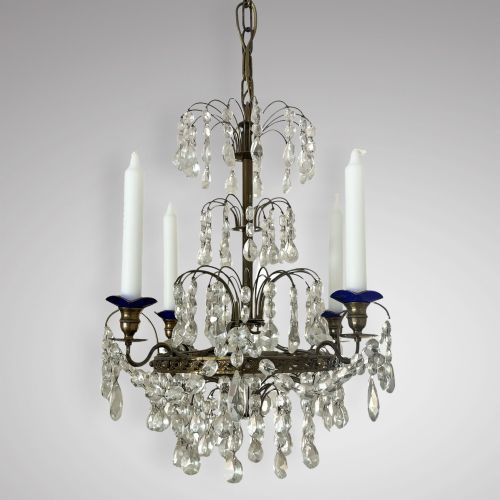
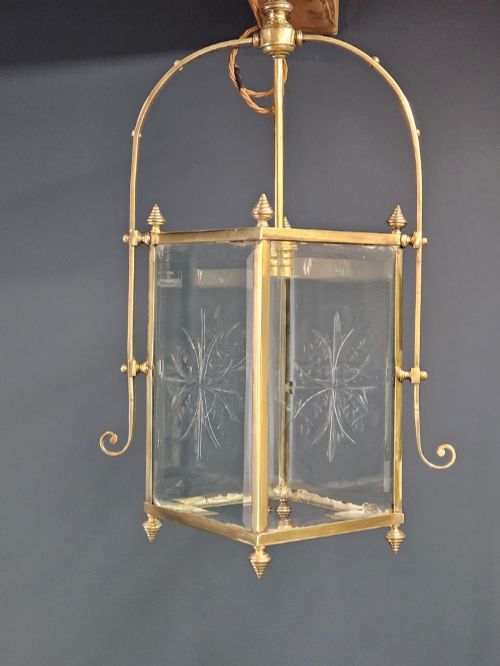


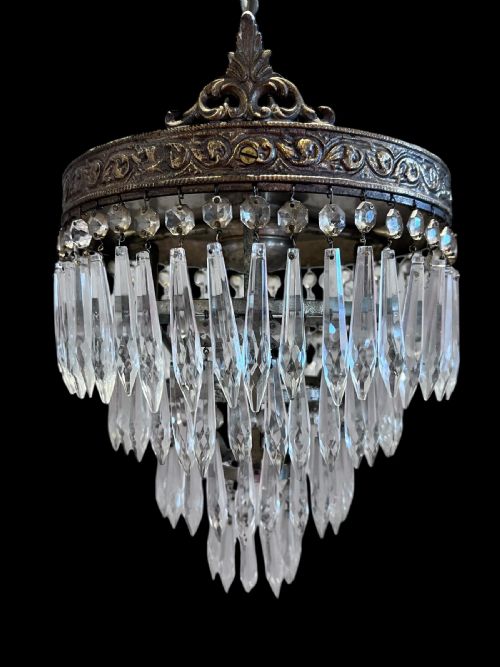


Framed Glass Pendant Light
Framed glass pendant lights bring overhead illumination through brass, metal, and cut crystal structures spanning Victorian, Edwardian, and early twentieth-century periods.
Framed Glass Pendant Light
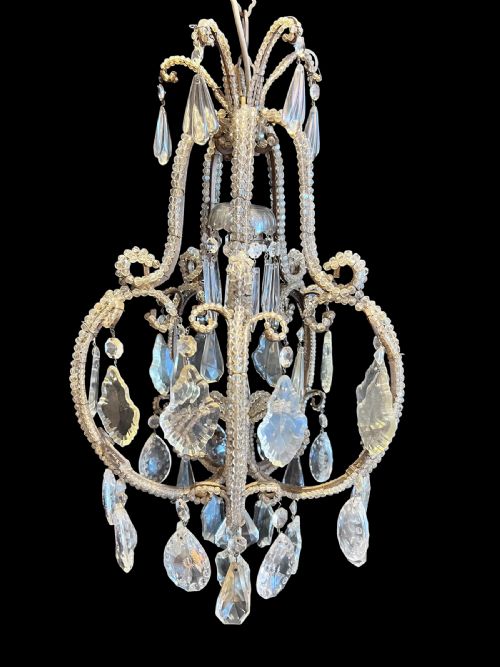
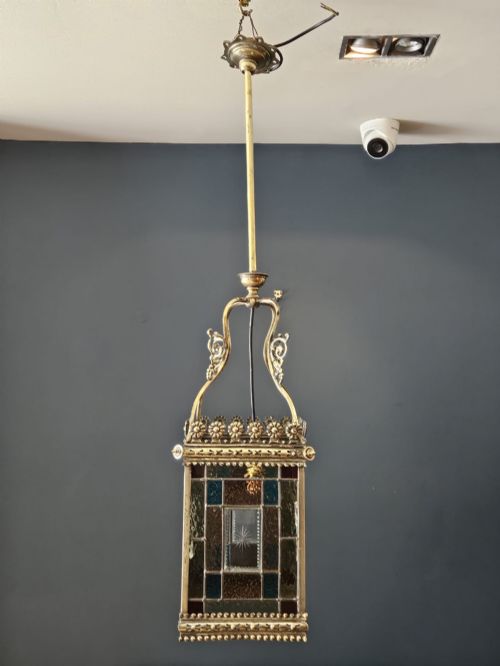
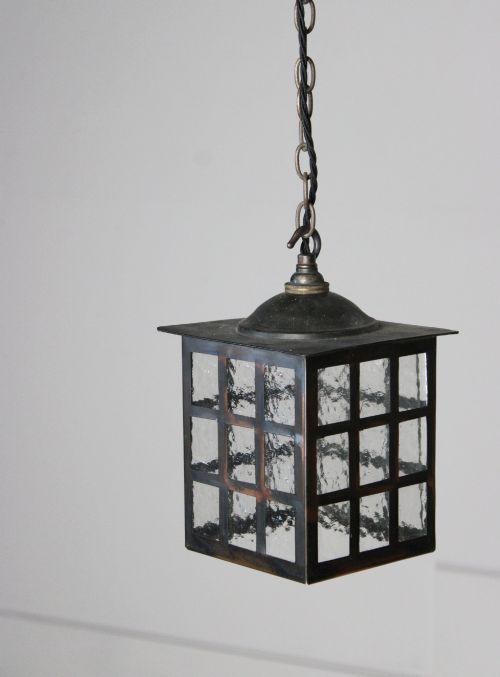
A framed glass pendant light represents a category of ceiling lighting encompassing lanterns, cage chandeliers, and drop fittings. These pieces emerge from the nineteenth century, Victorian, Edwardian, and early twentieth-century periods, running through the 1920s and 1930s.
The selections on this page demonstrate distinct stylistic influences including French Chateau, Italian Rococo, Art Nouveau, Arts and Crafts, and Gustavian. Most examples rely on metal frames enclosing or supporting glass elements.
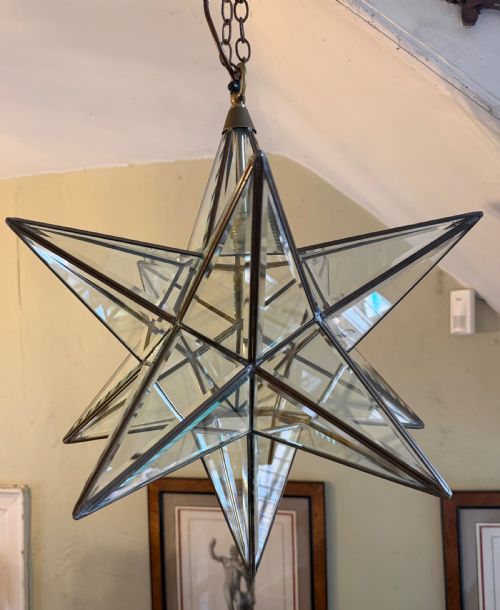
Form varies from single-light lanterns and moravian stars to multi-tiered waterfall chandeliers and basket fixtures. These overhead lights serve both functional illumination and decorative centrepiece roles within interiors.
Materials and construction
Construction relies on structural frames shaped from brass, gilt metal, copper, wire, and green steel. These metal frameworks support hanging glass components, lead glass panels, or bevelled glass inserts.
Optical and decorative effects come from cut glass, cut crystal, prism bags, swags, and long prisms. Individual components are wired or pinned into place within the metal armature to form lanterns and cage structures.
Listings feature brass, gilt metal, copper, wire, and steel frames paired with cut glass, crystal, and lead glass components.
Assessing quality and execution
Quality reveals itself in the weight and substance of the metal frame, whether solid brass, gilt metal, or heavy steel. Superior examples feature crisp casting, precise joinery, and robust structural integrity supporting the glass.
Glass components differentiate standard items from finer works through depth of cutting, clarity of crystal, and complexity of assembly such as multi-tiered waterfalls or leaded panels. The precision of the prisms and beads dictates how light refracts through the room.
The Framed Glass Pendant Light Glossary
- Pendant light
- A hanging lighting fixture suspended from the ceiling by a chain, cord, or metal rod. These pieces direct illumination downwards into a space.
- Cage chandelier
- A chandelier design enclosed within a metal skeleton frame shaped like a birdcage or basket. The structural metalwork holds numerous crystal drops and prisms.
- Bevelled glass
- Glass panes possessing angled edges cut and polished to a specific facet. This technique catches and refracts light passing through lanterns.
- Prism
- A cut glass or crystal pendant designed to refract light into spectral colours. Longer prisms and swags hang from the framework to increase sparkle.
- Plafoniere
- A ceiling-mounted light fitting positioned close to the surface rather than suspended on a long drop. These fixtures often feature bowl-shaped or basket glass elements.
Framed Glass Pendant Light: Frequently Asked Questions
Where should I hang a framed glass pendant light?
These fixtures suit hallways, dining spaces, and high-ceilinged rooms where overhead clearance allows suspended lighting. Their enclosed or semi-enclosed frames direct focused light downwards while casting patterns through the glass.
Selecting the correct scale ensures the proportion matches the room dimensions. Smaller lanterns fit compact vestibules, while multi-tiered chandeliers anchor larger living areas.
How do I identify an Edwardian lantern?
Edwardian pieces often combine brass framing with clean lines reflecting the shift away from heavier Victorian aesthetics. They frequently utilise clear or leaded glass panels within structured metal frameworks.
Examining the construction metal and the mounting hardware helps confirm the period. Brass and copper frames from this era show specific manufacturing tolerances typical of the early twentieth century.
How do I care for antique glass lighting?
Routine maintenance involves gentle dusting of the glass panels and crystal prisms using a soft cloth. Ensuring the power is off before cleaning prevents damage to the delicate metalwork and hanging components.
Periodic checks of the hanging chain, ceiling hook, and internal wiring maintain safety. Professional rewiring may be necessary for pieces retaining their original vintage electrical components.