



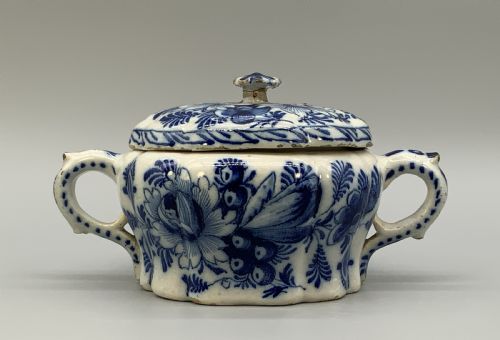

English Blue White Earthenware
English blue white earthenware brings together centuries of tin glaze, transfer printing, and cobalt pigment on ceramic forms.
English Blue White Earthenware
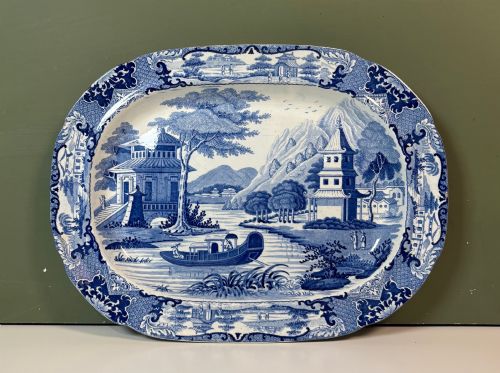
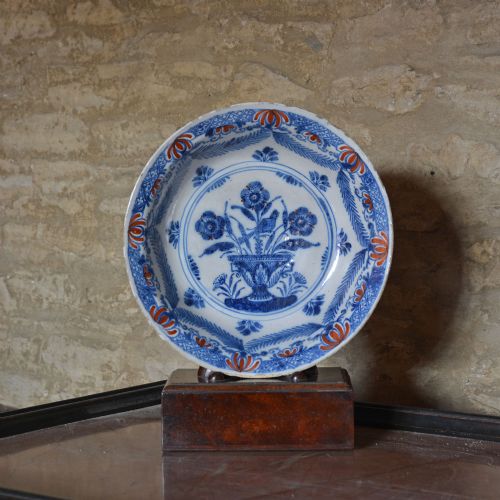
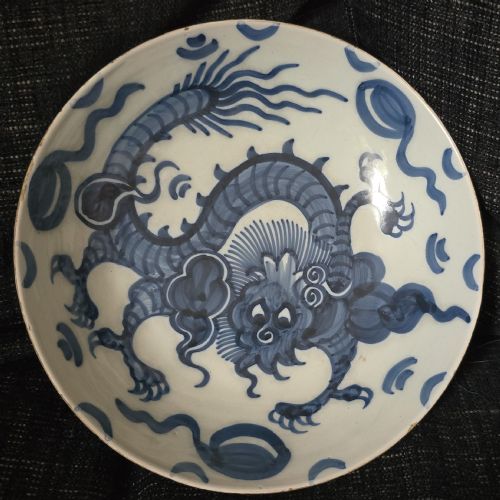
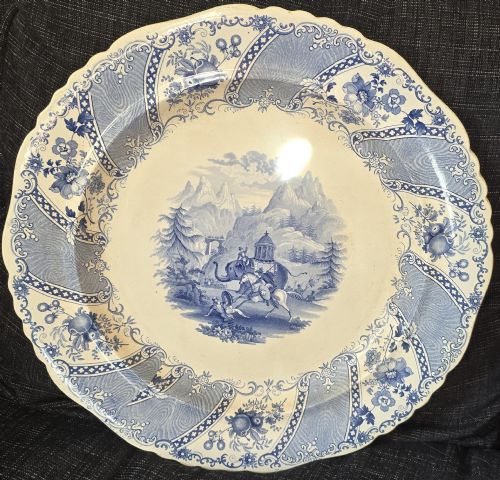
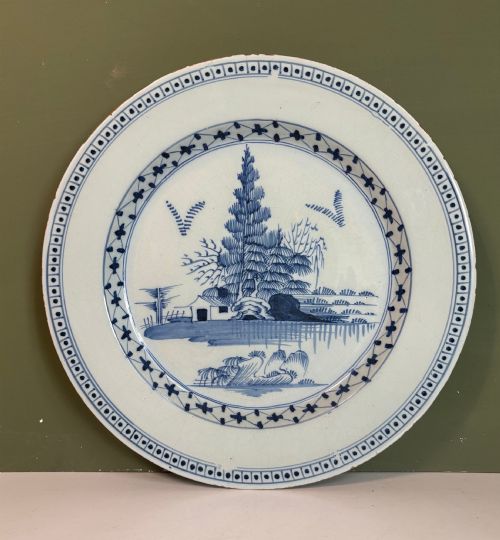
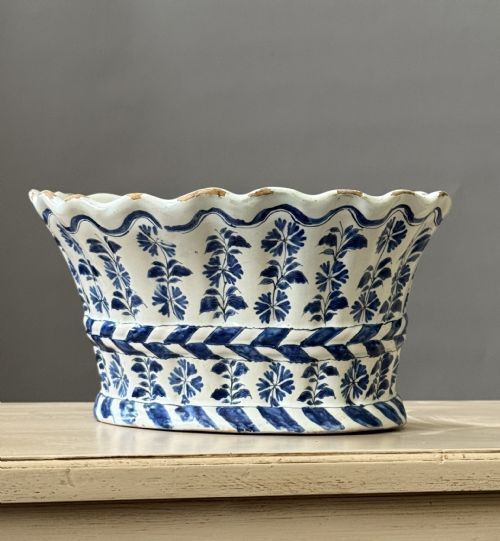
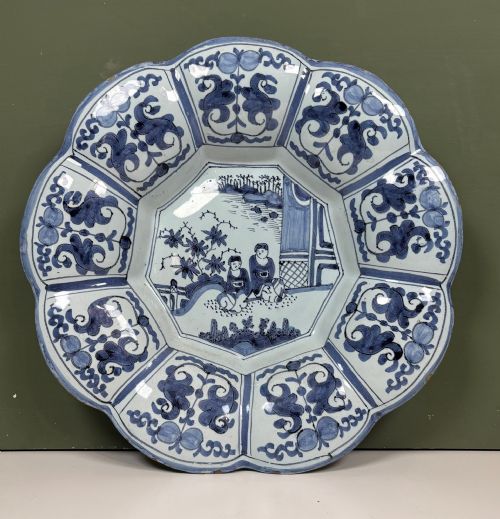
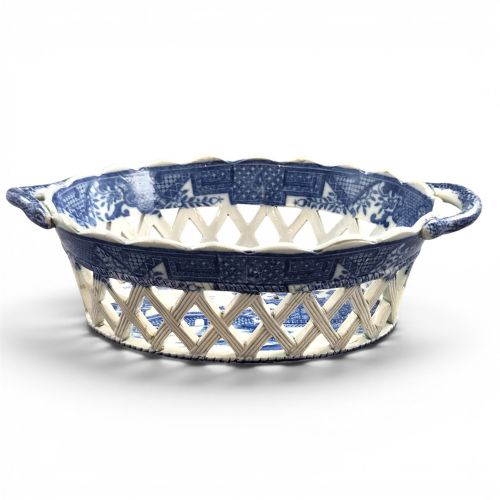
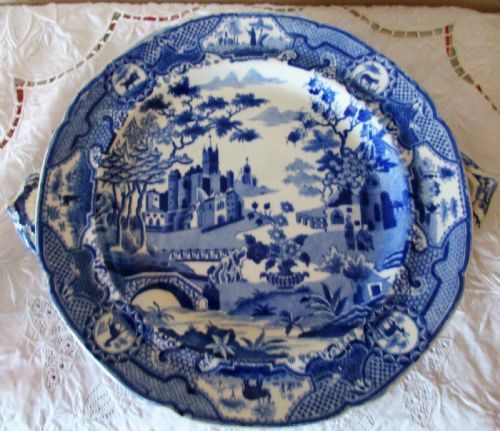
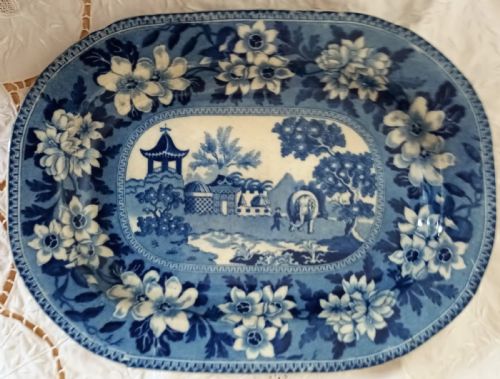
Buyers looking for english blue white earthenware encounter a broad sweep of ceramics, spanning formal serving vessels and everyday domestic pottery. The selection includes early tin-glazed chargers alongside later transfer-printed platters and bowls.
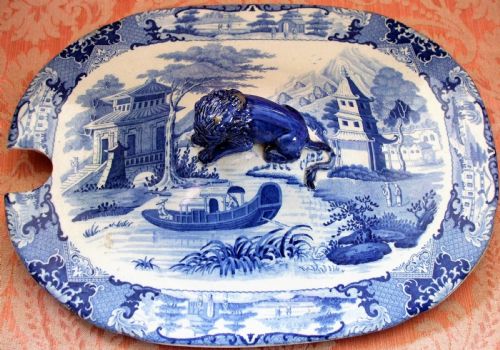
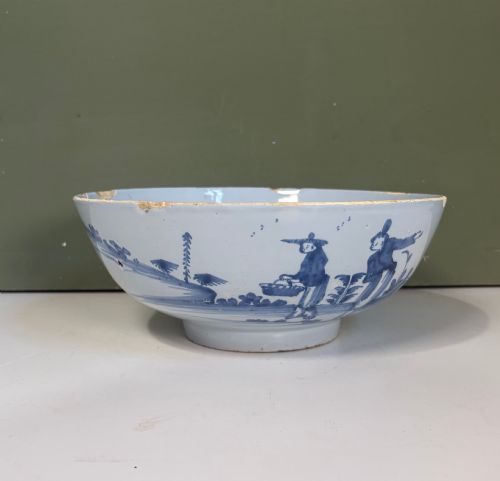
Delftware pieces from the seventeenth and eighteenth centuries represent the earlier end of this tradition, whilst nineteenth-century transferware forms the bulk of what appears in daily trade. Forms range from large meat dishes and bough pots to small apothecary jars and marriage plates.
Materials and Techniques
Potters relied on earthenware bodies coated in tin glaze to provide an opaque white surface for decoration. Cobalt pigment and cobalt oxide supplied the deep blue tones applied beneath or over the glaze before firing.
Later production shifted towards refined earthenware and pearlware, decorated using copperplate transfer printing to achieve intricate pictorial scenes.
English Blue White Earthenware Retail Price Guide 2026
Typical asking prices for english blue white earthenware among the pieces listed under this phrase on Sellingantiques today, from the lower quarter to the upper quarter. They describe what is for sale here now, not the wider market.
Listings feature earthenware spanning multiple centuries, from seventeenth-century delft posset pots to twentieth-century banded bowls.
Assessing Quality
Depth and clarity of the cobalt blue decoration separate standard domestic items from superior studio or factory productions. Sharpness in transfer-printed scenes indicates a well-preserved copper plate and careful application during printing.
The precision of the glaze layer and stability of the ceramic body dictate the overall integrity of the piece over centuries of handling.
William Smith & Co·Spode·Robert Hamilton·John Rogers & Son·J. & R. Clews·J. & R. Riley·Stubbs·Mintons·T G Green
The English Blue White Earthenware Glossary
- Delftware
- Tin-glazed earthenware produced in England and the Netherlands, typically featuring hand-painted blue and white designs. It forms a cornerstone of seventeenth and eighteenth-century ceramic collections.
- Transferware
- Pottery decorated by applying a printed design from an engraved copper plate onto paper, which was then transferred onto the unglazed or biscuity ceramic surface. This technique revolutionised nineteenth-century production.
- Tin Glaze
- An opaque white glaze containing tin oxide, used to coat earthenware bodies and create a smooth canvas for blue pigments. It is characteristic of delftware and early European pottery.
- Posset Pot
- A two-handled ceramic vessel used historically for serving a hot spiced milk and wine drink. Surviving examples from the seventeenth and eighteenth centuries are often decorated in blue and white.
- Drug Jar
- An apothecary vessel used for storing dry or wet medicines, frequently labelled with Latin abbreviations. These jars represent a specialised branch of early earthenware production.
English Blue White Earthenware: Frequently Asked Questions
What is the difference between delftware and transferware?
Delftware relies on hand-painted cobalt decoration over a tin glaze, typical of the seventeenth and eighteenth centuries. Transferware uses an engraved plate to press printed patterns onto the ceramic body, dominating the nineteenth century.
Both fall under the wider umbrella of blue and white earthenware, though they reflect entirely different workshop methods and stylistic eras.
How do I care for antique earthenware?
Wash these pieces gently by hand using mild soap and warm water, avoiding harsh detergents and dishwashers entirely. Tin glaze and old earthenware bodies can be porous or develop hairline fractures if subjected to thermal shock.
Store them securely on flat surfaces away from direct sunlight and sudden temperature shifts to preserve the glaze integrity.
How can I tell an eighteenth-century piece from a nineteenth-century one?
Examine the decoration technique and the weight of the ceramic body. Eighteenth-century pieces often show brushstrokes and minor glaze imperfections characteristic of hand-painted delftware.
Nineteenth-century items typically feature mechanical transfer printing with crisp, repeating patterns across refined earthenware or pearlware bodies.
Were apothecary jars used in homes?
Apothecary jars and wet drug jars were originally made for trade use in dispensaries, hospitals, and chemist shops to hold specific medicinal ingredients. Over time, many found their way into domestic settings as decorative objects due to their striking blue and white designs.
Collectors prize them today for their historical inscriptions and direct link to early medical practice.