




Enameled Glass Vessel
An enameled glass vessel brings together coloured glass and painted or fused detail, offering a decorative surface that catches the light from any angle.
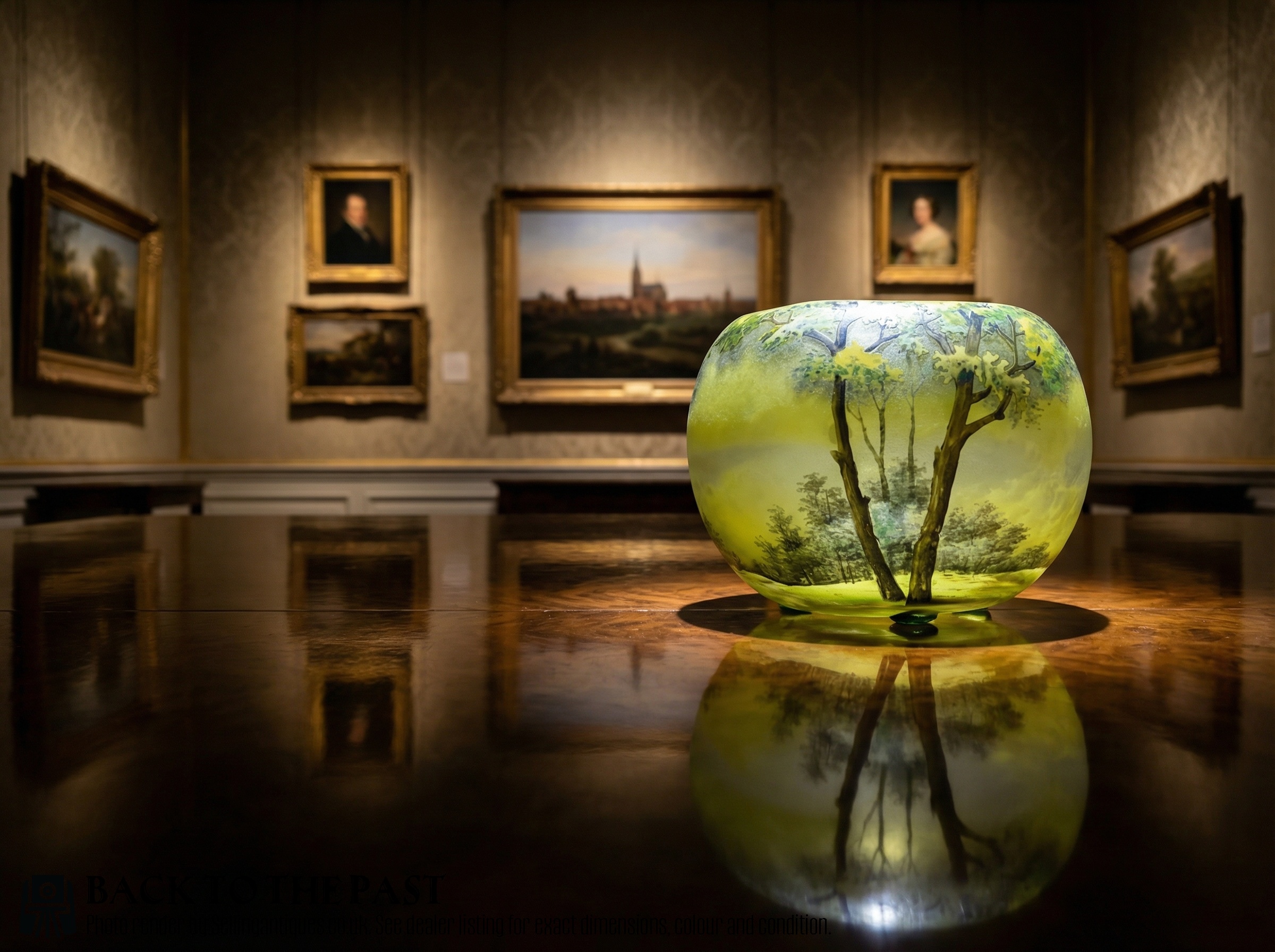
Enameled Glass Vessel
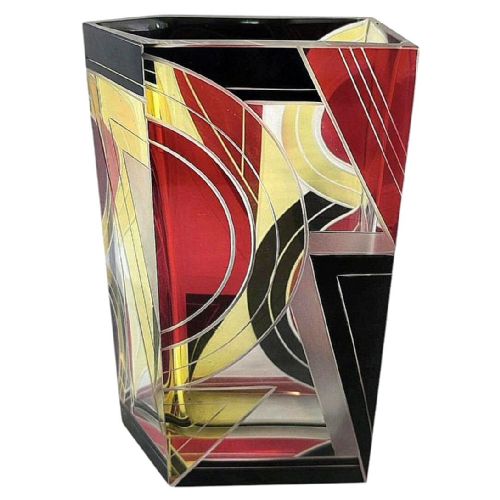
When you search for an enameled glass vessel, you encounter objects created to hold flowers, liquids or small treasures, finished with decorative pigment applied directly to the surface. These pieces range from Victorian mantel ornaments to geometric Art Deco glassware from Czech workshops.
The selections span several distinct periods, most notably the Victorian era and the early twentieth century, alongside earlier eighteenth-century examples. Forms vary from tall cylindrical vases and ewers to small scent bottles, trinket boxes and lidded jars.
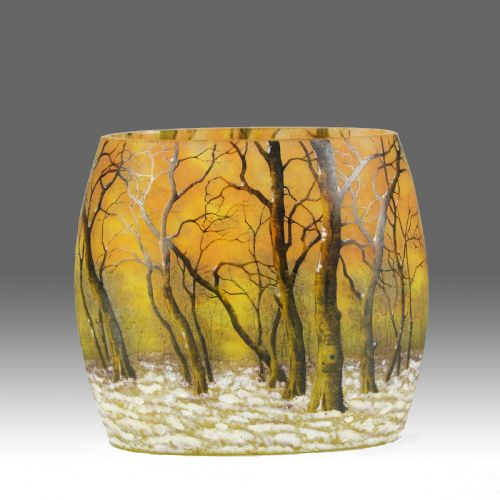
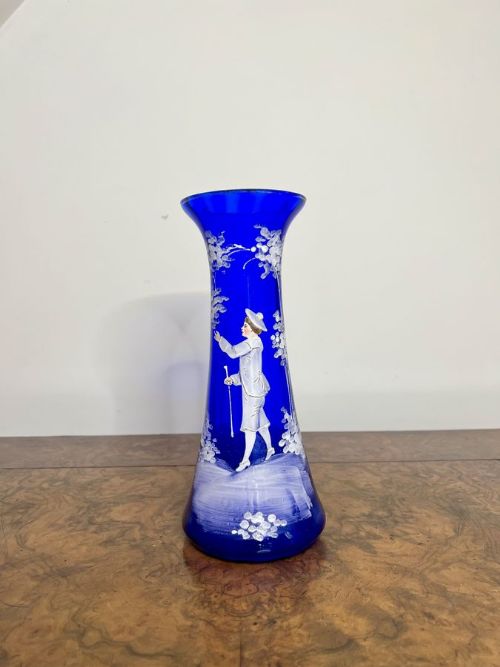
On this page, you are most likely to meet Victorian green or cranberry glass decorated in the white silhouette style associated with Mary Gregory, as well as early twentieth-century cameo and enamelled pieces from continental makers.
How they were made
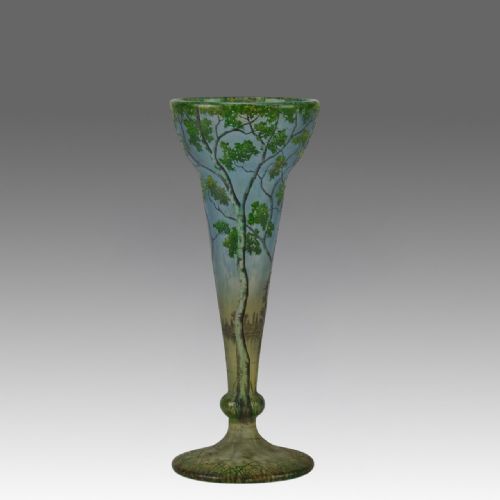
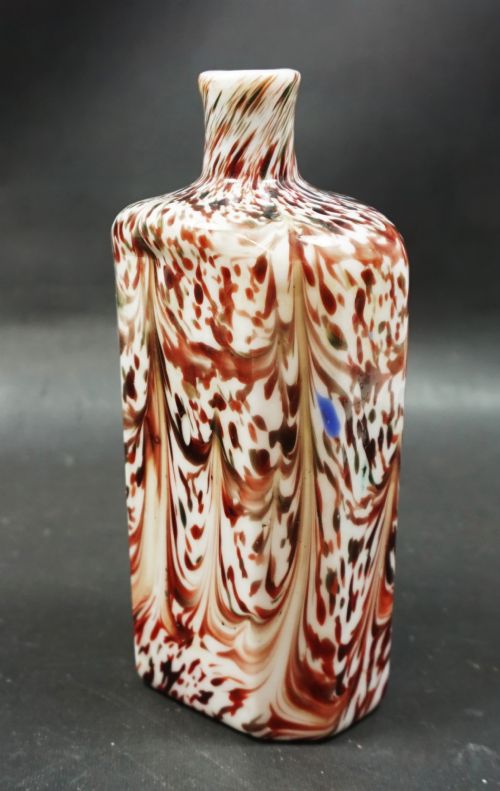
Makers shaped glass by hand blowing into moulds or forming free-blown vessels, utilising materials such as opaque milk glass, opaline, cranberry glass and uranium glass as a foundation. Some items incorporate cameo glass layers or additional components like sterling silver lids and solid silver gilt mounts.
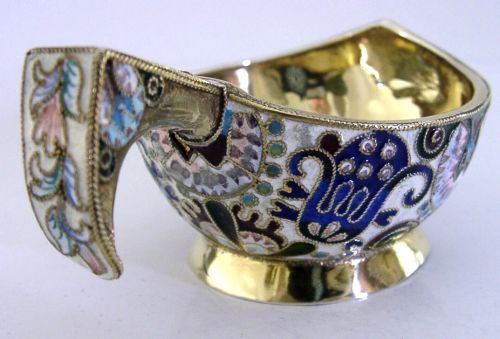
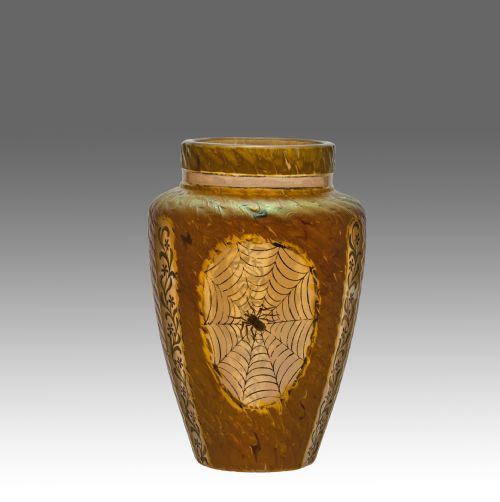
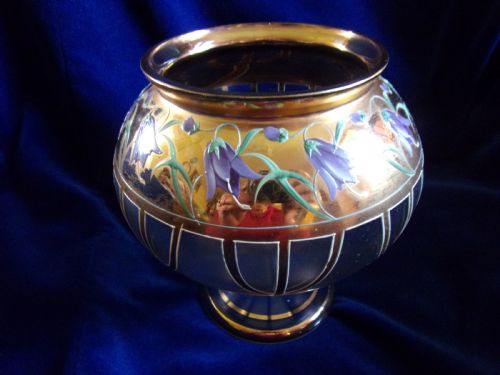
Decoration relied on hand painting with enamel colours, sometimes enhanced with gold leaf, gilt highlights or acid etching to create tactile, layered surfaces. Certain pieces feature enamel inclusions or specific colour grounds such as Rouge de Chine.
Listings feature Victorian green glass, early twentieth-century cameo glass, and Art Deco geometric opaque glass.
What varies in quality
The standard of an enameled glass vessel depends on the precision of the hand-painted brushwork and the complexity of the glass body itself, such as multi-layered cameo carving or controlled acid-etched geometric patterns. Finer pieces demonstrate meticulous registration of enamel colours that sit crisply on the glass without pooling or blurring.
Artistry in the design of the subject matter - whether landscape scenes, botanical studies or geometric Art Deco motifs - separates standard decorative production from exceptional studio output. The integration of high-grade mounts, such as solid silver fittings or original stoppers, also elevates the stature of a piece.
Daum Frères·Kralik Glass·Karl Palda·Moser·Harrach
The Enameled Glass Vessel Glossary
- Cameo glass
- Glass formed with multiple layers of different colours, carved or acid-etched away to leave a raised design in relief against a contrasting background.
- Enameled glass
- Glass decorated with powdered glass or vitreous enamel pigments fired in a kiln to fuse permanently with the surface.
- Cranberry glass
- Transparent pinkish-red glass produced by adding gold chloride to the molten batch during manufacture.
- Opaline glass
- An opaque or translucent pale glass developed in France and popular during the nineteenth century for decorative tablewares.
- Silver-gilt
- Silver objects that have been coated with a thin layer of gold over the metal surface.
Enameled Glass Vessel: Frequently Asked Questions
What is an enameled glass vessel?
An enameled glass vessel is a decorative object made from blown or moulded glass and painted with vitreous enamel colours that are fired for permanence.
These pieces encompass vases, flasks, jars and scent bottles produced across the nineteenth and twentieth centuries in various European glassmaking centres.
How do I care for antique glass?
Antique glass requires gentle cleaning by hand using lukewarm water and mild soap, avoiding harsh abrasives that could damage surface enamels or gilding.
Keep vessels away from sudden temperature changes and direct sunlight to protect the integrity of painted details and delicate glass bodies.
How do I identify Victorian pieces?
Victorian examples often feature characteristic white enamel silhouette figures, rich cranberry or green glass grounds, and naturalistic floral or pastoral motifs.
Many nineteenth-century items also incorporate applied handle details, ewer forms, or silver-lidded mounts typical of the period.
What defines Art Deco glassware?
Art Deco glassware is characterised by strong geometric lines, stylized symmetrical patterns, and opaque or coloured glass bodies produced during the interwar years.
Czech makers frequently utilised acid-etching and contrasting enamel panels to achieve these modern architectural designs.