


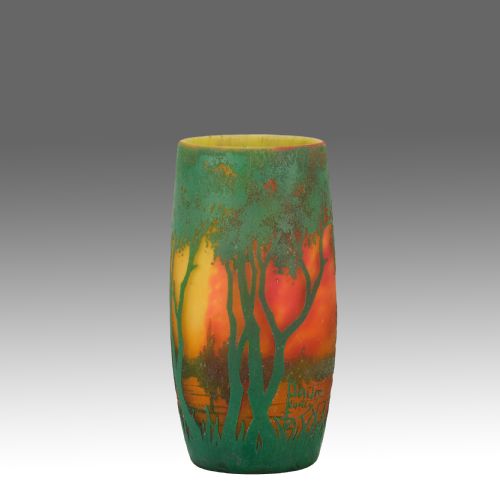


Antique Daum Nancy
Antique daum nancy pieces are French glass works combining vibrant cameo layering and enamel, prized for their striking botanical and landscape motifs.
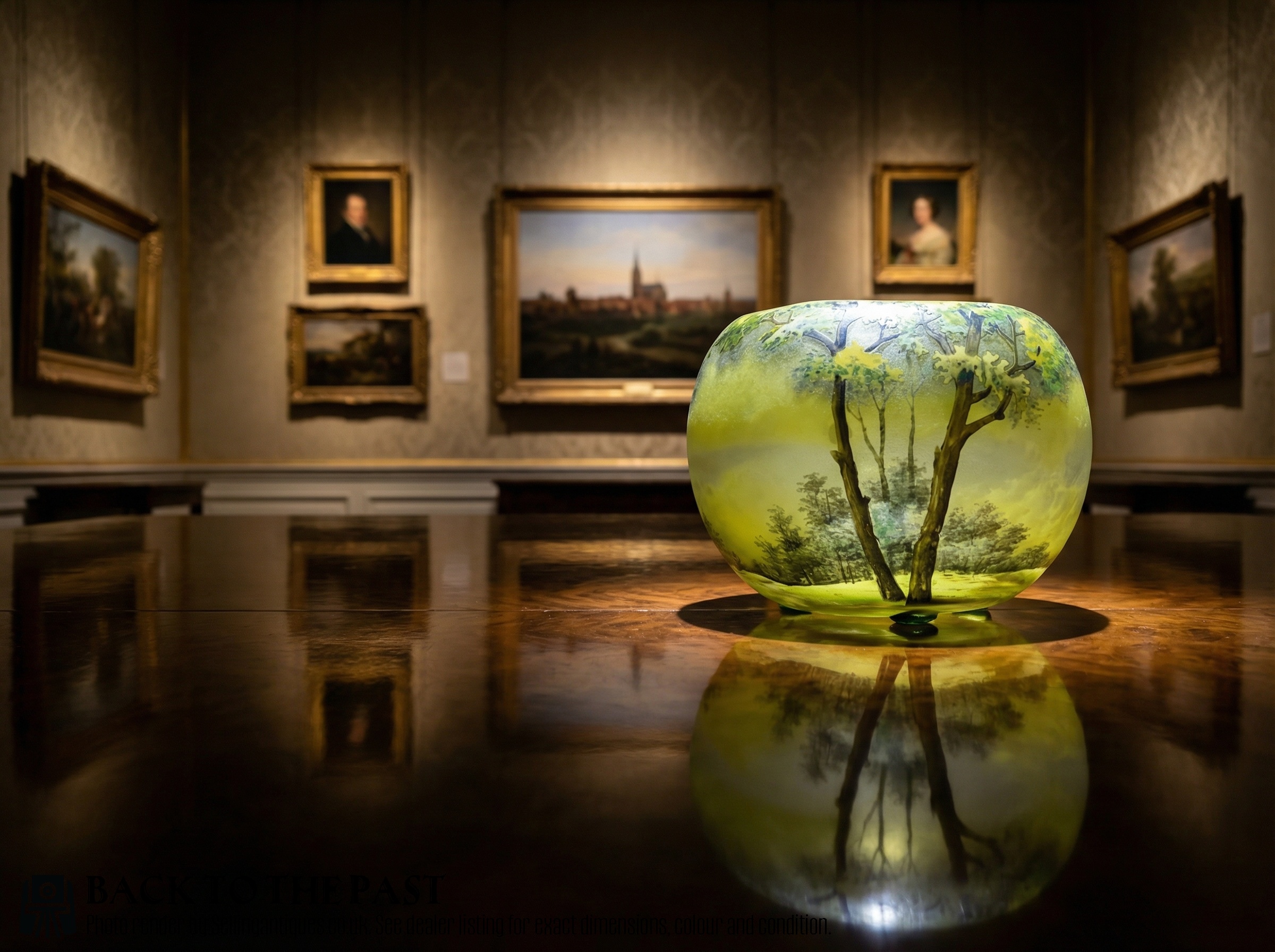
Antique Daum Nancy
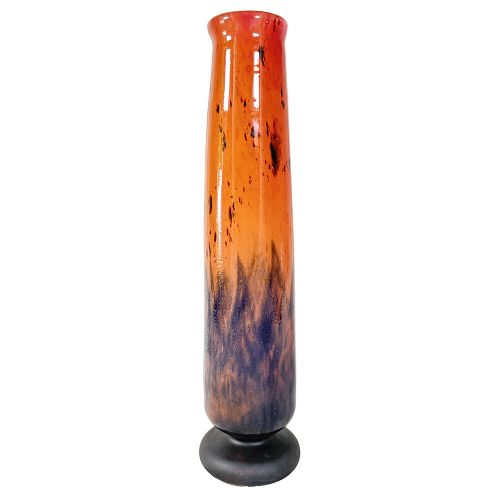
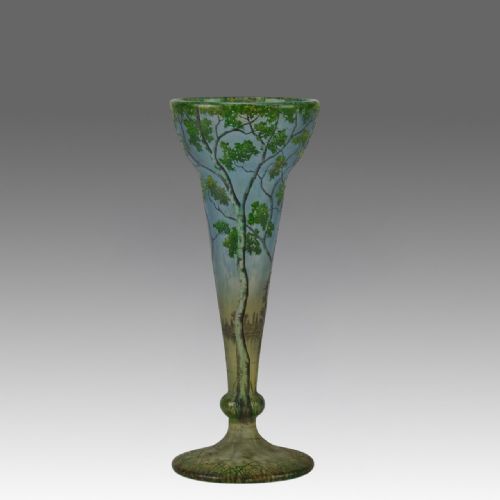
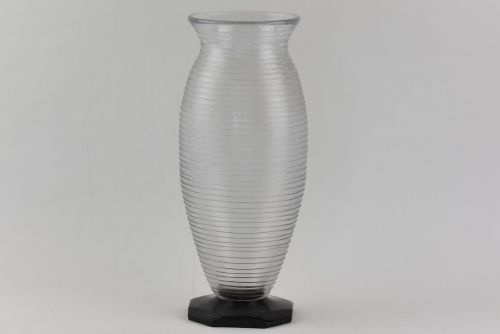
When you search for antique daum nancy, you encounter sophisticated French glassware spanning the Art Nouveau and Art Deco periods. The selection focuses heavily on vases, alongside table lamps and decanters with jugs.
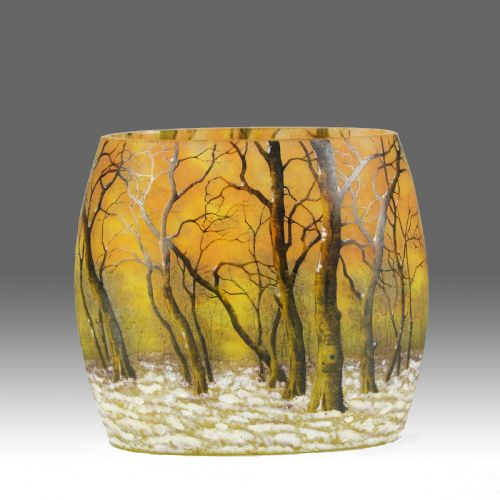
Most examples originate from the early twentieth century, capturing distinct natural scenes such as winter landscapes, summer landscapes, and specific floral motifs including sweet peas, iris, and thistles. These objects display the artistic ambition of the Nancy glassworks through distinct vessel forms.
How they were made
The makers utilised cameo glass and blown glass techniques, often employing acid-etched glass methods to create depth and relief across the surface. Powdered glass and crystal formed the base for complex colouration.
Detailing was frequently enhanced with enamel decoration and mounted with bronze elements, uniting glass artistry with metalwork where lamps or specific vessels demanded it.
Listings feature cameo glass, enamel, and acid-etched glass across Art Nouveau and Art Deco periods.
What varies in quality
Quality rests in the execution of the landscape or botanical subject, where finely detailed winter scenes and intricate floral layering demonstrate superior artistic control. The complexity of the acid-etching and the richness of the enamel work distinguish finer examples.
Scale and substantial presence also dictate distinction, as larger vases and weighted crystal forms demand greater technical mastery during the blowing and cooling processes.
Daum Frères·Daum Nancy·Daum
The Antique Daum Nancy Glossary
- Cameo glass
- A form of glass created by fusing layers of different colours and then etching or carving away portions to produce a raised design. This technique allows for intricate, multi-coloured imagery.
- Acid-etched glass
- Glass treated with acid to eat away exposed surfaces and create textured or recessed patterns. It provides precise control over design depth without manual carving.
- Enamel
- A decorative glass or metal powder fused to the surface through firing. It adds vibrant, opaque colour details to the vessel exterior.
- Art Nouveau
- A decorative style characterised by fluid, organic lines and floral motifs. It heavily influences the natural subject matter seen on these glass pieces.
- Art Deco
- A later style defined by geometric precision and stylised forms. It marks the transition in later production away from purely naturalistic scenes.
Antique Daum Nancy: Frequently Asked Questions
What periods do these pieces date from?
The pieces span from the late nineteenth century through the early twentieth century, encompassing both the height of Art Nouveau and the emergence of Art Deco.
Production dates recorded in the listings primarily focus around nineteen hundred, with examples extending into nineteen ten and nineteen twenty.
How do Art Nouveau and Art Deco pieces differ?
Art Nouveau works rely on natural forms, featuring fluid botanical and landscape subjects such as iris, thistles, and sunset scenes. These designs emphasise organic curves and layered cameo glass.
Art Deco examples shift toward heavier crystal and stylised, robust vessel forms with bubble glass effects, reflecting changing aesthetic preferences after the first world war.
What subjects are common on the glass?
Natural landscapes dominate the decorative repertoire, particularly winter scenes, summer vistas, and coastal or boating views. Botanical studies including sweet peas, montbrecia, blackberries, and solanacées also appear frequently.
Artists translated these motifs using multi-layered cameo glass and precise enamel work to capture atmospheric light and shadow.
How were the table lamps and decanters used?
Table lamps served to illuminate interiors while showcasing the translucent qualities of enameled glass landscapes when lit from within. Decanters and jugs functioned as decorative tableware, often retaining original stoppers for serving liquids.
Both functional forms doubled as display pieces that highlighted the intricate glassmaking techniques of the Nancy workshops.