


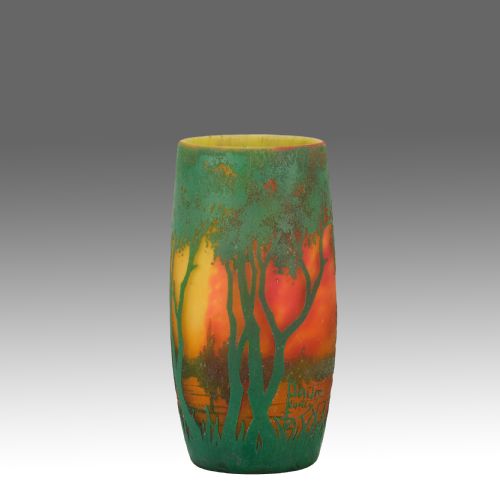


Daum Nancy Glass
Daum Nancy glass brings together French artistry and rich colour, offering collectors superb cameo vessels and lamps from the turn of the twentieth century.
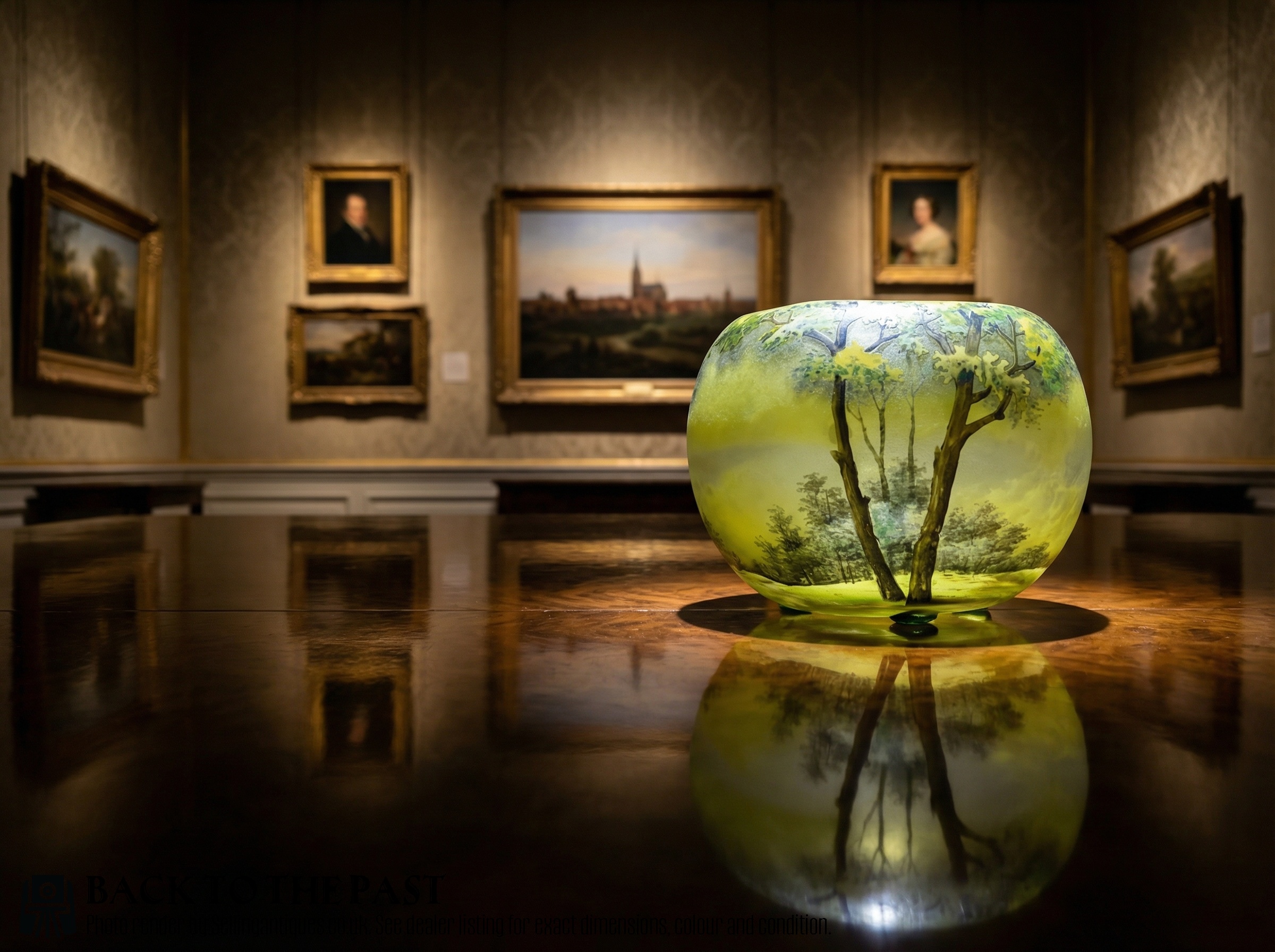
Daum Nancy Glass
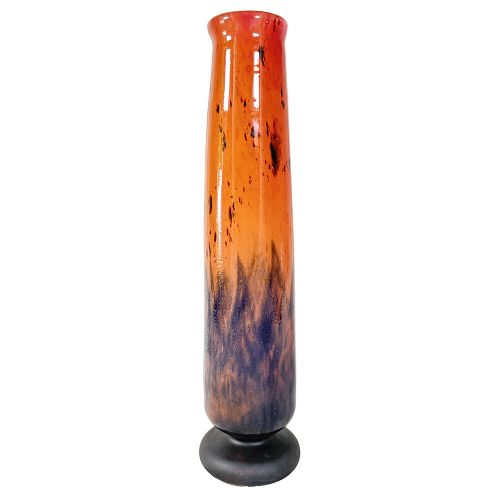
When someone searches for daum nancy glass, they are looking at French decorative works spanning the late nineteenth century through the Art Deco era. The pieces here are predominantly vases and lamps, shifting from organic botanical forms to geometric modernism over the decades.
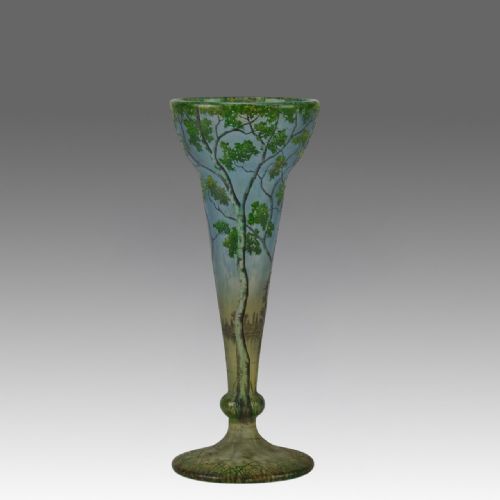
The most common version to meet on this page is the cameo glass vase from around nineteen hundred, featuring layered botanical motifs like sweet peas, thistles, and irises. These works capture the natural curves of the Art Nouveau movement through meticulous glassmaking.
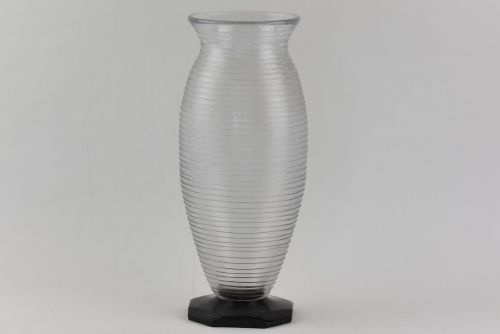
Alongside organic vases, the selection includes table lamps, decanters, and later Art Deco designs in crystal and blown glass. These pieces demonstrate the evolving output of the Nancy workshops across different decades of production.
What varies in quality
The distinction between tiers rests on the complexity of the cameo carving and the depth of the acid-etching. Pieces with multiple colour layers and detailed manual finishing command greater attention than simpler single-layer designs.
Scale and ambition separate standard production from exceptional works, visible in substantial architectural vases and complete lighting fixtures with original components. The precision of the enamelling and the clarity of the signature further divide the output.
Listings span five decades from eighteen ninety to nineteen thirty, encompassing both Art Nouveau cameo work and Art Deco crystal.
Daum Frères·Daum Nancy
The Daum Nancy Glass Glossary
- Cameo Glass
- Glass vessels made with two or more fused layers of contrasting colours, carved to create a raised design. This technique requires considerable skill to avoid cutting through the thin outer layer.
- Acid-Etched Glass
- Glass treated with acid to eat away exposed surfaces, creating textured patterns or removing outer colour layers. It became a primary method for mass production and fine detail alike during the Art Nouveau period.
- Enamel
- Opaque or translucent glass paint applied to the surface and fired to fuse with the body. Artists used enamel to add fine details to floral and landscape scenes.
- Blown Glass
- Glass shaped by inflating molten metal on the end of a blowpipe. This foundational technique produced the basic vessel forms before any surface carving or etching took place.
- Crystal
- Clear glass containing metal oxides that increase brilliance and weight. It provided the heavy, luminous medium for later geometric designs.
Daum Nancy Glass: Frequently Asked Questions
How do I date my piece?
Examine the stylistic markers and signatures on the vessel to determine its period of origin. Art Nouveau pieces with naturalistic motifs typically date around nineteen hundred, while geometric forms point to the nineteen twenties and thirties.
Signatures evolved alongside the artistic movements, shifting from ornate engraved lettering on early cameo works to simpler acid-stamped marks on later crystal.
What subjects appear on cameo vases?
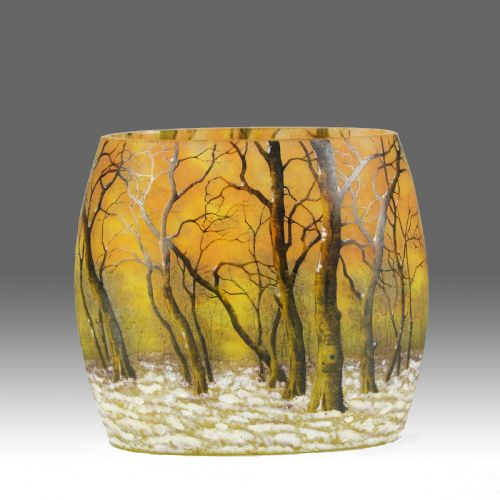
Botanical themes dominate the earlier production, featuring flowers such as irises, montbrecia, and sweet peas alongside thistles and berries. Landscapes depicting winter scenes or sunsets also feature prominently on vases and jugs.
Later works transition away from organic subjects towards abstract patterns and heavy crystal forms characteristic of the Art Deco period.
How should I display lamps safely?
Place table lamps on stable, flat surfaces away from edges where cords might be pulled. Ensure the wiring is checked by a qualified professional to meet current safety standards while preserving original components.
Keep glass shades out of direct sunlight to protect enamel work and maintain the integrity of the coloured glass over time.
Are all pieces signed?
Most authenticated works carry a signature etched, enamelled, or moulded into the glass surface. The form of the signature often corresponds to the specific period and workshop output.
Absence of a visible mark requires careful comparison with documented examples from the same era to confirm attribution.