




Decorative Cameo Glass Vessel
A decorative cameo glass vessel brings layered colour and naturalistic motifs into a room, capturing the finest achievements of early twentieth century glassmaking.
Decorative Cameo Glass Vessel
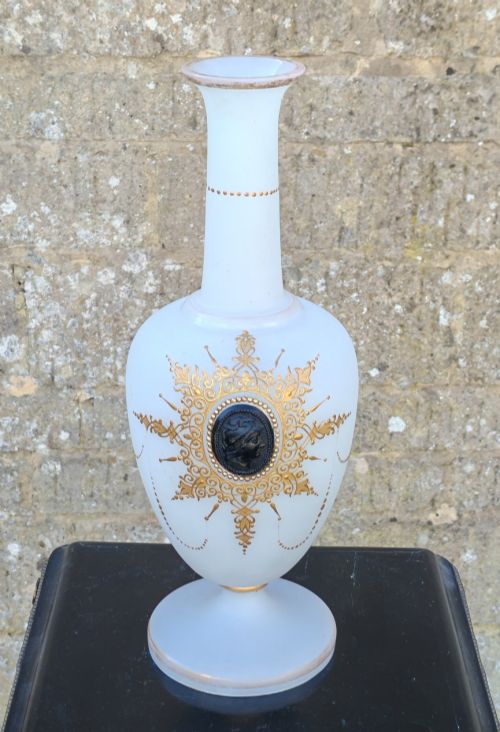
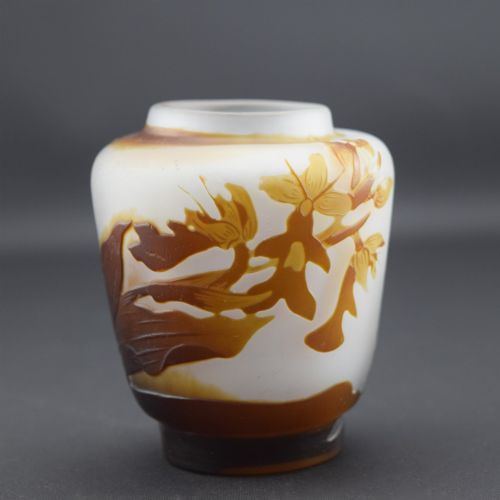
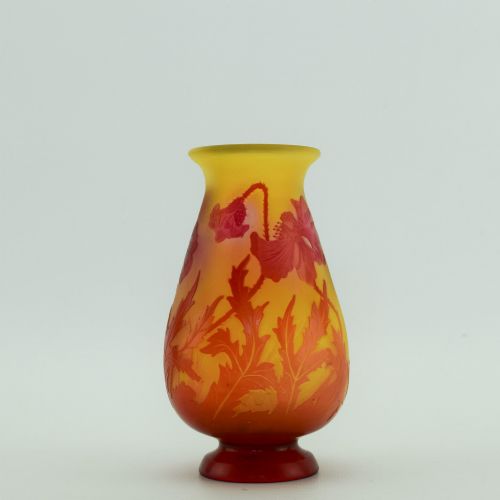
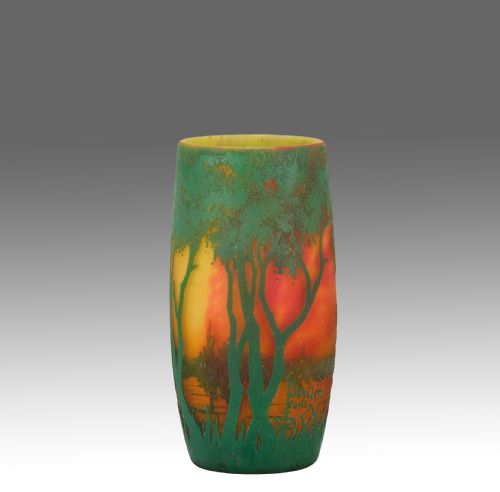
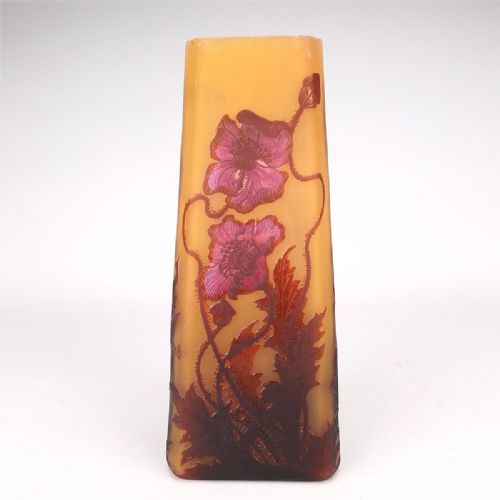
A decorative cameo glass vessel is a vase shaped from layered glass, carved or etched to reveal contrasting colours beneath. These pieces belong primarily to the early twentieth century, spanning the nineteen hundreds to the nineteen thirties. Art Nouveau forms dominate the selection, favouring botanical and landscape subjects.
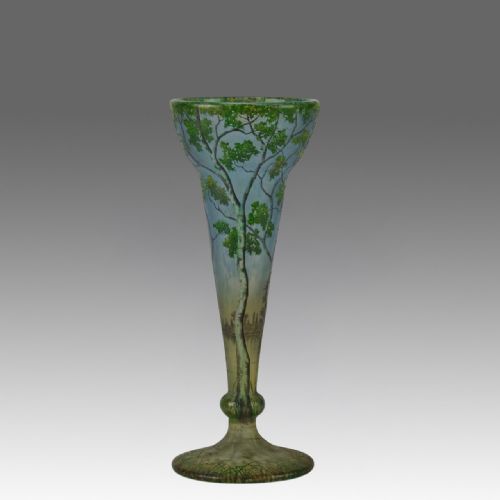
Vases form the entirety of the objects seen in this category. Buyers encounter blown and frosted glass vessels decorated with floral patterns, forest scenes, and winter landscapes. The aesthetic aligns closely with the Art Nouveau movement, celebrating organic lines and natural themes.
How they were made
Makers utilised blown glass techniques to build multiple coloured layers into a single vessel. Acid-etching and manual carving removed the exterior layers to shape the raised design against the contrasting background. Enamel additions occasionally supplemented the carved glass surface to enrich the colour palette.
Artisans applied frosted glass finishes to diffuse light and accentuate the depth of the carved cameo motifs. The combination of blowing, layering, and chemical or mechanical etching required precise control to achieve the characteristic relief work.
Decorative Cameo Glass Vessel Retail Price Guide 2026
Typical asking prices for decorative cameo glass vessel among the pieces listed under this phrase on Sellingantiques today, from the lower quarter to the upper quarter. They describe what is for sale here now, not the wider market.
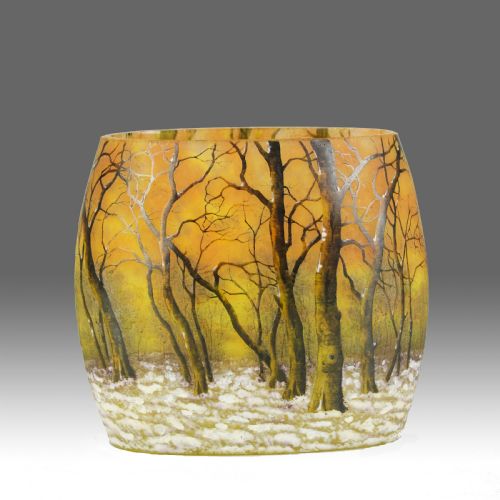
Winter landscapes featuring bare trees proved remarkably popular for vessels etched during the nineteen hundreds.
What varies in quality
Quality rests upon the depth of the carving and the complexity of the layered colours within the glass. Vessels featuring intricate landscape scenes or detailed botanical motifs demand greater technical skill from the glassmaker. The clarity of the acid-etching and the harmony of the colour transitions separate standard production from superior examples.
The sophistication of the Art Nouveau design and the crispness of the relief work dictate the standing of a piece. Finer vessels display meticulous attention to natural forms, such as foliage and floral details, integrated seamlessly into the body of the vase.
Daum Frères·Emile Gallé·Legras
The Decorative Cameo Glass Vessel Glossary
- Cameo glass
- Glass vessels constructed with two or more distinct colour layers where the outer layer is carved or etched away to create a raised design. This technique imitates classical carved stone cameos.
- Acid-etched glass
- Glass decorated by submerging the material in acid to eat away the surface layers. This chemical process creates matte textures and defines the cameo motifs without hand-carving.
- Blown glass
- Glass shaped by inflating molten glass on the end of a blowpipe. It forms the essential foundation of the vessel before any cameo layering or carving takes place.
- Frosted glass
- Glass treated to create a textured, translucent surface that diffuses light. It provides a soft background contrast for the sharper, coloured cameo relief decoration.
- Art Nouveau
- An international style of art and architecture popular in the early twentieth century. It is characterised by intricate asymmetrical lines based on natural forms such as plants and flowers.
Decorative Cameo Glass Vessel: Frequently Asked Questions
What periods do decorative cameo glass vessels come from?
These pieces date from the early twentieth century, specifically the nineteen hundreds, nineteen twenties, and nineteen thirties. The majority align with the height of the Art Nouveau period.
Production methods during these decades relied on traditional glassblowing combined with advanced chemical etching techniques to produce multi-layered relief designs.
How were these vessels used originally?
They served primarily as ornamental display pieces in homes rather than functional containers for cut flowers. Their intricate landscape and botanical scenes were designed to be admired for their artistic merit.
Wealthy patrons placed them on mantelpieces and cabinets where light could pass through the layered glass to highlight the colours.
How do you display a cameo glass vessel?
Place the vessel near a natural light source such as a window to illuminate the coloured glass layers and reveal the depth of the carving. Avoid placing them in direct, harsh sunlight that might cause fading in any enamelled details.
Positioning them against a neutral background helps the etched botanical or landscape motifs stand out clearly to the viewer.
How do you tell different glass techniques apart?
Acid-etched glass displays uniform matte textures where the chemical agent has eaten away the surface, whereas carved cameo work shows individual tool marks and varied depths. Blown glass forms provide the smooth internal structure that supports these exterior treatments.
Examining the rim and base under magnification reveals whether layers were fused during the blowing stage or applied subsequently.