


Enamel Wall Charger
When you search for an enamel wall charger, you are seeking a large, decorative plate designed to be hung and admired.
Enamel Wall Charger
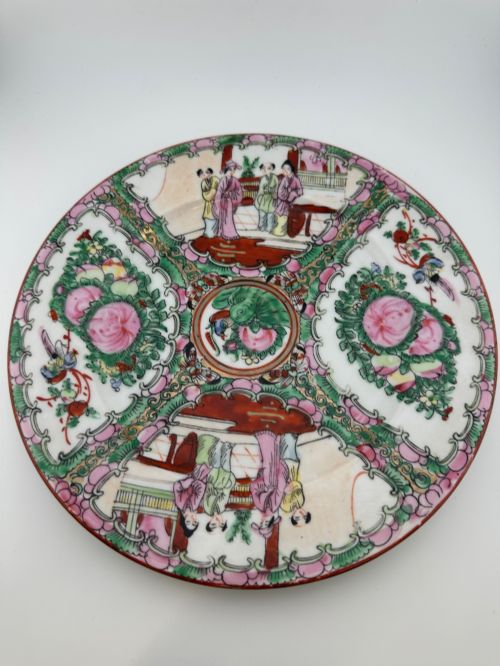
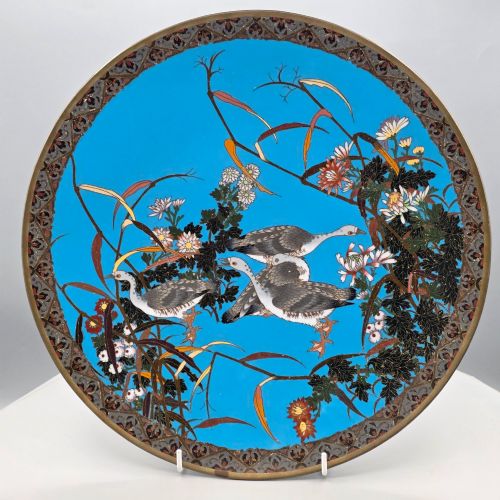
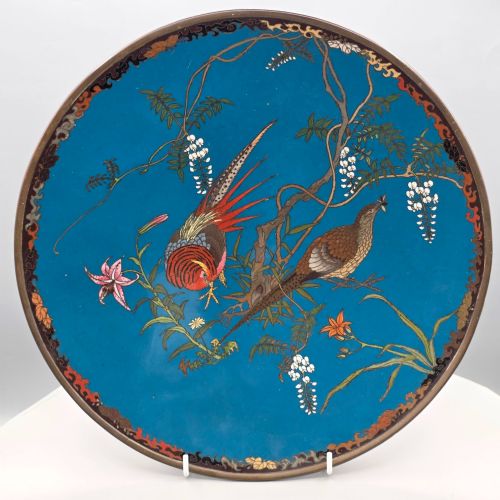
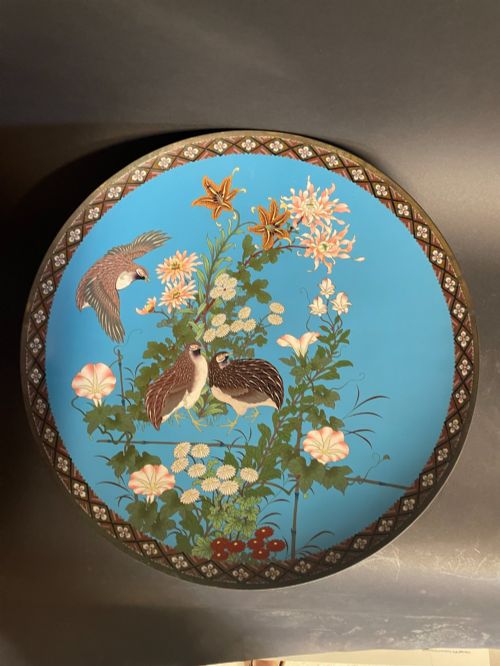
An enamel wall charger is a wide, shallow dish created for display rather than dining, often measuring over thirty centimetres across. The pieces found on this page span from the eighteenth century to the early twentieth century, with a strong representation from the Meiji period.
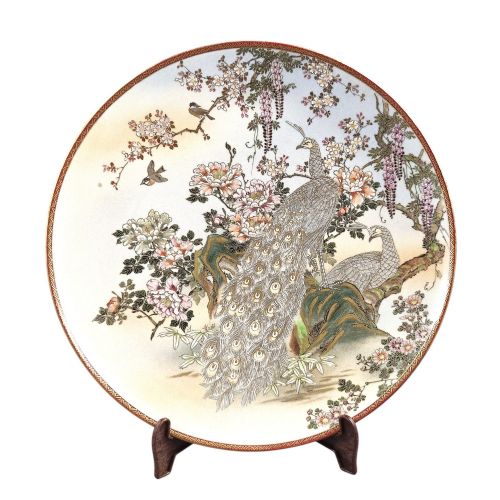
The decorative subjects rendered upon these surfaces include birds, dragons, landscapes, and historical figures. Many examples originate from Japanese workshops, alongside Chinese export wares and European porcelain traditions.
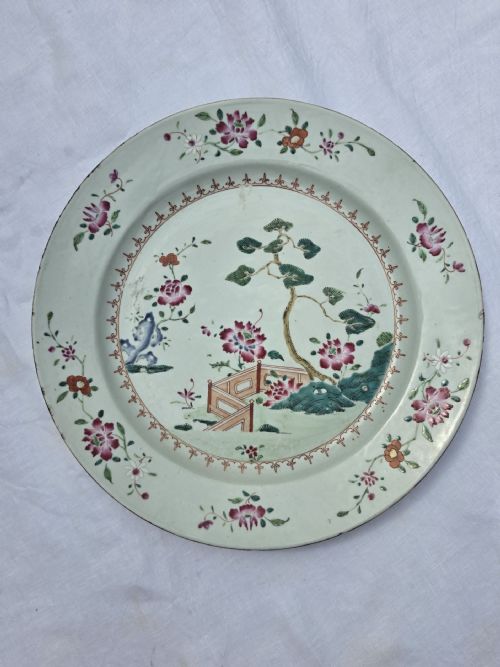
Makers utilised various display formats, including large dishes, decorative plaques, and heavy chargers intended to catch the eye from across a room. Collectors encounter both copper-bodied cloisonne and porcelain bases decorated with enamels.
Materials and construction
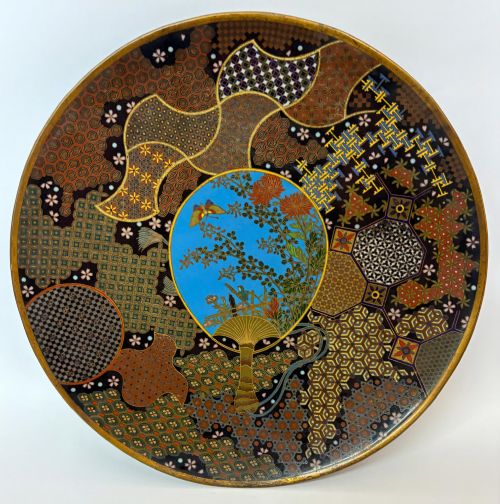
Metalwork forms the foundation for much of the output here, utilising copper or brass bodies to shape the heavy plates. Artisans applied thin wire outlines to partition the surface before filling the compartments with powdered glass enamels and firing them in a kiln.
Porcelain serves as an alternative substrate, seen in Satsuma, Kutani, and Famille Rose wares where hand-painted enamels and gold leaf decorate the glazed ceramic body. Totai shippo technique applies cloisonne enamels directly onto a porcelain core, sometimes mimicking the texture of tree bark.
Listings feature pieces spanning the late seventeenth century through to the early twentieth century, encompassing Japanese Meiji and Edo periods alongside Chinese export wares.
Indicators of quality
The refinement of the wirework and the density of the enamel fields dictate the visual success of a cloisonne piece. Superior examples display microscopic cell work, perfectly even glazing without pitting, and intricate pictorial subjects such as leaping koi or detailed avian plumage.
Artistic execution separates standard decorative plates from masterworks, evident in the balance of the composition, the subtlety of the colour shading, and the presence of artist signatures from renowned workshops.
The Enamel Wall Charger Glossary
- Cloisonne
- A technique where metal wires are soldered to a metal base to create cells, which are then filled with enamel paste and fired. This method produces intricate patterns defined by thin metallic lines.
- Totai shippo
- Japanese enamel work applied over a porcelain or ceramic body rather than metal. This unusual method combines ceramic moulding with cloisonne wire techniques.
- Charger
- A large ornamental plate traditionally used on sideboards or hung on walls for display. These pieces exceed standard dining plate dimensions.
- Meiji Period
- A Japanese historical era spanning from 1868 to 1912, noted for a surge in export arts and technically demanding metalwork. Pieces from this time often feature elaborate naturalistic motifs.
- Moriage
- A ceramic decorating technique where slip is piped onto the surface in raised dots or lines to create a tactile, three-dimensional effect. It is frequently highlighted with gold.
Enamel Wall Charger: Frequently Asked Questions
How do I hang a heavy charger safely?
Large chargers require robust, adjustable brass or coated wire display hangers that grip the rim securely without slipping.
Ensure the wall fixing is anchored directly into a stud or uses a proper masonry plug to bear the substantial weight of copper or porcelain plates.
What is the difference between a charger and a plate?
Chargers are significantly larger than standard dining plates, generally measuring upwards of thirty centimetres across.
They were designed primarily for ceremonial use, sideboard display, or wall hanging rather than serving food.
Can I clean enamel wall chargers with water?
Dust accumulates on wirework and textured surfaces over time, requiring gentle maintenance with a dry, soft brush.
Avoid immersing antique pieces in water or using chemical solvents, particularly those with porous ceramic bodies or exposed metal elements.