



Empire Style Candlesticks
Empire style candlesticks bring monumental neoclassical presence to a table, combining heavy cast bronze with gleaming ormolu mounts.
Empire Style Candlesticks
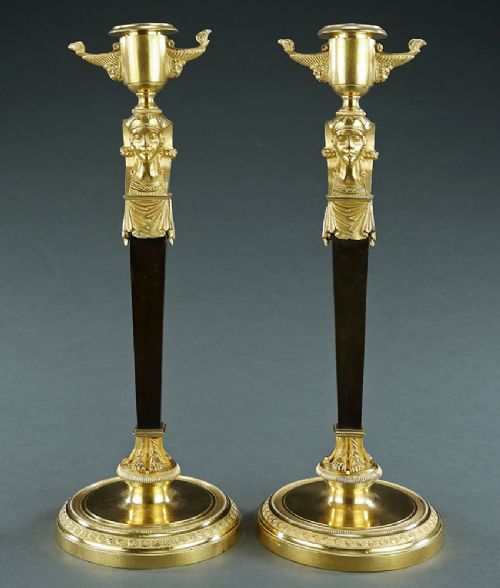
Empire style candlesticks draw on classical vocabulary, taking inspiration from ancient Roman, Greek, and Egyptian motifs. When searching this phrase, a buyer encounters matching pairs intended for formal mantelpieces and dining tables, frequently standing on heavy pedestals.
The pieces appearing here span the nineteenth century, including Regency, Louis XVI, and French Restoration iterations alongside later twentieth-century interpretations. French workshops dominate the selection, though English makers also produced comparable neoclassical lighting.
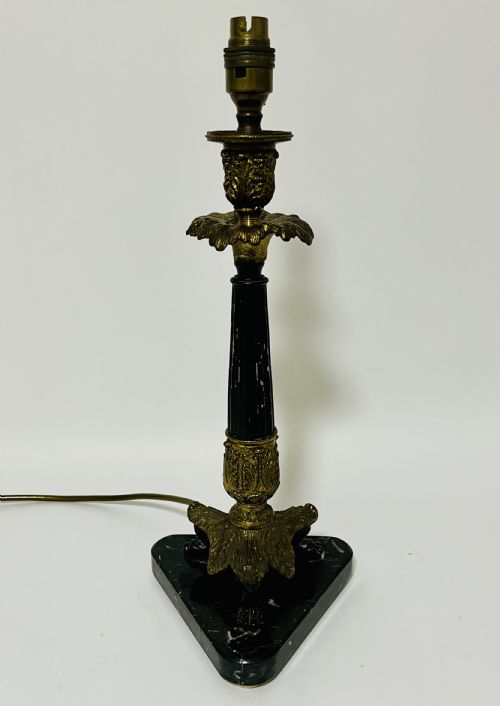
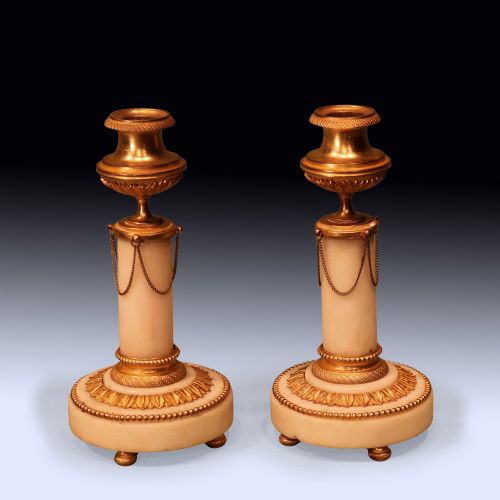
Forms extend beyond simple single-light shafts into multi-branch candelabra, wall sconces, and occasional table lamps converted from earlier oil-burning fixtures. White marble bases and patinated dark bronze columns recur regularly across the available stock.
How they were made
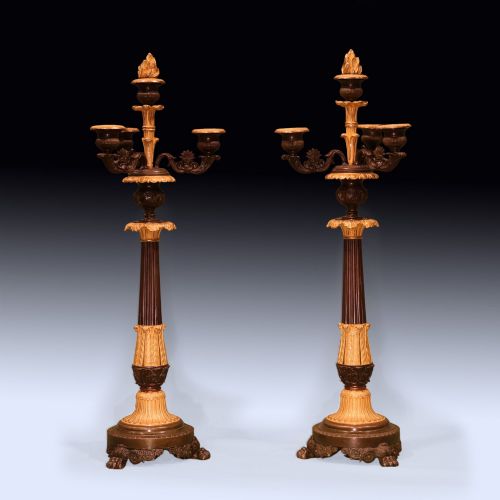
Foundry workers cast components in bronze and brass using traditional techniques before applying mercury gilding to create ormolu surfaces. Contrasting patinated bronze provides a dark, matte finish that highlights the bright, polished highlights of the gilt metal.
Masons shaped white marble and coloured stone to form solid bases and plinths, turning them on lathes to achieve classical column profiles. Craftsmen then assembled the metal and stone elements using threaded iron rods and concealed pins.
Detailing relied on meticulous chasing, where artisans refined cast surfaces with fine chisels and punches to sharpen acanthus leaves, caryatids, and classical drapery. This manual finishing separates crisp decorative motifs from softer, more generalised castings.
Empire Style Candlesticks Retail Price Guide 2026
Typical asking prices for empire style candlesticks among the pieces listed under this phrase on Sellingantiques today, from the lower quarter to the upper quarter. They describe what is for sale here now, not the wider market.
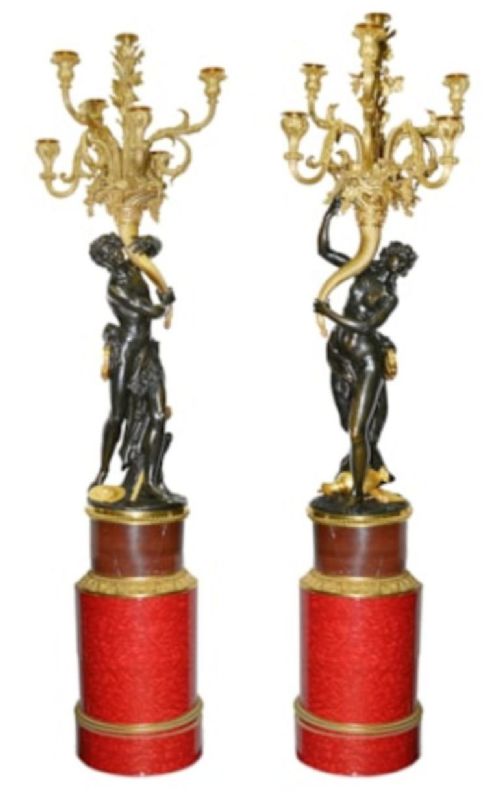
Winged putti and merman twin-arm designs offer a playful mythological twist among the austere classical columns.
What varies in quality
The retention and depth of the original gilding dictate visual richness, as thick ormolu applications reflect light warmly compared to thin or later electroplated finishes. The quality of the underlying bronze casting also dictates the overall weight and structural rigidity of the pair.
The Empire Style Candlesticks Glossary
- Ormolu
- Gilded bronze produced by applying a mercury and gold amalgam to a bronze base before heating to drive off the mercury. This historic French fire-gilding technique yields a deep, durable golden lustre.
- Patinated bronze
- Bronze treated with chemical solutions to produce a controlled dark brown or greenish surface colour. This dark tone provides contrast against bright ormolu mounts.
- Caryatid
- A sculpted female figure serving as an architectural support or candlestick shaft. These classical figures often appear draped in robes on nineteenth-century shafts.
- Candelabra
- A branched candlestick holding multiple candles on separate arms. These fixtures often feature removable branches allowing them to function as single candlesticks.
- Athenienne
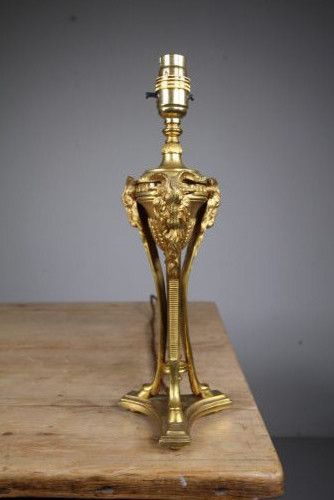
- A tripod stand supporting a classical basin or urn form, adapted by neoclassical designers for lighting. This tripod arrangement provides exceptional stability on a dining table.
Empire Style Candlesticks: Frequently Asked Questions
How do I clean ormolu?
Dust gilt bronze gently with a soft brush to protect the delicate metallic surface. Avoid using harsh chemical polishes that strip away historic gilding.
Warm water with mild soap applied on a damp cloth removes stubborn grime safely. Dry thoroughly with a lint-free cloth immediately afterwards.
Were these electrified later?
Many nineteenth-century examples underwent conversion into table lamps during the twentieth century to accommodate modern electric lighting. Some retain their original wiring channels without drilling, while others show later modifications.
Buyers should inspect the base and central shaft for wiring holes to determine if a piece remains in its original candlestick configuration. Unconverted pairs retain high appeal for traditional table settings.
How do I spot a marriage?
A marriage occurs when two mismatched candlesticks are paired together as a set after manufacture. Close inspection reveals subtle discrepancies in casting quality, height, or base dimensions.
Examining the underlying construction and threading helps confirm whether components originated from the same workshop batch. Genuine pairs share identical wear patterns and foundry marks.
What is Grand Tour style?
Grand Tour items were souvenirs acquired by wealthy travellers visiting classical antiquities in Italy and France during the nineteenth century. These pieces frequently replicate ancient architectural columns and sculptural bronzes.
Such items reflect a nineteenth-century obsession with classical archaeology and ancient aesthetics. They bring a scholarly neoclassical character to interior spaces.