
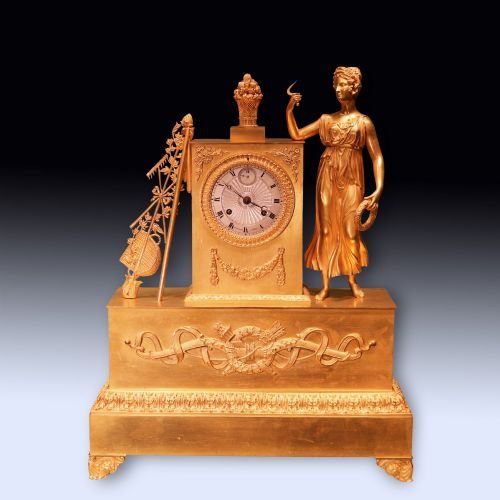
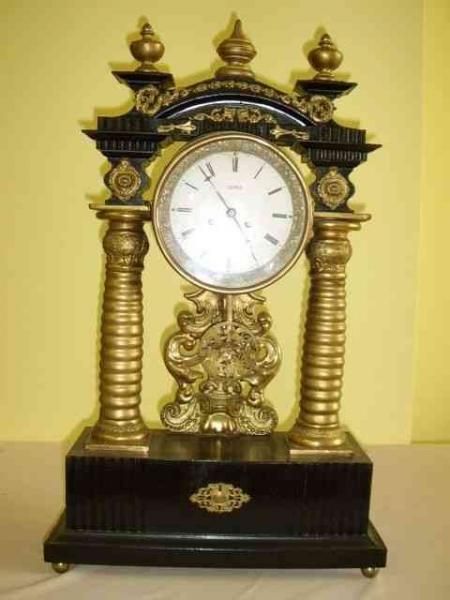


Empire Period Clock
These heavy, figurative bronzes command a room, bringing neoclassical weight and precise mechanical movement to a mantelpiece.

Empire Period Clock
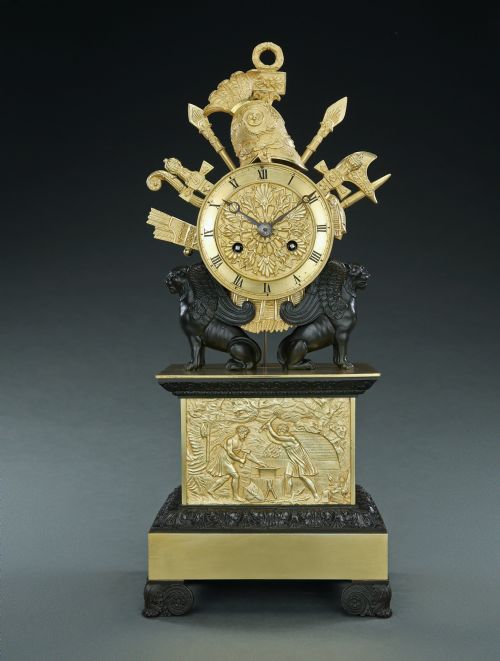
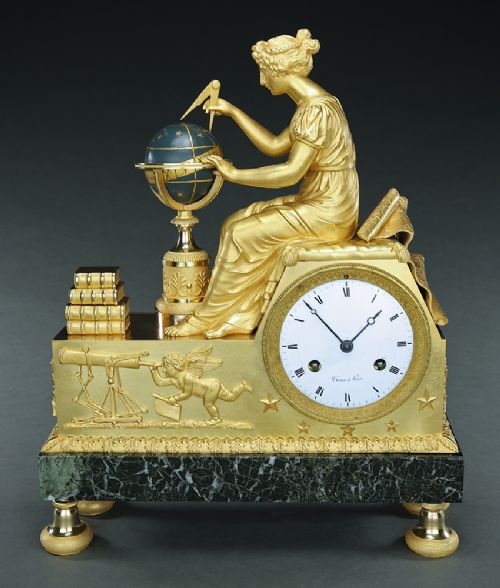
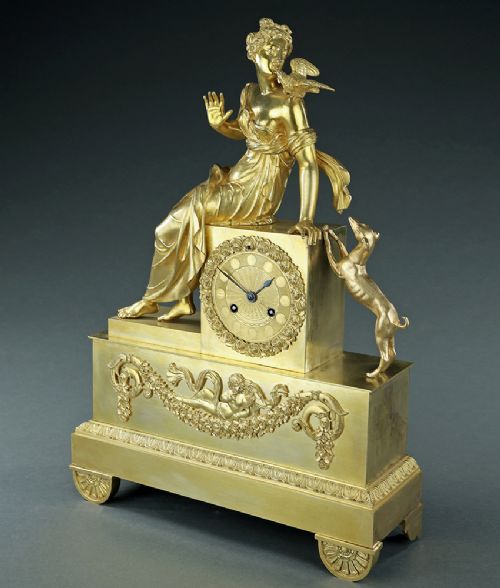
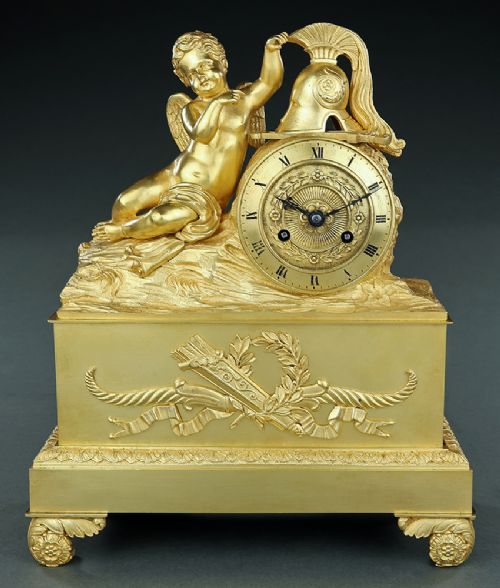
When you search for an empire period clock, you encounter substantial mantelpieces and portico clocks originating predominantly from the nineteenth century and the Regency era. These pieces frequently take the form of mantel clocks and clock garnitures, often rendered as figurative works depicting classical motifs, mythological scenes, and allegorical subjects.
The version most commonly met on this page is the French brass and gilt bronze mantel clock, often pairing patinated bronze figures with polished ormolu mounts. Alongside these French works sit Regency examples from British makers, occasionally incorporating mahogany cases or marble plinths alongside the characteristic metalwork.
How they were made
The makers of these timepieces relied heavily on mercury gilding to apply gold to bronze, creating the bright ormolu surfaces that contrast with dark patinated bronze. Cases combined cast metal components with marble bases, white enamel dials, and hand-fitted glass bezels.
Movements required skilled metalworking, utilising brass plates, steel arbors, and occasionally silk suspension threads or chain fusee mechanisms. Craftsmen cast figural elements in sections before chiselling and assembling them into unified architectural or sculptural compositions.
Empire Period Clock Retail Price Guide 2026
Typical asking prices for empire period clock among the pieces listed under this phrase on Sellingantiques today, from the lower quarter to the upper quarter. They describe what is for sale here now, not the wider market.
Goats and palm trees occasionally share a mantelpiece with classical astronomers.
What varies in quality
Movement finishing dictates the interior standard, separating standard production pieces from those bearing the signatures of accomplished makers. The weight and integration of the marble bases, the legibility of the enamel dials, and the precision of the dial painting further separate the grades.
Canaillor of Paris·Reiche·Ravrio·Pons de Paul·FB Adams London·Fatton Eleve de Breguet London
The Empire Period Clock Glossary
- Ormolu
- Gilt bronze produced by applying a mercury and gold amalgam to a bronze base and heating it to drive off the mercury. This technique creates a durable golden surface characteristic of the period.
- Fusee
- A conical pulley used in clock movements to maintain an even pull on the gear train as the mainspring unwinds. It ensures consistent timekeeping throughout the running cycle.
- Silk suspension
- A method of hanging the pendulum by a short loop of silk thread rather than a steel spring. It appears frequently on earlier nineteenth-century French movements.
- Clock garniture
- A matching set comprising a central clock flanked by decorative matching ornaments such as urns or candelabra. These sets were designed to sit together on a mantelpiece.
- Portico clock
- A clock design featuring a movement housed within a lintel supported by four columns, resembling a classical temple. They often include visible oscillating pendulums.
Empire Period Clock: Frequently Asked Questions
What is an empire period clock?
These are heavy mechanical timepieces produced during the early nineteenth century, strongly influenced by neoclassical design, French military campaigns, and classical mythology. They serve as both functional timekeepers and sculptural ornaments.
Cases predominantly feature gilt bronze and patinated bronze figures, often mounted on marble or mahogany bases. The movements inside rely on pendulum regulation and weight or spring drives.
How do you wind these clocks?
Winding requires a matching key inserted into specific winding holes on the white enamel dial to tension the springs inside the movement. Care must be taken not to over-wind the mechanism.
Most examples run for eight days per wind, while others require daily attention depending on the complexity of the striking train. Keeping a consistent winding routine helps maintain accurate timekeeping.
Where should I place a heavy bronze clock?
These clocks require a level, stable surface capable of supporting considerable weight, such as a sturdy mantelpiece, a console table, or a dedicated bracket. Placing them securely prevents vibrations from disturbing the pendulum.
Positioning them away from direct sunlight and damp environments protects the delicate enamel dials and the mercury-gilded ormolu surfaces from degradation over time.
How do I tell an early nineteenth-century clock from a later revival piece?
Early pieces from the initial period of manufacture display hand-chased bronze work with deep, distinct detailing and heavier cast components. The construction of the internal brass plates and the style of the screws also point to period manufacturing methods.
Revival pieces from later in the nineteenth century often exhibit smoother, less articulated casting and standardised movement parts. Comparing the dial lettering and the composition of the marble or bronze provides further clues to the date.