


Empire Period Bronzes
Empire period bronzes bring classical discipline and monumental presence to a room, combining dark cast metal with brilliant mercurial gilding.
Empire Period Bronzes
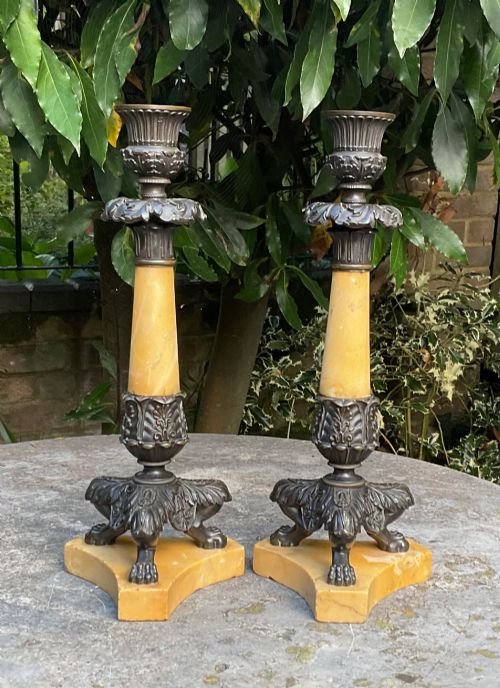
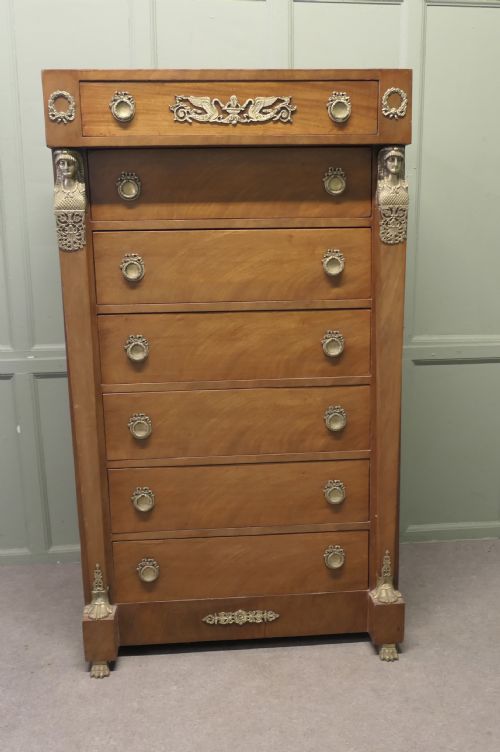
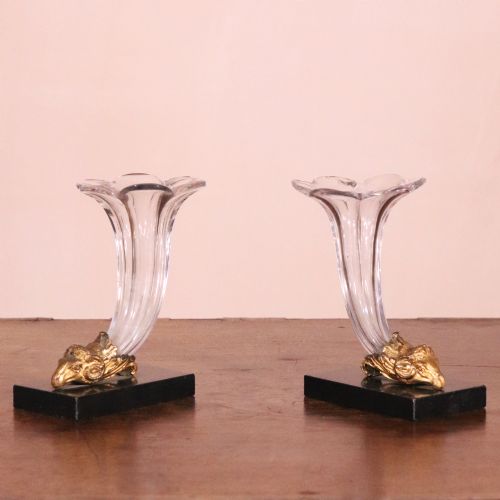
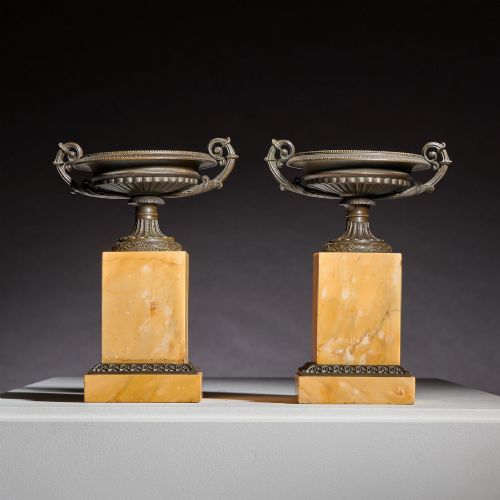
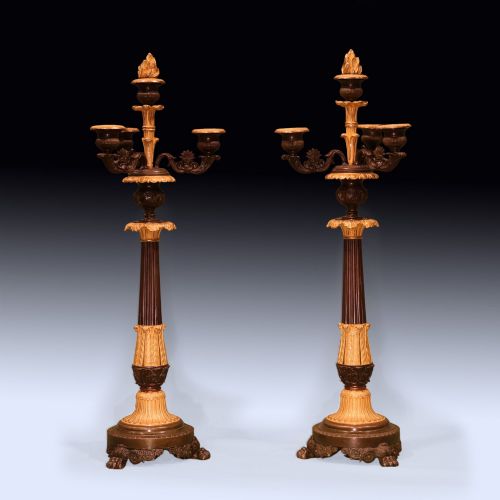
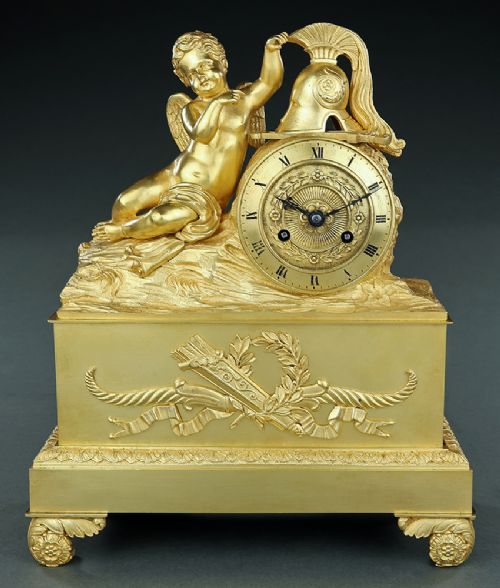
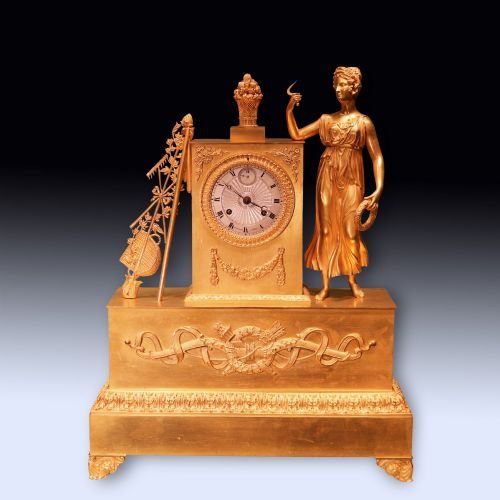
When you search for empire period bronzes, you are looking at decorative and functional objects produced during the early nineteenth century under French and Regency influence. These works take the form of mantel clocks, candelabra, candlesticks, tazzas, wall lights, and desk accessories designed with strict classical symmetry.
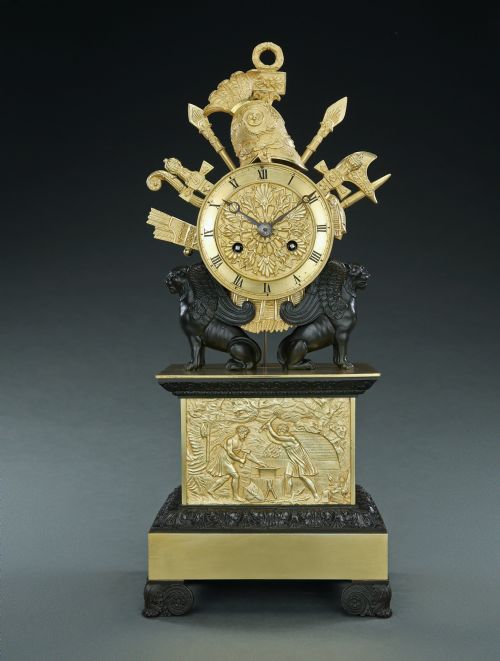
The objects on this page are most frequently French Empire or Regency pieces cast from copper alloys and mounted on contrasting stone plinths. They draw upon ancient Greek and Roman motifs, translating mythological figures, martial trophies, and architectural orders into domestic bronze works.
How they were made
Foundries made these objects using traditional lost-wax or sand-casting methods to shape the core components in bronze or brass. Artisans then chased the metal surfaces by hand with chisels and punches to sharpen details like hair, drapery, and acanthus leaves before assembly.
Gilding relied on the mercury-gilding technique, applying a gold and mercury amalgam to the bronze and heating it until the mercury vaporised to leave a rich, permanent layer of ormolu. Contrast was achieved by pairing this bright surface with dark patinated bronze and mounting the composition on bases of white, black, or Siena marble.
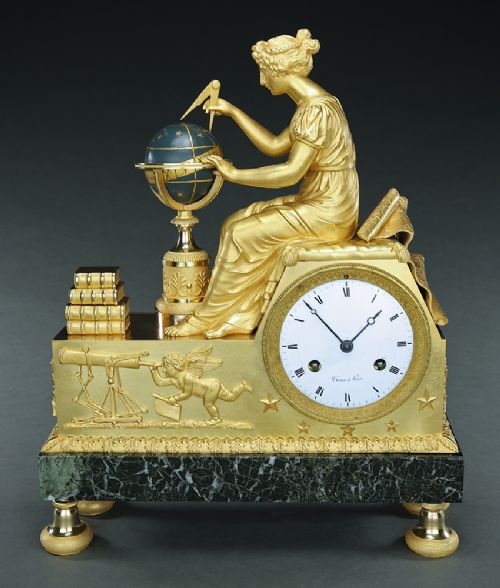
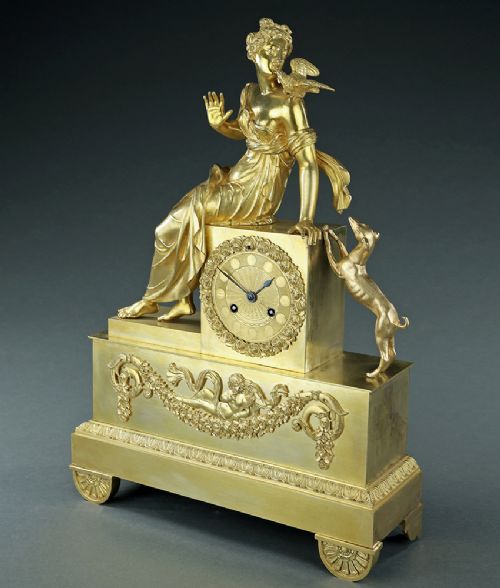
Several clocks are dedicated to astronomy and fidelity, including pieces named for Urania and the pursuit of love.
What varies in quality
The standard of a piece rests heavily on the crispness of the bronze chasing and the depth of the subsequent fire gilding. Superior works retain sharp undercutting and clean lines where individual tool marks remain visible under magnification, whereas lesser examples show smoothed contours from worn moulds or secondary casting.
Integration of materials also separates tiers of production, as higher quality items feature tightly fitted marble plinths, substantial weight from solid bronze components rather than thin brass sheets, and movements or mounts signed by established bronze-makers.
Reiche·Canaillor of Paris·Rabiat·Pons de Paul·Lefebvre of Belgium
The Empire Period Bronzes Glossary
- Ormolu
- Gilt bronze produced by applying a mercury and gold amalgam to a bronze base and firing it. This technique creates a distinctive, deep golden finish characteristic of nineteenth-century decorative metalwork.
- Patinated bronze
- Bronze treated with chemical solutions to darken the surface to a rich brown, black, or greenish tone. This dark finish provides visual contrast against bright ormolu mounts.
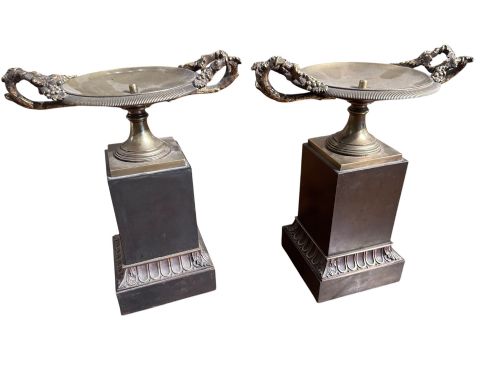
- Tazza
- A shallow saucer-shaped ornamental vessel raised on a stem and foot. Makers of this period fashioned them in bronze and marble for display on tables and mantelpieces.
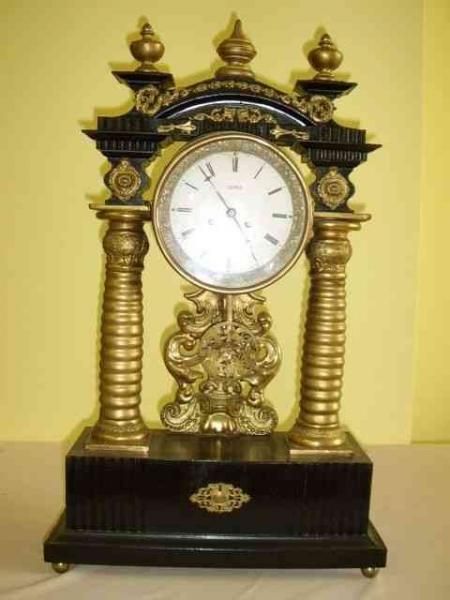
- Portico clock
- A mantel clock built within an architectural frame supported by columns. These architectural timepieces often combined ormolu mounts with marble or wood cases.
- Campana
- A classical bell-shaped vessel form used for decorative urns and vases. The shape derives from ancient pottery and bronze wine-mixing vessels.
Empire Period Bronzes: Frequently Asked Questions
What are empire period bronzes?
Empire period bronzes are decorative metal objects created during the early nineteenth century, inspired by neoclassical design and ancient Roman aesthetics.
They encompass functional items such as clocks, candelabra, inkstands, and wall lights cast in bronze and frequently enhanced with ormolu gilding and marble bases.
How were these bronzes used originally?
These items served both practical domestic purposes and grand decorative functions in Regency and continental interiors.
Clocks measured time in reception rooms, candelabra and candlesticks illuminated dining tables and mantelpieces, and desk stands organised writing materials for the study.
How do I live with antique bronzes?
Living with these pieces involves placing them on stable surfaces away from direct moisture and handling them gently by their solid structural parts.
Dusting requires only a soft, dry cloth, avoiding abrasive cleaners or polishes that can strip the original fire gilding or alter the bronze patina.
How do I tell periods apart?
Distinguishing between periods like French Empire, Regency, and Charles X relies on observing shifts in decorative vocabulary and architectural proportions.
Earlier pieces show strict military and classical motifs with heavy ormolu, while later Restoration and Charles X examples introduce softer floral details and lighter bronze mounts.