


Embossed Brass Coal Bin
These embossed brass coal bin examples bring fireside utility together with decorative metalwork across periods from the nineteenth century onward.
Embossed Brass Coal Bin
An embossed brass coal bin serves as a fireside receptacle for solid fuel, combining functional storage with decorative metal relief work. The pieces meeting this search phrase appear predominantly in Victorian and later styles, taking forms such as coal boxes, buckets, scuttles, and log bins.
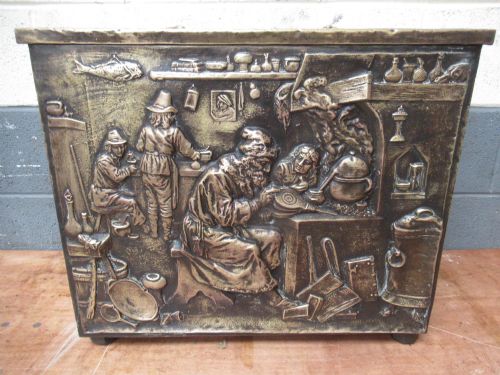
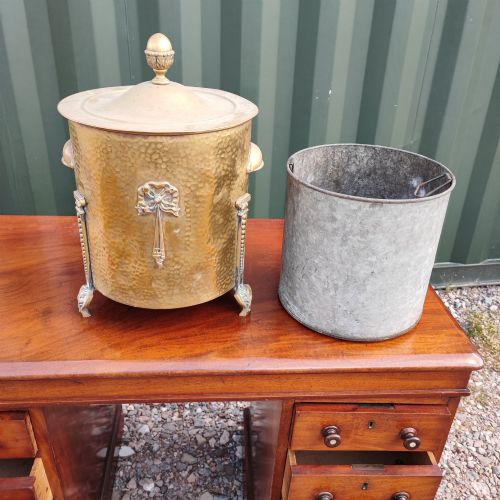
Makers shaped these containers for domestic hearths, incorporating hinged lids, drop handles, and internal liners of galvanised metal. The designs range from plain cylindrical vessels to ornate boxes adorned with tavern scenes or classical motifs.
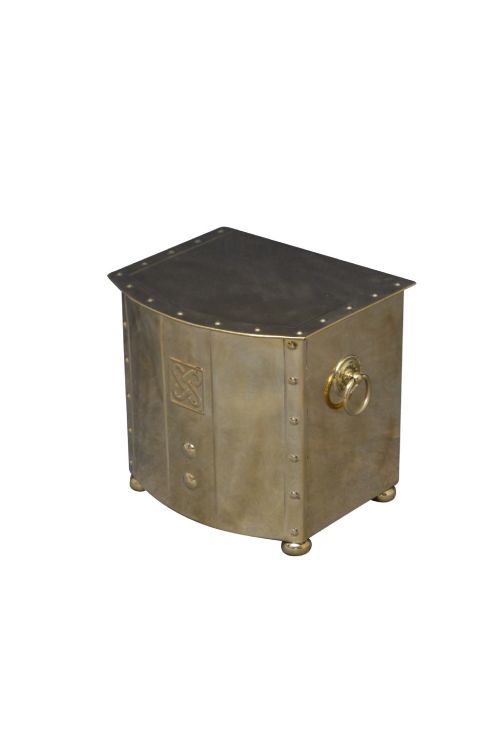
French, Belgian, and English workshops produced variations that double as planters or general fireside stores. Buyers encounter cylindrical coal buckets, rectangular purdoniums, and large jardinières constructed to sit beside the hearth.
How they were made
Artisans hammered and pressed sheet brass over wooden or metal carcasses to create the raised surface patterns. Copper bands, iron fittings, and wooden components such as ebony handles provided structural reinforcement to the main metal body.
Techniques varied from Dinanderie work involving beaten brass vessels to Adam style stamping and Arts and Crafts hand-hammering. Liners made of galvanised metal protected the outer brass and wood from moisture and coal dust.
Some Victorian coal bins secretly doubled as indoor gardens by hiding zinc flower buckets behind their embossed tavern scenes.
What varies in quality
The crispness of the repoussé or embossed decoration defines the visual standard of the piece, with sharper tavern scenes and floral motifs indicating skilled hand-chasing. Thicker gauge brass resists denting and holds its structural integrity under heavy daily loading.
The integrity of internal liners, original drop handles, and wooden or iron structural elements determines the completeness of the vessel. Period hinges and secure lid fittings separate domestic utility items from decorative showroom examples.
Petrus Ramus
The Embossed Brass Coal Bin Glossary
- Repoussé
- A metalworking technique where the design is hammered into relief from the reverse side. This method creates the characteristic raised patterns seen on the surface of the metal.
- Purdonium
- A type of coal box featuring a sloping front and a hinged lid designed to hold a coal shovel. These containers often include internal metal scoops for fuel transfer.
- Dinanderie
- The medieval and later Belgian art of brass and bronze working centred around Dinant. The term describes decorative beaten metal vessels and fireplace containers.
- Fireside accessory
- Any functional vessel or tool kept near the hearth for tending the fire. This category includes coal buckets, log bins, and fuel baskets.
Embossed Brass Coal Bin: Frequently Asked Questions
What are embossed brass coal bins used for?
These vessels store coal, peat, or logs beside an active fireplace while keeping fuel dust contained. Owners also utilise them as decorative umbrella stands or indoor planters.
Their substantial metal construction protects domestic interiors from loose debris while adding metallic texture to chimney breast surrounds.
How do I clean an antique brass coal bin?
Dust the surface regularly with a soft dry cloth to prevent soot accumulation within the embossed crevices. Avoid harsh chemical polishes that strip away the aged patina built up over decades of use.
Gentle wiping with a mild soap solution preserves the original brass and copper tones without damaging the metal relief work.
Are these coal bins suitable for modern fireplaces?
The containers function effectively beside contemporary stoves and open hearths for storing logs or solid fuel. Their period designs complement both traditional and modern living spaces.
Check that the internal metal liner remains intact if storing damp wood or coal to protect the outer brass structure from moisture.
How do I date a Victorian brass coal bin?
Examine the construction methods, handle fixings, and hinge types to establish the manufacturing period. Victorian examples often feature hand-hammered detailing and robust wooden carcasses.
Stylistic cues such as Arts and Crafts motifs or Regency revival shapes provide further clues to the decade of production.