




Pedestal Coal Scuttle
A pedestal coal scuttle brings hearthside utility into sharp focus, offering sturdy containment for winter fuel with period character.
Pedestal Coal Scuttle
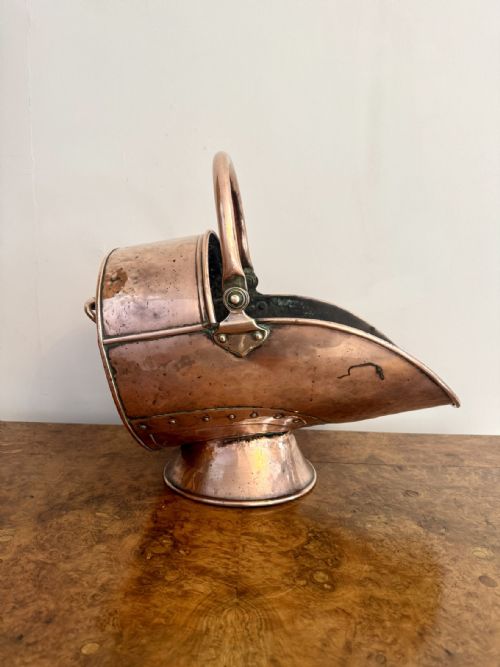
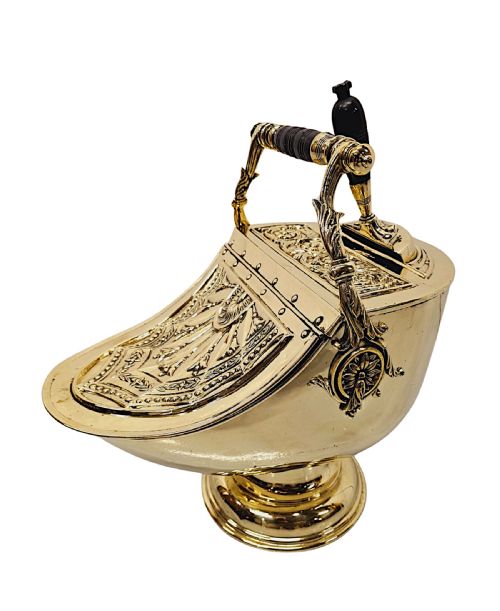
A pedestal coal scuttle sits by the fireplace as a functional container for solid fuel, taking forms such as the classic helmet or the lidded bucket. Buyers searching this phrase encounter examples from the 19th Century, Victorian, Edwardian, and Regency periods, alongside earlier George III designs.
The objects span varied material treatments, including polished brass, copper, and ebonised wood or walnut. Formats range from simple copper coal hods to more elaborate Dutch ebony buckets and Adam style coal purdoniums complete with shovels.
Most items on this page reflect the Victorian and 19th-century taste for decorative yet practical fireside accessories. These pieces balance heavy metal construction with domestic utility, designed to stand beside the hearth.
How they were made
Makers shaped sheet copper and brass into helmets and buckets, utilising hand-beaten techniques and secure riveted or soldered joints. Wood elements, such as walnut and ebony, provide contrasting structure and handles.
Metal components often received a polished finish to catch the firelight, while wooden sections turned on a lathe or constructed as stave buckets offered durable stability for heavy loads of coal.
Listings feature copper and brass prominently, alongside occasional examples in walnut, ebony, and ebonised wood across the 19th Century.
What varies in quality
The weight of the metal and the integrity of construction separate sturdy utilitarian pieces from finer decorative examples. Heavier gauge copper and brass retain their shape better under daily use and polishing.
Details such as dovetailed wooden joints, cast brass handles, and matching shovels indicate a higher tier of manufacture. The crispness of applied stylistic motifs, from Adam style ornament to Dutch colonial turning, marks the skill of the original workshop.
Benham & Froud
The Pedestal Coal Scuttle Glossary
- Coal scuttle
- A container specifically designed to hold and transport coal to the fireplace. These pieces often feature a wide mouth and a carrying handle.
- Helmet coal scuttle
- A specific form named for its flared, sloping profile resembling a traditional helmet. This shape allowed easy pouring of fuel directly onto the fire.
- Coal purdonium
- A box-style coal container, often featuring a sloping front door and a compartment for a shovel. These became popular in the Victorian period for domestic hearths.
- Coal hod
- A deep, bucket-like vessel for holding solid fuel. It provides straightforward utility without the flared rim of a helmet scuttle.
Pedestal Coal Scuttle: Frequently Asked Questions
What is a pedestal coal scuttle?
A pedestal coal scuttle is a fireside container designed to hold solid fuel close to the hearth. It combines practical utility with period metalwork or woodwork.
These pieces range from simple copper buckets to elaborate brass helmet scuttles intended to sit visibly in a reception room.
How did people use them?
Households used these vessels to carry coal from the cellar or coal bunker to the fireplace. The shaped spout or bucket form made emptying fuel onto the fire straightforward.
Many included a matching shovel stored in a dedicated compartment or hung alongside the main body for convenience.
How do I clean brass and copper?
Metal surfaces benefit from gentle cleaning to maintain their finish without removing historic patina. Harsh abrasives can damage the thin metal layers.
Regular dusting and appropriate metal care products help preserve the shine on polished brass and copper surfaces.
How do I tell periods apart?
Periods reveal themselves through stylistic details, material choices, and construction methods. George III pieces often show clean, classic lines while Victorian items lean towards heavier ornamentation.
Arts and Crafts examples display hand-worked textures, whereas Regency items favour crisp classical proportions in brass and wood.