






Brass Coal Helmet
A brass coal helmet brings polished hearthside utility and gleaming period weight to the fireside.
Brass Coal Helmet
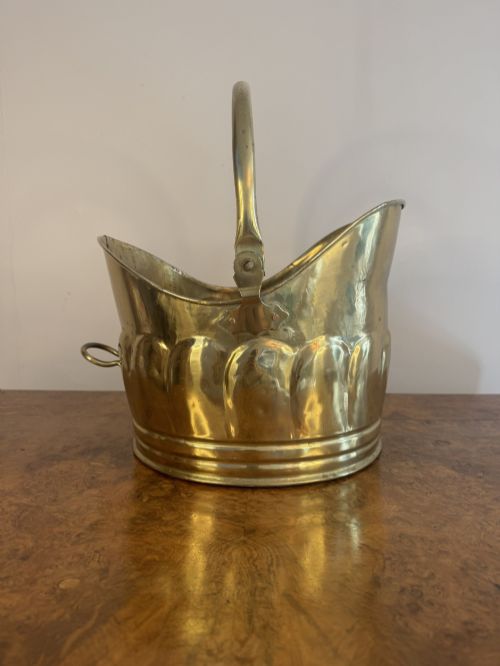
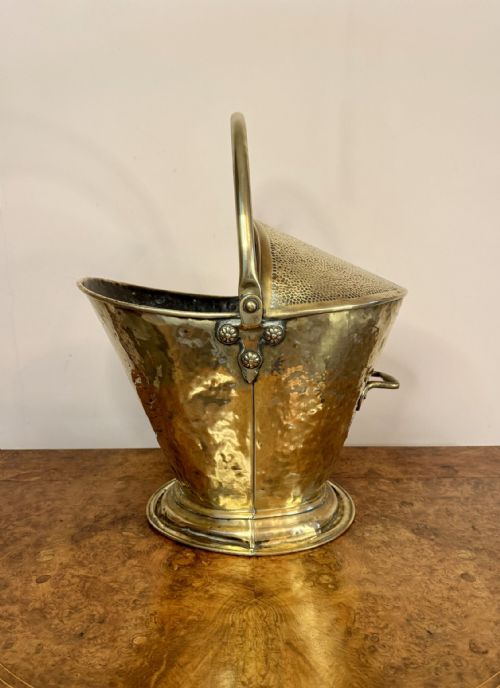
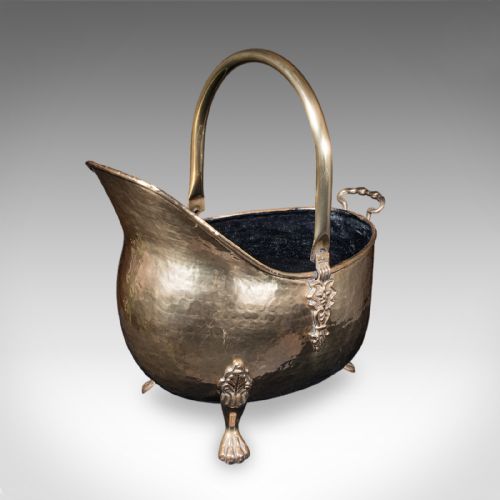
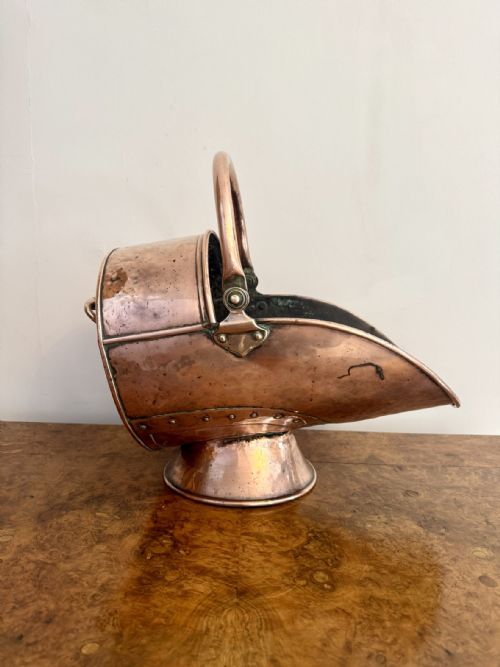
A brass coal helmet is a fireside vessel designed to hold fuel next to an open grate, taking its distinctive name from its flared, sloped profile that resembles a traditional headpiece. These practical accessories date primarily from the nineteenth century, emerging through the Georgian, Victorian and Edwardian eras as domestic comfort and metalworking grew in sophistication.
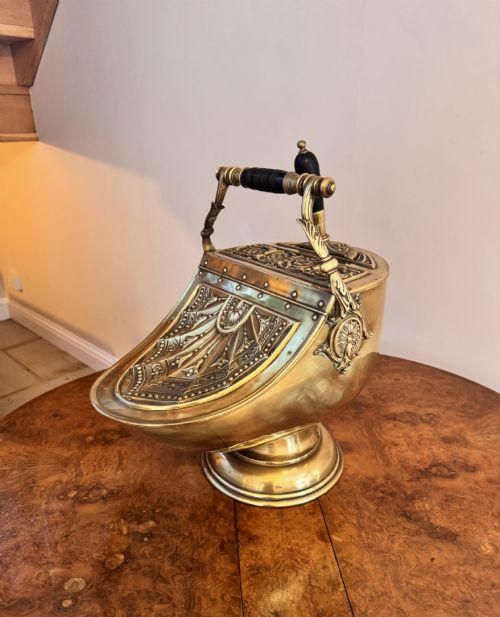
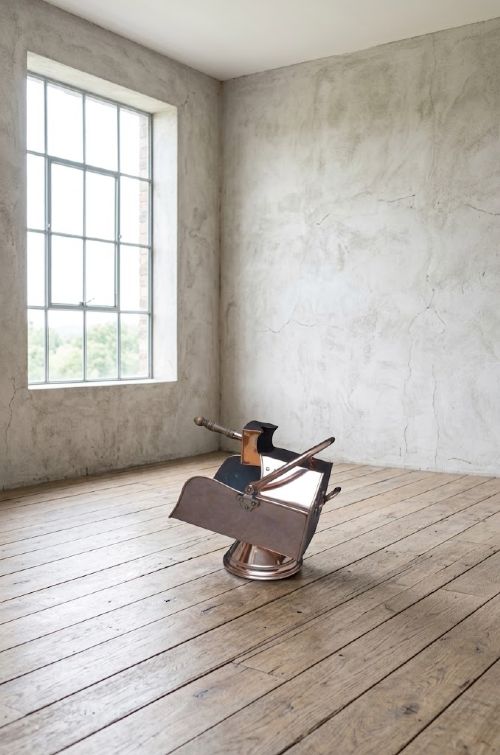
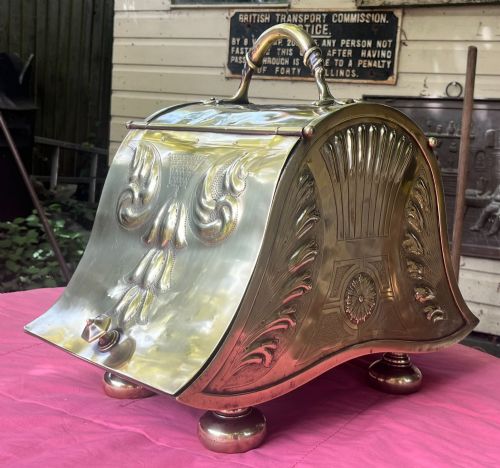
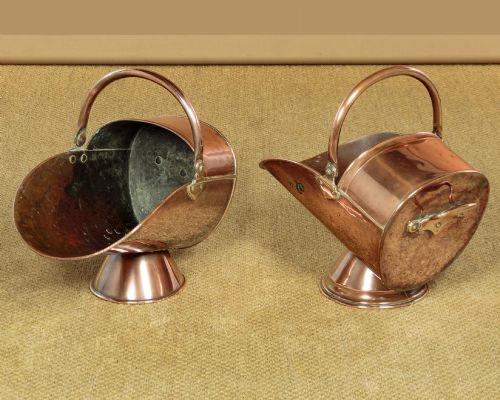
The pieces appearing on this page span heavy cast forms, smooth sheet brass bodies and contrasting copper combinations, frequently accompanied by matching swing handles and occasionally original shovels. Victorian examples dominate the selection, bringing substantial gauge metal and decorative embossing directly from nineteenth-century parlours to modern interiors.
Materials and construction methods
Makers fashioned these utilitarian objects principally from sheet brass and warm copper, often combining both metals to create contrasting rims, bases and bodies. Handles frequently incorporate turned wood, ebonised elements or ceramic grips to insulate against heat while adding tactile contrast to the polished metal surfaces.
Workshops utilised hand-beating, spinning and rolling techniques to shape the sheet metal, securing seams with dovetail joints, heavy rivets or brass banding. Bases often rest on cast feet, ranging from simple stepped pedestals to stylized claw feet and lions paw designs that elevated the vessel off the hearth floor.
Brass Coal Helmet Retail Price Guide 2026
Typical asking prices for brass coal helmet among the pieces listed under this phrase on Sellingantiques today, from the lower quarter to the upper quarter. They describe what is for sale here now, not the wider market.
Listings feature brass coal helmets spanning the Georgian, Victorian, and Edwardian periods, frequently paired with matching copper bodies and wooden handles.
Distinctions in craftsmanship and form
The thickness of the gauge metal fundamentally divides standard utility pieces from exceptional items, with heavier brass and copper offering superior rigidity and enduring shape over decades of use. Better examples display crisp hand-chased embossing, secure riveting and well-balanced swing handles that move smoothly without straining the body of the scuttle.
Completeness also elevates a piece, as survival of the original matching brass shovel, dual lids or specialised maker marks transforms a standard fireside container into a notable collector's item. Refined proportions, such as a cleanly swept helmet brim and stable, decorative feet, separate sophisticated parlour accessories from plain utilitarian bins.
Benham and Froud·Henry Loveridge·William Souter and Sons
The Brass Coal Helmet Glossary
- Coal helmet
- A fireside scuttle featuring a flared, sloping rim reminiscent of a military headpiece designed for pouring fuel cleanly. This specific silhouette became a staple of nineteenth-century domestic metalwork.
- Ebonised wood
- Timber treated to resemble expensive ebony through a dark staining and polishing process. Makers utilised this material for insulated handles and decorative accents.
- Embossing
- A technique where a design is raised above the surrounding metal surface using punches and hammers. This ornamentation added rich texture to otherwise plain sheet brass bodies.
- Companion set
- A matched collection of fireside tools, such as tongs, pokers and shovels, often displayed alongside coal buckets. These sets unified the aesthetic of the nineteenth-century hearth.
Brass Coal Helmet: Frequently Asked Questions
How were coal helmets used?
These containers were filled with coal from an outside storage bunker and brought indoors to replenish parlour and drawing room fireplaces. The flared helmet design allowed the user to tilt the vessel and guide fuel smoothly into the grate.
They also served as decorative fireside accessories, with polished surfaces intended to catch the flickering light of the hearth when not actively in use.
How do I date a brass coal helmet?
Dating relies on observing construction methods, material combinations, and stylistic markers recorded across Victorian, Georgian and Edwardian periods. Heavier gauge metal, hand-beated seams, and specific maker marks often point toward earlier nineteenth-century production.
Later Edwardian and Arts and Crafts examples frequently incorporate distinct decorative motifs, lighter construction, or simpler riveted joints that reflect changing industrial techniques.
Can I use an antique coal helmet today?
Many of these sturdy brass and copper vessels remain robust enough to hold logs, kindling or coal beside a modern fireplace. Their enduring metal construction ensures they function just as well today as they did in nineteenth-century homes.
Care should be taken to protect antique finishes from excessive moisture and abrasive cleaners to preserve the original polished surface and patina.