



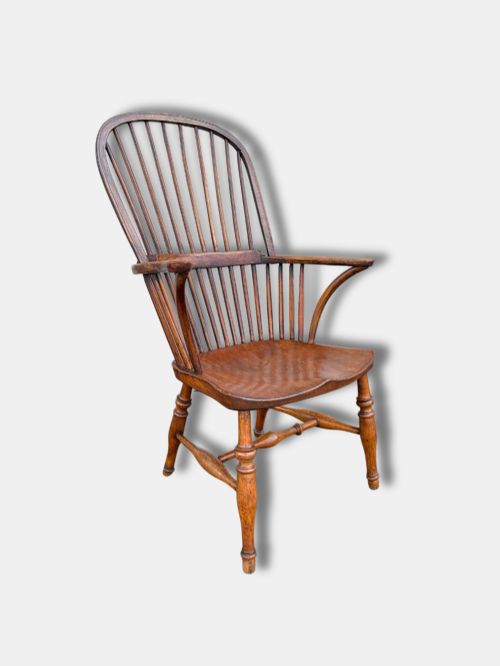
Elm Desk Armchair
An elm desk armchair brings a tactile, vernacular presence to a study, offering sturdy timber seats shaped by generations of country joiners.
Elm Desk Armchair
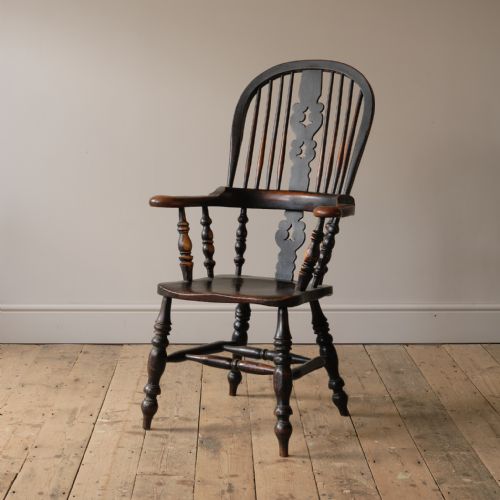
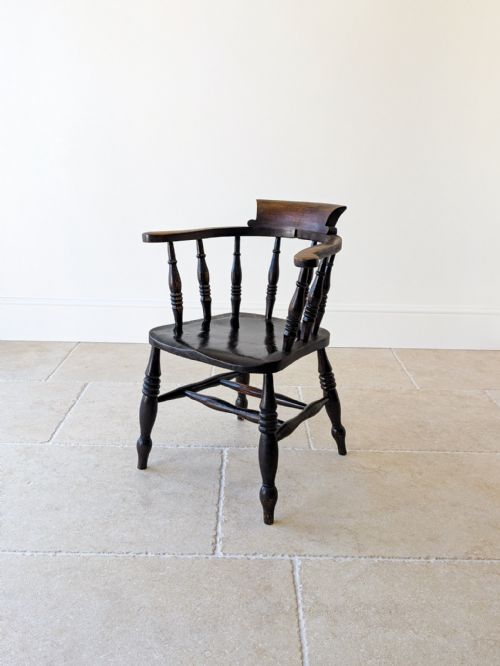
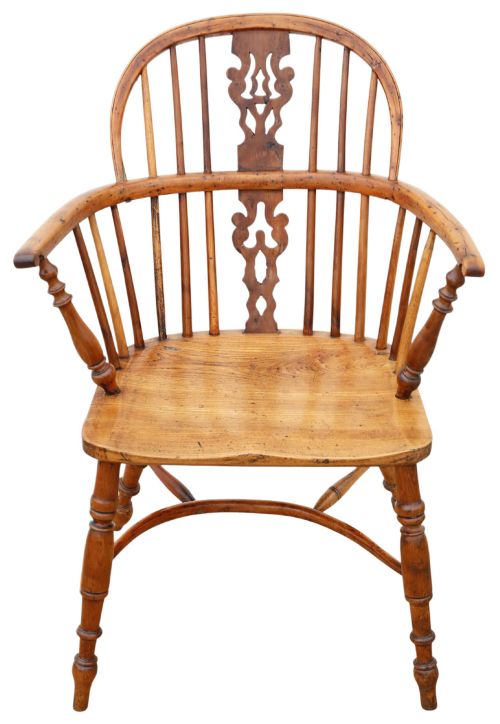
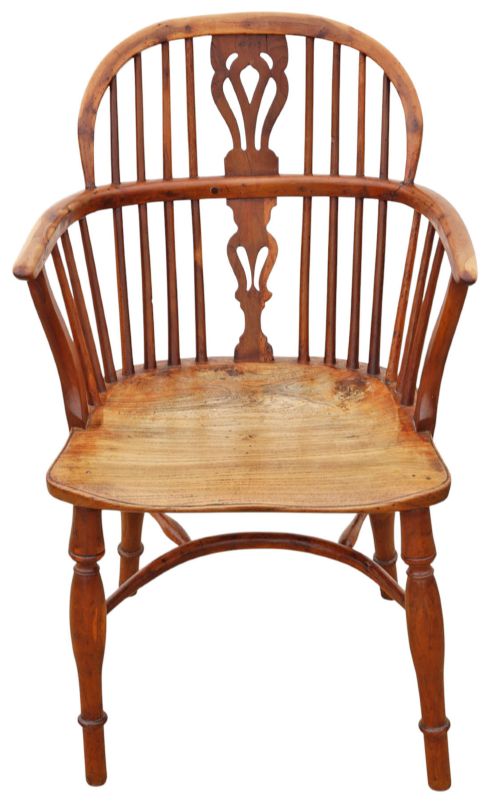
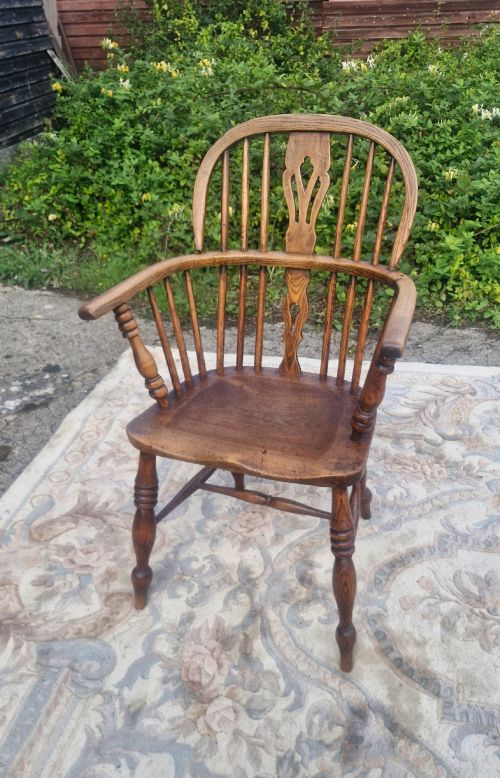
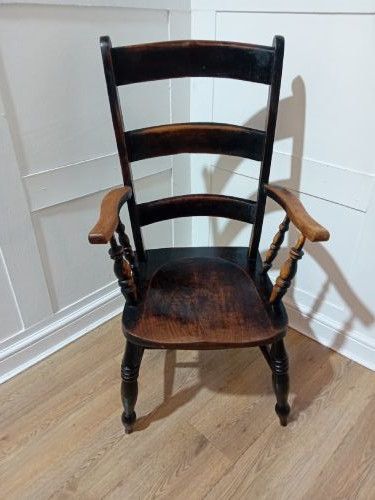
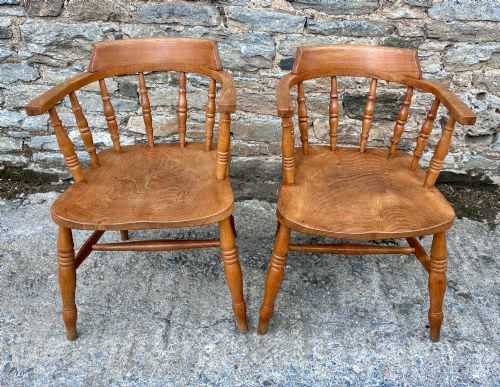
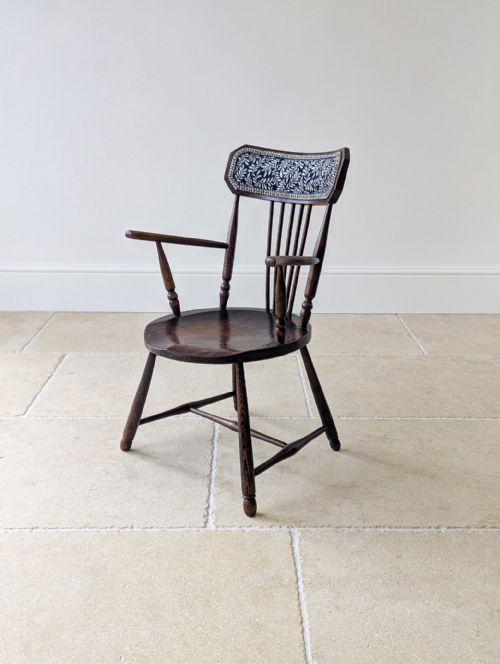
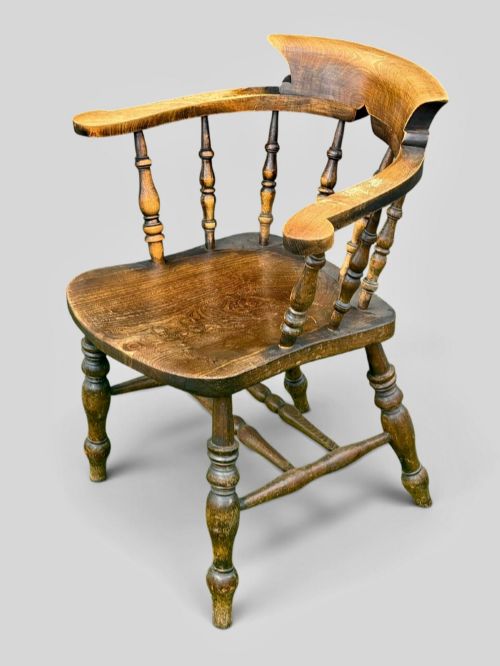
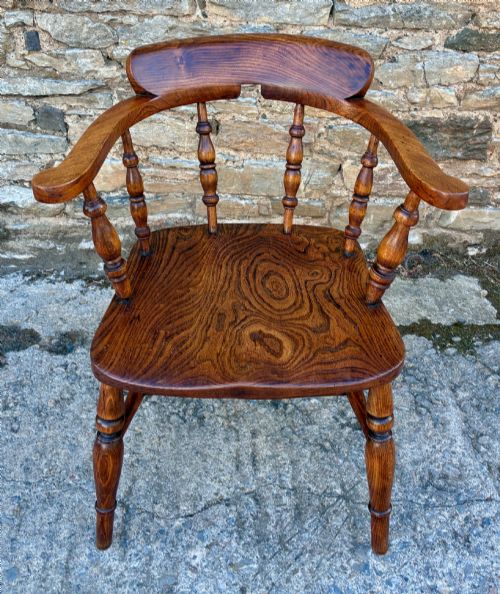
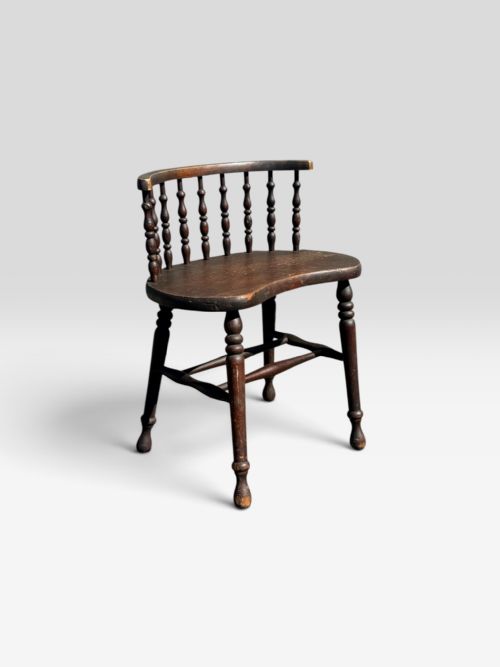
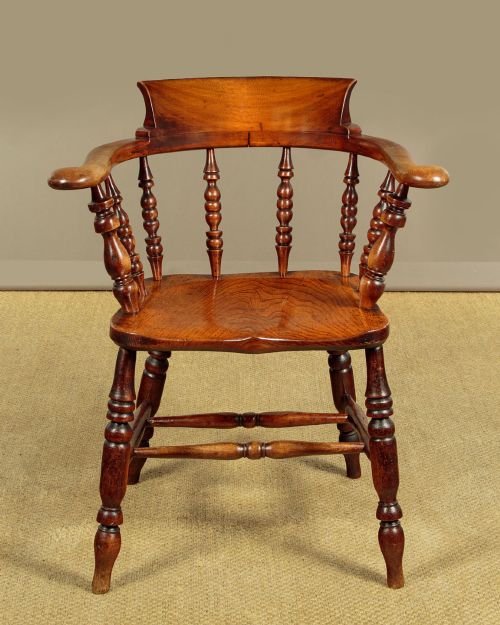
When searching for an elm desk armchair, you encounter robust seating built for functional everyday use rather than formal parlour display. These chairs typically manifest as traditional Windsor forms, low-back smokers' bows, or Captain's chairs designed with supportive curved armrests and solid timber seats.
The versions most common on this page date from the nineteenth and eighteenth centuries, reflecting regional English vernacular traditions. Makers utilised local hardwoods to construct sturdy frames suited to long hours at a desk or writing table.
Regional variations span Thames Valley origins, Scottish examples, and West Country pieces, each displaying distinct spindle arrangements or hoop-back structures. They bridge the gap between utilitarian workshop seating and domestic comfort.
Materials and construction
Construction relies heavily on a combination of elm for the thick, saddle-shaped seats and ash, beech, or oak for the steam-bent hoops, spindles, and legs. Elm provides a durable, interlocking grain that resists splitting when shaped, whilst straight-grained ash or beech offers tensile strength for slender back spindles.
Joinery techniques involve traditional bodging methods where turned legs and back uprights are wedged directly into bored holes through the solid timber seat plank. Windsor construction methods ensure structural integrity without relying on metal fixings, allowing the timber to move naturally over centuries.
Seats show genuine generational wear where previous writers polished the elm simply by leaning back.
Distinguishing quality in country seating
The choice of secondary woods also influences the character, with yew and ash combinations generally commanding greater attention for their rich grain patterns and warm patination. Original surface finishes, such as early wax or historic ebonisation, preserve the integrity of the piece far better than stripped or heavily sanded timber.
J SPENCER
The Elm Desk Armchair Glossary
- Windsor chair
- A chair built with a solid wooden seat into which the legs and back spindles are separately inserted rather than forming an integrated frame. This method creates a resilient structure typical of English country furniture.
- Smoker's bow
- A low-backed Windsor variant featuring a continuous curved armrail supported by turned spindles, originally popular in smoking rooms and offices. It provides compact elbow support suitable for desk work.
- Comb back
- A Windsor chair design where the top of the backrest resembles the teeth of a comb, featuring vertical spindles rising through a horizontal crest rail. This style often dates to the eighteenth or early nineteenth century.
- Bodge
- The traditional craft of turning green wood components in woodland shelters before assembling them into chair frames. Bodgers supplied local chairmakers with standardised parts like legs and spindles.
- Carver
- A general term for an armchair, often used historically to distinguish seating with arms from matching side chairs used around a dining table or desk.
Elm Desk Armchair: Frequently Asked Questions
How can I tell a Victorian smokers bow from an 18th century Windsor?
Earlier eighteenth-century examples often display higher hoop backs, comb tops, and more complex spindle configurations, reflecting regional vernacular craftsmanship. Victorian versions tend to be lower, wider, and frequently utilise beech or ash components alongside the elm seat.
Examining the turning style of the legs and the wear patterns on the armrests helps clarify the manufacturing era and regional origin.
Are these chairs suitable for daily use at a modern desk?
These historical chairs work well in contemporary studies provided the seat height matches your desk surface and leg clearance. Their sturdy wooden construction is inherently robust and built for longevity.
Adding a simple loose cushion can enhance comfort for long desk sessions without altering the historic character of the timber seat.
Why is elm used for the seats of these armchairs?
Elm timber possesses an interlocking, twisting grain structure that makes it exceptionally resistant to splitting when subjected to the downward pressure of wedged chair legs. This quality made it the preferred choice for solid chair seats across generations of English makers.
Over time, elm develops a rich, undulating texture as the softer grain wears down, creating a tactile surface unique to country furniture.