



Pair of Captains Chairs
A pair of captains chairs brings sturdy, low-backed seating into a study or library, valued for solid timber frames and supportive curved armrests.
Pair of Captains Chairs
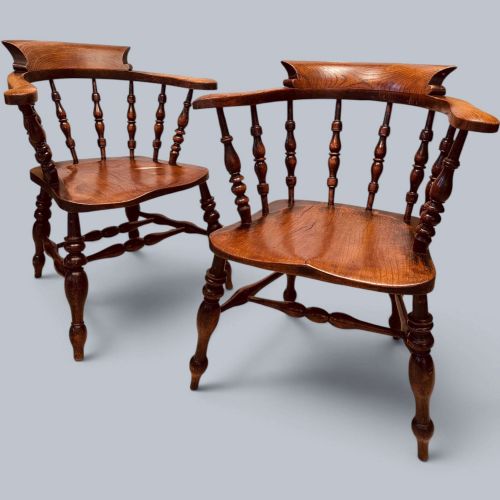
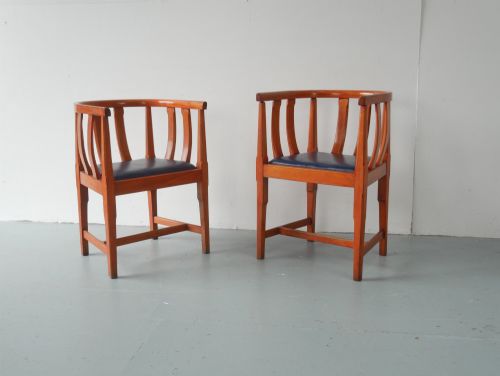
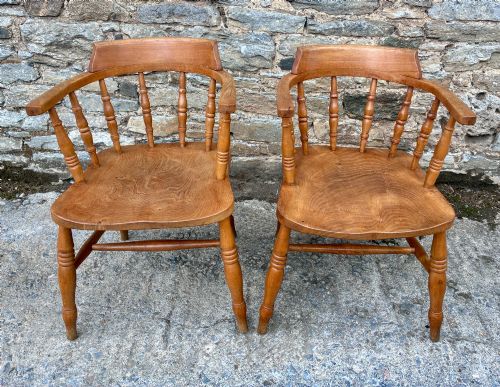
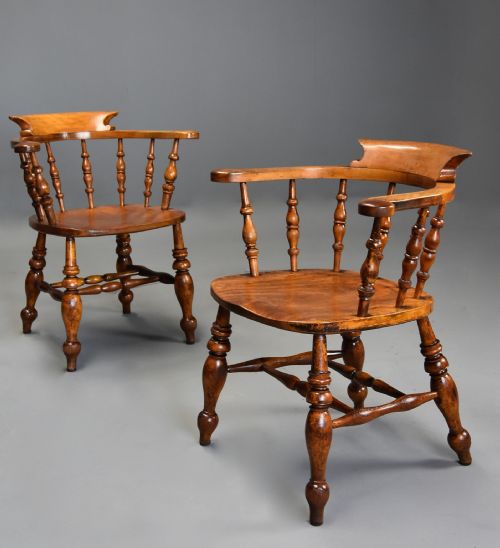
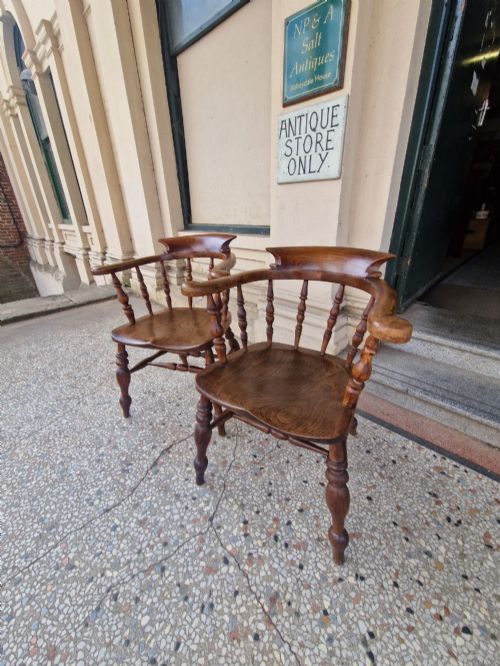
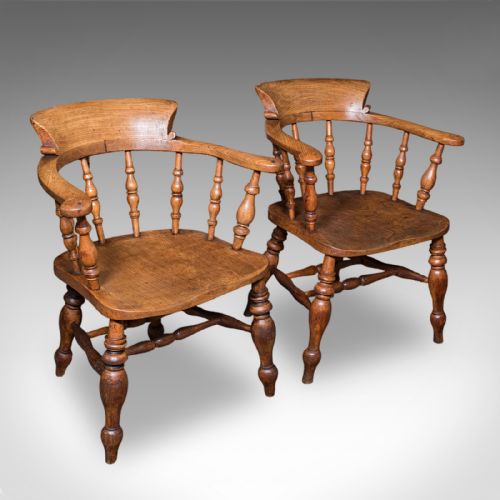
A pair of captains chairs comprises sturdy, low-backed seating traditionally placed at desks, in libraries, or around dining tables. These chairs often feature continuous curved armrests supported by vertical spindles above a wooden or upholstered seat.
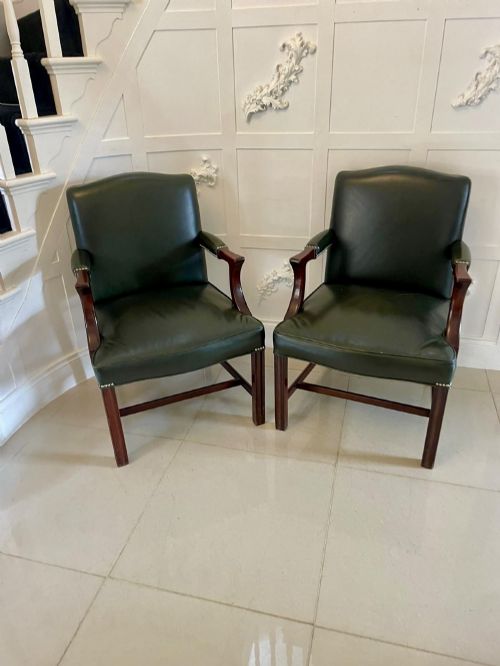
On this page, Victorian and 19th-century examples predominate, alongside Edwardian and Regency pieces. The forms range from traditional country elm and ash smokers bows to polished mahogany and leather desk chairs.
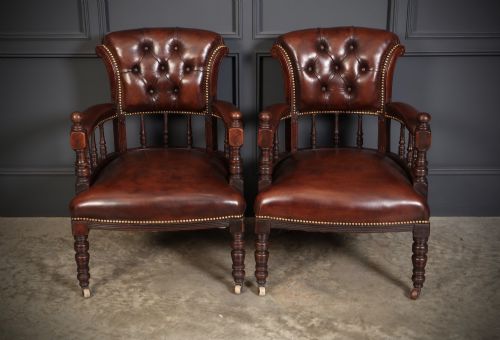
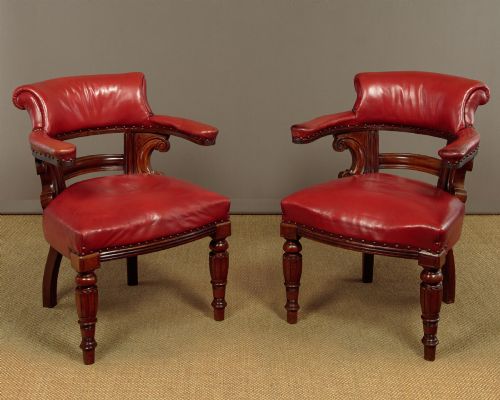
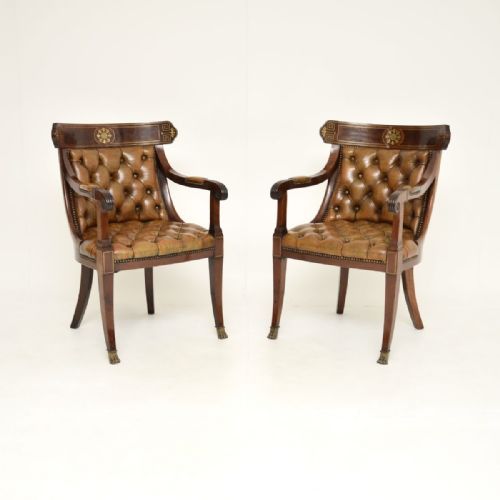
Buyers encounter regional country variations alongside formal library armchairs. Many incorporate swivelling mechanisms, brass inlay, or buttoned leather upholstery suited to domestic or maritime use.
Materials and construction methods
Frames rely on durable native and imported timbers, frequently combining ash and elm for country chairs, or solid mahogany, walnut, and oak for formal desk variants. Turned wooden spindles and steam-bent backrails form the structural envelope of Windsor and smokers bow designs.
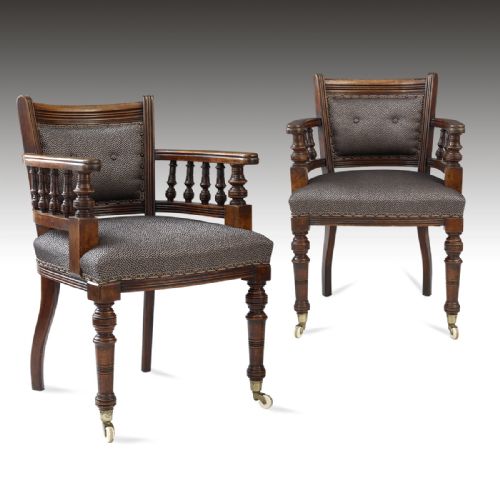
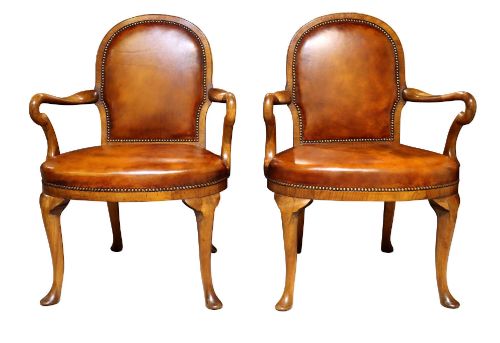
Upholstered versions integrate supple leather panels, fabric, or buttoned hide secured with brass tacks over padded seats. Metal components such as brass inlays, castors, and revolving swivel mechanisms provide functional reinforcement in maritime and library settings.
Pair of Captains Chairs Retail Price Guide 2026
Typical asking prices for pair of captains chairs among the pieces listed under this phrase on Sellingantiques today, from the lower quarter to the upper quarter. They describe what is for sale here now, not the wider market.
Listings feature ash, elm, mahogany, oak, walnut, birch, yew, and satinwood, spanning the Regency, Victorian, and Edwardian periods.
Distinctions in craftsmanship and condition
The standard of timber selection and joinery distinguishes finer examples, visible in closely matched grain patterns and tight structural joints. Patina on exposed wood and leather develops through decades of use, where preserved surfaces command greater appreciation.
Refined decorative touches, including brass inlay, satinwood detailing, or complex turnings, separate standard utility seating from high-grade library and desk armchairs. Original swivelling actions and intact leather upholstery further influence the standing of each pair.
George Bartholomew & Co.·Henry Maxwell·P & O
The Pair of Captains Chairs Glossary
- Smokers Bow
- A sturdy wooden armchair with a low, continuous backrail and thick spindles, closely related to the captain chair. These originated in 19th-century country workshops.
- Carver Chair
- An armchair designed to match a set of dining chairs, usually positioned at the table heads. They offer wider proportions than standard side chairs.
- Patina
- The surface sheen and mellow colour developed by wood and leather through age and handling. A rich patina indicates long periods of careful use.
- Windsor Chair
- A chair built with a solid wooden seat into which the legs, back spindles, and arms are separately jointed. They rely on steam-bent components for their curved backs.
- Tub Chair
- An armchair featuring a continuous curved back and sides that form a single enclosed shape. They frequently appear in Edwardian and Victorian library settings.
Pair of Captains Chairs: Frequently Asked Questions
What is a captains chair?
A captains chair is a sturdy low-backed armchair featuring a rounded top rail supported by vertical spindles. They were traditionally designed for use at desks, ships' quarters, or dining tables.
These chairs combine timber frames with wooden or leather-upholstered seats. Their compact, stable proportions distinguish them from standard armchairs.
How do captains chairs differ from Windsor chairs?
Captains chairs are generally lower and heavier than standard high-back Windsor chairs, specifically designed for desk or table work. Many feature continuous armrails that wrap around the lower back.
Both forms utilise traditional stick-built or steam-bent construction methods. Captains chairs frequently incorporate upholstered leather pads or swivelling mechanisms not typically found on standard Windsors.
Where were captains chairs used?
These chairs originally served in ships' cabins, captain's quarters, and railway carriages before transitioning into domestic libraries and offices. Their compact footprint made them practical for restricted spaces.
Later Victorian and Edwardian examples moved into domestic studies and drawing rooms as designated desk or library seating.
How should I care for leather upholstered chairs?
Leather upholstery benefits from regular dusting with a soft dry cloth and periodic treatment with appropriate leather dressings to prevent drying. Keeping the hide away from direct heat sources preserves its flexibility.
Wooden frames require simple maintenance using beeswax or gentle polish to maintain the natural timber grain and existing patina.