

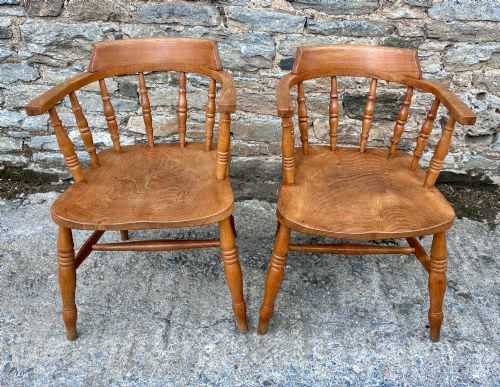
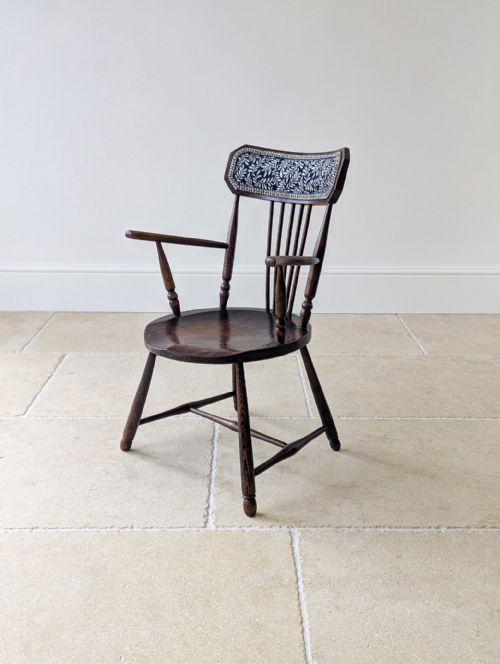
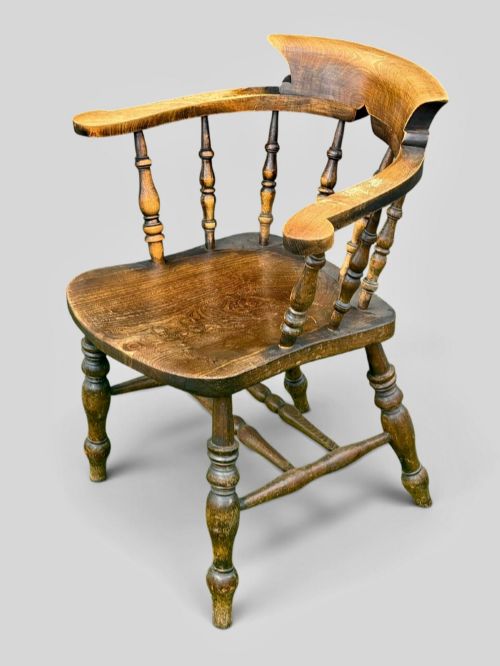
Traditional Elm Desk Chair
A traditional elm desk chair brings robust, tactile character to a workspace, combining rustic timber with practical seating.
Traditional Elm Desk Chair
When you search for a traditional elm desk chair, you find robust seating built for heavy daily use in studies, libraries, and farmhouses. These pieces bridge the gap between vernacular utility and enduring domestic comfort.
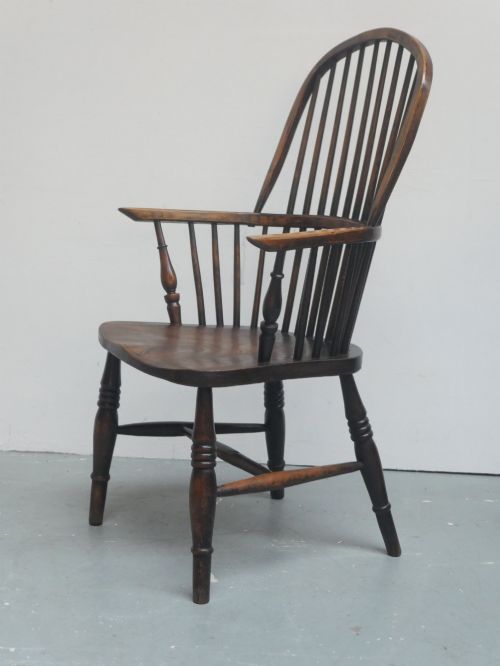
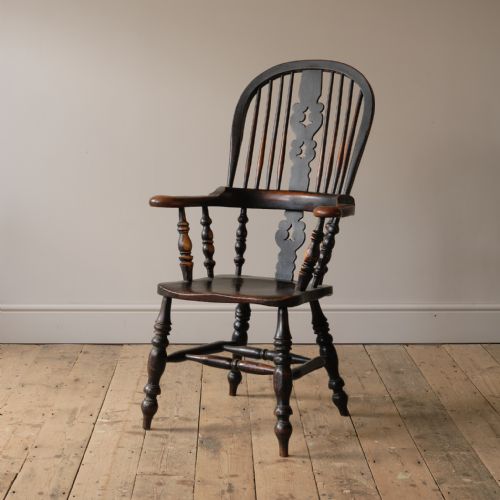
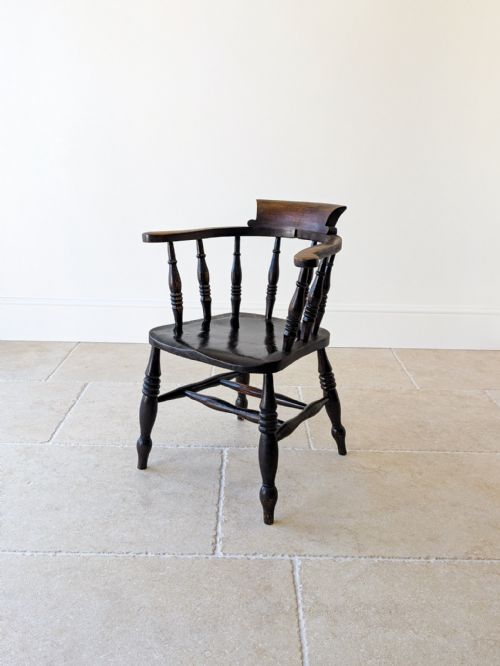
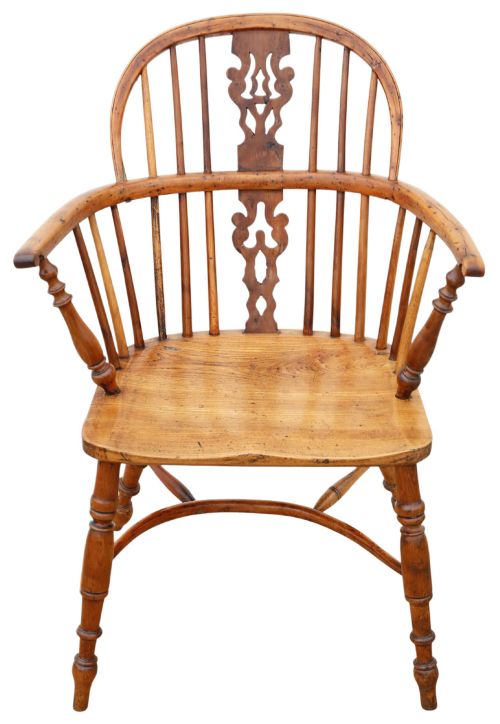
You are most likely to meet Victorian and 19th-century examples on this page, alongside earlier Georgian forms. These chairs frequently incorporate Windsor and captain's designs originating from English country workshops and regional centres like the Thames Valley.
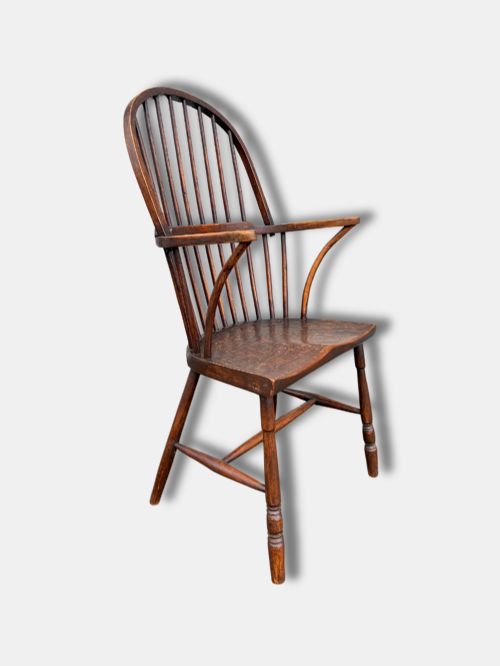
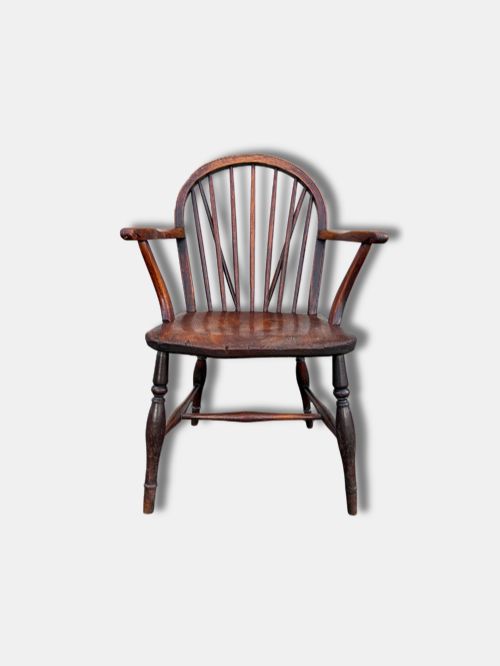
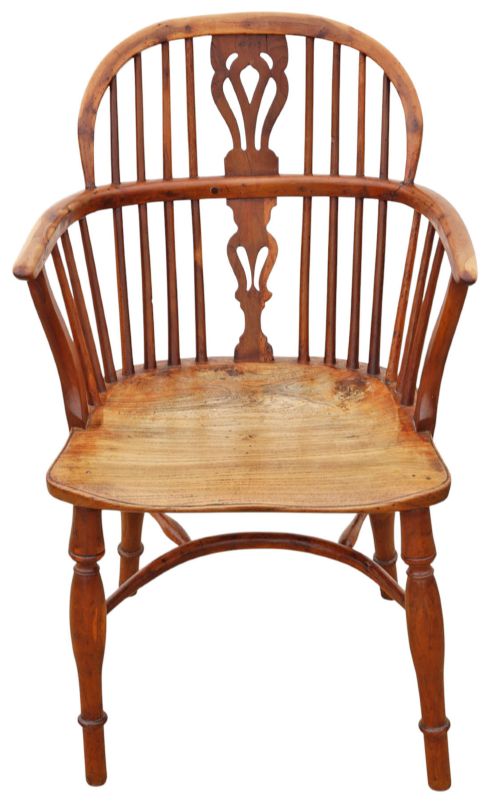
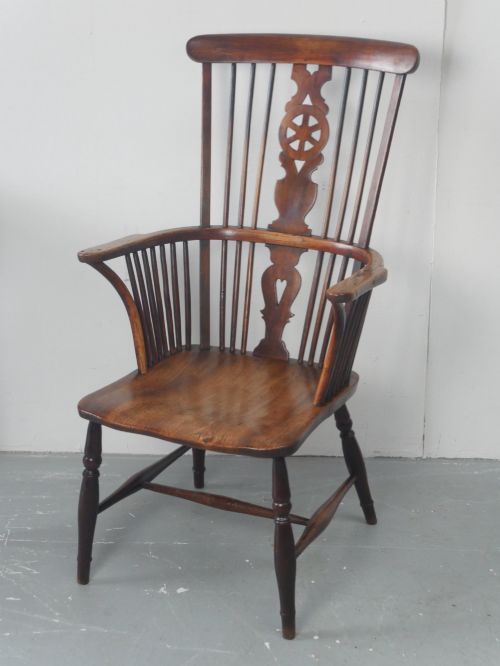
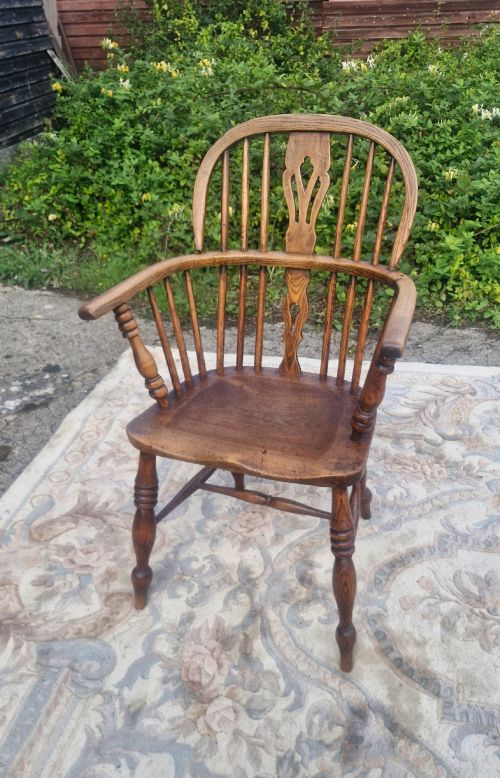
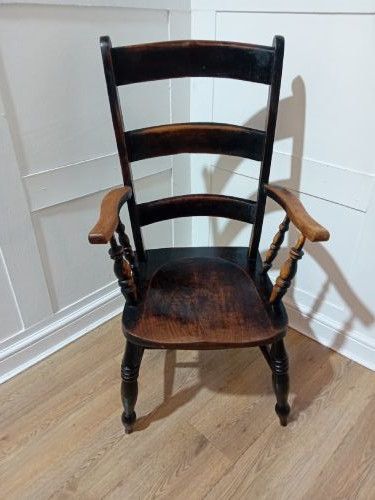
The category encompasses varied regional sub-types including smoker's bows, stickbacks, wheel-backs, and low-back armchairs. Each variant adapts the basic timber frame for a specific domestic or working function.
How they were made
Traditional makers built these chairs using a combination of native hardwoods, pairing elm seats with ash, beech, or yew for spindles, legs, and bentwood bows. Elm provided a tough, interlocking grain that resisted splitting under the stress of daily movement.
Techniques relied on solid timber construction, utilising turned components, steam-bent arm rails, and wedged tenon joints. Makers shaped solid elm seats with adzes and scorps to create deep, comfortable saddles.
Surfaces received simple finishes such as wax, oil, or ebonisation, often developing a rich patina over decades of handling.
Listings feature timbers such as elm, ash, beech, oak, and yew wood across Victorian and earlier periods.
What varies in quality
The distinction between ordinary and exceptional examples rests on the balance of timber selection and the elegance of the turning. Master makers chose highly figured yew or richly grained elm and balanced the proportions of the hoop or comb back for visual harmony.
Structural integrity and the retention of original finish dictate desirability. Chairs that preserve their early surface without excessive sanding demonstrate superior historical survival compared to heavily restored pieces.
Regional distinctiveness also plays a role, as evidenced by marked pieces or well-documented vernacular styles from specific English counties.
J Spencer
The Traditional Elm Desk Chair Glossary
- Windsor chair
- A chair built with a solid wooden seat into which the legs and back spindles are direct-tenoned. This method creates a sturdy, resilient frame characteristic of English country furniture.
- Smoker's bow
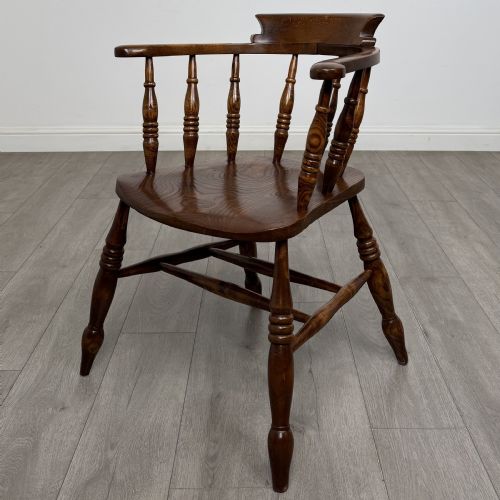
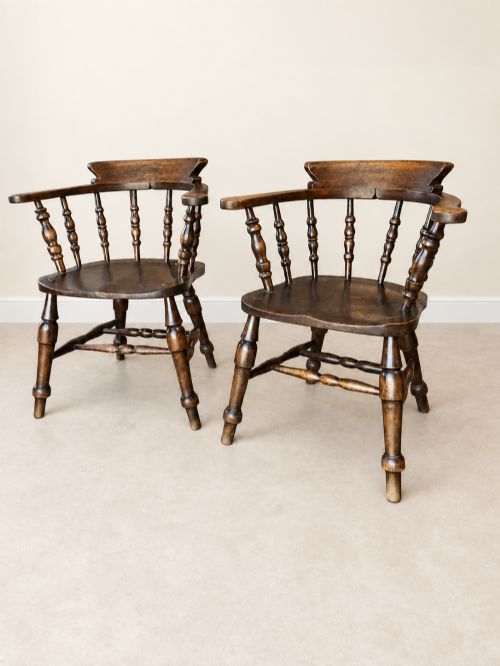
- A low-backed Windsor armchair with a continuous curved rail forming the arms and back. It appeared frequently in 19th-century parlours, smoking rooms, and offices.
- Comb back
- A Windsor chair style where the upper back resembles the teeth of a comb, featuring vertical spindles topped by a horizontal crest rail. This form often dates to the 18th century.
- Stretcher
- The horizontal timber rod connecting the legs of a chair to provide structural stability. Traditional examples often use a crinoline stretcher curved upward beneath the seat.
- Thames Valley chair
- A regional English Windsor chair style known for refined turning, generous proportions, and the frequent use of yew wood alongside elm.
Traditional Elm Desk Chair: Frequently Asked Questions
How do I identify a genuine traditional elm desk chair?
Examine the construction methods beneath the seat, looking for hand-turned spindles wedged into drilled sockets rather than modern metal fasteners. Genuine older examples show tool marks from adzes on the saddle seat and natural wear patterns on the arms.
Check the timber types, as authentic pieces typically combine an elm seat with ash or beech framing. Consistency in the timber's ageing and the presence of an honest, undisturbed surface finish point toward authenticity.
Were these chairs originally used at desks?
Many forms found here, such as captain's chairs and smoker's bows, served versatile roles in offices, libraries, and domestic settings during the 19th century. Their sturdy construction and supportive armrests made them suitable for writing and administrative work.
While some were built specifically for commercial or study use, others adapted dining or kitchen chair patterns for workspace environments.
How should I care for elm and ash furniture?
Keep wooden chairs away from direct heat sources and rapid temperature fluctuations to prevent the elm seat from shrinking or splitting. Natural timber responds well to occasional applications of beeswax to nourish the grain and maintain the surface.
Avoid synthetic polishes containing silicone, which can build up over time and dull the historic patina of the wood.
What is the difference between a Windsor and a captain's chair?
A Windsor chair relies on a thick solid seat that directly anchors the legs and back components, often featuring a high or low bow back with vertical spindles. A captain's chair generally refers to a lower-backed, compact armchair designed with a continuous curved arm rail suited for sitting close to a table or desk.
Both types frequently share elm seats and turned ash or beech framing within the traditional country vernacular.