



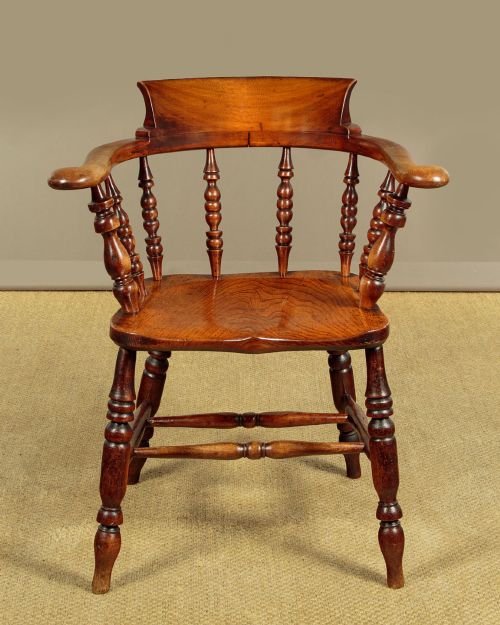
Antique Country Desk Chair
An antique country desk chair brings tactile warmth and sturdy utility to a study, built from honest local timbers to serve generations of writers.
What these chairs are
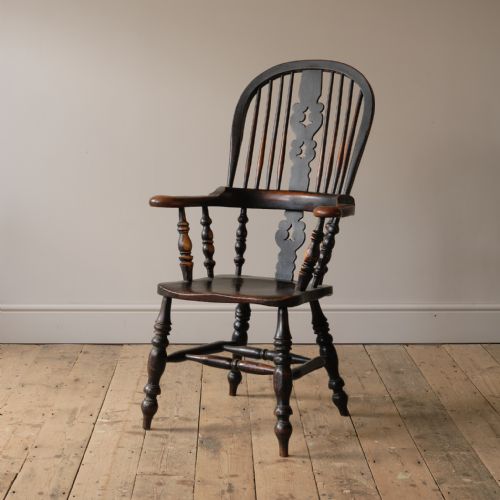
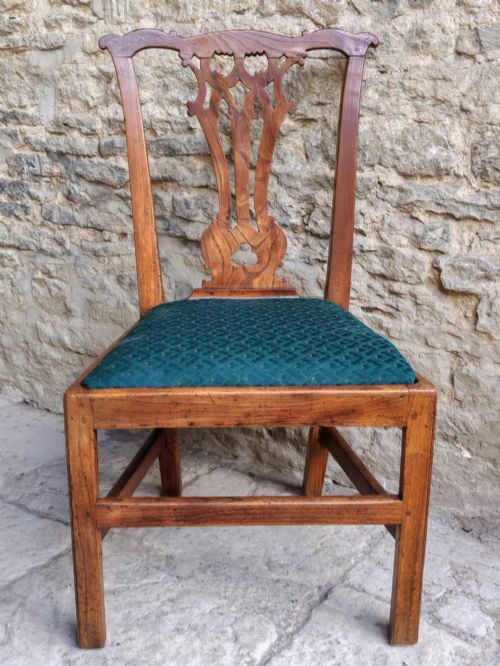
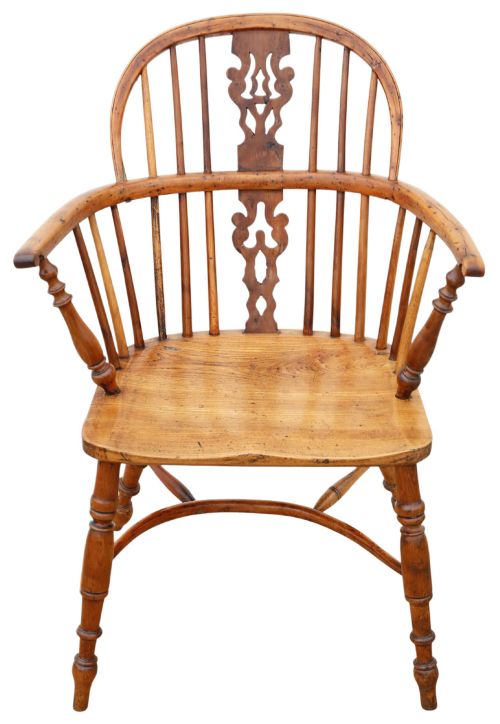
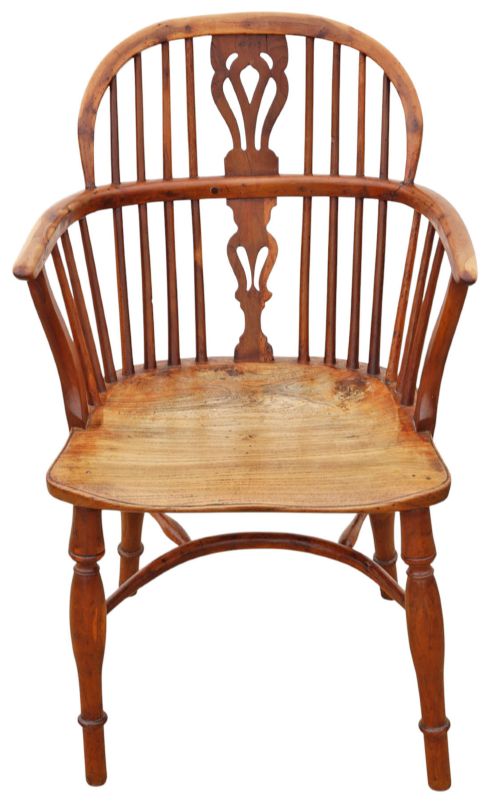
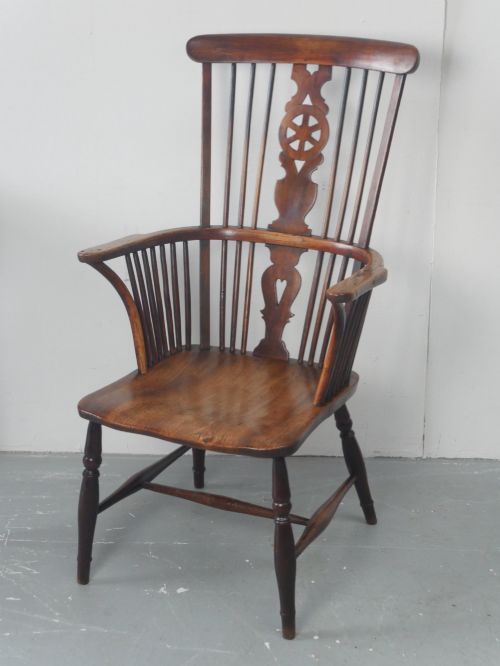
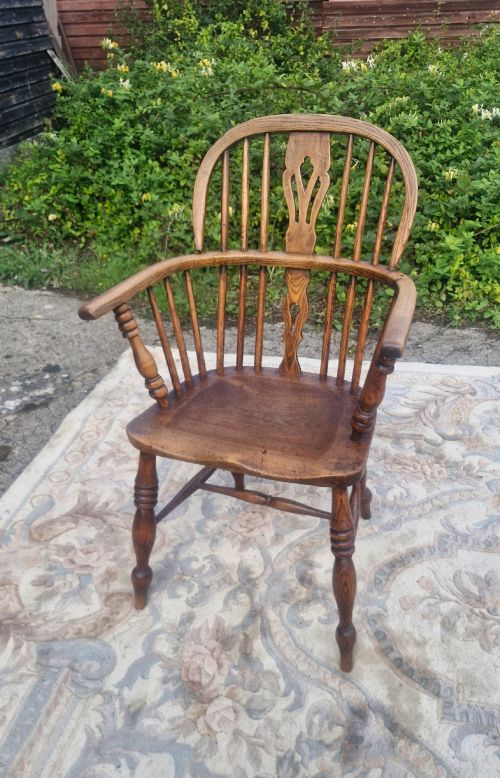
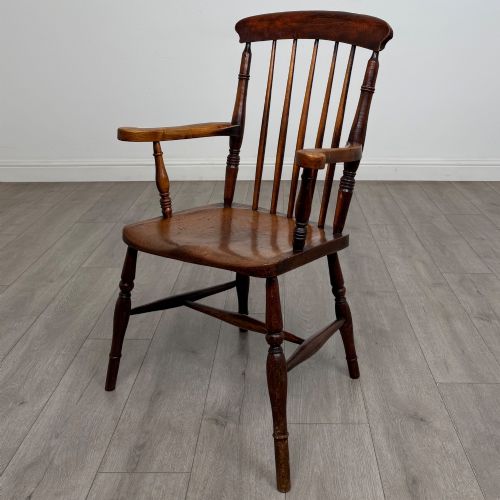
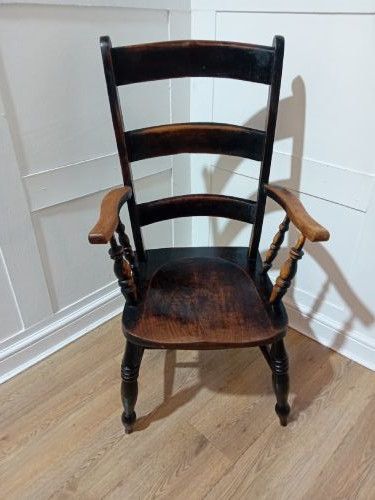
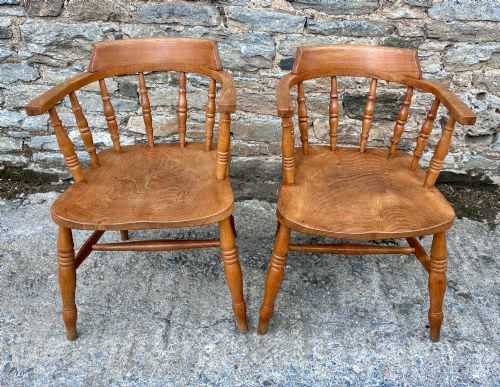
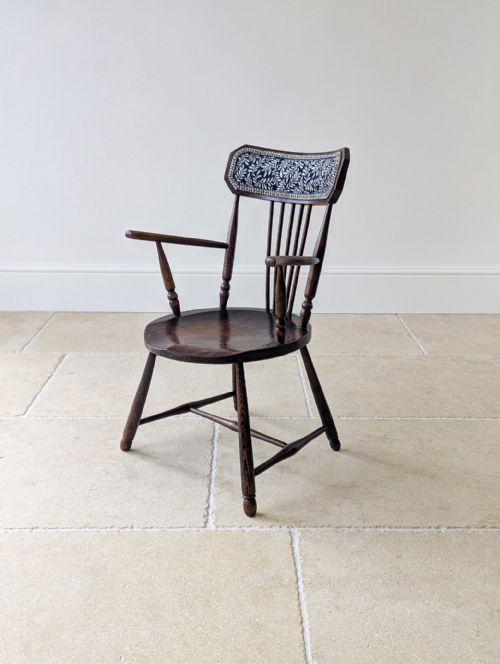
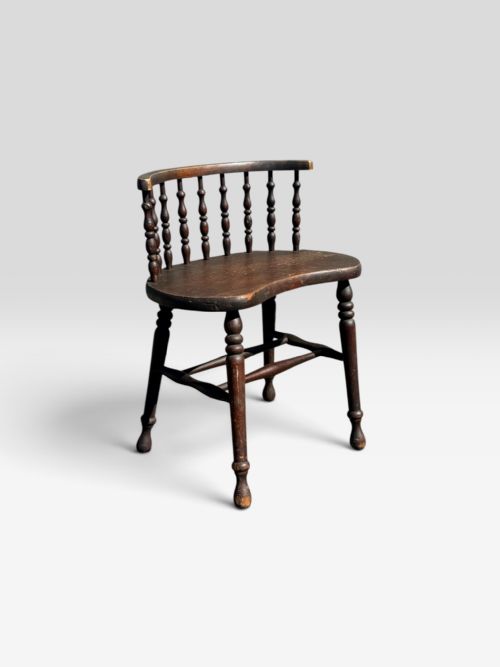
When you search for an antique country desk chair, you encounter robust seating designed for practical work in farmhouses, studies, and country houses. The pieces on this page span the Georgian, Regency, and Victorian eras, taking forms such as low back Windsors, captains chairs, bar back carvers, and smokers bows.
Makers shaped these utilitarian seats primarily as armchairs and elbow chairs, alongside occasional side chair variants. The design prioritises working comfort at a desk, with sturdy arms and supportive backs adapted for daily clerical or domestic tasks.
Origins are rooted in English regional traditions, where local cabinet makers and chair bodgers built sturdy seating for domestic and professional service. Surviving examples demonstrate a long working life, moving from country houses and studies into modern antique collections.
How they were made
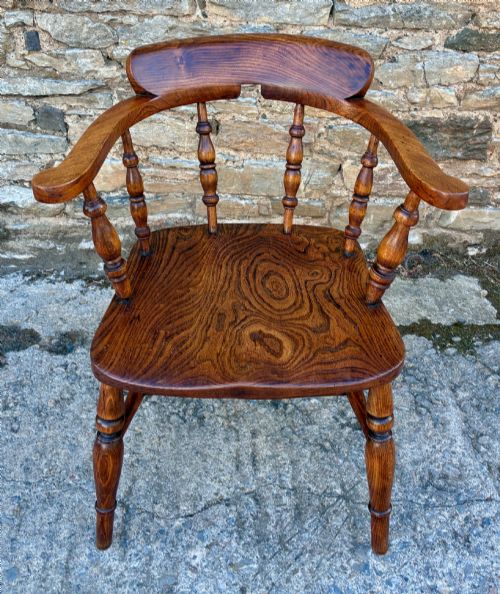
Construction relies heavily on native British timbers, with elm, oak, yew, beech, ash, and mahogany utilised according to regional availability and structural need. Woods were frequently combined within a single frame, pairing strong hardwood legs and spindles with thick, dished solid elm seats.
Traditional joinery techniques governed their assembly, employing turned spindles, pegged joints, and steam-bent wooden bows to form resilient, rigid structures. Woodturners and joiners selected materials for grain pattern and toughness, ensuring the chairs could withstand heavy daily use without failing.
Retail Price Guide 2026
Typical UK retail prices for country desk chair, calculated from the Sellingantiques database of over a million retail prices indexed since 2003. This retail price guide relies exclusively on Sellingantiques data; no external sources or auction records are used, so the figures do not describe the wider market.
Listings on this page feature pieces from the Victorian and 19th Century periods, constructed in elm, oak, yew, beech, ash, mahogany, and hardwood.
What varies in quality
Quality rests in the balance of timber selection and the harmony of regional vernacular proportions. Chairs built with richly figured yew or heavily grained elm display a distinct visual depth that simpler beech or mixed-hardwood frames lack.
Construction integrity separates workaday seating from finer regional craftsmanship, seen in the fluency of a steam-bent arm rail or the ergonomic depth of a sculpted wooden seat. The best pieces retain their original surface patination and tight, unyielding structural joints developed through decades of honest service.
The Antique Country Desk Chair Glossary
- Windsor
- A traditional chair construction featuring a solid wooden seat into which the legs, back spindles, and bow are separately bored and wedged. This design provides exceptional structural resilience.
- Carver
- An armchair, typically heavier than a dining chair, featuring supportive armrests designed for a head of household or a working desk. They often display more elaborate turning on the front legs and posts.
- Smokers Bow
- A low-backed Windsor variant with a continuous curved arm rail, historically favoured for smoking rooms and studies. It offers compact support suited to prolonged desk work.
- Bar Back
- A chair style featuring a horizontal wooden slat or rail across the upper backrest, often shaped for lumbar support. This form appears frequently in nineteenth-century utilitarian seating.
Frequently Asked Questions
What is an antique country desk chair?
These pieces are sturdy regional seating forms produced in Britain during the eighteenth and nineteenth centuries for domestic and clerical work. They combine practical ergonomics with native hardwoods.
Craftsmen built them using traditional Windsor and joined frameworks, resulting in robust chairs suited to daily study use.
Which woods were used to build them?
Maker workshops utilised accessible native timbers including elm, oak, yew, beech, ash, and mahogany. Different woods were often paired within a single frame for strength and contrast.
Elm frequently provided the solid dished seat, while ash or beech formed the turned spindles and structural legs.
How do I date an antique country desk chair?
Dating relies on observing structural forms, turning styles, and wood patination across Georgian, Regency, and Victorian periods. Earlier eighteenth-century examples exhibit different proportions compared to later Victorian iterations.
Matching the specific timber choices and joinery methods to known regional periods helps narrow down the decade of manufacture.
Were these chairs originally meant for desks?
Many were built for general domestic or office duties, functioning in halls, studies, and counting houses. Their supportive arms and sturdy frames made them ideal for prolonged writing tasks.
Over time, variations like captains chairs and corner desk chairs evolved specifically for seated clerical work.
How should I care for an antique wooden chair?
Keep wooden seating away from direct heat sources and dramatic humidity fluctuations to prevent timber splitting. Regular gentle dusting preserves the natural historic finish.
Applying appropriate wax polishes occasionally helps nourish dry hardwoods and maintain their surface patination.