





Egyptian Revival Table
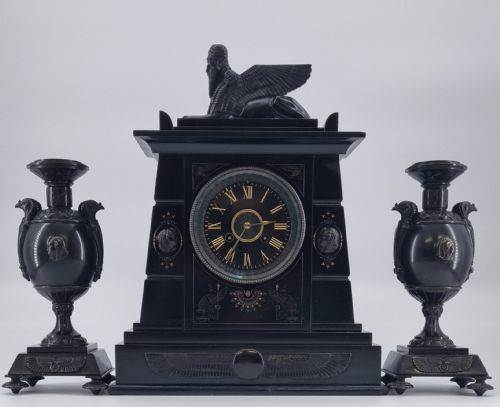
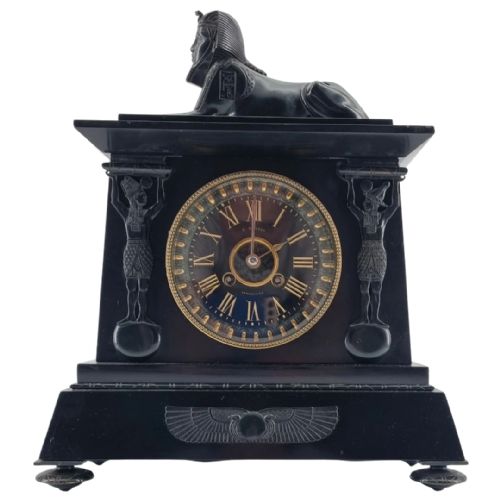
These egyptian revival table selections bring monumental pharaonic motifs into domestic spaces, prized by collectors for their striking blend of classical antiquity and rich cabinetmaking.
Egyptian Revival Table
An egyptian revival table channels the visual vocabulary of ancient Nile civilisations, appearing in forms ranging from occasional tables and console tables to supper tables and folding stools. These pieces draw on decorative idioms spanning the Georgian, Regency, and Victorian periods, alongside later twentieth-century interpretations.
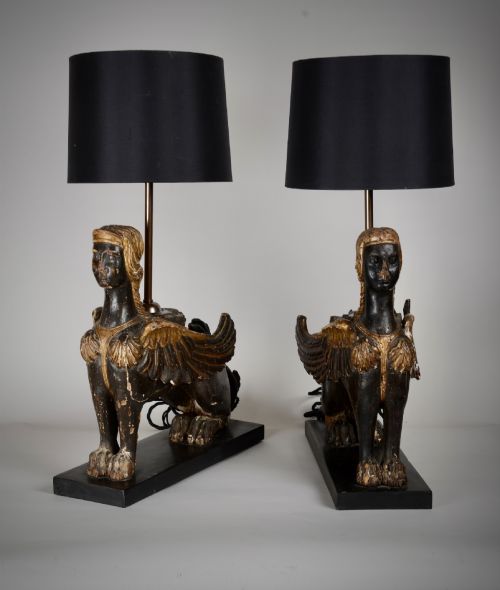
The materials and supports frequently incorporate symbolic figures, winged motifs, or architectural columns reminiscent of temple architecture. Buyers encounter both grand mahogany dining pieces and more compact occasional or centre tables finished with gilt details.
Materials and Construction
Cabinetmakers utilised dense timbers such as mahogany, rosewood, and ebonised woods to provide a dark, dramatic foil for metallic ornaments. These wooden surfaces often receive gilt or painted highlights to accentuate carved pharaonic details.
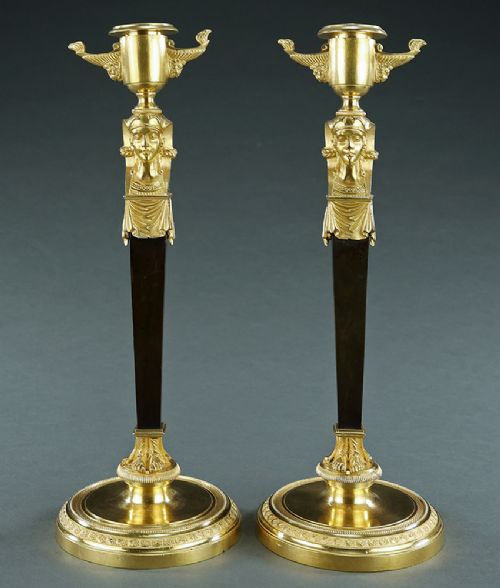
Metal components - ranging from bronze and brass to silver plating - are integrated into bases, mounts, and supports. Craftspeople employed casting, chasing, and inlay techniques to merge metallic elements seamlessly with the wooden framework.
Egyptian Revival Table Retail Price Guide 2026
Typical asking prices for egyptian revival table among the pieces listed under this phrase on Sellingantiques today, from the lower quarter to the upper quarter. They describe what is for sale here now, not the wider market.
Listings feature 19th Century, 1880, 1930, Georgian, Victorian, 18th Century, 1900, and 1920 periods alongside materials including Brass, Bronze, Marble, and Mahogany.
Distinctions in Quality
Material selection also dictates standing, with dense, well-figured timbers and genuine gilt bronze commanding greater regard than secondary woods or simpler painted finishes. The integration of the Egyptian motifs into the overall structural design separates masterwork pieces from standard commercial production.
Josef Lorenzl·D. Munsey·Paul Philip Barraud·Ivan Zaiec·Brockbanks of London·Demetre Chiparus·Barraud & Lund
The Egyptian Revival Table Glossary
- Ormolu
- Gilt bronze mounted on furniture or used for decorative objects, created through an amalgam of mercury and gold. This technique produced a rich, enduring metallic lustre highly favoured in nineteenth-century workshops.
- Console table
- A table designed to stand against a wall, frequently supported by decorative brackets, pillars, or figural mounts. In revival schemes, these supports often take the form of caryatids or mythical beasts.
- Centre table
- A freestanding table finished on all sides, intended to sit in the middle of a room rather than against a partition. These pieces display ornamental detail from every angle.
- Fusee
- A conical pulley used in clockwork mechanisms to maintain even tension as the mainspring unwinds. This mechanical refinement appears in precision timepieces associated with high-grade desk and mantel clocks.
Egyptian Revival Table: Frequently Asked Questions
How do I date an egyptian revival table?
Dating relies on examining the underlying timber construction, secondary woods, and the specific stylistic vocabulary employed by the maker. Pieces from the Regency era often display a strict neoclassical interpretation, whereas later Victorian and twentieth-century examples incorporate eclectic or art deco influences.
Hardware, fixing methods, and the patina of the wood further assist in establishing the period of manufacture. Comparing the cast mounts against known dated examples provides additional chronological clarity.
Where should I place an egyptian revival table?
These tables function effectively as focal points in hallways, drawing rooms, or studies where their architectural lines can be appreciated. Freestanding centre tables require adequate clearance to showcase their ornamentation from all sides.
Pairing them with restrained surrounding decor allows the distinct pharaonic motifs to stand out without visual competition. Avoid placing vulnerable polished timbers in direct sunlight or near heat sources.
Are these tables sturdy enough for daily use?
Solid timber construction and robust joinery allow many examples to handle light daily placement, though delicate gilt mounts and inlays require mindful care. Occasional and console tables are generally built to support standard decorative objects rather than heavy loads.
Regular dusting with a soft, dry cloth preserves the finish without harming delicate metallic elements or patinated surfaces. Professional conservation advice should be sought if structural movement occurs.
What defines the egyptian revival style?
The style incorporates visual elements drawn from ancient Egyptian art and architecture, including obelisks, sphinxes, lotus motifs, and hieroglyphic patterns. European cabinetmakers reinterpreted these motifs during distinct periods of archaeological rediscovery.
This aesthetic manifested across various forms, merging classical European furniture shapes with striking pharaonic ornamentation. The resulting pieces balance architectural solemnity with decorative richness.