

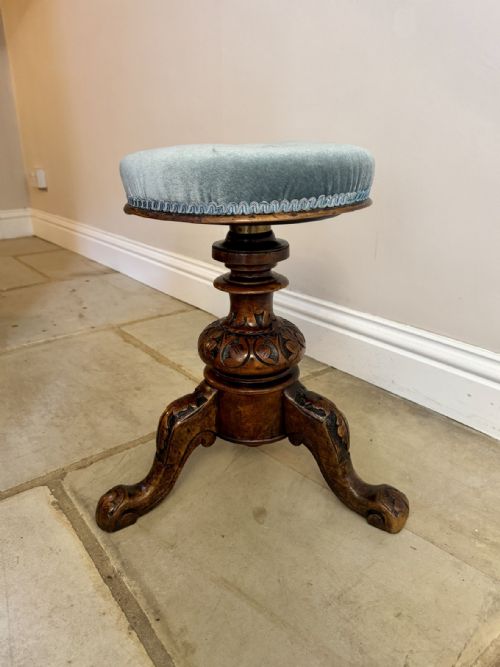

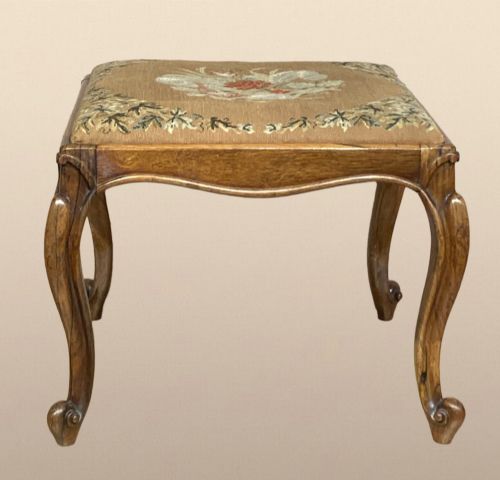
Edwardian Upholstered Footstool
An edwardian upholstered footstool brings compact comfort and period character to a room, offering versatile seating or a place to rest tired feet.
Edwardian Upholstered Footstool
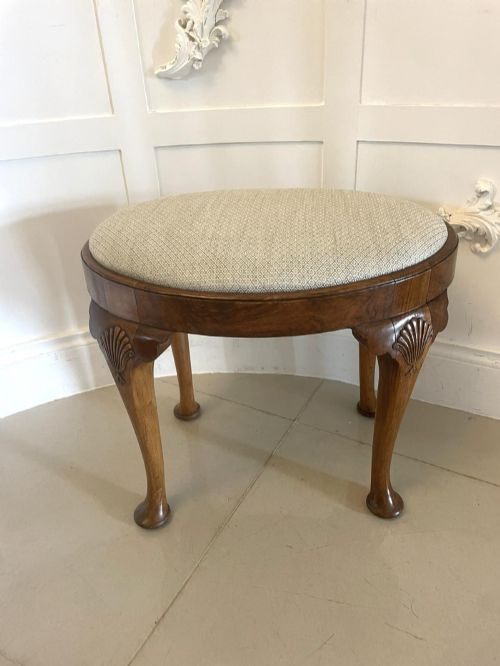
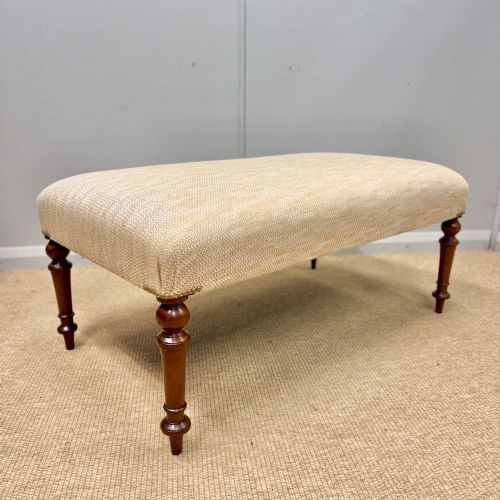
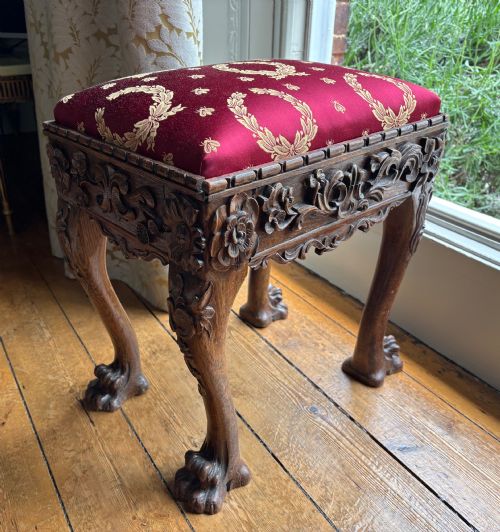
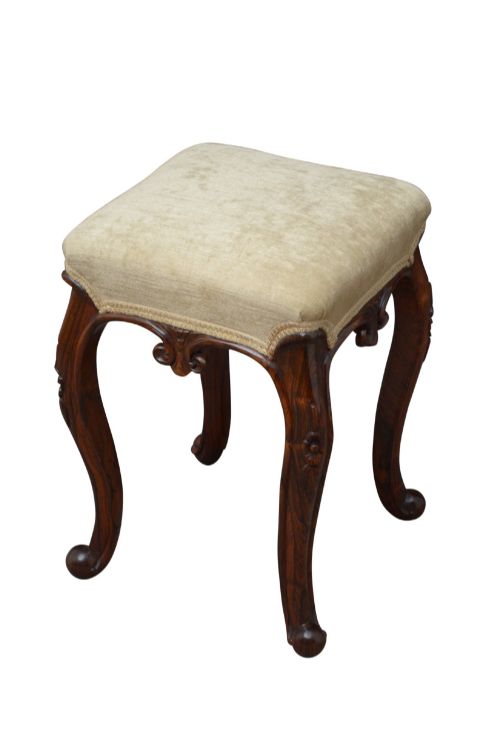
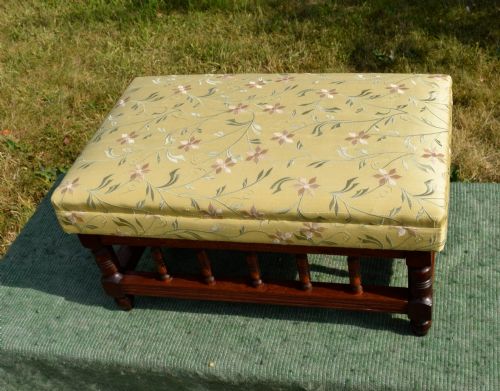
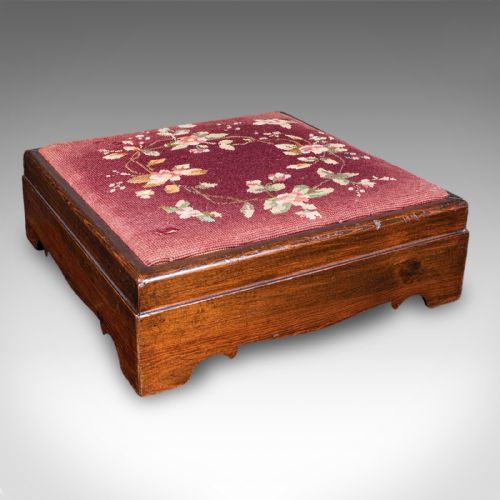
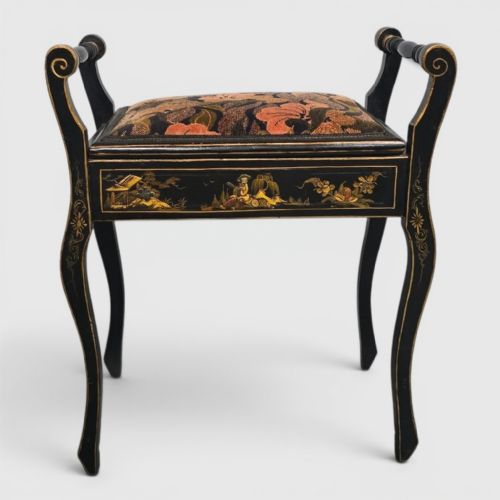
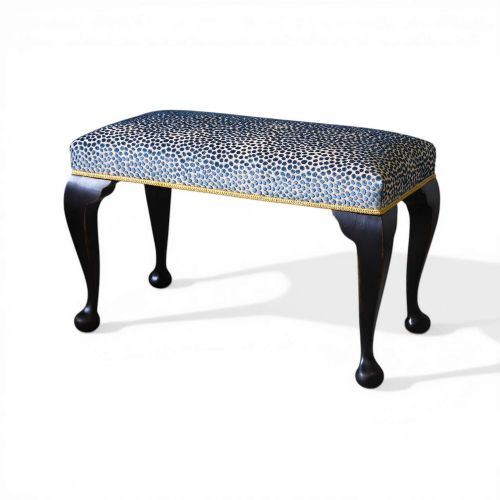
The edwardian upholstered footstool sits alongside related low seating such as dressing table stools, piano stools, and small ottomans. Most examples on this page date from the Edwardian period or the broader nineteenth century, featuring rectangular, oblong, or oval forms designed for fireside or parlour use.
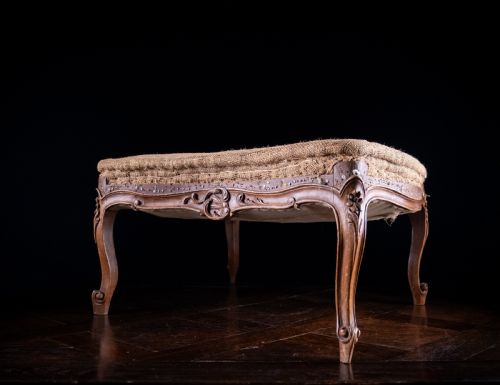
Makers often drew inspiration from earlier aesthetics, producing pieces in styles ranging from Arts and Crafts and Chippendale Revival to Queen Anne and Louis XV. These low frames appear in native timbers like mahogany, walnut, and oak, frequently paired with modern or period textiles.
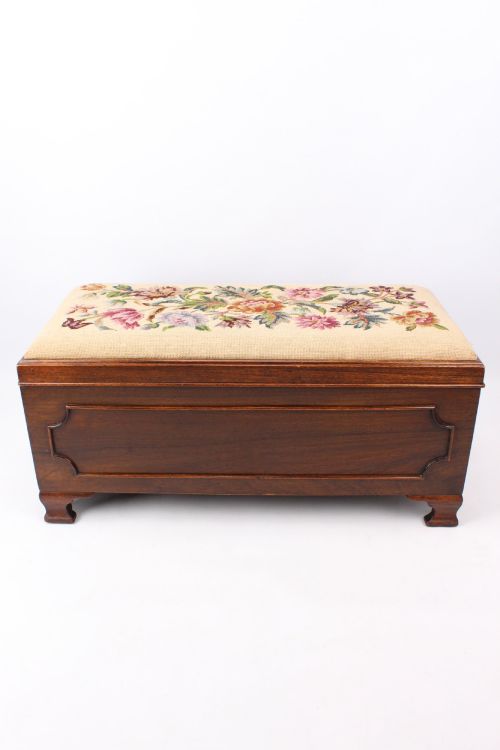
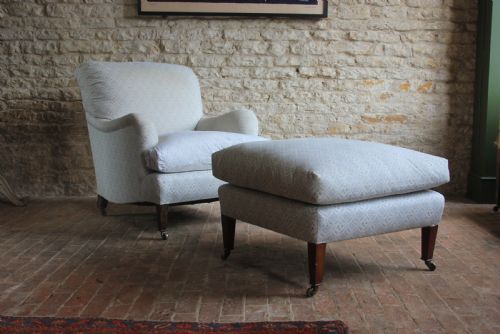
While many listings focus on straightforward footstools, buyers also encounter larger ottomans and specialised seating designed to match armchairs. The unifying characteristic remains a low profile paired with a padded top, whether plain or needlework-covered.
Materials and Construction
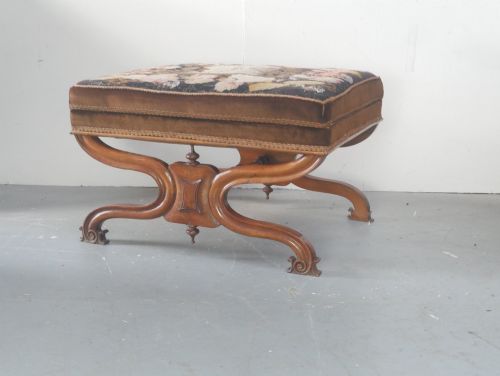
Framing timbers include mahogany, walnut, oak, pitch pine, and ebonised or lacquered woods, chosen for structural rigidity and finished surfaces. Joinery methods involve traditional turned legs, cabriole supports, and cross stretchers, occasionally augmented by brass castors for mobility.
Upholstery techniques rely on durable textile coverings such as wool, tapestry, needlework, Liberty fabric, damask, and leather, often secured over internal padding. Some pieces retain buttoned leather or decorative braided edges that highlight the hand-finished nature of the seating.
Edwardian Upholstered Footstool Retail Price Guide 2026
Typical asking prices for edwardian upholstered footstool among the pieces listed under this phrase on Sellingantiques today, from the lower quarter to the upper quarter. They describe what is for sale here now, not the wider market.
Several stools double as secretive ottomans, proving that Victorians and Edwardians liked to hide their clutter beneath the upholstery.
Assessment of Quality
Quality rests in the crispness of the timber carving and the architectural balance of the frame, where substantial hardwoods command greater respect than softer pines. Finer examples display carefully turned legs, sturdy stretchers, and thoughtful proportion rather than plain utility.
The upholstery standard also separates basic utility items from superior pieces, with dense padding, tight fabric tension, and traditional needlework or leather finishes elevating the overall execution. Original design integrity combined with tight joinery marks the better specimens.
Howard and Sons
The Edwardian Upholstered Footstool Glossary
- Cabriole leg
- A furniture leg that curves outward and then tapers inward, mimicking an animal's leg. This popular form frequently terminates in plain or carved feet.
- Needlework
- Hand-stitched textile work utilised for seat covers and upholstery panels. It adds texture and decorative pattern to the upper surface.
- Cross stretcher
- Horizontal wooden bracing connecting the legs beneath a stool for added stability. These often feature central turnings or intersecting arches.
- Ottoman
- A low upholstered seat or footstool lacking arms or a backrest. These forms often provide larger surface areas than standard footstools.
- Chinoiserie
- European decorative style employing imitation Chinese motifs and lacquering techniques. It appears on select ebonised or lacquered stool frames.
Edwardian Upholstered Footstool: Frequently Asked Questions
How were these stools used?
These low pieces served primarily as footrests by the fireside or as auxiliary seating in drawing rooms and dressing areas. Their compact dimensions allowed them to be tucked away or moved easily between rooms as needed.
Specialised variants like piano stools offered stable, height-adjustable or fixed seating for musicians. Others functioned as companions to larger armchairs, completing a coordinated seating arrangement.
What woods were commonly used?
Cabinetmakers utilised durable hardwoods such as mahogany and walnut for finer parlour furniture, valuing their rich grain and ability to hold detailed carving. Oak appeared frequently in pieces reflecting the Arts and Crafts aesthetic.
Softer timbers like pitch pine and beech were also employed, often painted, ebonised, or lacquered to achieve a specific decorative finish. Timber choice generally reflected the intended formality and style of the piece.
How do I spot an Edwardian piece?
Edwardian seating often displays lighter proportions and simpler decorative motifs than heavy Victorian furniture, drawing inspiration from earlier Georgian and neoclassical styles. Turned legs, inlaid wood details, and satin-finished timbers are characteristic hallmarks of this era.
Makers working in this period also embraced vernacular Arts and Crafts simplicity alongside revived continental forms. Examining the timber finish and interior construction helps distinguish these from older nineteenth-century examples.
Are modern upholstery replacements acceptable?
Many surviving frames have received new fabric or leather coverings over the decades to ensure practical usability in modern homes. Restored or replaced upholstery is standard practice for functional antique seating.
Buyers often appreciate listings that detail renewed coverings while preserving the antique timber frame underneath. Original textile survivals are less common and tend to be valued for their historical integrity.