


Edwardian Sugar Basket
An edwardian sugar basket brings pierced metalwork and vibrant glass liners together on the tea table.
Edwardian Sugar Basket
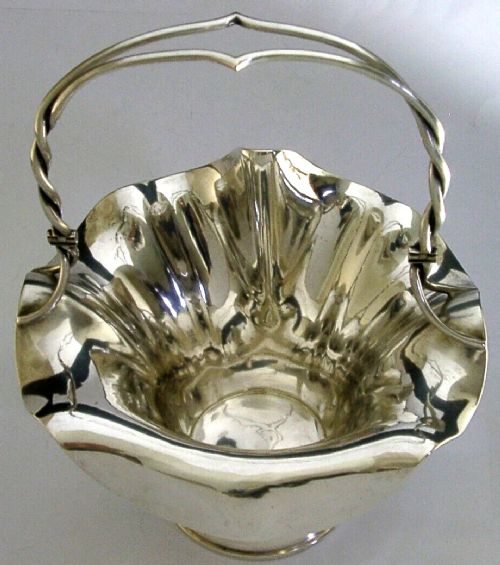
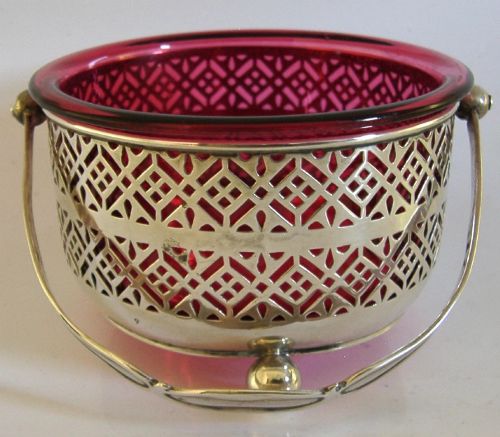
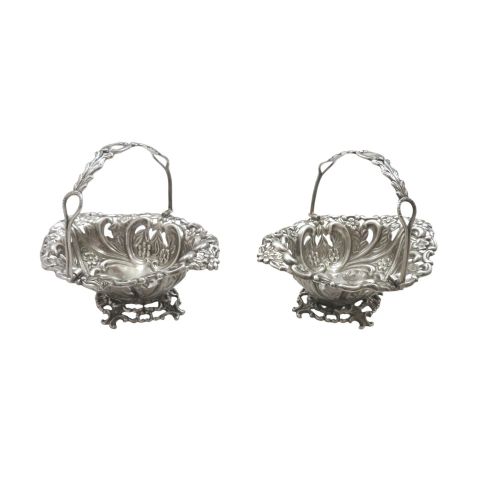
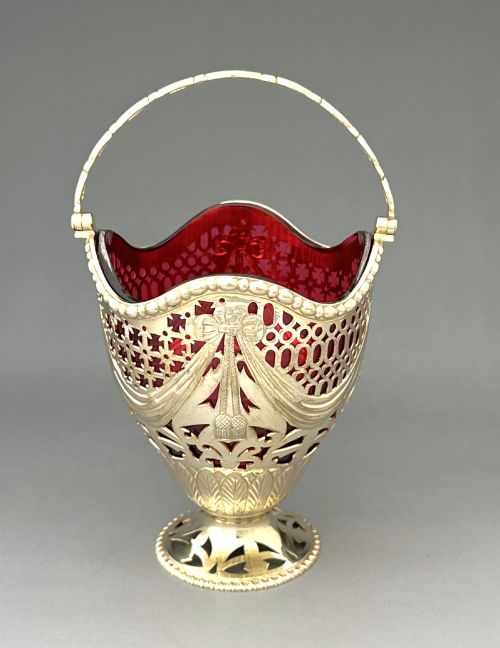
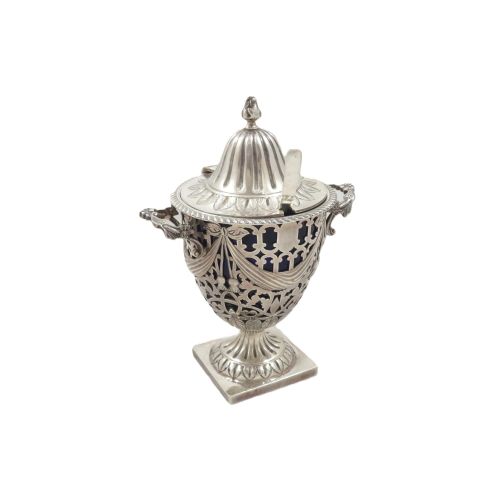
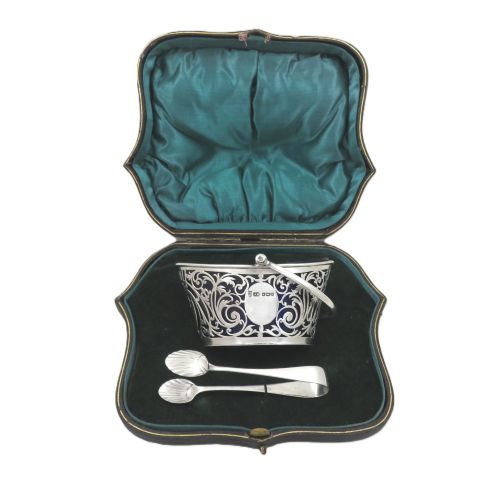
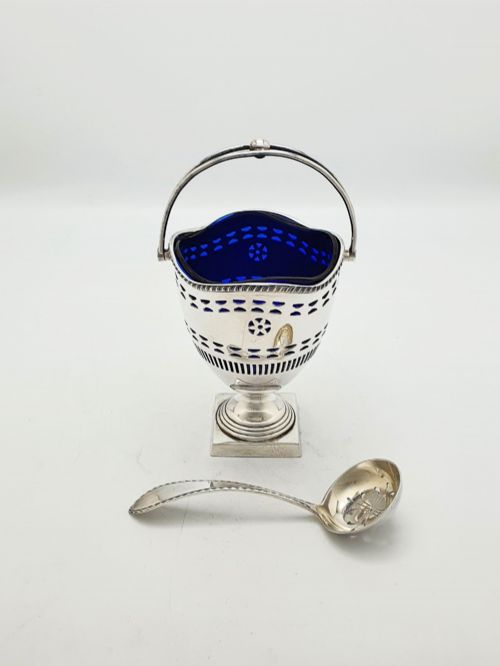
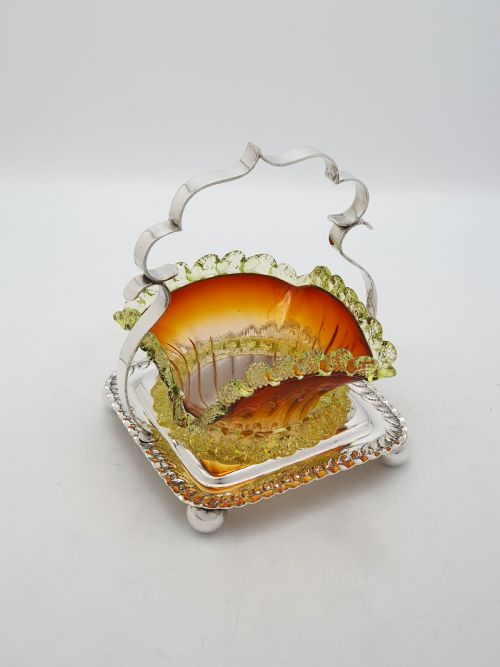
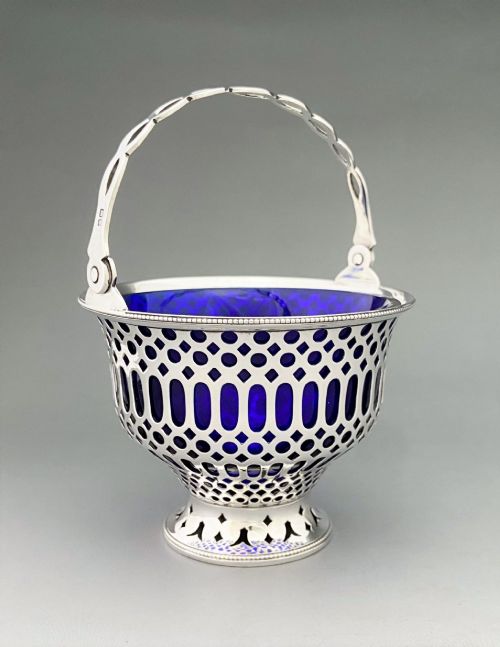
An edwardian sugar basket is a small table vessel designed to hold loose sugar cubes or granules, often accompanied by a coloured glass liner. You will frequently encounter forms featuring swing handles, pierced fretwork, and decorative frames dating from the early twentieth century.
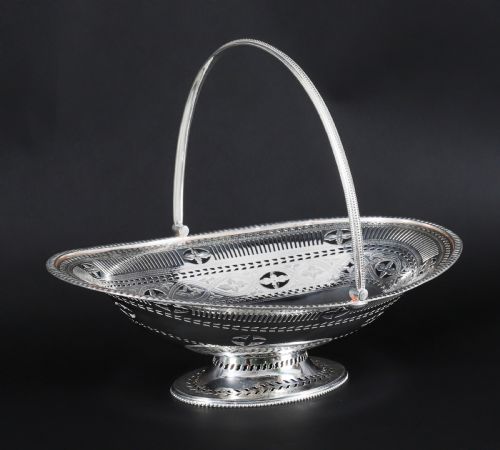
The pieces appearing here span the Edwardian period alongside select Victorian and George V examples. Formats range from open wirework baskets and urns with lids to pierced bowls with sifter attachments and matching presentation cases.
Makers utilised various object designations in their titles, including sugar bowls, bonbon dishes, and decorative fruit baskets. Despite these overlapping terms, the core function remains the serving of sugar during formal afternoon tea.
What separates individual pieces
Quality rests upon the weight of the metal and the intricacy of the piercing work. Heavier solid silver frames with complex fretwork or wirework represent the upper echelon of production.
The presence of an original, undamaged coloured glass liner influences the completeness of the piece. Matching liners in specific tones such as cranberry, cobalt, or vaseline complete the intended design.
Maker marks and town assay stamps provide clear indications of origin. Pieces bearing identifiable silversmith punches and fitted presentation cases demonstrate higher initial manufacture standards.
Listings feature sterling silver, silver plate, and glass across the Edwardian, Victorian, and George V periods.
Hammond, Creake And Co·James Dixon And Sons Ltd·Edward H Stockwell·William Comyns·Alfred Marston·Elkington·WMF
The Edwardian Sugar Basket Glossary
- Swing handle
- A movable arched handle attached to the rim of the basket by pivots. It allows the handle to drop to the side when accessing the contents.
- Pierced-work
- A technique where metal is cut through to create decorative open patterns and lattice designs. This reduces the weight of the basket while increasing visual lightness.
- Silver-gilt
- Silver that has been coated with a thin layer of gold on the surface. This finish provides a warm golden interior glow when viewed through glass liners.
- Fretwork
- Ornamental perforated or cut-out patterns in metalwork. Artisans used this method to form geometric and floral motifs around the body of the basket.
- Liner
- A removable vessel fitted inside the metal frame to hold loose substances. They appear in various coloured glasses to contrast with the silver exterior.
Edwardian Sugar Basket: Frequently Asked Questions
What were edwardian sugar baskets used for?
These vessels held lump or granulated sugar during formal tea service. Guests spooned or picked sugar from the basket into their cups.
The coloured glass liners protected the silver metal from sticky residue and moisture. Many designs included matching sugar sifters or tongs for serving.
How do I identify an edwardian sugar basket?
Look for hallmarks indicating early twentieth-century British assay offices such as Chester, Sheffield, and London. The combination of pierced silver frames and vibrant glass liners is characteristic of the period.
Design motifs often draw on Edwardian lightness and revived Neo-Classical or Art Nouveau influences.
Are the glass liners removable?
Yes, the glass inserts lift out independently from the metal framework. This construction allowed for easy cleaning after use.
Finding a piece with its original coloured glass liner intact remains important for completeness.
What metals were used to make them?
Silversmiths utilised solid sterling silver as well as silver-gilt and silver-plated base metals. Heavier pieces indicate substantial silver content.
Sheffield and Birmingham manufacturers produced both solid silver and plated variations.