

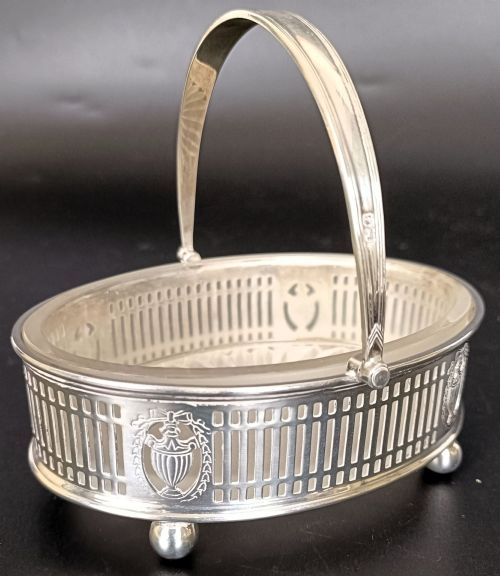


Swing Handle Glass Dish
These swing handle glass dish pieces combine tactile coloured glass with agile metal mounts, offering practical service and striking display.
Swing Handle Glass Dish
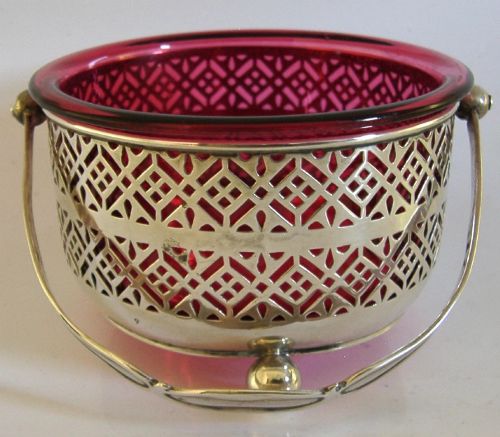
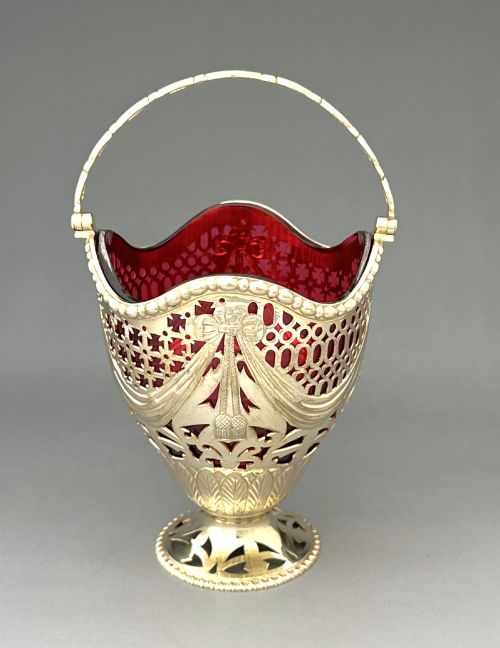
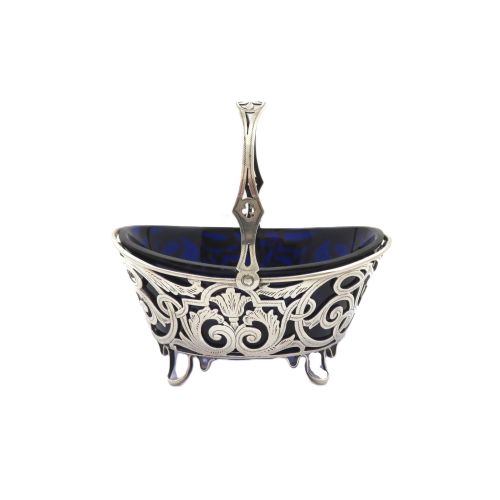
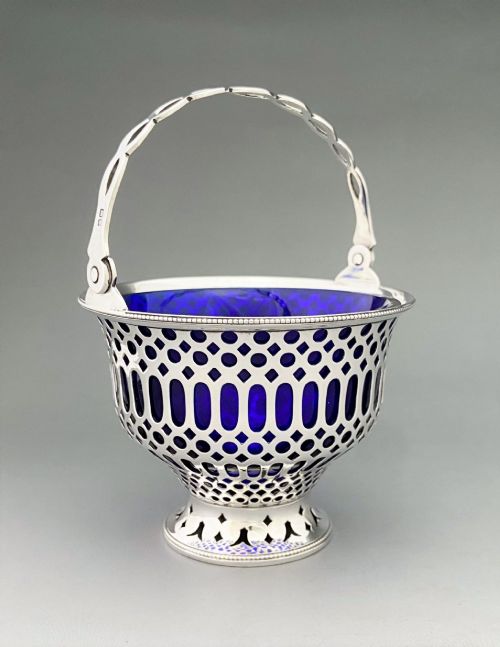
A swing handle glass dish brings together a supportive metal frame, most often formed as a sugar basket or decorative bowl, paired with a removable glass vessel. Buyers seeking a swing handle glass dish will encounter forms ranging from Georgian Neoclassical sugar baskets to Edwardian potpourri vessels and Art Nouveau tableware.
The prevailing examples on this page span the Victorian and Edwardian eras, alongside pieces from the eighteenth and twentieth centuries. These objects frequently function as sugar baskets or decorative table centerpieces, utilising articulated handles that fold down to allow access to the contents.
Makers shaped these baskets in oval, round, and pierced silhouettes, placing coloured glass liners inside intricately worked metal frames. The integration of glass and metal creates lively interplay between polished silver and rich translucent hues.
Materials and Construction
Makers fashioned the metal frames using sterling silver, silver-gilt, and silver plate, frequently employing piercing techniques to create openwork patterns. Handles were cast with floral motifs or hinged securely to the rim of the basket.
Liners were produced from cranberry glass, cobalt glass, ruby glass, and rock crystal glass, providing vibrant colour contrasts against the polished metal. These glass inserts fit snugly within the pierced or solid metal framework.
Listings feature sterling silver, silver plate, and silver-gilt combined with cranberry, cobalt, ruby, and rock crystal glass across Victorian and Edwardian periods.
Judging Quality
Quality rests upon the crispness of the metalwork, distinguishing heavily cast floral handles and sharp piercing from simpler, flatter stamped decoration. The weight of the silver or silver plate and the complexity of the frame construction dictate the tier of the piece.
The clarity and depth of the glass liner elevate the piece, particularly where rich cranberry or cobalt tones are present. Well-fitted glass inserts that sit properly within the metal basket indicate higher original manufacture.
W M F·William Comyns·George Fox
The Swing Handle Glass Dish Glossary
- Sterling Silver
- An alloy consisting of 92.5 percent silver by mass, widely utilised for durable tableware and mountings.
- Cranberry Glass
- A pinkish-red glass created by adding gold to the molten batch, popular in Victorian decorative items.
- Silver-Gilt
- Silver that has been coated with a thin layer of gold on its surface, creating a warm golden finish.
- Pierced
- A technique where metal is cut through to create openwork decorative patterns along the body of the basket.
- Potpourri Basket
- A vessel designed to hold dried scented plant material, often featuring pierced lids or open frames to release fragrance.
Swing Handle Glass Dish: Frequently Asked Questions
What were swing handle glass dishes used for?
These pieces served primarily as sugar baskets on the dining table, holding loose sugar lumps for tea service. They also functioned as decorative bowls and potpourri containers.
The movable handle allowed servants or hosts to lift the basket easily or lower it out of the way when accessing the contents.
How do I care for silver and glass baskets?
Wash the glass liner gently in warm soapy water, removing it completely from the metal frame before cleaning. Polish the silver or silver-gilt mount with a soft cloth and appropriate cleaner, avoiding contact with the glass.
Keep the pieces away from excessive moisture during storage to protect both the metal surfaces and the integrity of the hinged handle.
How do I identify an Edwardian basket?
Edwardian pieces often display lighter, airier designs influenced by earlier eighteenth-century styles, utilising pierced silver frames and vibrant glass liners. Look for hallmarks that correspond to the early twentieth century.
The presence of makers such as William Comyns or George Fox frequently points toward this period of refined tablewares.
What is the difference between ruby glass and cranberry glass?
Ruby glass exhibits a deeper, more intense red coloration derived from different metallic additives during the blowing process. Cranberry glass displays a characteristic pinkish-red hue created specifically with gold chloride.
Both materials provide striking contrast when paired with bright sterling silver or silver-gilt frames.