


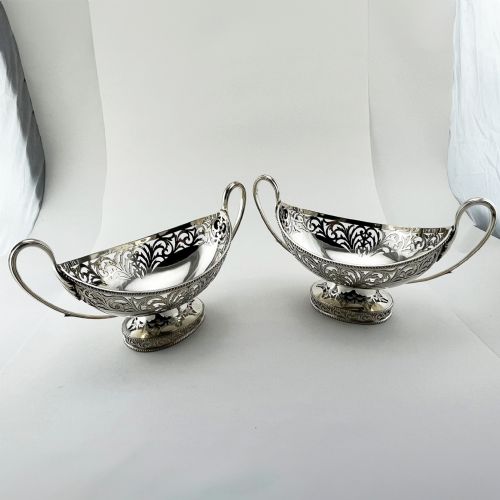


Pierced Silver Plate Basket
These pierced silver plate basket pieces bring openwork metalwork and colourful glass liners to your table, offering the height of Victorian and Edwardian dining elegance.
Pierced Silver Plate Basket
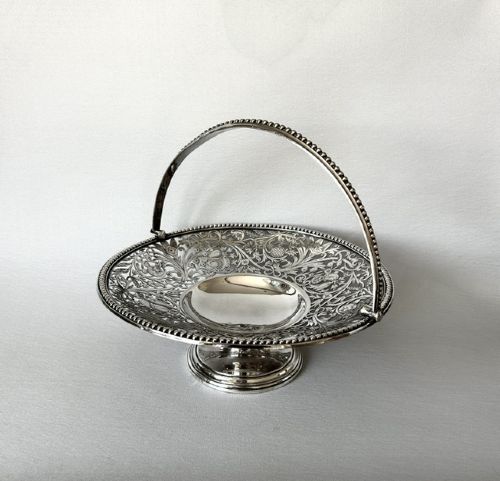
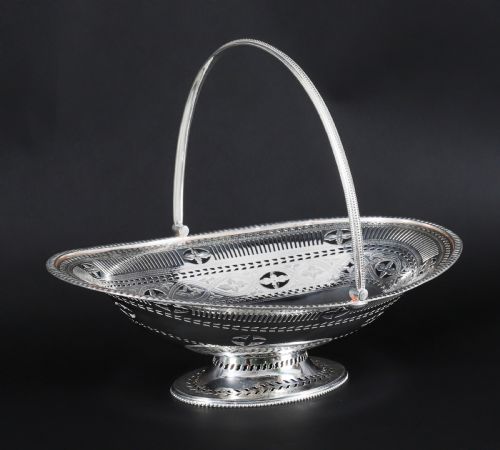
A pierced silver plate basket serves as a decorative centrepiece for fruit, bread, cakes, or sugar, often featuring intricate openwork patterns that showcase its contents. When searching for a pierced silver plate basket, buyers encounter an array of nineteenth and early twentieth-century forms, from swing-handle cake stands to sugar bowls with coloured glass liners.
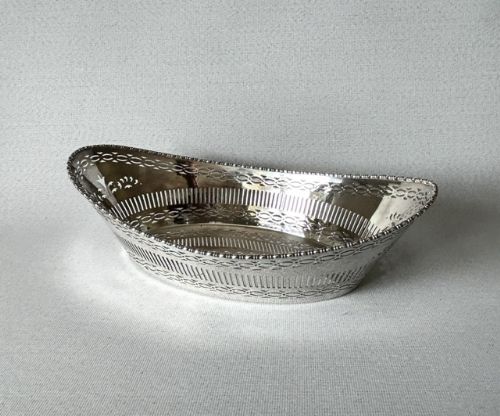
The selection ranges across Victorian, Edwardian, and George V styles, encompassing pieces from the mid-nineteenth century up to the 1910s. Alongside fruit baskets, the listings include bonbon dishes, sugar baskets, and serving dishes with pierced or reticulated bodies.
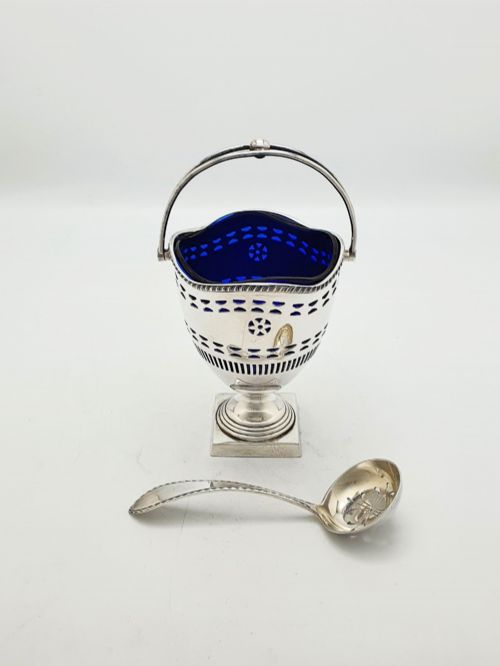
Victorian Neoclassical and Art Nouveau designs appear frequently, demonstrating how makers adapted classical motifs and flowing organic lines to silver plate and EPNS. Many of these items include original glass liners in cobalt blue, ruby, red cranberry, or opaline glass.
How they were made
These items rely on silver plate and electroplated nickel silver over a base metal, combining durability with a bright metallic finish. Artisans formed the intricate openwork bodies by piercing or reticulating the metal sheet before shaping and applying decorative embossed floral details.
Many examples incorporate blown glass liners, including cobalt and opaline variants, designed to sit snugly within the pierced metal framework. Swing handles, reeded mounts, and wooden elements are integrated to complete the serving vessels.
Some sugar baskets come with tiny matching sifters, proving that even nineteenth-century sugar management required proper cutlery.
What varies in quality
Quality in these items rests upon the crispness of the piercing and the depth of the embossed floral decoration on the silver plate. Finer examples retain their original coloured glass liners intact, whether in cobalt, ruby, or opaline glass.
The robustness of the swing handle mechanism and the balance of the reeded mounts also distinguish finer production from simpler tableware. Maker attribution to known workshops like Mappin and Webb, Elkington, or Walker and Hall elevates the standing of a piece.
Mappin and Webb·Elkington·Thomas Bradbury·Walker and Hall
The Pierced Silver Plate Basket Glossary
- EPNS
- Electroplated Nickel Silver, a common base material beneath the silver plating of these pieces. It provides a strong, stable foundation for the decorative outer layer.
- Reticulated
- Pierced or perforated in a net-like pattern. This technique creates the openwork lattice designs seen across the bodies of these baskets.
- Opaline glass
- A pale, translucent glass often used for the fitted liners inside sugar and fruit baskets. It adds a soft colour contrast to the polished silver plate.
- Swing-handle
- A movable handle attached to pivots on the rim of the basket. It allows the vessel to be easily carried and laid flat when placed on a table.
- Sifter
- A small spoon or accessory sometimes accompanying sugar bowls and baskets. It pairs with the pierced body to serve granulated or lump sugar.
Pierced Silver Plate Basket: Frequently Asked Questions
What were pierced silver plate baskets used for?
These vessels served various functions on formal dining tables, primarily holding fruit, bread, cakes, or sugar during the Victorian and Edwardian periods. Their openwork design allowed air to circulate around fresh produce while presenting it attractively to guests.
Smaller versions functioned as bonbon dishes or sugar baskets, often paired with contrasting coloured glass liners to hold loose items safely.
How do I identify the period of a basket?
Dating relies on stylistic clues such as the heavy ornamentation of mid-Victorian pieces, the classical symmetry of Victorian Neoclassical examples, and the flowing organic lines of Art Nouveau items. Maker marks and manufacturing techniques, such as early electroplating methods, also help narrow down the decade of production.
The presence of specific glass liner colours and handle designs further assists in distinguishing between mid-nineteenth century items and later Edwardian or George V pieces.
Are the glass liners usually original?
Many surviving baskets retain their original cobalt, ruby, red cranberry, or opaline glass liners, which were custom-fitted to the pierced metal bodies. Because glass liners are fragile, replacements do occur over time.
Examining the fit and the wear patterns on both the glass and the interior metal helps determine if the liner has stayed with the basket since its manufacture.
How should I care for silver plated baskets?
Maintenance involves gentle cleaning with a soft cloth and a specialised silver polish formulated for plated items to preserve the thin metal layer. Avoid abrasive materials that might wear down the plating over the pierced details.
Glass liners can be removed and washed separately in warm soapy water before being placed back into the dry metal basket.